The Castle of Otranto by Horace Walpole: Free EPUB, AZW3 & KEPUB Download
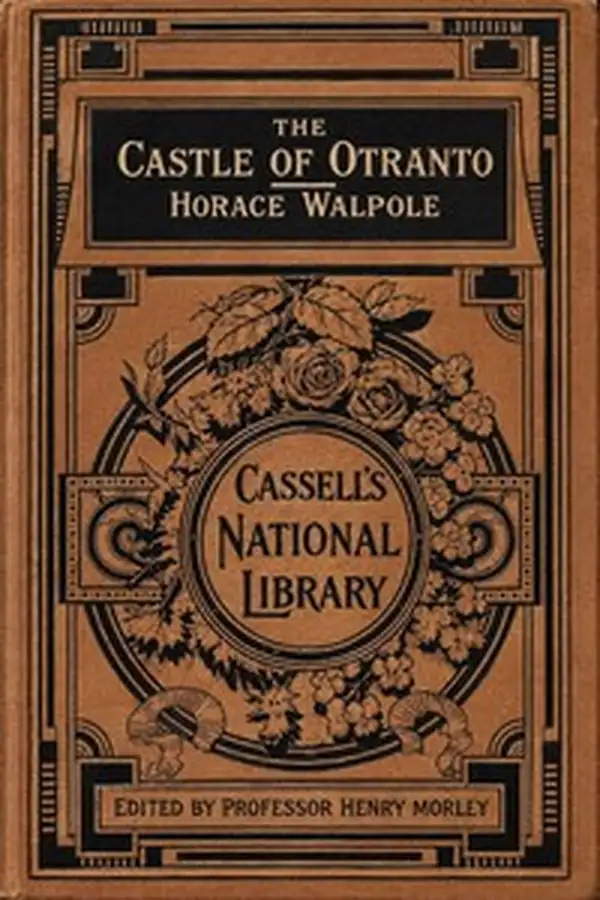
The Castle of Otranto
📖 Click to Read the Opening Pages Online Preview
Chapter I
Manfred, Prince of Otranto, had one son and one daughter: the latter, a most beautiful virgin, aged eighteen, was called Matilda. Conrad, the son, was three years younger, a homely youth, sickly, and of no promising disposition; yet he was the darling of his father, who never showed any symptoms of affection to Matilda. Manfred had contracted a marriage for his son with the Marquis of Vicenza’s daughter, Isabella; and she had already been delivered by her guardians into the hands of Manfred, that he might celebrate the wedding as soon as Conrad’s infirm state of health would permit.
Manfred’s impatience for this ceremonial was remarked by his family and neighbours. The former, indeed, apprehending the severity of their Prince’s disposition, did not dare to utter their surmises on this precipitation. Hippolita, his wife, an amiable lady, did sometimes venture to represent the danger of marrying their only son so early, considering his great youth, and greater infirmities; but she never received any other answer than reflections on her own sterility, who had given him but one heir. His tenants and subjects were less cautious in their discourses. They attributed this hasty wedding to the Prince’s dread of seeing accomplished an ancient prophecy, which was said to have pronounced that the castle and lordship of Otranto “should pass from the present family, whenever the real owner should be grown too large to inhabit it.” It was difficult to make any sense of this prophecy; and still less easy to conceive what it had to do with the marriage in question. Yet these mysteries, or contradictions, did not make the populace adhere the less to their opinion.
Young Conrad’s birthday was fixed for his espousals. The company was assembled in the chapel of the Castle, and everything ready for beginning the divine office, when Conrad himself was missing. Manfred, impatient of the least delay, and who had not observed his son retire, despatched one of his attendants to summon the young Prince. The servant, who had not stayed long enough to have crossed the court to Conrad’s apartment, came running back breathless, in a frantic manner, his eyes staring, and foaming at the mouth. He said nothing, but pointed to the court.
Download the EPUB, AZW3 or KEPUB to keep reading past the wedding day.
Download Full EPUB1764
~40,000 words (estimated)
Approx. 2.2 hours
Standalone
The castle of Otranto, Italy
7 sections
EPUB · AZW3 · KEPUB
0.42 MB (EPUB) · 0.50 MB (AZW3) · 0.44 MB (KEPUB)
Public domain in the United States
Project Gutenberg #696
The Castle of Otranto opens on a wedding day at a castle in southern Italy and kills the bridegroom before the ceremony begins: a helmet an hundred times larger than any casque made for a human being falls into the courtyard and crushes young Conrad. Manfred, who holds the castle by no good title, divorces the virtuous Hippolita on the spot and seizes the hand of the bride, Isabella, whose father was the Marquis of Vicenza. She escapes through a subterraneous passage to the church of St. Nicholas, while the family prophecy promises that the castle and lordship of Otranto should pass from the present family whenever the real owner should be grown too large to inhabit it.
Walpole published it at the end of 1764 as a translation from an Italian manuscript, and he did not put his own name to it until the second edition. Thomas Gray reported that Cambridge readers cried a little over it and were afraid to go to bed. The machinery it introduced, castles, subterraneous vaults, tyrants, sighing portraits and statues that bleed from the nose, became the furniture of Gothic fiction. See Wikipedia’s article on The Castle of Otranto for its publication history. The text is available via Project Gutenberg #696.
The Castle of Otranto by Horace Walpole: Summary, Characters & Themes
This page is a summary and analysis of The Castle of Otranto by Horace Walpole, the short novel that opened the Gothic vein in English fiction in 1764. It begins on a wedding day at the castle of Otranto, where the heir is crushed under a helmet of impossible size, and it ends three days later with a ruling family destroyed and a new prince installed. Between those points Walpole keeps the story moving: a tyrant who wants his son’s bride, a girl running through underground passages, a peasant who looks exactly like a dead king, and a prophecy that the castle will pass to its true owner once that owner grows too large to live in it. Below are the historical context, the characters and the themes, summaries of all seven sections of this edition, and the free download links.
The author is Horace Walpole, and the text of The Castle of Otranto itself has a long critical history. Walpole wrote it at Strawberry Hill, the Gothic villa he built at Twickenham, after waking from a dream of a gigantic hand in armour on a staircase. He claimed the book was a translation of a black-letter Italian manuscript printed at Naples in 1529 and signed the preface as its translator; readers took the bait, and only the second edition carried his name. The novel appeared at the end of 1764, when he was in his late forties, and it drew on the antiquarian taste of the moment as much as on the theatre. Its five chapters are almost plays: entrances, exits, one unbroken run of action, and long speeches that keep most of the violence off the stage.
Manfred, prince of Otranto, has one son, Conrad, and one daughter, Matilda. Conrad is to marry Isabella, daughter of the Marquis of Vicenza, but on the wedding morning he is found dead beneath an enormous helmet in the courtyard. Rather than lose the alliance, Manfred decides to divorce his wife Hippolita and marry Isabella himself. Isabella escapes through a subterranean passage to the church of St Nicholas, helped by a young peasant, Theodore, who is later revealed to be the son of the friar Jerome. Theodore loves Matilda, and Matilda loves him; Isabella, who has every reason to hate Manfred, ends by marrying Theodore. Meanwhile the castle fills with portents: a sighing portrait, a bleeding statue, a spectre, and an armoured hand on the stairs.
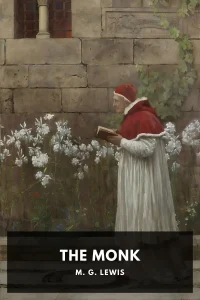
The people are drawn in flat, strong colours, and that is part of the book’s force. Manfred is a tyrant with a conscience, cruel to his daughter in one scene and undone by remorse in the next. Hippolita is patient to the point of self-erasure. Matilda is pious and brave, Isabella resourceful, Theodore honourable and slightly too good. Two generations of novelists borrowed the pattern: Matthew Lewis took the monk, the dungeon and the devil for The Monk in 1796, and Ann Radcliffe took the castle, the fleeing heroine and the explained ghost for The Mysteries of Udolpho in 1794. Both are free on this site.
Read today, the novel is short, fast and strange. Horror and comedy sit side by side without apology, and Walpole’s servants talk like a comic stage turn while his princes talk like Seneca. The plot depends on coincidence, and the ending arrives with thunder, a collapsing wall and a saint in the clouds. None of that has worn off: the book is still the place where the Gothic starts, and it is still readable in an evening. The introduction printed at the front of this edition, written for Cassell’s National Library in 1901, gives a plain account of Walpole’s life and of how the story came to be written. The text used here is the Project Gutenberg transcription (#696), which is in the public domain in the United States.
Historical Context
The Castle of Otranto appeared in December 1764 behind the title page of a translation: translated by William Marshal, gentleman, from the original Italian of Onuphrio Muralto, canon of the church of St Nicholas at Otranto. The preface described a manuscript found in the library of an old Catholic family in the north of England and printed at Naples in 1529, in black letter. The story was set between the first crusade and 1243, which let Walpole explain away miracles and apparitions as the manners of a credulous age. The hoax held for a few months. A second edition carried a preface in Walpole’s own voice and his name on the title page, and he never tried fiction again, though he kept the castle: Strawberry Hill was built at the same time and from the same antiquarian appetite.
Contemporary readers took the book seriously. Thomas Gray, Walpole’s old friend from the grand tour, reported from Cambridge that it made some of them cry a little and all in general afraid to go to bed o’ nights. It went through several editions in the 1760s and was quickly imitated and parodied; by the 1790s the machinery of castles, monks, subterranean passages and persecuted maidens had become a genre, and Ann Radcliffe had made the explained supernatural its standard. Walpole’s own blend of terror and farce was less to later taste, and nineteenth-century critics often treated the comic servants as a blemish. The 1901 introduction printed in this edition takes the opposite view, calling the novel an early sign of the reaction towards romance and arguing that the terrors of Bianca help to carry the catastrophe.
The novel is built like a play. It covers about three days, keeps to one place and a small cast, and the chapters run without scene breaks or summary: characters arrive, speak and leave, and dialogue carries most of the action. Walpole says as much in the preface, claiming that the rules of the drama are almost observed and that there is no bombast, no similes, flowers, digressions, or unnecessary descriptions. The claim is not quite true, since the book has a good deal of rhetoric, but the shape is real: five acts, a discovery, a reversal, and a final scene of recognition in which a hidden heir is produced and a usurper confesses. The chapter divisions in this edition are Walpole’s own five, printed with the long 1901 introduction, the 1764 preface and the sonnet to Lady Mary Coke.
Key Characters & Literary Archetypes
- Manfred: Prince of Otranto, a tyrant who needs a son, repudiates his wife and pursues his son’s bride, and is undone by the prophecy he has always feared.
- Isabella: Daughter of the Marquis of Vicenza, contracted to Conrad and then pursued by his father; she escapes through the castle vaults and takes sanctuary, resourceful and quick-witted.
- Theodore: A peasant labourer who resembles Alfonso’s portrait, shows a birthmark to the friar Jerome, and turns out to be the true heir of Otranto.
- Matilda: Manfred’s daughter, pious and brave, who frees Theodore from the black tower and is killed by her own father in the church.
- Hippolita: Manfred’s wife, patient and devout, who accepts a divorce she does not want and ends by taking the veil beside the husband who ruined her.
Core Literary Themes
- Usurpation and legitimacy: The castle belongs to Alfonso’s line, and the plot is the slow return of the rightful owner: every portent is a reminder that Manfred holds what he does not own.
- Terror and the supernatural: The helmet, the bleeding statue, the sighing portrait and the armoured hand are never explained away; Walpole lets the marvellous stand as fact and makes it the engine of the plot.
- Patriarchal power: Manfred treats his wife, his daughter and his son’s bride as property, and the novel shows the cost: Hippolita’s submission, Matilda’s death, and a house left without an heir of its own blood.
- Comedy inside horror: The servants Bianca, Diego and Jaquez gossip and panic in prose that belongs to comedy, and Walpole deliberately keeps that low register beside the grand terrors of the main plot.
- Inheritance and the sins of fathers: The moral printed in the preface, that the sins of fathers are visited on their children, is acted out: Ricardo’s murder is paid for by Manfred, and Matilda pays for both.
Why Download Our Custom E-Reader Edition of The Castle of Otranto?
This edition is made for reading rather than for study. The text follows the Project Gutenberg transcription of the 1901 Cassell’s National Library printing, which keeps Walpole’s five chapters, the 1764 preface and the dedication sonnet in the order the book was meant to be met. Nothing is abridged, rewritten or annotated in the body: the spelling and punctuation are the ones the Victorian editors set, so the prose keeps its eighteenth-century rhythm and its odd capital letters. Page numbers from the print edition are gone, which lets the five chapters read as one continuous movement.
The files are plain, reflowable and DRM-free. Type size, margins and line spacing are yours to set, and the chapter headings are real headings, so the table of contents works and you can jump between the five chapters, the introduction and the preface. There are no page scans, no columns to pinch and zoom, and no watermark on the text. The EPUB opens in Apple Books, Calibre and most e-readers; the AZW3 is for Kindle, and the KEPUB is for Kobo, where it gives proper chapter progress and page counts.
The book is short enough to read in a sitting or two, which suits the way it was written: Walpole said the first draft took about two months, and the plot moves at that speed. If you want the context first, the 1901 introduction is a short, plain account of Walpole’s life and of the dream that started the book; if you want the story first, start at Chapter I and come back to it later. Either order works, and both are in the same file.
- Project Gutenberg transcription, via Project Gutenberg #696 — the complete text, unabridged, with the chapter headings the author set.
- Complete text Walpole’s five chapters, the 1764 preface, the sonnet to Lady Mary Coke and the 1901 introduction, all unabridged.
- Reading comfort reflowable type, real chapter headings and a working table of contents, with no page scans to zoom.
- Three formats EPUB for most readers, AZW3 for Kindle and KEPUB for Kobo, none of them locked with DRM.
- The Monk — free EPUB, AZW3 & KEPUB
- The Mysteries of Udolpho — free EPUB, AZW3 & KEPUB
- Northanger Abbey — free EPUB, AZW3 & KEPUB
Chapter summaries
This edition is short: an introduction, Walpole’s preface, a sonnet and five chapters. The summaries below follow the order of the file, with the last two chapters kept together because the action runs on from one to the other without a break.
- Introduction: A 1901 essay on Walpole’s life: Eton, the grand tour with Thomas Gray, his seat in Parliament and the sinecures that paid for Strawberry Hill. It describes the dream of an armoured hand that started the book, the two months of writing, and the first readers who were afraid to go to bed.
- Preface: Walpole, writing as the translator of an Italian manuscript, claims the story was printed at Naples in 1529 and found in an English Catholic library. He defends the miracles as faithful to a credulous age, contrasts terror with pity, and draws the moral that the sins of fathers are visited on their children.
- Sonnet: Fourteen lines addressed to Lady Mary Coke, promising that the gentle maid whose tale these pages tell will have her sorrows rewarded. It is the only verse in the book, and it works as a short dedication rather than as an argument about the story.
- Chapter I: On his wedding day Conrad is crushed under a giant helmet in the courtyard. Manfred, needing an heir, decides to divorce Hippolita and marry Conrad’s bride Isabella, who escapes through a subterranean passage with the help of a peasant found in the vault. The helmet’s plumes move, a portrait sighs, and the servants report a giant’s leg.
- Chapter II: Matilda and her maid Bianca hear the peasant singing below the window; he is Theodore, a labourer. Manfred interrogates him, condemns him to death, and is interrupted when the friar Jerome recognises a birthmark and claims him as his son. A trumpet at the gate announces a herald from the Knight of the Gigantic Sabre.
- Chapter III: A herald demands Otranto for Frederic of Vicenza and the return of Isabella. The knight arrives with a hundred men carrying an enormous sword, which falls and fixes itself in the court. While the castle empties in search of Isabella, Matilda frees Theodore; he meets Isabella in the caves and wounds her father Frederic by mistake.
- Chapters IV–V: Frederic recovers and the two fathers plan a double marriage, until blood drips from Alfonso’s statue and a spectre tells Frederic to forget Matilda. Manfred, told that Theodore is meeting a woman at the tomb, stabs his own daughter in the dark. Theodore is revealed as Alfonso’s heir, the castle falls, and Manfred abdicates.
The Castle of Otranto: Frequently Asked Questions
Is The Castle of Otranto the first Gothic novel?
What does the prophecy in the novel mean?
Who is Theodore?
Why does Manfred want to divorce Hippolita?
How long does the novel take to read?
Is this the 1764 text?
Does the story end happily?
Where can I download The Castle of Otranto for free?
Part of: Gothic horror classics · Classic fiction