Just So Stories by Rudyard Kipling: Free EPUB, AZW3 & KEPUB Download
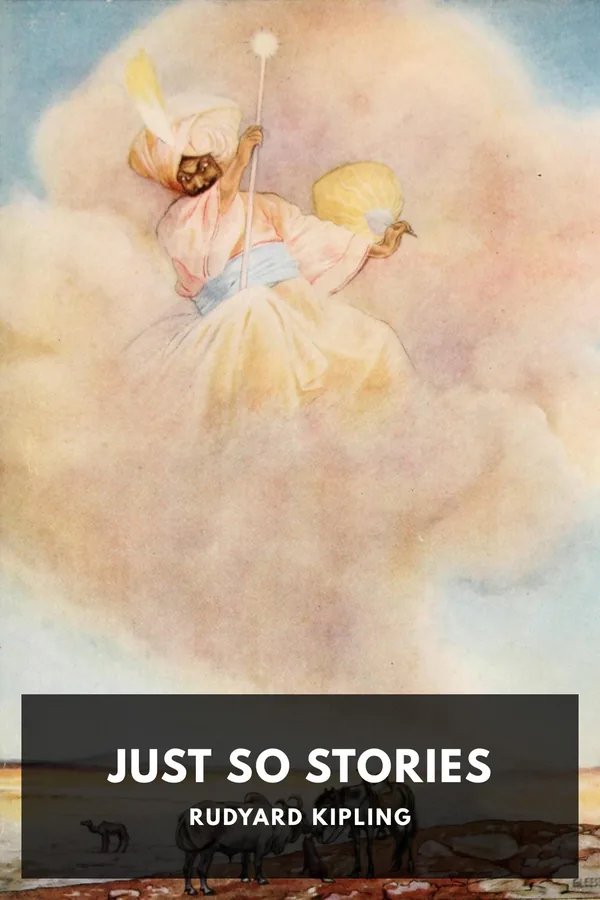
Just So Stories
📖 Click to Read the Opening Pages Online Preview
The opening of How the Whale Got His Throat
In the sea, once upon a time, O my Best Beloved, there was a Whale, and he ate fishes. He ate the starfish and the garfish, and the crab and the dab, and the plaice and the dace, and the skate and his mate, and the mackereel and the pickereel, and the really truly twirly-whirly eel. All the fishes he could find in all the sea he ate with his mouth—so! Till at last there was only one small fish left in all the sea, and he was a small ’Stute Fish, and he swam a little behind the Whale’s right ear, so as to be out of harm’s way. Then the Whale stood up on his tail and said, “I’m hungry.” And the small ’Stute Fish said in a small ’stute voice, “Noble and generous Cetacean, have you ever tasted Man?”
“No,” said the Whale. “What is it like?”
“Nice,” said the small ’Stute Fish. “Nice but nubbly.”
The excerpt below quotes the opening of the first story, in which the Whale eats every fish in the sea, the small ‘Stute Fish hides behind his right ear, and the Whale is told that Man is nice but nubbly.
Download Full EPUB1902
~34,000 words (estimated)
Approx. 1.9 hours
Standalone
The High and Far-Off Times and the Time of the Very Beginnings, an invented prehistory in which the animals and the first people are given the shapes they still have.
Twelve stories, grouped one to a movement
EPUB · AZW3 · KEPUB
10.10 MB (EPUB) · 3.29 MB (AZW3) · 10.11 MB (KEPUB)
Public domain in the United States
Project Gutenberg #2781 · Standard Ebooks
Just So Stories is Rudyard Kipling’s collection of twelve animal tales, published in 1902, in which the world is new and nothing in it has settled down yet. A whale swallows a shipwrecked mariner and keeps a grating in his throat; a camel says Humph once too often; a rhinoceros eats a Parsee’s cake and pays for it in his skin; a leopard is given his spots five at a time by an Ethiopian’s fingertips. An elephant’s child pulls his nose long at the Limpopo, a kangaroo is run into shape by a yellow dog, and a cat bargains his way into a cave one word at a time.
The method is to answer a child’s question with a story, and the answering voice keeps interrupting itself: the address to the Best Beloved, the suspenders the reader must not forget, the asides that are jokes. The tales are short and written to be read aloud, and each settles a feature of an animal or a letter or a tide that it has just invented, then closes with a verse caption. Wikipedia’s entry on the collection lists the twelve stories and their publishing history. — The text is available via Project Gutenberg #2781 and Standard Ebooks.
Just So Stories by Rudyard Kipling: Summary, Characters & Themes
This page offers a summary and analysis of Just So Stories, twelve tales in which a grownup explains to a child why the world looks the way it does. Rudyard Kipling published the collection in 1902, and the stories are described here in his order, from the whale that swallows a mariner to the butterfly that stamps his foot and moves a palace. Each tale is short enough for one sitting, each ends by settling a feature of an animal or a letter or a tide, and each is followed by a verse caption and by a picture that the narrator describes and explains. The notes below cover the stories, the recurring cast of gods, magicians and talking beasts, and the tricks of a voice that never lets the reader forget who is speaking.
The first four stories account for the whale, the camel, the rhinoceros and the leopard. A ‘Stute Fish escapes being eaten by swimming behind the Whale’s ear and talks him into tasting Man, and the mariner who is swallowed cuts his raft into a grating and wedges it in the whale’s throat. The Camel refuses to work three days running and is given a hump to live on, which turns the punishment into an explanation of how a camel goes without food. The Rhinoceros eats a Parsee’s cake and later finds his tight skin filled with crumbs and rubbed into folds against a palm-tree. The Leopard and the Ethiopian follow the game into a shadowy forest, where the Ethiopian darkens his skin and presses five fingers into the Leopard’s coat.
Stories five to eight begin with the Elephant’s Child, whose ‘satiable curtiosity takes him to the Limpopo and costs him his short nose, and end with the Neolithic family of Tegumai, Teshumai and Taffy. Between them, Old Man Kangaroo is chased across Australia by Yellow-Dog Dingo until his hind legs are the shape they are, and the Hedgehog and the Tortoise of the turbid Amazon teach each other to swim and to curl until they are neither one thing nor the other and Mother Jaguar calls them Armadillos. Taffy’s picture-letter, drawn on birch-bark to fetch her father’s spear, is read as a battle and brings the whole tribe down on a polite stranger.
The last four are the longest and the most inventive. Taffy and her father build an alphabet out of noises, and the story shows a carp’s mouth, a snake and a broken egg turning into letters. The Crab that played with the sea is stripped of his shell by the Eldest Magician and given a pair of scissors. The Cat walks by himself until the Woman praises him three times and the Man and the Dog add bargains of their own. Suleiman-bin-Daoud, ashamed of having shown off, lets a boastful butterfly stamp his foot and watches four Djinns carry the palace into the air. Those last two are comedies of household management, one inside a cave with a fire and a milk-pot, the other in a golden palace with nine hundred and ninety-nine queens, and in both a woman understands the terms of the bargain before the men and the beasts do.
This edition follows the text prepared by Standard Ebooks from the Project Gutenberg transcription, and it keeps the twelve stories as the book prints them, each with its own verse caption and its own note on the pictures. Readers who want the Mowgli stories can go on to Kipling’s The Jungle Book, which belongs to the same shelf and the same animal country. Two books from the years on either side of this one sit well beside it: The Wonderful Wizard of Oz, published in 1900, and The Wind in the Willows, whose riverbank animals talk as Kipling’s do. All of them are free here in the same three formats.
Historical Context
The stories take place on a map that a child could follow with a finger. The Whale is caught at latitude Fifty North, longitude Forty West; the Rhinoceros lives near Socotra and Mazanderan; the Leopard hunts the High Veldt; the Elephant’s Child walks from Graham’s Town to Kimberley and then east by north to the Limpopo; the Kangaroo runs from the Flinders to the Cinders and thirty degrees across Australia; the Crab’s sea reaches from the Perak river past Malacca and Singapore to Borneo and Java; and the Wagai of the Neolithic stories is the river Wey, which the closing verse caption places an hour out of Guildford. The narrator keeps saying that the places can be looked out on the map, which is both a joke and a promise that the made-up story is pinned to a real world.
The book is also a document of its decade in its vocabulary. Its ships are the P. and O. and the B.I. steamers of the crab’s verse caption, its newspaper is the Times with the shipping page on page two, its Parsee keeps a stove that the reader is told never to touch, and its Neolithic tribe is ranked with Hetmans and Dolmans, Neguses, Woons and Akhoonds, with Warlocks, Angekoks and Juju-men behind them. The Ethiopian story carries the racial language of 1902 in the narration and in the caption that names him, and a reader meets those words as a period marker rather than as part of the joke. The rest of the idiom is domestic and oral: the smack and the spank, the Best Beloved, the I have drawn him grey and woolly of the picture notes.
Almost nothing in the book is dated. The stories begin in the High and Far-Off Times, once upon a time, and before the High and Far-Off Times with the Time of the Very Beginnings, and the only clock in the collection belongs to Big God Nqong, whose pet tame clock says five o’clock. That refusal of dates is the point of the form: the tales are etiologies, explanations of a present feature by an invented past, and they work best when the past is left vague. The one story with a deliberate chronology is the pair about Taffy, set a week apart, which ends by looking forward to the twenty-six letters and is the book’s only prophecy.
Key Characters & Literary Archetypes
- The narrator: The voice that says O my Best Beloved and interrupts itself with instructions about suspenders and latitudes. He is a grownup telling a child, he explains his own drawings in the notes after each story, and he likes the phrase just so, which closes the alphabet story and gives the book its name.
- The Elephant’s Child: A new elephant full of ‘satiable curtiosity, spanked by every aunt and uncle in Africa for asking questions. He goes to the Limpopo to learn what the Crocodile has for dinner, loses his short nose to the answer, and comes home able to spank his whole family with it.
- Taffimai Metallumai (Taffy): A Neolithic girl whose name means Small-person-without-any-manners-who-ought-to-be-spanked. She draws a picture-letter on birch-bark to fetch her father’s spear, causes a tribal emergency, and then builds an alphabet out of noises with her father, one sound-picture at a time.
- The Cat That Walked by Himself: The wildest of the wild animals, who will not come when the Dog and the Horse go up to the Cave. He bargains with the Woman for a place by the fire and three drinks of milk a day, wins all three, and goes back to walking by his wild lone whenever the moon gets up.
- Suleiman-bin-Daoud: Solomon son of David, the Most Wise Sovereign, who understands what beasts and rocks and trees say and wears a ring that summons Afreets, Fairies and the angel Azrael. He is ashamed of having shown off once, and the story turns on his refusing to do it again for the sake of his quarrelling queens.
- Pau Amma: The King Crab who slips into the sea at the Very Beginning and plays with the tides until the Eldest Magician strips his shell off with the little finger of his left hand. He is made small, given a pair of scissors, and left to dig a Pusat Tasek under every stone on the beach.
Core Literary Themes
- Why the world is the shape it is: Every story is an etiology, an answer to a child’s question about a feature of the present: the whale’s throat, the camel’s hump, the leopard’s spots, the elephant’s trunk, the kangaroo’s legs, the armadillo’s scales, the letters of the alphabet, the tides, the cat’s independence. The answers are jokes, but they are jokes with a rule, since each one has to be consistent enough to satisfy a listener who will ask why again. The book never pretends the explanations are true, and it never lets them be arbitrary, which is why they are remembered long after the biology has been corrected.
- Curiosity and its wages: The Elephant’s Child is spanked for asking and rewarded with a trunk; Taffy is scolded for a picture and praised for an invention; the Cat asks for nothing and gets everything by waiting to be praised. The book is on the side of the question, but it is honest about the cost: noses are pulled, hair is filled with mud, and a kangaroo is run half to death before he is improved. Curiosity in these stories is not a virtue but an appetite, and the plot is what happens when an appetite meets a power that can answer it.
- Bargains and the keeping of them: The Cat’s three words, the Camel’s hump, the Crab’s shell and the Djinn’s magic all work by contract. Somebody promises, somebody else remembers, and the promise is enforced by a curtain that falls, a smoke that comes down, a milk-pot that cracks in two. Kipling’s made world runs on covenants rather than on morals: the characters are bound by what they have said, and the comedy is in watching a small creature hold a large one to the letter of an agreement.
- The map and the empire: The stories are full of places a child of 1902 would have found in an atlas, and the narrator keeps inviting the reader to look them out: the Red Sea, the Limpopo, the Amazon, the Flinders, the Perak, Borneo and Java, the shipping routes of the P. and O. The world is treated as an inventory that can be named and visited, and the joke is that the invented animals are more at home in it than the people are. The travel talk is also a way of making the fantastic plausible, since a magician who can make the Himalayas is easier to believe in when the Himalayas are on the map.
- The voice that talks to a child: The collection’s real subject may be its own telling. The narrator addresses the Best Beloved, repeats himself, apologises, breaks off to explain a picture, and closes each tale with a verse caption that is a second, smaller joke. The repetitions are the ones a child asks for, and the asides are the ones a child interrupts with. Reading the book aloud is the test it was built for, and the sentences are shaped for a listener who will stop the reader to ask what a word means.
Why Download Our Custom E-Reader Edition of Just So Stories?
The twelve stories are here in the order the book prints them, one to a movement, so that the page can be used as a guide while reading or as a way of finding a particular tale again. Each summary says what the story explains and how it explains it, which is the part a child remembers and an adult forgets, and the verse captions are described rather than quoted, so that nothing is spoiled by the guide.
The text follows the Standard Ebooks edition, which is prepared from the Project Gutenberg transcription and checked against scans of the printed book; the spelling of the dialects, the capitals of the gods and the punctuation of the verse captions are that edition’s. Nothing has been cut or modernised, and the stories keep their own titles. If you want the source itself, the same text is at Project Gutenberg #2781.
Everything on the page is free: the EPUB, the AZW3 and the KEPUB, with no account, no email and no sample chapter. The files carry the whole book, including the picture notes that follow each tale, and the guide exists because the stories are short enough to be read in any order and are better read in this one. There is no paywall and no newsletter at the end of the download.
- Based on the Standard Ebooks Edition, via Standard Ebooks, whose text is prepared from the Project Gutenberg transcription and checked against scans of the printed book; the story titles, the verse captions and the byline follow that edition.
- All twelve stories, complete From How the Whale Got His Throat to The Butterfly That Stamped, with the picture notes that follow each tale and no passage abridged.
- One summary for each story Twelve short guides in reading order, each saying what the tale explains and how, keyed to the story it covers.
- EPUB, AZW3 and KEPUB files The same text in three formats, for Apple Books, Kindle and Kobo, with the verse captions and the capitals kept as the book prints them.
- The 1894 Mowgli stories Kipling published eight years earlier, with the same animal country and a much harder set of laws. — free EPUB, AZW3 & KEPUB
- The 1900 American fairy tale that was the other bestseller of Kipling’s decade, and just as willing to explain its own magic. — free EPUB, AZW3 & KEPUB
- Kenneth Grahame’s riverbank animals, talking, boasting and barging about in a world that is only half invented. — free EPUB, AZW3 & KEPUB
Chapter summaries
The book has twelve stories and no chapters: each is a document of its own in this edition, printed under its own title and followed by its own verse caption and picture notes. The twelve groups below follow that order, one story to a group, and the names in the headings are the stories’ own rather than an editor’s. Each summary says what the tale explains, how the explanation is arranged, and what a reader should watch for; the verse captions are described and not quoted, so the page can be read beside the book without giving away the last lines.
- Story 1 — How the Whale Got His Throat: A Whale eats every fish in the sea until a small ‘Stute Fish hides behind his right ear and suggests that Man is nice but nubbly. The Whale finds a shipwrecked mariner at latitude Fifty North, longitude Forty West and swallows him, raft, suspenders and all. The mariner dances a hornpipe inside, the Whale hiccups, and the grating that results is the whale’s throat.
- Story 2 — How the Camel Got His Hump: In the beginning of years the Camel will not work and answers every request with Humph. The Horse, the Dog and the Ox each take his share, and the Man says that three must work double-time. The Djinn in charge of All Deserts finds the Camel in the middle of the Howling Desert and gives him a hump, so that he can go three days without eating and still never catch up with the work.
- Story 3 — How the Rhinoceros Got His Skin: A Parsee on an island in the Red Sea bakes a cake two feet across and three feet thick, and a Rhinoceros with no manners eats it off his horn. Five weeks later, in a heat-wave, the Rhinoceros takes off his tight skin to bathe, and the Parsee fills it with cake-crumbs and burnt currants. The Rhinoceros puts it on again and rubs himself into folds against a palm-tree, and the buttons are rubbed off.
- Story 4 — How the Leopard Got His Spots: The Leopard and the Ethiopian hunt the High Veldt until the game learns to avoid them and goes off to a forest full of shadows. There the Giraffe grows blotchy and the Zebra stripy, while the hunters eat rats and beetles and get the Big Tummy-ache. Baviaan, the dog-headed baboon, tells them to change, and the Ethiopian darkens his skin and presses five fingertips into the Leopard’s coat.
- Story 5 — The Elephant’s Child: An Elephant’s Child full of ‘satiable curtiosity asks what the Crocodile has for dinner and is sent by the Kolokolo Bird to the great grey-green, greasy Limpopo River. The Crocodile takes his nose and pulls, the Bi-Coloured-Python-Rock-Snake knots his legs, and the nose stretches to nearly five feet. Three days later it has stopped aching, and the child comes home able to spank his whole family with it.
- Story 6 — The Singsong of Old Man Kangaroo: A grey woolly Kangaroo with four short legs dances on an outcrop in the middle of Australia and asks to be made different from all other animals. Little God Nqa and Middle God Nquing send him away, but Big God Nqong, in his bath in the salt-pan, calls Yellow-Dog Dingo. The chase runs thirty degrees across the continent, and by five in the afternoon the Kangaroo has the legs and the tail he still has.
- Story 7 — The Beginning of the Armadillos: A Stickly-Prickly Hedgehog and a Slow-Solid Tortoise live on the turbid Amazon and are hunted by a Painted Jaguar whose mother has given him instructions he cannot keep straight. The Hedgehog fills his paw with prickles and the Tortoise dives into the river, and then the two friends teach each other to swim and to curl. Their exercises change them into something scaly, and Mother Jaguar calls the result an Armadillo.
- Story 8 — How the First Letter Was Written: Tegumai Bopsulai breaks his carp-spear at the Wagai river, and his daughter Taffy draws a picture-letter on birch-bark for a stranger who does not speak their language. The drawing is read as a battle: the Neolithic ladies sit on the messenger in a line of six, the tribe is drummed together, and Tegumai is found fishing. The Head Chief calls the picture a great invention and forecasts the twenty-six letters.
- Story 9 — How the Alphabet Was Made: A week later Taffy and her father turn noises into pictures in the smoke of the cave: a carp’s open mouth for ah, a carp’s tail for yer, a round egg for o, a hissing snake for s, and the drying-poles for sho. By the end of the day they can write shu-ya, sky-water, which means rain, and they spend the next day finishing the alphabet. The story ends with the letters and a look back through hieroglyphics to the alphabet a child learns.
- Story 10 — The Crab That Played with the Sea: The Eldest Magician teaches every animal its play at the Very Beginning, and Pau Amma the Crab slips into the sea instead. His coming and going empties and floods the beaches, and the search for him takes the Man, his daughter and the Magician to the Heart of the Sea. Pau Amma loses his shell, is made small, and is given a pair of scissors and the tides.
- Story 11 — The Cat That Walked by Himself: When the animals are wild, the Woman makes a fire, a magic with a blade-bone, and a home, and the Dog, the Horse and the Cow come in one by one for bones, grass and milk. The Cat will not come, but he bargains that one word of praise will let him into the cave, two will let him by the fire, and three will give him milk. He wins all three and then makes his own terms with the Man and the Dog.
- Story 12 — The Butterfly That Stamped: Suleiman-bin-Daoud, the wisest of kings, is plagued by nine hundred and ninety-nine quarrelling wives and will not use his ring to silence them, because he once showed off and was ashamed. A boastful butterfly claims that a stamp of his foot would remove the palace, and Balkis tells the butterfly’s wife to take him at his word. The palace is lifted a thousand miles, the queens are cured, and the King laughs.
Just So Stories: Frequently Asked Questions
What is Just So Stories about?
Who wrote Just So Stories, and when was it published?
How many stories are there, and what are they called?
Are the stories connected, or can they be read separately?
Is the language old-fashioned?
What are the verse captions at the end of each story?
Why is the book called Just So Stories?
Where can I get the free EPUB, AZW3 and KEPUB files?
Part of: Children’s Classics · 1900s