Winnie-the-Pooh by A. A. Milne: Free EPUB, AZW3 & KEPUB Download
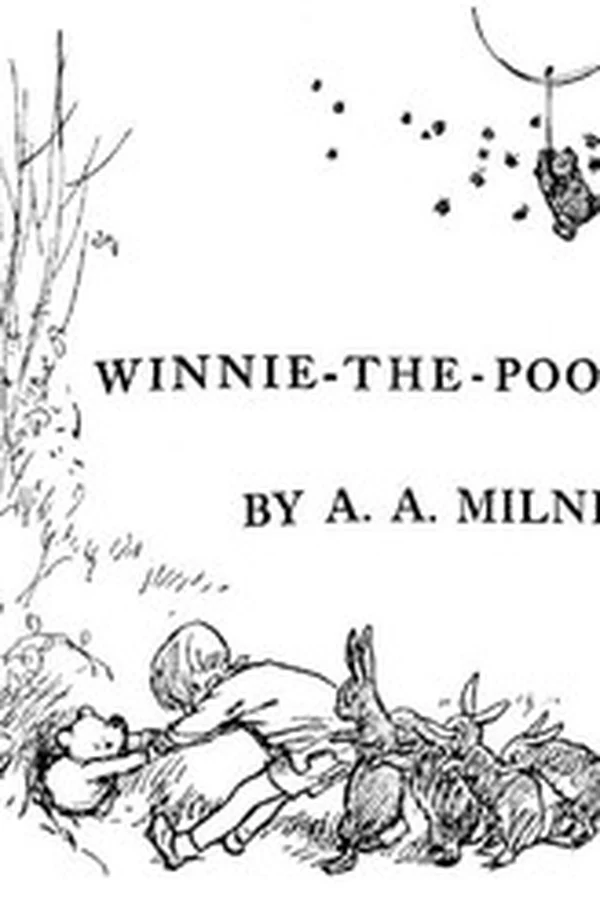
Winnie-the-Pooh
📖 Click to Read the Opening Pages Online Preview
Chapter I: In Which We Are Introduced to Winnie-the-Pooh and Some Bees
Here is Edward Bear, coming downstairs now, bump, bump, bump, on the back of his head, behind Christopher Robin. It is, as far as he knows, the only way of coming downstairs, but sometimes he feels that there really is another way, if only he could stop bumping for a moment and think of it. And then he feels that perhaps there isn’t. Anyhow, here he is at the bottom, and ready to be introduced to you. Winnie-the-Pooh.
When I first heard his name, I said, just as you are going to say, “But I thought he was a boy?”
“So did I,” said Christopher Robin.
The preview stops here; the bear is still at the bottom of the stairs. Take the whole book, all ten chapters from the honey tree to the party, with the button below.
Download Full EPUB1926
~21,000 words (estimated)
Approx. 1.2 hours
Winnie-the-Pooh
The Hundred Acre Wood, England
10 chapters
EPUB · AZW3 · KEPUB
4.80 MB (EPUB) · 4.87 MB (AZW3) · 4.82 MB (KEPUB)
Public domain in the United States
Project Gutenberg #67098
Winnie-the-Pooh is ten bedtime stories about a bear of very little brain and the friends who put up with him in a forest that is really a nursery floor. Pooh climbs an oak for honey and falls through the branches into a gorse bush, gets stuck in Rabbit’s front door after eating too much, hunts a Woozle that turns out to be himself, and frightens Piglet half to death by putting his head inside a honey jar. Around him Milne assembles a small society of animals with very human grievances: Eeyore, who loses his tail and then his birthday, Piglet, who is brave while being frightened, and Christopher Robin, who arranges the rescues.
The book is a comedy of manners played by toys, and its jokes are for the adult reading aloud as much as for the child listening: the spelling of a birthday greeting, the Very Deep Pit that catches nobody but Pooh, the Expotition to the North Pole that ends with a stick in the ground. Nothing in it is sentimental about childhood, and the tenth chapter says good-bye in a voice that children accept and adults find harder. See Wikipedia’s article on Winnie-the-Pooh for its publication history. The text is available via Project Gutenberg #67098.
Winnie-the-Pooh by A. A. Milne: Summary, Characters & Themes
This page is a summary and analysis of Winnie-the-Pooh, the 1926 book of ten stories that A. A. Milne made out of bedtime games with his son and that E. H. Shepard drew for. It is a better-made book than its reputation as a nursery fixture suggests. Each chapter is an errand (a tree, a hole, a trap, a birthday, a party) and each errand goes wrong in a way that reveals the animal who undertook it. The sentences are short, the comedy is dry, and the narrator talks to the child in the room, which is why the book survives its hundredth reading aloud better than most of the things written in its shadow. It is also, for a book built out of a father’s games, unusually well made: every chapter has a shape and every joke has a target.
The author is A. A. Milne, born in London in 1882. He had been writing for Punch for a decade before he wrote a line for children, and the animal society in this book runs on the same rules as an English household: property, visitors, meals at fixed hours, presents that must be acknowledged, and a great deal of wounded dignity. Eeyore is the neighbour who has decided that nothing is worth expecting. Rabbit is the one who keeps the pencil and draws up the plan. Owl is the one who uses long words where short ones would do. Piglet is the small one who is brave on purpose. Nobody is punished for being foolish, and nobody is improved by the end. The result is a book with no villain, no lesson and hardly a plot, and it is the better for all three.
This copy comes from the Canadian issue of the first edition, printed and bound in Toronto by McClelland & Stewart, whose copyright page lists five printings between October 1926 and March 1931 and names Ernest H. Shepard as illustrator. That provenance is worth knowing if you compare editions, because the wording here is the first-printing text, with the punctuation and the capitalised Nouns, Cunning Trap and Very Deep Pit and Expotition, that later house styles quietly regularised. Milne capitalises whenever an animal is being solemn, and the capitals are half the joke: they show a small creature taking himself entirely seriously, which is the tone the whole book runs on. The front matter lists Milne’s other books, verses, essays, a play and a mystery story, which is a reminder that the man who wrote this one thought of himself as a humorist first.
The form is unusual for a children’s book and is the reason it still reads well. Each chapter is framed as an adult telling a story to a boy, and the boy interrupts; the interruptions are printed in brackets, so the narrative keeps stopping to be discussed. Pooh is not a magical animal but a toy, and the forest is assembled out of a nursery and a corner of countryside. That double frame lets Milne put a joke for the parent beside a joke for the child in the same paragraph, and it lets the ending be about leaving rather than about adventure. Read the brackets carefully and you can hear the room. Milne never writes down to the boy, and never pretends that the toys are real; both the toy and the telling are part of the joke.
The text on this page follows the Project Gutenberg #67098 transcription of the 1926 book, which keeps all ten chapters and Milne’s titles, and nothing in the prose has been modernised or shortened. It runs to about 21,000 words, roughly 1.2 hours of reading, or a fortnight of bedtimes at a chapter a night. If you want company on the shelf afterwards there is The Wind in the Willows, published in 1908, whose animals have mortgages and motor-cars; The Secret Garden, from 1911, which is about a walled garden and a slow cure rather than a wood; and Alice’s Adventures in Wonderland, the 1865 book that made literary nonsense respectable and gave every later children’s writer a licence to be silly on purpose. All three are on this site in the same format, and any of them will fill the fortnight after Pooh.
Historical Context
Alan Alexander Milne was born in London in 1882, the son of a schoolmaster, and read mathematics at Cambridge before going into journalism. He edited the humorous magazine Punch in his twenties, wrote plays that ran in the West End, and served in the First World War, which he came out of a different and quieter man. When We Were Very Young, a book of verses for children, appeared in 1924 and sold far more copies than anything else he had written. Winnie-the-Pooh followed in 1926. Of all his work it was the least ambitious, and it is the only part of it most readers now know. By 1926 he was forty-four, a successful playwright with a wife and a small son, and the stories he told at bedtime were the least of his ambitions.
The introduction explains the names, and the explanation is a joke about the Zoo. The bear is Edward Bear; Pooh was the name of a swan that Christopher Robin had said good-bye to; Winnie came from a bear at the London Zoo that the boy was fond of, and Milne cheerfully admits that he cannot remember which name came from which. The stories themselves began as bedtime games, and the brackets that interrupt them, with Christopher Robin asking whether he was the bear falling out of the tree, keep a child’s voice inside the adult narration. That is the book’s whole method in miniature: a father telling a story, a son correcting it. Milne leaves the rest of the biography out too, and that is typical of the book: it prefers the joke to the fact.
Winnie-the-Pooh was reprinted five times between October 1926 and March 1931, which is what the copyright page of this copy records, and the Canadian issue was printed and bound in Toronto. Shepard’s drawings were part of the book from the start; he had illustrated When We Were Very Young and would go on drawing the animals for the rest of his long life. The prose has never been out of print, and the ten chapters are still the quarry that every adaptation works: the honey tree, the trap, the flood, the party, and a boy going upstairs to his bath. Five printings is a modest success by later standards and a remarkable one for a book of animal stories bought by adults as a present for children.
Key Characters & Literary Archetypes
- Winnie-the-Pooh: A bear of very little brain who lives under the name of Sanders and thinks best with his head between his paws. He is greedy, courteous and stubbornly literal: asked whether the bees will notice him hanging under a balloon, he answers that you never can tell with bees. He writes HUNNY on his jars to be sure of the contents, counts himself down from ten pots of honey to one, and builds a boat out of a jar. His dignity survives every humiliation the book arranges for him.
- Piglet: A Very Small Animal who lives under a beech tree behind a sign reading TRESPASSERS W. He is frightened of Heffalumps, of Kangas and of the dark, and he goes anyway, which is the whole point of him. He is also the one who thinks of a balloon for Eeyore’s birthday, and the one who asks the question that Rabbit’s plans never answer. When he says it is hard to be brave when you are only a Very Small Animal, nobody in the forest argues with him.
- Eeyore: The old grey donkey who stands in a thistly corner thinking Why? and Wherefore? and is quietly pleased when somebody arrives to interrupt the thinking. He loses his tail and does not notice, receives a pot and a burst balloon for his birthday, and makes a speech at a party he is certain is his own. Gloom is his profession and his defence at once. Milne gives him the best diction in the book and never lets him be merely pitiable.
- Rabbit: The organiser, and the nearest thing in the forest to a grown-up. He keeps the pencil, writes the plan, counts the pockets a suit would need for a family, and proposes stealing Baby Roo to be rid of the newcomers. He is fussy about visitors and never quite dishonest. His front door is too small, his larder is real, and his friends-and-relations fill the end of every procession. The book enjoys making him wrong, and it lets him be right about practical things.
- Owl: The resident intellectual, at The Chestnuts, a house grander than anybody else’s because it has both a knocker and a bell-pull. He can spell his own name WOL and goes to pieces over words like measles; he talks about the customary procedure, issues notices in his own private spelling, and tells the long story about an aunt and a seagull’s egg. He is consulted on everything and helpful about nothing, and he is wrong so politely that nobody minds.
- Christopher Robin: The boy who owns the forest and supplies its rules. He comes out with a gun and an umbrella to bring a bear down from a balloon, reads Sustaining Books to a Wedged Bear for a week, leads the Expotition, sails an umbrella under the name The Brain of Pooh, and gives the party at the end. He is also the child inside the brackets, interrupting the story to check whether he was in it. His line to Pooh, silly old Bear, said lovingly, is the tenderest thing in the book.
Core Literary Themes
- Friendship as work rather than feeling: The animals are not affectionate in speeches; they are affectionate in errands. Rabbit pulls, Christopher Robin reads aloud for a week, Pooh holds a pole across a stream so Roo can climb out, Eeyore hangs his tail over a pool as a rope. Milne never announces that they love one another. He shows a bear wedged in a doorway and a dozen people arriving with rope, and the reader supplies the feeling. That is why the ending, where everybody says good-bye politely and goes home, is sadder than any declaration could have been. The tenderest moments are all practical: somebody holding something steady while somebody else climbs.
- Small animals and the arithmetic of courage: Piglet is the moral centre because he is afraid. He considers a headache and then walks up to the trap anyway; he is terrified in Kanga’s pocket and still manages an Aha!; he waits in a house surrounded by water and writes a message to whoever might find it. It is hard to be brave, he says, when you are only a Very Small Animal. Milne does not cure him of the fear, and that is the argument about courage the book actually makes: it is a thing you do while frightened. He is the only character in the wood who is asked to be useful because he is small, and he takes the job.
- Melancholy, weather and Eeyore: Eeyore is the book’s comedy of depression and its weather report. He predicts rain, complains about thistles, and treats a burst balloon as evidence about the universe. The flood chapters run the same joke at larger scale, catastrophe as an inconvenience and rescue as a matter of somebody remembering a pole. Milne keeps the gloom funny by keeping it articulate: Eeyore is never too sad to find the precise word, and the precision is what makes him bearable company for six-year-olds and their parents alike. He is also the only one who never gets an answer to his complaint, which is part of the joke and part of the sadness.
- Nonsense, spelling and the comedy of language: The engine of the book is verbal. Owl writes a birthday greeting as HIPY PAPY BTHUTHDTH THUTHDA BTHUTHDY, Pooh labels a jar HUNNY, Rabbit’s entire plot depends on the word Aha!, and Christopher Robin corrects Expotition to Expedition because it has an x in it. Words are how these animals misunderstand each other and how they get along. Almost every joke is made of grammar or spelling, which is why it still works when it is read out loud for the twentieth time to somebody who has heard it nineteen times. Even the props are misspelt: a pot of honey is labelled HUNNY because that is how the bear spells it, not because the jar is a joke.
- The nursery floor as a world: The forest has a geography, but the book keeps reminding us that it is furniture: a house behind a green door, a hole in a sandy bank, a chestnut tree, a stream, a quantity of chairs. The frame is a father telling a story at bedtime, and the boy interrupts from inside the brackets. That double exposure, the toy and the child imagining it at once, is what allows the last chapter to be ruthless. Christopher Robin goes off to school and the bear goes upstairs, and the book does not pretend the wood will still be there. The toys do not know they are toys, the boy does, and the gap between the two is where the book lives.
Why Download Our Custom E-Reader Edition of Winnie-the-Pooh?
The comedy is written for the person doing the reading, not only the person being read to. Owl’s customary procedure, the notice on his door asking you to ring if an answer is required, Eeyore’s speech at a party he has decided is his own: these are jokes about language and self-importance that a five-year-old hears as noise and a parent hears as wit. That is the reason the book does not wear out at the tenth reading, and the reason it is still being read at the hundredth. Parents who have not read it since childhood are usually surprised by how much of it they can still hear.
It is also one of the few children’s books honest about the end of childhood. The last chapter hands out the presents, sends the boy to school, and closes with a bump, bump, bump on the stairs. Milne does not promise that the forest will be there next year, and he does not soften the good-bye. Children take it lightly, which is the joke, and adults do not, which is the point. It is also short enough that the sadness does not overstay, which is the hardest thing to manage in a book for children and the thing Milne does without apparent effort.
This edition gives you the complete text of the ten chapters in EPUB, AZW3 and KEPUB, with each chapter marked so that it opens where it should on any reader. The chapters are short enough for one a night, the paragraphs are short enough for a phone screen, and the punctuation and capitalised Nouns are the 1926 ones rather than a modernised retelling. Nothing has been abridged, and nothing has been explained. It opens at any chapter, keeps your place, and asks nothing of you except a voice to read it in. Buy it for a child, and read it yourself first.
- Project Gutenberg transcription, via Project Gutenberg #67098 — the public-domain text this edition is built from, complete and unabridged.
- Readable on any device EPUB, AZW3 and KEPUB files with real chapter marks, so each of the ten chapters opens where it should, on a phone or on an e-reader.
- The complete 1926 text ten chapters with Milne’s In Which titles, the punctuation of the first printing, and no abridgement anywhere in the book.
- Made for reading aloud short chapters, a narrator who stops for interruptions, and jokes that work at two ages in the same sentence.
- The Wind in the Willows — free EPUB, AZW3 & KEPUB
- The Secret Garden — free EPUB, AZW3 & KEPUB
- Alice’s Adventures in Wonderland — free EPUB, AZW3 & KEPUB
Chapter summaries
Winnie-the-Pooh has ten chapters, each a self-contained errand, and each titled the way Milne titled it: In Which. The summaries below follow the order of the book and say what happens in each, including the jokes that the adaptations tend to drop.
- I. In Which We Are Introduced to Winnie-the-Pooh and Some Bees, and the Stories Begin: We begin with a bear being dragged downstairs by the back of his head, and with the explanation of his name: this is Edward Bear, and Winnie-ther-Pooh is what Christopher Robin calls him. Pooh climbs an oak for honey, falls through the branches into a gorse bush, borrows a blue balloon, rolls in mud until he looks like a small black cloud, and hangs in the sky while Christopher Robin walks up and down below with an umbrella saying tut-tut, it looks like rain. The bees are not deceived.
- II. In Which Pooh Goes Visiting and Gets Into a Tight Place: Pooh calls on Rabbit, eats honey and condensed milk until the larder is bare, and then cannot get his back half out through the front door. Rabbit uses his back legs as a towel-horse; Christopher Robin prescribes a week of no meals and reads a Sustaining Book to the North end of the bear. At the end of the week the friends-and-relations pull in a long line, and Pooh comes out with a Pop like a cork, sending everybody head over heels into the bracken.
- III. In Which Pooh and Piglet Go Hunting and Nearly Catch a Woozle: Pooh tracks paw-marks around a spinney, Piglet joins him, and the marks multiply as their own earlier tracks cross; by the fourth circuit there are four animals and Piglet remembers a morning thing he has to do at home. Christopher Robin, watching from an oak, explains that Pooh has been following himself all along. I have been Foolish and Deluded, says Pooh, and I am a Bear of No Brain at All. Christopher Robin tells him he is the Best Bear in All the World, and the chapter ends at Luncheon Time.
- IV. In Which Eeyore Loses a Tail and Pooh Finds One: Eeyore stands in a thistly corner and cannot find his tail. Pooh sets out to find it, walks to the Hundred Acre Wood to consult Owl, and hears a lecture on the customary procedure, which turns out to involve issuing a Reward. On Owl’s door the bell-pull is the missing tail, and Pooh recognises it. He unhooks it, Christopher Robin nails it back on in its right place, and Eeyore frisks about the forest waving it so happily that Pooh has to hurry home for a sustaining snack.
- V. In Which Piglet Meets a Heffalump: Pooh decides to catch a Heffalump with a Cunning Trap and a Very Deep Pit baited with honey, most of which he eats on the way, and then puts his head in the jar to finish it and cannot get it out again. At six in the morning Piglet creeps up to the pit, sees a roaring shape with a jar for a head, and runs to Christopher Robin crying a Horrible Heffalump. Christopher Robin laughs until the jar smashes against a tree-root. Piglet goes home to bed with a headache and Pooh gets his head back.
- VI. In Which Eeyore Has a Birthday and Gets Two Presents: Pooh eats Eeyore’s birthday honey on the walk over and gives him the empty pot, relabelled by Owl with a birthday greeting in a spelling of Owl’s own devising. Piglet runs so fast to bring a balloon that he falls over and bursts it, and presents Eeyore with a small damp rag. Eeyore discovers that the rag fits inside the pot, and puts it in and takes it out again, happier than anybody else in the book. At home there is a cake with pink sugar icing and three candles waiting for him.
- VII. In Which Kanga and Baby Roo Come to the Forest, and Piglet Has a Bath: Rabbit objects to the new arrivals, who carry their families about in pockets, and draws up a plan to steal Baby Roo: Pooh will recite poetry about a tree while Rabbit seizes the baby. The plan half works, and Piglet ends up in Kanga’s pocket, carried home, scrubbed, dosed with medicine and renamed Henry Pootel by Christopher Robin, who refuses to recognise him. Kanga has guessed the joke and plays it out to the end. The chapter settles the newcomers with a timetable of Tuesdays.
- VIII. In Which Christopher Robin Leads an Expotition to the North Pole: Christopher Robin puts on his Big Boots and announces an Expotition, and Pooh repeats the word all day without ever getting it right. A line of animals sets off with Provisions, Eeyore complaining from the rear, Roo falling into the stream and being fished out with a pole that Pooh has just picked up. The pole turns out to be the North Pole. Christopher Robin ties a message to it, Roo is sent to bed, and Eeyore asks whether it rained, which it did not.
- IX. In Which Piglet Is Entirely Surrounded by Water: The rain does not stop and the water reaches Piglet’s window. He writes a message, puts it in a bottle and throws it out. Pooh, marooned on a branch with his pots of honey, catches the bottle, cannot read it, launches a honey jar called The Floating Bear and paddles to Christopher Robin. They come for Piglet in an umbrella, The Brain of Pooh, after Owl has nearly talked him to sleep and into the water. It is the book’s one real adventure and it is told almost entirely in jokes.
- X. In Which Christopher Robin Gives Pooh a Party, and We Say Good-bye: Christopher Robin gives a party for the bear who rescued Piglet, and Eeyore makes a speech claiming the party as his own, interrupted by Roo’s hiccups. The present is a pencil case with pencils marked B for Bear, HB for Helping Bear and BB for Brave Bear, a knife, an india-rubber, and a ruler with inches on it in case you want to know how many inches anything is. Pooh takes it home. Christopher Robin takes the bear up to his bath, and the book ends with the sound of a head on the stairs.
Winnie-the-Pooh: Frequently Asked Questions
How long does it take to read Winnie-the-Pooh?
What age is Winnie-the-Pooh for?
Is Tigger in Winnie-the-Pooh?
What are the most famous chapters?
Who is telling the stories?
Is Winnie-the-Pooh in the public domain?
Do the ten stories have to be read in order?
Where can I download Winnie-the-Pooh for free?
Part of: Children’s Classics · Classic Fiction