The Wind in the Willows by Kenneth Grahame: Free EPUB, AZW3 & KEPUB Download
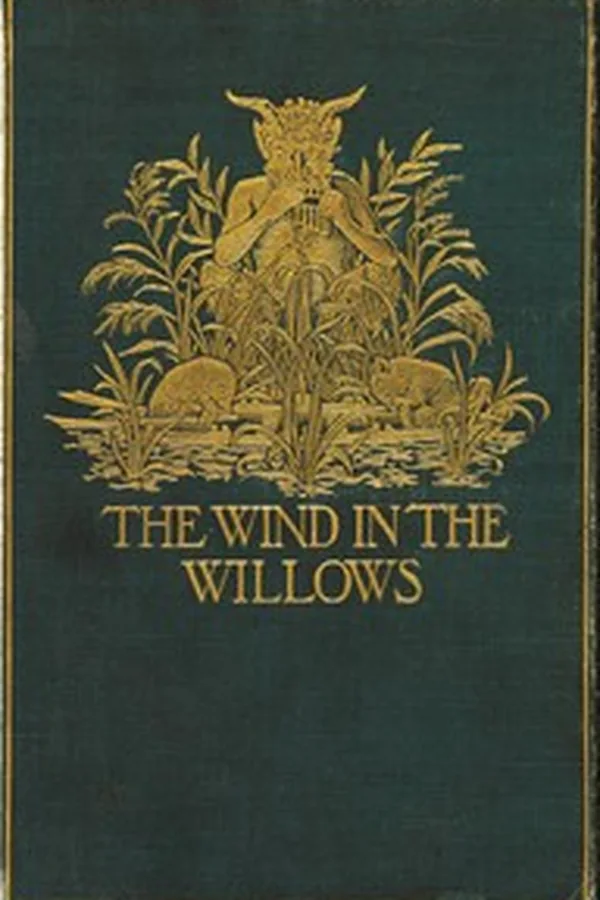
The Wind in the Willows
📖 Click to Read the Opening Pages Online Preview
Chapter I: The River Bank
The Mole had been working very hard all the morning, spring-cleaning his little home. First with brooms, then with dusters; then on ladders and steps and chairs, with a brush and a pail of whitewash; till he had dust in his throat and eyes, and splashes of whitewash all over his black fur, and an aching back and weary arms. Spring was moving in the air above and in the earth below and around him, penetrating even his dark and lowly little house with its spirit of divine discontent and longing. It was small wonder, then, that he suddenly flung down his brush on the floor, said “Bother!” and “O blow!” and also “Hang spring-cleaning!” and bolted out of the house without even waiting to put on his coat. Something up above was calling him imperiously, and he made for the steep little tunnel which answered in his case to the gravelled carriage-drive owned by animals whose residences are nearer to the sun and air. So he scraped and scratched and scrabbled and scrooged and then he scrooged again and scrabbled and scratched and scraped, working busily with his little paws and muttering to himself, “Up we go! Up we go!” till at last, pop! his snout came out into the sunlight, and he found himself rolling in the warm grass of a great meadow.
“This is fine!” he said to himself. “This is better than whitewashing!” The sunshine struck hot on his fur, soft breezes caressed his heated brow, and after the seclusion of the cellarage he had lived in so long the carol of happy birds fell on his dulled hearing almost like a shout. Jumping off all his four legs at once, in the joy of living and the delight of spring without its cleaning, he pursued his way across the meadow till he reached the hedge on the further side.
“Hold up!” said an elderly rabbit at the gap. “Sixpence for the privilege of passing by the private road!” He was bowled over in an instant by the impatient and contemptuous Mole, who trotted along the side of the hedge chaffing the other rabbits as they peeped hurriedly from their holes to see what the row was about. “Onion-sauce! Onion-sauce!” he remarked jeeringly, and was gone before they could think of a thoroughly satisfactory reply. Then they all started grumbling at each other. “How stupid you are! Why didn’t you tell him——” “Well, why didn’t you say——” “You might have reminded him——” and so on, in the usual way; but, of course, it was then much too late, as is always the case.
The opening of Chapter I is printed here exactly as it stands in the 1908 text. All twelve chapters, with Grahame’s own headings, are in the free EPUB, AZW3 and KEPUB below.
Download Full EPUB1908
~61,000 words (estimated)
Approx. 3.4 hours
Standalone
The River Bank, the Wild Wood and Toad Hall, England
12 chapters
EPUB · AZW3 · KEPUB
0.35 MB (EPUB) · 0.45 MB (AZW3) · 0.38 MB (KEPUB)
Public domain in the United States
Project Gutenberg #289
The Wind in the Willows is Kenneth Grahame’s 1908 novel about four animals who live along a river in southern England: Mole, who walks out of his spring-cleaning one morning and discovers the water; Rat, who rows, writes verse and keeps a tidy house; Badger, who dislikes society but commands it; and Toad, whose sudden passion for motor-cars ends in a courtroom, a prison cell and a fight for his ancestral home. What begins as a gentle river idyll turns into farce, then into something quieter and stranger about restlessness, home and the places we leave and come back to.
The book is short, twelve chapters and roughly 61,500 words, and its shape is a ring rather than a plot: six chapters of riverbank life, four of Toad’s escalating disasters, and two of recovery. Grahame writes in long, rhythmic sentences that sound better aloud than they look on the page, and he mixes knockabout comedy with passages of real awe. The full text is in the public domain, and The Wind in the Willows has never been out of print. The text is available via Project Gutenberg (eBook #289), first posted in July 1995.
The Wind in the Willows by Kenneth Grahame: Summary, Characters & Themes
Kenneth Grahame’s The Wind in the Willows, published in 1908, is usually filed as a children’s classic, and its first audience really was a child: Grahame told the earliest versions of the stories to his son Alastair, known in the family as Mouse, at their house by the Thames. This summary and analysis takes the book on its own terms rather than through its many adaptations. It is a riverbank comedy in twelve chapters, an anthology of digressions, and a quiet argument between two ways of living: Rat’s contentment with a known stretch of water, and Toad’s hunger for whatever is faster and louder. Grahame wrote it as a long-serving officer of the Bank of England who had published two books of childhood reminiscence, then fallen silent for a decade.
The novel began as bedtime stories and, in the account Grahame later gave, as letters to his son; it reached print with Methuen in October 1908, illustrated by W. Graham Robertson, and sold well even where reviewers were puzzled by the mixture of slapstick and mysticism. Grahame had retired from the Bank earlier that same year, and the book reads like the work of a man with time on his hands and a river at the end of the garden: the Thames near Cookham Dean, where the family spent their summers, supplies its geography almost exactly. The picnics, the backwaters and the long afternoons are holidays recollected in middle age, written by someone who knew how quickly such afternoons end.
Structurally the novel is loose, and deliberately so. The first three chapters establish the river and the Wild Wood; the fourth and fifth take Mole and Rat underground and then home again; the sixth introduces Toad’s catastrophe; the seventh interrupts everything for a vision of a horned god; and the last five chapters work through Toad’s imprisonment, his escape, the loss of Toad Hall and its recovery. Grahame had little interest in a tight plot, and the book’s early reviewers noticed the looseness. What holds the book together is voice and weather: the narrator who can make a picnic hilarious will stop for a page on wind in the reeds, and the shift never reads as a failure of tone.
The characters are drawn with a firm comic hand. Mole is the reader’s way in, a shy animal whose courage arrives in bursts; Rat is a practical host and a poet who needs the river in order to think; Badger is the book’s conscience, gruff, reclusive and absolutely reliable; and Toad is its engine, a vain, generous, unteachable showman who is also, at the end, genuinely ashamed of himself. Otter, the Sea Rat and the field-mice fill out the edges. None of them grows in a modern novelistic sense; they are fixed temperaments set in motion, and the comedy comes from watching the same four animals collide with the same four problems, season after season, in the same small neighbourhood.
The book’s afterlife has been unusually long. A. A. Milne adapted it for the stage as Toad of Toad Hall in 1929, E. H. Shepard drew a celebrated set of illustrations for a 1931 edition, and the novel has stayed in print ever since, in versions for children and for adults, and in both hardback and paperback. Readers who finish it often want the same mixture of comedy and river light: J. M. Barrie’s Peter and Wendy has a similarly dark undertow beneath its adventure, and L. Frank Baum’s The Wonderful Wizard of Oz shares its episodic, generous invention. The text used on this page is the Project Gutenberg transcription, first posted in 1995 and last updated in November 2024.
Historical Context
Grahame published The Wind in the Willows into an Edwardian Britain that was still, just, horse-drawn. The motor-car remained a rich enthusiast’s toy: the Motor Car Act of 1903 had set a national speed limit of twenty miles an hour and required drivers to register and carry licences, and a car was still noisy enough to scatter a picnic and glamorous enough to be worth stealing. The book registers that moment precisely. Toad’s mania is not simple vanity but a response to a genuinely exciting new machine, and the narrator’s disgust at the ‘Poop-poop’ is the disgust of a walker and a rower who has already chosen his side.
Grahame’s own life supplied most of the material. He was born in Edinburgh in 1859, was sent south to England as a boy, and went to work at the Bank of England at nineteen, rising to secretary in 1898. He married Elspeth Thomson in 1899, and their son Alastair was born in 1900. The family spent summers near Cookham Dean on the Thames, where Grahame rowed, walked and watched the river. He retired from the Bank in 1908, the year the novel appeared, and wrote almost nothing afterwards. The book’s famous idleness, its boats and picnics and long afternoons, is the holiday of a man with a desk job and a long commute.
The novel’s reception was warm but puzzled. Reviewers praised the river chapters and were baffled by the Piper; children, by most accounts, took to Toad at once. The First World War, six years after publication, made the book’s untroubled countryside look remote, and its later reputation was carried by stage and radio adaptations as much as by the text itself. Grahame’s last years were sad: his son died in 1920, and he himself died in 1932. By then the book had already begun the slow migration from the children’s shelf to national myth that has kept it in print for more than a century.
Key Characters & Literary Archetypes
- Mole: The first animal in the book and its point of view. He leaves his spring-cleaning with the line ‘Hang spring-cleaning!’ and discovers a world of boats, picnics and other animals; later he is the one who insists on visiting his own small house, and the one who panics in the Wild Wood. Grahame uses him as a measure of ordinary courage: shy, tidy, loyal and braver than he looks, the character who keeps the reader’s own timidity in view.
- The Water Rat: Ratty is the river’s resident poet and host: he rows, writes verse, keeps a neat house and states the book’s creed, that there is ‘nothing —absolute nothing—half so much worth doing as simply messing about in boats’. He is also the character most tempted by elsewhere, and in the Piper chapter he is the one who hears the call and has to be brought back to the bank. His contentment is real but not automatic; the river is a choice he keeps making.
- Mr. Badger: The book’s authority figure: old, gruff, reclusive and utterly dependable. He lives underground, dislikes society and invitations, and takes Toad in hand when the others cannot. He knows the secret tunnel under Toad Hall, plans the counter-attack, and delivers the novel’s moral judgments in the fewest possible words. Grahame gives him no vanity at all, which is exactly why the others obey him, and why his rare approval lands harder than any speech from Rat or Mole.
- Mr. Toad: Toad is the engine of the plot and the book’s most memorable creation: a rich, vain, enthusiastic squire who moves from caravans to motor-cars to prison to a stolen horse in a few chapters, and who is genuinely funny even at his worst. Grahame lets him be both absurd and sympathetic; his final, performed modesty at the banquet is the book’s last joke, and its gentlest one. The other three exist partly to react to him, and the novel’s energy rises whenever he is in the room.
- Otter: Otter is a cheerful, muscular river animal, at home in the water and fond of the bank’s company; his son Portly disappears in high summer and is found asleep between the hooves of the Piper. His presence keeps the riverbank from feeling like a private club: he is a neighbour rather than a member of the four, and his family life runs quietly alongside theirs. He also gives the book one of its few glimpses of the animals at home with children of their own.
- The Sea Rat: The Sea Rat arrives in the ninth chapter with stories of Constantinople, Venice and the Levant, and nearly persuades Rat to leave the river for a life of voyages. He is not a villain but a temptation: the book needs him to show that restlessness is not only Toad’s problem. His speech, ‘Take the Adventure, heed the call’, is the most seductive passage in the novel, and the one Grahame then quietly refutes, with a river, a supper and a friend who talks sense.
Core Literary Themes
- Home and the road: The book’s central pair of values. Mole’s return to his neglected house in ‘Dulce Domum’ is treated as a small epiphany, and the smell of home proves stronger than any adventure; yet the road, the river and the sea all pull at the same animals. Grahame refuses to choose between them: the point is not that home is better than travel, but that both are necessary and neither is enough on its own, which is why the ending restores Toad Hall without making Toad any less restless.
- Contentment and restlessness: Rat’s settled life and Toad’s mania are two answers to the same question about what to do with a day. Grahame treats Toad’s energy as comic but not contemptible, and Rat’s contentment as admirable but fragile; the Sea Rat and the migrating swallows show that the riverbank is a choice rather than a natural order. The happiest characters in the book are the ones who know when to stop, and the book is honest about how hard that knowledge is to hold on to.
- Friendship and correction: The four animals are friends in a specifically Edwardian sense: they interfere, lecture and take charge. Badger and Rat correct Toad repeatedly, and the correction reaches its climax in the ban on speeches and songs at the banquet. Grahame makes the discipline feel like affection rather than punishment, and Toad’s final compliance is the proof that the method worked, at least for one evening. The book’s ideal of friendship is not tolerance but the willingness to tell a friend what he is doing to himself.
- Class and manners: Toad is a squire with a hall, servants and a carriage; the stoats and weasels are poachers and squatters; the barge-woman is working class and, in the book’s terms, admirably unimpressed. Grahame’s comedy runs on the friction between Toad’s assumptions and everyone else’s, and the novel’s social world is more precise than its animal disguises suggest. The riverbank has a pecking order, and the joke is usually on the one who forgets it, whether that is Toad in a borrowed dress or a stoat in a stolen hall.
- Nature, panic and the sacred: The Wild Wood is genuinely frightening, and the Piper chapter is genuinely numinous: the animals see something they are not meant to see, and are then allowed to forget it. Grahame’s nature is not a pretty backdrop but a presence with moods of its own, and the book’s most memorable pages are the ones where the comedy stops and the reeds take over. The two registers are not in conflict: the panic in the wood makes the warmth of Badger’s kitchen feel earned, and the silence at dawn makes the laughter afterwards possible.
Why Download Our Custom E-Reader Edition of The Wind in the Willows?
The text here is the Project Gutenberg transcription of the 1908 novel, not a modern abridgement or a retelling. All twelve chapters are present, with Grahame’s chapter titles, his punctuation and his long sentences left alone; the only changes are the ones a digital edition has to make, such as paragraph spacing and a working table of contents. Nothing has been simplified for younger readers and nothing has been added, which matters in a book whose sentences are half its pleasure.
The EPUB, AZW3 and KEPUB files are generated from that same text and checked against it, so the chapter breaks, the poems and the songs fall where they do in the printed book. There is no registration, no email address and no paywall. The files are DRM-free and can be copied to any reader you own, including the one you already have, and they will still open in ten years on a device that has never heard of this website.
The edition is designed for reading rather than for showing off: a clean serif body, chapter headings that match the 1908 originals, and a table of contents that works on small screens. If you only want the bare text, the book is long out of copyright and can be read in a browser as well, but the e-reader files above are the version to keep on a device. Either way, you get the same twelve chapters, the same river and the same four animals.
- Project Gutenberg transcription, via Project Gutenberg #289. eBook #289 was first posted in July 1995 and last updated in November 2024, with the original 1908 chapter headings intact.
- All twelve chapters, unabridged Mole’s spring-cleaning, Toad’s trial, the Piper and the banquet, in the order Grahame published them, with nothing cut.
- EPUB, AZW3 and KEPUB, DRM-free Three formats in one download set, no account needed, and nothing to install beyond the reader you already use.
- Made for e-readers Chapter breaks, poems and songs kept where the printed book puts them, and a table of contents that actually navigates.
- Peter and Wendy — free EPUB, AZW3 & KEPUB
- The Wonderful Wizard of Oz — free EPUB, AZW3 & KEPUB
- The Jungle Book — free EPUB, AZW3 & KEPUB
Chapter summaries
The novel has twelve chapters. The first half is riverbank life and the Wild Wood; the second half belongs to Toad. The summaries below follow the order of the 1908 text, chapter by chapter.
- I. The River Bank: Mole abandons his spring-cleaning on impulse and scrambles up to the river bank, where the Water Rat introduces him to boats, picnics and the philosophy of ‘simply messing about in boats’. The two row downstream, meet Otter and, at dusk, the restless Toad, who is bored with his house and already planning something new. It is a chapter of pure introduction: no plot, only weather, food and the pleasure of company, and it sets the book’s governing contrast between Mole’s shyness and the river’s easy sociability, with the picnic basket as the chapter’s real protagonist.
- II. The Open Road: Toad has bought a bright new gypsy caravan and drags Mole and Rat off along the high road, where the narrator celebrates ‘The poetry of motion’ before a motor-car roars past and wrecks the caravan in the ditch. Toad is instantly transfixed, murmuring ‘Poop-poop!’, and by the end of the chapter has ordered a large and very expensive motor-car. The comedy is exact: the caravan was a toy, the car is a toy, and Toad’s enthusiasm is identical in both cases. Rat and Mole walk home, and Toad’s fate is sealed with a purchase.
- III. The Wild Wood: Mole slips away alone on a winter afternoon to find Badger and loses himself in the Wild Wood, where the pattering of little feet becomes ‘the Terror of the Wild Wood’. Rat finds him half-frozen in the hollow of a beech tree, and the two shelter in Badger’s underground house, where Badger reveals that he has been expecting them. The chapter is the book’s first turn into fear, and its rescue is deliberately unheroic: warmth, slippers, food and a gruff host. Grahame makes the wood genuinely dangerous and the kitchen genuinely safe.
- IV. Mr. Badger: Snowed in at Badger’s, Mole and Rat spend a comfortable morning in his underground kitchen while Badger delivers his verdict on Toad: ‘Toad’s hour’ must come, and he means to take the young squire in hand once the winter is over. The chapter is mostly talk, food and the pleasure of a warm room after a cold night, but it also gives the book its moral centre. Badger, who dislikes society and invitations, is the one animal everyone obeys, and his plan quietly turns the book from episodes toward the plot that will carry its second half.
- V. Dulce Domum: On the way back to the river, Mole smells his own neglected house and insists on visiting it; Rat grumbles, then helps him set Mole End to rights, and the field-mice arrive carol-singing at the door. The chapter’s title is Latin for ‘sweet home’, and its climax is not an adventure but a smell: the remembered scent of Mole’s own hallway, which no other home can replace. It is the quietest chapter in the book and the one that most readers remember, and it contains the novel’s clearest statement of what home is for, delivered without a single argument.
- VI. Mr. Toad: Badger, Rat and Mole descend on Toad Hall, put Toad under house arrest and set a watch on him, but Toad escapes, steals a motor-car, is caught and is tried. The magistrate’s Clerk adds twelve months for theft, three years for furious driving and fifteen years for cheek, observes that the figures ‘tot up to nineteen years’, and then suggests a round twenty to be on the safe side. Toad is led away in ruins, and the book’s comedy turns briefly cruel: the sentence is absurd, but the cell is real.
- VII. The Piper at the Gates of Dawn: In high summer Rat and Mole row upriver at dawn to look for Otter’s missing son Portly, and on the way they hear piping that they cannot resist following. They find the child asleep between the hooves of a horned figure, see him for a moment in the first light, and are then allowed to forget what they saw. The chapter is the book’s visionary centre, and its strangest claim is that mercy sometimes consists of being permitted to forget, so that the animals can go back to their picnic and their river without having to carry the vision home.
- VIII. Toad’s Adventures: Toad, in prison and refusing food, is rescued by the gaoler’s daughter, who is fond of animals and brings him a disguise: a washerwoman’s cotton dress and bonnet. Dressed as a laundress he walks out of the strongest prison in England, talks his way onto a train, and escapes when the engine is pursued, ending the chapter hiding in a hollow tree. It is the book’s purest farce, and Toad’s energy is entirely undiminished by captivity: he is still talking, still boasting, and still convinced that the world exists to admire him.
- IX. Wayfarers All: Restless in late summer, Rat falls in with a Sea Rat from Constantinople, who describes Venice, the Levant and a life of voyages until Rat is bewitched enough to think of leaving the river. Mole finds him packing, holds him back and talks him down, and the swallows gather for their own departure. The chapter is the book’s most seductive argument for elsewhere, and its answer, that the river is also a kind of voyage, is quietly made rather than preached. Rat’s restlessness matters because he is the character who seemed most settled, and the book treats it with sympathy.
- X. The Further Adventures of Toad: Penniless and still in disguise, Toad talks a barge-woman into giving him a lift, boasts about his washing until she throws him into the canal, steals her horse and sells it to a gipsy for six shillings and sixpence plus breakfast. Then he hails a motor-car, is recognised, crashes it into a horse-pond and is carried off by the river, where Rat hauls him out by the scruff of the neck. The chapter is relentless farce, and the best sustained comedy Grahame wrote, running on Toad’s inability to learn anything at all from experience.
- XI. “Like Summer Tempests Came His Tears”: Rat lectures the sodden Toad on what an awful ass he has been, and then delivers worse news: the stoats and weasels have taken Toad Hall. Toad is shot at by a ferret sentry, has a stone dropped through his boat, and is reduced to tears; Badger then reveals the family secret, an underground passage from the river bank to the butler’s pantry, and Mole disguises himself as a washerwoman to frighten the stoats. The counter-attack is planned for the Chief Weasel’s birthday banquet, and the chapter ends with a plan rather than a fight.
- XII. The Return of Ulysses: The four friends creep through the tunnel, burst out of the butler’s pantry and rout the weasels in the dining-hall with sticks; Mole then rounds up the stoat sentries, and Toad Hall is retaken. Toad writes invitations announcing a programme of speeches and songs, so Rat and Badger confiscate the cards and ban all speeches, and Toad sings his last little song alone in his bedroom. At the banquet he is ostentatiously modest, and the book ends with weasel mothers frightening their children with the Badger. It is restoration comedy, and it works because everyone knows what has been restored.
The Wind in the Willows: Frequently Asked Questions
Is The Wind in the Willows a children’s book or an adult’s book?
How long is The Wind in the Willows?
What is the book actually about?
Do the twelve chapters tell one continuous story?
What does ‘Dulce Domum’ mean?
Who is the Piper at the Gates of Dawn?
Is Toad a villain?
Where can I read the original text online?
Part of: Children’s classics · Classic fiction