The Wonderful Wizard of Oz by L. Frank Baum: Free EPUB, AZW3 & KEPUB Download
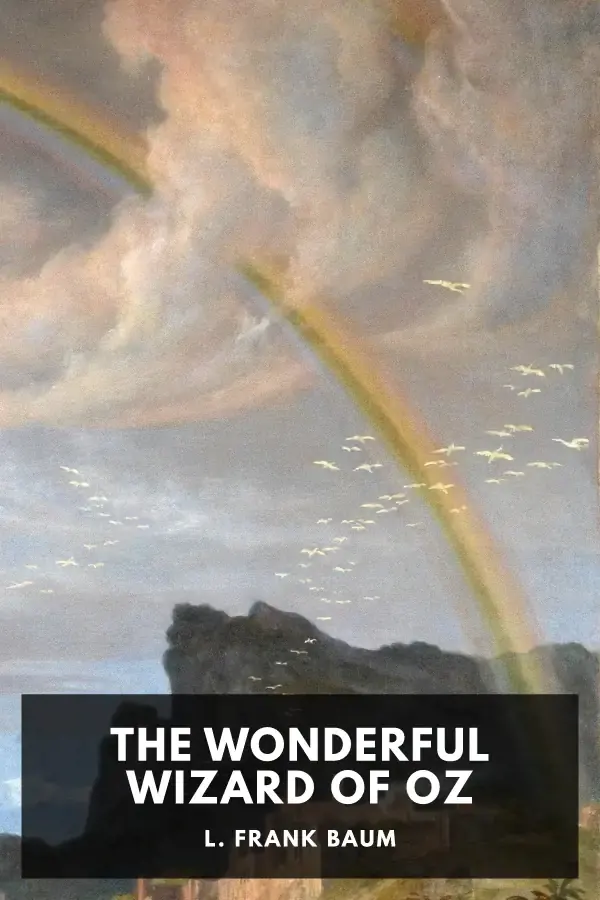
The Wonderful Wizard of Oz
📖 Click to Read the Opening Pages Online Preview
Read the opening of The Wonderful Wizard of Oz
Dorothy lived in the midst of the great Kansas prairies, with Uncle Henry, who was a farmer, and Aunt Em, who was the farmer’s wife. Their house was small, for the lumber to build it had to be carried by wagon many miles. There were four walls, a floor and a roof, which made one room; and this room contained a rusty looking cookstove, a cupboard for the dishes, a table, three or four chairs, and the beds. Uncle Henry and Aunt Em had a big bed in one corner, and Dorothy a little bed in another corner. There was no garret at all, and no cellar—except a small hole dug in the ground, called a cyclone cellar, where the family could go in case one of those great whirlwinds arose, mighty enough to crush any building in its path. It was reached by a trap door in the middle of the floor, from which a ladder led down into the small, dark hole.
When Dorothy stood in the doorway and looked around, she could see nothing but the great gray prairie on every side. Not a tree nor a house broke the broad sweep of flat country that reached to the edge of the sky in all directions. The sun had baked the plowed land into a gray mass, with little cracks running through it. Even the grass was not green, for the sun had burned the tops of the long blades until they were the same gray color to be seen everywhere. Once the house had been painted, but the sun blistered the paint and the rains washed it away, and now the house was as dull and gray as everything else.
When Aunt Em came there to live she was a young, pretty wife. The sun and wind had changed her, too. They had taken the sparkle from her eyes and left them a sober gray; they had taken the red from her cheeks and lips, and they were gray also. She was thin and gaunt, and never smiled now. When Dorothy, who was an orphan, first came to her, Aunt Em had been so startled by the child’s laughter that she would scream and press her hand upon her heart whenever Dorothy’s merry voice reached her ears; and she still looked at the little girl with wonder that she could find anything to laugh at.
The cyclone arrives within a page, and by the end of the first chapter the house, the girl and the dog are somewhere else entirely.
Download Full EPUB1900
~39,000 words (estimated)
Approx. 2.2 hours
The Oz books, book 1 of 14
Kansas and the four countries of Oz
24 chapters in 11 movements
EPUB · AZW3 · KEPUB
0.33 MB (EPUB) · 0.41 MB (AZW3) · 0.35 MB (KEPUB)
Public domain in the United States
Project Gutenberg #55
The Wonderful Wizard of Oz is L. Frank Baum’s first Oz book, published in Chicago in 1900 with pictures by W. W. Denslow. A cyclone lifts Dorothy’s farmhouse out of gray Kansas and sets it down on the Wicked Witch of the East, and the Munchkins send her along a yellow brick road to a wizard nobody has ever seen. She travels with a Scarecrow who wants brains, a Tin Woodman who wants a heart and a Lion who wants courage, and each of them is already using the quality he is asking for. Baum called the book a modernized fairy tale.
The book is funny about its own magic. The Emerald City is stagecraft, the Wizard is a ventriloquist with a paper head and a screen, and the climax is a bucket of water thrown in a temper. Nobody is punished for wanting what they want: the companions get tokens and are told to believe in them. The villain is dissolved by housework rather than defeated by a hero, and Dorothy’s reward is a return to the least magical place in the book, which the last line insists was home all along. See Wikipedia’s article on The Wonderful Wizard of Oz for its publication history. The text is available via Project Gutenberg #55.
The Wonderful Wizard of Oz by L. Frank Baum: Summary, Characters & Themes
This summary and analysis of The Wonderful Wizard of Oz follows all twenty-four chapters, from the gray farmhouse in Kansas to the click of a pair of silver heels. Baum published the book in Chicago in 1900 with illustrations by W. W. Denslow, and the two men designed it as an object: coloured paper for different sections, pictures printed beside the text, a cover that looked like a toy. The pictures matter to the reading, because Denslow drew the Scarecrow as a bundle of straw with a painted face and the Tin Woodman as a polished machine, and those images fixed the characters in the culture decades before the film existed. This page treats the novel as it was printed in 1900, not as it is remembered from the screen.
L. Frank Baum was forty-four when the book appeared, and he had already run a chain of failed shops, a newspaper in the Dakotas, a travelling theatre company and a best-selling Mother Goose before he wrote a novel for children. This was his first Oz book, and he tested it aloud on his own sons and on the children of the neighbourhood before it went to the printer. The Introduction he published with it is a small manifesto: the old fairy tales, he says, have been classed as historical, and what children want now is a modernized fairy tale in which the wonderment and joy are retained and the heartaches and nightmares are left out. He kept that promise through twenty-four chapters.
Plot in brief: the cyclone carries Dorothy and Toto into the Munchkin Country, where the house lands on the Wicked Witch of the East and the Good Witch of the North gives her the dead woman’s silver shoes. The road to the Emerald City collects three companions, each certain he lacks something: the Scarecrow wants brains, the Tin Woodman a heart, the Lion courage. Oz sets them a task, to kill the Wicked Witch of the West, and they manage it almost by accident, when Dorothy throws a bucket of water over her in a rage. On the way they cross a river on a raft, lose the Scarecrow on a pole, are rescued by a stork, and are carried out of a poppy field by thousands of field mice.
The wizard turns out to be the book’s real subject. When Toto knocks over a screen in the Throne Room, the terrifying Head, the lovely Lady, the Beast and the Ball of Fire are revealed as paper, costume and cotton, worked by a bald little man from Omaha who came to Oz in a balloon and has been improvising ever since. He is not destroyed for it. He gives the Scarecrow bran and pins, the Tin Woodman a silk heart, the Lion a green bottle of courage, and says what the book has been saying all along: they had these qualities before they asked. Baum’s fraud is exposed, forgiven and put to work, which is a stranger and more adult ending than any defeat would have been.
Readers who know only the 1939 film will find a different book: the shoes are silver, the Witch melts rather than dissolves, there is no Kansas frame and no songs, and whole countries never reached Hollywood, including the brittle china figurines, the Hammer-Heads who fire their own heads at intruders, and the Quadlings of the south. It is a short novel, near forty thousand words, and it reads aloud well, which is how it was first tested. The text used here is the Project Gutenberg transcription (#55), which follows Denslow’s first edition. Two natural neighbours on this shelf are Alice’s Adventures in Wonderland, another girl who argues with the world she falls into, and The Adventures of Tom Sawyer, the river town Baum grew up beside.
Historical Context
Baum wrote the book in Chicago in 1900, in the middle of a decade that invented the American children’s gift book. Publishers had begun printing colour plates and binding stories in cloth with pictures stamped on the cover, and the firm of George M. Hill spent heavily on Denslow’s illustrations and on a layout that changed the colour of the paper for different sections of the story. The first edition was an object to be handled as much as read, and it sold well enough that Baum could leave newspaper work and write full time. Within two years he had staged a musical version and was already planning the next Oz book.
The Introduction is a small polemic. Baum had grown up on Grimm and Andersen, and he thought the old tales had become museum pieces: full of ogres, punishments and moral lessons that modern schooling already supplied. His alternative was an American wonder tale with no moral attached, set in a country that had its own geography, its own farms and its own politics, and written in a plain prose a child could follow. The book is full of things the Grimms never had: a tin woodman, a hot-air balloon, a city of green glass and a wizard who turns out to be a salesman. That plainness is the style, not the absence of one.
The novel was a bestseller, and Baum followed it with thirteen more Oz books before his death in 1919, though he twice tried to stop and was persuaded back by his readers and his debts. The 1902 stage musical made the story a national entertainment, and the 1939 film made it a permanent one, at the cost of the silver shoes, which became ruby to show off Technicolor. The book itself has been in the public domain in the United States since 1956. What survives best is the tone: a fantasy that treats children as intelligent, has no moral to deliver, and never frightens them for the sake of a lesson.
Key Characters & Literary Archetypes
- Dorothy Gale: An orphan living with Aunt Em and Uncle Henry on a farm so gray that even the grass has lost its colour. She is polite, practical and entirely without awe: she scolds the Lion for frightening Toto, oils the Woodman, and tells the Wizard to his face that he is a humbug. Her one wish is to go home, and Baum never lets her trade it for a throne in a magic country. She is the calm centre the fantasy arranges itself around.
- The Scarecrow: Stuffed with straw and painted by a Munchkin farmer two days before Dorothy meets him, he believes he has no brains and is in fact the cleverest of the party: he plans the ditch crossing, chops the tree that drops the Kalidahs, and works out how to escape the Witch. His fear of a lighted match is the only thing that ever frightens him. At the end Oz fills his head with bran and pins, and he becomes ruler of the Emerald City, which he governs well.
- The Tin Woodman: A woodman named Nick Chopper who was enchanted piece by piece: his axe turned on him, a tinsmith replaced each lost limb, until nothing was left of the man but tin. He lost the girl he loved in the process and wants a heart so that he can feel again. He is the tenderest character in the book, weeping at a crushed beetle and rusting his own jaws, and he ends as ruler of the Winkies, which he takes as a great honour.
- The Cowardly Lion: A lion who charges the travellers, knocks the Scarecrow and the Woodman flat, and then confesses through tears that he is afraid of everything. Baum’s joke is that he behaves bravely in every crisis while insisting he is a coward, and the book never resolves the contradiction, because it does not need to: courage here is what you do while frightened. He kills the giant spider that terrorises the forest and is crowned king of the beasts before he goes home.
- The Wizard of Oz: A bald little man from Omaha who came to Oz in a balloon, was taken for a wizard, and has been performing ever since: a paper Head, a lovely Lady assembled from costume, a Beast of skins, a cotton Ball of Fire, and a voice thrown from behind a screen. He is a humbug and says so when Toto exposes him, but he is also the book’s most competent adult, and his gifts do real work. He leaves in his own balloon rather than face a difficult conversation.
- Glinda the Good: The Witch of the South, who rules the Quadlings from a castle of red and receives the travellers when every other road home has failed. She is beautiful, unhurried and slightly alarming in her calm: she asks for the Golden Cap before she will help, uses it to settle her three companions in new kingdoms, and then tells Dorothy the one fact nobody has mentioned in twenty-three chapters, that the silver shoes will carry her anywhere in three steps.
Core Literary Themes
- Home as the real destination: Dorothy spends twenty-four chapters trying to get back to a farm that Baum describes as gray, cracked and joyless, and the book insists the place is worth returning to precisely because it is ordinary. Oz offers her a throne, a wizard’s protection and a kingdom’s gratitude, and she refuses all of it. The ending is not a reward but a correction: the magic was never the point, and Kansas was never as dull as it looked from inside the cyclone. It is a children’s book making a quietly conservative argument about where happiness is kept.
- Self-worth and the gift: Every companion already has the quality he is asking for. The Scarecrow solves every problem while insisting he has no brains, the Woodman is the tenderest character in the book while mourning a heart he lost, and the Lion is brave in every crisis while calling himself a coward. Oz’s gifts of bran, silk and coloured water work because they let each of them believe something that was already true. Baum’s psychology is exact and uncondescending: confidence is a story you are given permission to tell about yourself.
- Appearance and authority: Green spectacles locked on at the gate, a Head made of paper, a Lady assembled from costume, a Ball of Fire that is cotton soaked in oil: Oz is an education in how institutions manufacture awe. The Emerald City is not a fraud exactly, since people are happy, the streets are clean and the ruler is kind, but its glory is stagecraft, and the book shows the machinery without becoming cynical about it. When the screen falls, the citizens do not riot; they keep the city and put a Scarecrow on the throne.
- Friendship as the only magic: Nothing in the plot is solved by a spell. The travellers get across the ditch because the Lion can jump, out of the river because a stork is kind, out of the poppies because field mice owe the Woodman a debt, and out of the Witch’s castle because they oil each other’s joints and sew each other back together. Glinda’s shoes are the single piece of real magic in the book, and they arrive at the very end, as a convenience. The novel’s ethic is domestic: help the person in front of you and the road opens.
- A modernized fairy tale: Baum’s Introduction sets the book against Grimm and Andersen: no ogres, no chopped toes, no moral tacked to the end, and the heartaches and nightmares left out. What replaces them is comedy, engineering and American optimism, in the shape of a tin man, a hot-air balloon, a city of green glass and a wizard who is a salesman. The wicked are defeated by accident and the good are rewarded with ordinary lives, which is a different kind of wish-fulfilment from the European tale. The result is a fantasy that trusts children with irony, and that is why adults still read it.
Why Download Our Custom E-Reader Edition of The Wonderful Wizard of Oz?
The Wonderful Wizard of Oz runs to about 39,000 words in twenty-four short chapters, which makes it one of the few nineteenth-century children’s classics that fits comfortably into a week of bedtime reading. This edition keeps every chapter heading as a real division of the file, so the table of contents on your device can find The Dainty China Country or The Queen of the Field Mice without scrolling, and the paragraphs are set as continuous prose rather than broken into the short lines some free texts use. Nothing has been cut, modernised or rewritten for younger readers.
The text follows the Project Gutenberg transcription of the 1900 first edition, the one in which the shoes are silver and the pictures were Denslow’s. That matters more than usual here, because the book has been reprinted so often in versions that quietly adopt the film’s ruby slippers, its Kansas frame and its invented characters. What you get is the novel as Baum and Denslow made it: the china country, the Hammer-Heads, the giant spider the Lion kills, and an ending that is quiet, domestic and a little sad. The dialogue is left as the printer set it.
Three formats are offered because readers differ and because children’s books get passed around. The EPUB suits phones, tablets and most e-readers and reflows if the type is raised for a young reader; the AZW3 is for Kindle devices and keeps the chapter marks in the device’s own contents list; the KEPUB is built for Kobo readers, which paginate and bookmark that container better. All three are DRM-free and unabridged, so they can be moved between the devices in a house and will still open when a shop closes. No account is needed to read them.
- Project Gutenberg transcription, via Project Gutenberg #55 — the complete text, unabridged, with the chapter headings the author set.
- Complete text, twenty-four chapters every chapter of the 1900 novel in Baum’s order, from the cyclone to the last line in Kansas, with nothing abridged or rewritten.
- Silver shoes, not ruby the first-edition detail the films changed, along with the china country, the Hammer-Heads and the giant spider the Lion kills.
- EPUB, AZW3 and KEPUB three DRM-free files in one download, the same book on a phone, a Kindle or a Kobo, with no account needed.
- Alice’s Adventures in Wonderland — free EPUB, AZW3 & KEPUB
- The Adventures of Tom Sawyer — free EPUB, AZW3 & KEPUB
- The Odyssey — free EPUB, AZW3 & KEPUB
Chapter summaries
The novel has twenty-four short chapters, and the summaries below gather them into eleven movements so that the road from the cyclone to the silver shoes can be followed without losing the thread. Chapters are named as Baum named them, and the order is the order of the 1900 text.
- Chapters I-II: The cyclone and the Munchkins: A cyclone lifts the Kansas farmhouse with Dorothy and Toto inside and sets it down on the Wicked Witch of the East. The Munchkins are small, dressed in blue and grateful. The Good Witch of the North gives Dorothy the dead witch’s silver shoes, kisses her forehead for protection, and points her down the yellow brick road toward the Wizard of the Emerald City.
- Chapters III-IV: The Scarecrow and the road: Wearing her clean gingham dress and carrying bread, Dorothy follows the yellow brick road into a cornfield, where a Scarecrow on a pole asks for brains. He was made two days earlier, hates being called a fool, and fears nothing except a lighted match. Together they walk through a country of ruined farms toward the city, talking about Kansas and about what a brain would feel like.
- Chapters V-VI: The Tin Woodman and the Lion: A groaning in the trees leads them to a tin man rusted solid; oiled back to life, he explains how an enchanted axe took him apart limb by limb until a tinsmith replaced him, and how he lost the girl he loved. He wants a heart. In the dark forest a Lion charges them, knocks two of them down, then weeps with fright and confesses that he is a coward.
- Chapters VII-VIII: Kalidahs, the river and the poppies: The road is cut by a wide ditch, and the Lion carries each traveller across. Bear-bodied Kalidahs follow, and the Scarecrow has the Woodman chop the tree they cross on, dropping both into the gorge. The party builds a raft, is swept downstream, and abandons the Scarecrow on a pole until a stork rescues him. Then a poppy field puts Dorothy and the Lion to sleep.
- Chapters IX-X: The field mice and the gate: The Tin Woodman saves a small gray mouse who turns out to be the Queen of the Field Mice, and thousands of her subjects drag the sleeping Lion out of the poppies on a wooden truck. At the Emerald City the Guardian of the Gates fits everyone, Toto included, with green spectacles locked on with a key, without which the city’s brightness would blind them.
- Chapters XI-XII: The Wizard and the Witch: Oz appears differently to each traveller, as a Head, a Lady, a Beast and a Ball of Fire, and sets them all the same task: kill the Wicked Witch of the West. She sends wolves, crows, bees and finally the Winged Monkeys, who wreck the Scarecrow and the Woodman and carry Dorothy and the Lion to her castle, where Dorothy is set to scrubbing floors.
- Chapters XIII-XIV: The rescue and the monkeys: Dorothy throws a bucket of water over the Witch in a temper and melts her, freeing the Winkies from years of slavery. Tinsmiths rebuild the Woodman, the Scarecrow is restuffed, and the party takes the Golden Cap. In a field of buttercups they learn from the mice that the cap commands the Winged Monkeys, who tell their own story and carry them back to the city.
- Chapters XV-XVI: The humbug and the gifts: Toto knocks over a screen and exposes a bald little man from Omaha who admits he is a humbug: the Head was paper, the Lady costume, the Fire cotton, and the voice came from behind a screen. He cannot send Dorothy home. He does fill the Scarecrow’s head with bran and pins, sew a silk heart into the Woodman, and give the Lion a bottle of courage.
- Chapters XVII-XVIII: The balloon and the south: Oz builds a balloon of green silk and plans to fly to Kansas with Dorothy, but Toto chases a kitten, the ropes part, and the balloon rises with the Wizard alone. The Scarecrow is left to rule. A soldier with green whiskers says Glinda of the South may help, so the four companions set out across open country with no road and no map.
- Chapters XIX-XXI: Trees, china and a spider: Fighting trees seize and throw the travellers until the Woodman chops the offending branch. Beyond a wall of china lies a country of brittle figurines, where a milkmaid’s cow has a cracked leg and a clown called Mr Joker has been mended in a hundred places. In a great forest the Lion kills a giant spider and is crowned king of the beasts.
- Chapters XXII-XXIV: The Hammer-Heads, Glinda and home: A steep hill is held by the Hammer-Heads, armless people who fire their own heads at intruders. The Winged Monkeys carry the party over to the red country of the Quadlings, where Glinda asks for the Golden Cap, settles the three companions in their kingdoms, and tells Dorothy that the silver shoes will carry her anywhere in three steps.
The Wonderful Wizard of Oz: Frequently Asked Questions
What is The Wonderful Wizard of Oz about?
Is it suitable for young children?
How does the book differ from the 1939 film?
Why does Baum call it a modernized fairy tale?
Who illustrated the first edition?
How long is it, and how long does it take to read?
Is the Wizard of Oz a villain?
Where can I read the full text?
Part of: Children’s classics · Adventure and sea stories