Alice’s Adventures in Wonderland by Lewis Carroll – Free Download (EPUB, AZW3, KEPUB)
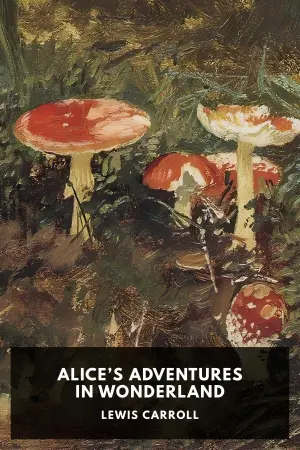
Alice’s Adventures in Wonderland
📖 Click to Read Chapter 1 Online Preview
Chapter I — Down the Rabbit-Hole
Alice was beginning to get very tired of sitting by her sister on the bank, and of having nothing to do: once or twice she had peeped into the book her sister was reading, but it had no pictures or conversations in it, “and what is the use of a book,” thought Alice “without pictures or conversations?”
So she was considering in her own mind (as well as she could, for the hot day made her feel very sleepy and stupid), whether the pleasure of making a daisy-chain would be worth the trouble of getting up and picking the daisies, when suddenly a White Rabbit with pink eyes ran close by her.
There was nothing so very remarkable in that; nor did Alice think it so very much out of the way to hear the Rabbit say to itself, “Oh dear! Oh dear! I shall be late!” (when she thought it over afterwards, it occurred to her that she ought to have wondered at this, but at the time it all seemed quite natural); but when the Rabbit actually took a watch out of its waistcoat-pocket, and looked at it, and then hurried on, Alice started to her feet, for it flashed across her mind that she had never before seen a rabbit with either a waistcoat-pocket, or a watch to take out of it, and burning with curiosity, she ran across the field after it, and fortunately was just in time to see it pop down a large rabbit-hole under the hedge.
Tumble down the rabbit-hole into Lewis Carroll’s whimsical dreamscape. Download the complete unabridged classic for your e-reader, including the Alice’s Adventures in Wonderland free epub.
Download Full EPUBEpic Journeys & Timeless English Classics
About Alice’s Adventures in Wonderland
First published in 1865, Alice’s Adventures in Wonderland by English author and Oxford mathematician Charles Lutwidge Dodgson—writing under the pen name Lewis Carroll—fundamentally transformed the landscape of world children’s literature. Conceived during a golden afternoon rowing expedition along the River Thames with the three young daughters of Dean Henry Liddell, the tale discarded the stern moralizing, pious didacticism, and utilitarian instruction that had characterized children’s books throughout the early 19th century. In their place, Carroll substituted unadulterated linguistic joy, boundless imaginative whimsy, and philosophical subversion.
For readers searching for a free Alice’s Adventures in Wonderland EPUB, this public domain (US) edition offers the complete unabridged text, DRM-free and ready for any e-reader. You can download the full EPUB, read the illustrated Alice in Wonderland ebook online, or keep a free Alice in Wonderland EPUB for offline reading on Kindle, Kobo, Apple Books, and Android devices.
The narrative follows young Alice, a curious, articulate Victorian girl who tumbles down an expansive rabbit-hole while chasing a waistcoat-wearing White Rabbit. She descends into Wonderland—an underground realm governed by irrational physical transformations, inverted linguistic paradigms, and arbitrary authoritarian rules. As Alice navigates through tears that become oceans, attends an unyielding perpetual tea-party with the Mad Hatter and March Hare, encounters the floating, enigmatic Cheshire Cat, and faces the capricious wrath of the Queen of Hearts, she relies on her pragmatic Victorian sense of decorum to question the surreal absurdity around her.
Beneath its playful veneer, the novel functions as an exquisite intellectual puzzle. As a logician and mathematical lecturer at Christ Church, Oxford, Carroll laced the narrative with intricate mathematical games, parodies of contemporary Victorian academic verse, and rigorous explorations of symbolic logic that continue to enchant literary scholars, philosophers, and mathematicians worldwide. This is why the book remains a staple of Victorian children’s literature, literary nonsense, and English classic fiction reading lists today.
Thematic & Philosophical Dimensions
Parody of Victorian Pedagogy and Morality
In mid-Victorian Britain, juvenile literature was primarily intended to instruct children in obedience, piety, and industriousness. Schoolchildren were forced to memorize moralistic poems, such as Isaac Watts’s Against Idleness and Mischief (“How doth the little busy bee…”). Carroll systematically parodies this compulsory didacticism. When Alice attempts to recite her schoolroom verses, her memory warps into nonsensical homages to reptilian laziness (“How doth the little crocodile improve his shining tail”). Wonderland exposes adult authority—embodied by tutors, monarchs, and parental figures—not as benevolent repositories of wisdom, but as erratic, self-indulgent, and fundamentally arbitrary.
The Tyranny of Language and Symbolic Logic
Wonderland operates under the premise that language is not merely a tool for communication, but an unstable, self-referential game. The creatures Alice encounters routinely take linguistic metaphors literally:
- The Mad Tea-Party: Time is personified as a real living being whom the Mad Hatter has quarreled with, causing clocks to freeze forever at six o’clock.
- The Mock Turtle’s Education: Traditional academic curricula are dismantled into phonetic puns (“Reeling and Writhing, of course, to begin with; and then the different branches of Arithmetic—Ambition, Distraction, Uglification, and Derision”).
- The Mouse’s Tale: Typeset visually in the undulating shape of an actual rodent’s tail in the online preview, bridging concrete poetry with linguistic signifiers.
The Anxiety of Growth and Physical Transformation
Throughout her descent, Alice repeatedly ingests mysterious potions and cakes that cause her physical stature to expand or contract violently. These bodily shifts serve as a poignant metaphor for the destabilizing physical and psychological transitions of human adolescence. Alice repeatedly suffers an existential crisis of identity, asking herself: “Who in the world am I? Ah, that’s the great puzzle!” Her final triumph occurs in the courtroom of the King and Queen of Hearts, where she reclaims her physical and mental sovereignty, dismissing the entire tyrannical regime with a cry of sovereign rationalism: “You’re nothing but a pack of cards!”
Key Characters
- Alice: A perceptive, polite, and scrupulously logical young Victorian girl. Her attempts to impose rational social etiquette upon the illogical populace of Wonderland form the novel’s core dynamic.
- The White Rabbit: The hurried, neurotic herald of the Queen of Hearts. Clad in gloves and a waistcoat, he embodies the frantic temporal anxieties and bureaucratic subservience of the Victorian middle class.
- The Cheshire Cat: An independent, enigmatic feline capable of vanishing at will, leaving only an indelible, mischievous grin. He serves as Wonderland’s detached philosopher, calmly observing that “we’re all mad here.”
- The Mad Hatter & The March Hare: Perpetually trapped in teatime due to their fractured relationship with Time, they engage Alice in circular, unanswerable riddles (“Why is a raven like a writing-desk?”).
- The Queen of Hearts: The volatile, tyrannical monarch of Wonderland. Ruling through sheer terror and instantaneous decrees of “Off with their heads!”, she embodies irrational institutional despotism untempered by judicial fairness.
Text based on a Standard Ebooks transcription from Project Gutenberg eBook #11. This work is in the public domain in the United States; users outside the US should check their local laws before using this ebook.
Digital Edition & Typography Notes
Because Alice’s Adventures in Wonderland relies heavily upon precise typographical formatting—such as the iconic tail poem and proportional text scalings—this release on editions.ink has been hand-crafted to meet the highest visual standards:
- Authoritative Text: Based on a Standard Ebooks transcription from Project Gutenberg, preserving Carroll’s punctuation, rhythmic italics, and capitalization conventions.
- Shaped Poetry in the Online Preview: The “Mouse’s Tale” is typeset as a shaped poem in the online preview on editions.ink, preserving Carroll’s original typographic intent. The embedded verses render cleanly across e-readers, smartphones, and high-resolution E-Ink screens.
- Open & Unencumbered: Provided completely DRM-free in standard EPUB, AZW3, and KEPUB formats for long-term archival preservation and immediate side-loading.
Text based on a Standard Ebooks transcription from Project Gutenberg eBook #11. This work is in the public domain in the United States; users outside the US should check their local laws before using this ebook.