The Canterbury Tales by Geoffrey Chaucer: Free EPUB, AZW3 & KEPUB Download
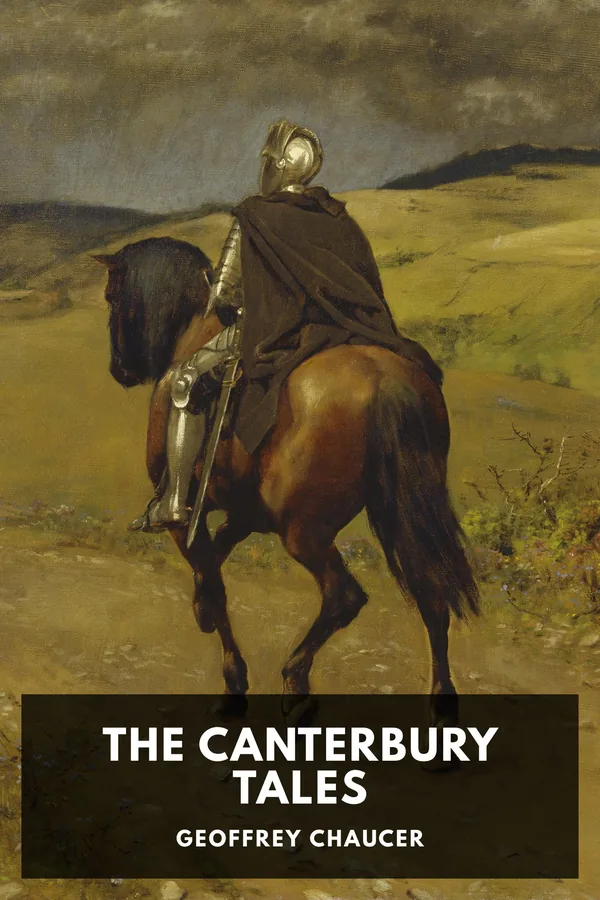
The Canterbury Tales
📖 Click to Read the Opening Pages Online Preview
The opening of the General Prologue
Befell that, in that season on a day, In Southwark at the Tabard8 as I lay, Ready to wenden on my pilgrimage To Canterbury with devout coráge, At night was come into that hostelry Well nine and twenty in a company Of sundry folk, by áventure y-fall In fellowship,9 and pilgrims were they all, That toward Canterbury wouldë ride. The chamber, and the stables werë wide, And well we weren eased at the best.10 And shortly, when the sunnë was to rest, So had I spoken with them every one, That I was of their fellowship anon, And madë forword11 early for to rise, To take our way there as I you devise.12
But natheless, while I have time and space, Ere that I farther in this talë pace, Me thinketh it accordant to reasón, To tell you allë the condition Of each of them, so as it seemed me, And which they weren, and of what degree; And eke in what array that they were in: And at a Knight then will I first begin.
A Knight there was, and that a worthy man, That from the timë that he first began To riden out, he loved chivalry, Truth and honoúr, freedom and courtesy. Full worthy was he in his Lordë’s war, And thereto had he ridden, no man farre,13 As well in Christendom as in Heatheness, And ever honour’d for his worthiness. At Alisandre14 he was when it was won. Full often time he had the board begun Above allë natións in Prusse.15 In Lettowe had he reysed,16 and in Russe, No Christian man so oft of his degree. In Grenade at the siege eke had he be Of Algesir,17 and ridden in Belmarie.18 At Leyës was he, and at Satalie, When they were won; and in the Greatë Sea19 At many a noble army had he be. At mortal battles had he been fifteen, And foughten for our faith at Tramissene.20 In listës thriës, and aye slain his foe. This ilkë21 worthy knight had been also Some timë with the lord of Palatie,22 Against another heathen in Turkie: And evermore he had a sovereign price.23 And though that he was worthy he was wise, And of his port as meek as is a maid. He never yet no villainy24 ne said In all his life, unto no manner wight. He was a very perfect gentle knight. But for to tellë you of his array, His horse was good, but yet he was not gay. Of fustian he weared a gipon, Allë besmotter’d with his habergeon,25 For he was late y-come from his voyáge, And wentë for to do his pilgrimage.
The preview stops after the first three paragraphs of the General Prologue, quoted from the Standard Ebooks text; the whole of the tales, fragments included, is in the free download below.
Download Full EPUBc. 1387–1400
~151,000 words (estimated)
Approx. 8.4 hours
Standalone
The road from Southwark to Canterbury, and the shrines of the saints.
Twenty-four tales in twelve groups
EPUB · AZW3 · KEPUB
1.12 MB (EPUB) · 2.11 MB (AZW3) · 1.42 MB (KEPUB)
Public domain in the United States
Standard Ebooks · Project Gutenberg #2383
The Canterbury Tales is a frame narrative in Middle English verse, begun about 1387 and still unfinished when Geoffrey Chaucer died in 1400. A company of pilgrims gathers at the Tabard Inn in Southwark for the road to the shrine of Thomas Becket at Canterbury, and their host turns the journey into a contest: each pilgrim tells two tales on the way out and two on the way home, and the best teller wins a supper at the others’ expense. Twenty-nine pilgrims are already in the company when the narrator joins it, and the tales that follow run from courtly romance to bawdy farce, from saint’s life to beast fable. Twenty-four tales survive, two of them unfinished. The road matters as much as the shrine: the tales are told in inns, in gardens and on the highway, and the company is still riding when the book stops.
The book is a portrait of late medieval England in the mouths of its people: a knight who has campaigned in Prussia and Turkey, a miller drunk on the ale of Southwark, a widow who has buried five husbands and is looking for a sixth, a pardoner selling relics out of a pillowcase. Chaucer gives each of them a voice and then lets the voices quarrel, so that the Miller answers the Knight and the Reeve answers the Miller. Chaucer’s own voice is part of the joke, since he apologises for the Miller, admires the Knight and is cut off by his own host. This page follows the order of the Standard Ebooks edition and keeps the fragments where the manuscripts leave them. Wikipedia’s article on The Canterbury Tales sets out the manuscripts and the disputed order of the tales. The text is available via Project Gutenberg #2383 and Standard Ebooks.
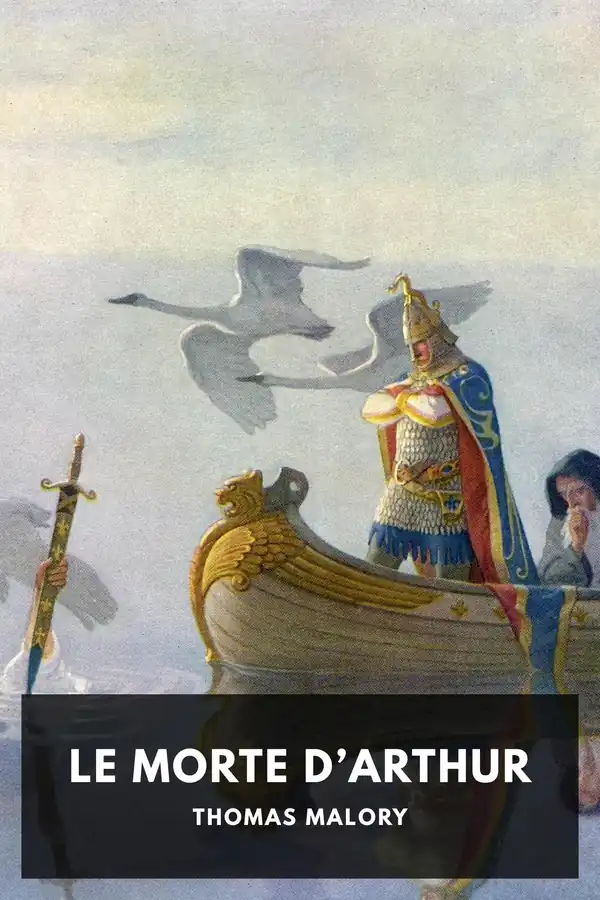
The Canterbury Tales by Geoffrey Chaucer: Summary, Characters & Themes
This page is a summary and analysis of The Canterbury Tales, the frame narrative that Geoffrey Chaucer left unfinished at his death in 1400. It follows the tales in the order the Standard Ebooks edition prints them, from the General Prologue at the Tabard Inn to the Parson’s prose sermon and the Retraction that closes the manuscript. Each tale is given its argument and its teller, together with the quarrel that links it to the tale before, because the links are half the book’s design. It also keeps an eye on the road, since the frame is what turns a collection of stories into a single journey. The page is written for readers meeting the poem for the first time, whether in Middle English or in a modern rendering, and for readers who want the shape of the whole before settling into the verse.
The frame is simple and elastic. Thirty riders, the narrator included, meet at an inn in Southwark on the eve of a pilgrimage, and their host, Harry Bailly, turns the journey into a story contest with a supper as the prize. Chaucer planned a hundred and twenty tales and left twenty-four, two of them fragments. Pilgrims fall out, the Host interrupts, and one tale breaks off in the middle of a line. The rules are read out like a contract, wine is fetched, and everyone swears to accept the Host’s judgment, which is why the interruptions carry the weight they do. The result is a book that keeps revising its own plan, which is why it can hold a knight’s tournament and a carpenter’s wooden tub in the same afternoon.
Chaucer took his stories where he found them: Boccaccio for the Knight and the Clerk, Ovid and Virgil for the classical matter, the French romances for the Squire and the Franklin, the saints’ legends for the Prioress and the Second Nun. The verse is the ten-syllable rhymed line that English poetry used for the next two centuries, with prose for the Parson’s sermon and for Chaucer’s own tale of Melibee. Most of the tales are in rhymed couplets, and the couplet is the reason the poem can be read fast and remembered afterwards. In this edition the spelling is normalized and the final e that the metre pronounces is marked with a diacritic, so the lines can be read aloud without looking up every word.
The poem survives in more than eighty manuscripts, none in Chaucer’s hand, and they disagree about the order of the tales; the two most influential arrangements are the Ellesmere and the Hengwrt. Printers settled the question early, and William Caxton’s edition of about 1476 made the book a national possession before the Reformation. Modern editions keep the fragments in the order the best manuscripts suggest, so disputes over the sequence remain disputes about placement rather than about the text itself. It has been in print, in one shape or another, since the first printers set it.
What has kept the book alive is not its plan but its voices, and the shelf around it is full of neighbours. Le Morte d’Arthur is the other great English work of the Middle Ages, printed by Caxton a few years later; Beowulf is the older English poem of monsters, hall-feasts and the road between them. The Divine Comedy is the poem Chaucer’s contemporaries would have named as the great one of their age. All three are free here, and the full text of this book is free at Project Gutenberg and at Standard Ebooks.
Historical Context
Chaucer was born in London around 1343, the son of a vintner, and spent his life in the service of the crown: page to the Countess of Ulster, soldier in France, where he was taken prisoner and ransomed, esquire of the royal household, controller of the customs on wool and hides at the port of London, and a diplomat sent to Genoa and Florence in 1372. He sat as knight of the shire for Kent in 1386, was clerk of the king’s works in 1389, and died on 25 October 1400, the first poet buried in Westminster Abbey. His wife Philippa served in the queen’s household, and the marriage tied him to a network of patrons at court.
The Tales were begun about 1387 and worked at for the rest of his life. The poem names itself in the Retraction at the end, where the author revokes his worldly writings, and it was already famous enough to be imitated within a few years of his death. Nothing fixes a date for any single tale, and the sequence in which they were written is unknown; the order in which they are read is an editorial arrangement, not an author’s decision. The Retraction lists his other works, which is the nearest thing we have to a bibliography from the poet’s own hand.
The world behind the book was anxious. The Peasants’ Revolt of 1381 had shown how quickly the lower orders could move; the Black Death had cut the population by a third a generation earlier; Wyclif’s followers were translating scripture and attacking the clergy; and from 1378 there were two popes. A pilgrimage to Canterbury was both a holiday and a work of piety, and the shrine of the archbishop murdered in 1170 was the busiest in England. Chaucer wrote in the London English that became the standard, at a moment when English was replacing French in the courts and the schools. Pilgrims travelled in companies for safety as much as for company, and the roads in April were crowded with them.
Key Characters & Literary Archetypes
- Geoffrey Chaucer, the narrator: He is a pilgrim among the others, wide-eyed, easily impressed and quick to apologise for the rudeness he reports. His own two tales, the parody romance of Sir Thopas and the long prose moral tale of Melibee, are a joke at his own expense, and the Host interrupts the first of them.
- Harry Bailly, the Host: Innkeeper of the Tabard in Southwark and master of ceremonies for the journey. He sets the rules, fixes the prize, judges the tales and rides at the head of the company. He is cheerful, overbearing and married, and he threatens any pilgrim who refuses to tell a tale with a ruinous bill. His humour runs to threats about that bill and complaints about his wife.
- The Knight: The first teller and the pattern of his order: he has fought in Prussia, Lithuania, Russia and Granada, and his armour is still rusted from the last campaign. His manners are as mild as a girl’s, and his tale of Theseus and the two Theban cousins sets the courtly standard that the churls then demolish. He is the one figure Chaucer describes without irony.
- The Wife of Bath: A cloth-maker from Bath, five times a widow at the church door and ready for a sixth. Her prologue is the longest and most personal speech in the book, an argument from scripture and experience for a wife’s sovereignty, and her tale turns that argument into a story about a knight and a loathly lady. Her voice is the loudest in the book and the funniest.
- The Miller: Robin, a miller from near Oxford, drunk on the ale of Southwark and determined to go before the Monk. His tale of a carpenter’s wife and a clever lodger answers the Knight with obscenity, and he sets the pattern for the churls’ tales that follow.
- The Pardoner: A seller of indulgences and relics from Ronceval, with a vernicle sewn on his cap and a bag of bones and rags for holy things. He preaches against avarice with total conviction and practises it without shame, and his tale of the three rioters is the tightest story in the book. His voice is the most confident in the whole collection.
Core Literary Themes
- Storytelling as a contest: The game at the Tabard gives the book its shape and its comedy. A supper is at stake, the Host is judge, and the pilgrims answer one another: the Miller interrupts the Knight, the Reeve takes revenge on the Miller, the Friar and the Summoner trade insults for two tales. Chaucer shows the making of a book as a social occasion, with bad manners, bad losers and a narrator who keeps apologising. The contest also gives the tales a deadline, which is why so few of them are allowed to run long.
- Marriage and mastery: No subject occupies the poem more. The Wife of Bath demands sovereignty, the Clerk offers patience and Griselda, the Merchant offers a wife from hell, the Franklin offers a marriage of free consent, and the Shipman offers a wife who settles her debts in bed. The tales do not agree, and the argument between them is the point. Even the Parson, who preaches against the world, assumes marriage as the ordinary state of a household.
- The three estates and their satire: Medieval theory sorted society into those who fight, those who pray and those who work. Chaucer takes one figure from each order and lets the type collapse into a person: the Knight is genuinely noble, while the Monk hunts, the Friar hears confessions for money, the Pardoner sells forgiveness and the Miller steals corn. The satire works by detail rather than by sermon. The Reeve and the Manciple are the estate administrators, and they are as crooked as the lords they serve.
- Death, penance and the last things: The pilgrimage is a figure for the life of the soul, and the tales keep returning to judgment. The Pardoner preaches death as a thief, the Physician tells of a father who beheads his daughter to save her honour, the Monk lists the falls of the great, and the Parson closes with a prose treatise on penitence. The Retraction that follows turns the whole book into a question about its author’s soul. The pilgrimage is itself a penance, and the shrine at the end of the road is a reminder of how short the road is.
- Fortune and the wheel: The Knight’s Tale turns on a fury sent at Saturn’s request, the Monk’s tragedies are a catalogue of men thrown down from the top of Fortune’s wheel, and the Nun’s Priest makes the same wheel turn for a rooster. Chaucer’s world is one in which the great are not safe and the lowly are not safe either, and the only stable thing is the telling of stories about it. Comedy and tragedy turn on the same wheel, which is why the Nun’s Priest can end with a moral and a laugh at once.
Why Download Our Custom E-Reader Edition of The Canterbury Tales?
Because the poem is long, uneven and full of quarrels, a guide helps before the first line. The chapter section below gives each tale its argument in the order of the text, with the answering tales set against one another, so that the design is visible before the reader is lost in a single tale. Each entry names its teller, and the links record who is answering whom.
The guide is also a map of the company: who these people are, what they do for a living and which of them are quarrelling with which. Six characters and five themes are treated at length, and the eight questions at the end take up what readers ask first, including where to begin and why the book stops in the middle of things. The notes need no degree in philology, and the prose is plain on purpose.
Nothing here replaces the tales themselves, which are the reason for the page. Read beside them, the summaries keep the road clear, and the full text, every tale and fragment, is free to download from Project Gutenberg and from Standard Ebooks. The download is a single file, and it opens on any reader, phone or tablet.
- Based on the Standard Ebooks Edition, via Standard Ebooks prepared this text from the Project Gutenberg transcription and proofread it for consistent spelling and punctuation. The edition keeps the whole corpus, verse and prose, with a working table of contents.
- Complete and unabridged About 151,000 words: the General Prologue, twenty-four tales, the links between them and the Retraction, with nothing cut and no modernized spelling beyond the edition’s own conventions. What is on the page is the text itself, not a condensation of it.
- Three formats, no account EPUB for most readers, AZW3 for Kindle and KEPUB for Kobo. All free, all DRM-free, all downloadable without a sign-up and readable offline on any device.
- A guide built around the frame Twelve chapter groups in the order of the tales, each with its plot and its link to the tale before, plus six character notes, five themes, eight questions and the historical setting of the last years of the fourteenth century. The guide is a reader’s companion, not a substitute for the text.
- The Divine Comedy — free EPUB, AZW3 & KEPUB
- Le Morte d’Arthur — free EPUB, AZW3 & KEPUB
- Beowulf — free EPUB, AZW3 & KEPUB
Chapter summaries
The plan the Host sets out at the Tabard is a hundred and twenty tales, two from each pilgrim going and two returning. Chaucer finished twenty-four, so what survives is a series of fragments, and the sequence below is the familiar one of the complete editions: the General Prologue, the Knight, then the answering tales, the fragments where the manuscripts leave them, and the Parson’s sermon with the Retraction after it.
- The General Prologue at the Tabard: April, and the birds sing and the pilgrims ride. In Southwark, at the Tabard inn, the narrator falls in with twenty-nine others bound for Canterbury: a knight, his son, a prioress, a monk, a friar, a merchant, a clerk, a lawyer, a franklin, five guildsmen, a cook, a shipman, a physician, the Wife of Bath, a parson and his brother the plowman, a miller, a manciple, a reeve, a summoner and a pardoner. The Host proposes the contest, the wine is fetched, the oath is sworn, and the cut goes to the Knight. The portraits come first, and the Host’s proposal closes the prologue and starts the game.
- The Knight’s Tale and the Miller’s answer: Theseus, duke of Athens, brings home Hippolyta and her sister Emily. Two Theban cousins, Palamon and Arcite, are taken prisoner and both love Emily from their cell; Arcite is freed and exiled, returns in disguise, and the rivals meet in a grove. Theseus stages a tournament, Arcite wins and is thrown by his horse, and Palamon marries Emily after his friend’s death. The Miller, drunk, insists on answering at once with the carpenter of Oxford, his young wife and a lodger who sells him a flood. Absolon’s kiss and the hot coulter from the forge follow.
- The Reeve, the Cook and the Man of Law: Oswald the Reeve, a carpenter by trade, takes the Miller’s tale as an insult and tells of Symkyn the miller of Trumpington, robbed of his stolen corn and beaten in his own bed by two Cambridge clerks. The Cook’s tale of Perkin Revellour, a London apprentice, breaks off after a few hundred words and was never finished. The Man of Law then fills the time with Constance, the emperor’s daughter, set adrift in a rudderless boat and carried from Syria to Northumberland and back to Rome. His prologue dates the day at 28 April, ten o’clock.
- The Wife of Bath: Her prologue is a life: five husbands at the church door since she was twelve, three old and rich, two young and hard, and a fifth, Jankin, who read her the book of wicked wives until she tore three pages out and he knocked her to the floor. She speaks for marriage, for experience against authority, and for a wife’s sovereignty. Her tale gives that argument a body: a knight of Arthur’s court must answer what women most desire, and an old woman trades the answer for his hand, then offers him the choice of a fair wife by day or night. He leaves the choice to her, and she becomes both at once.
- The Friar and the Summoner: The Friar answers the Wife with a story about a summoner, and the Summoner answers him with a story about a friar. In the Friar’s tale a summoner meets a yeoman in green on the road who turns out to be a fiend, and the two compare notes until a widow’s curse carries the summoner off. The Summoner’s friar, preaching in Holderness, wheedles a sick man for a gift, and the gift he gets must be divided among twelve friars; a lord’s squire solves the arithmetic with a cartwheel.
- The Clerk and the Merchant: The Clerk of Oxford tells the tale he learned at Padua from Petrarch: Walter, marquis of Saluzzo, marries the poor Griselda and tests her patience by taking her children and pretending to take a new wife, and she obeys to the end. The Merchant, two months married and wretched, replies with January of Pavia, sixty years old, who takes the young May and is blinded by age, while his squire Damian and his wife meet in his garden and in a pear tree, with Pluto and Proserpina looking on.
- The Squire and the Franklin: The Squire begins a romance of Cambuscan, king of Tartary, and the gifts brought to his feast at Sarra: a brass horse, a mirror, a ring and a sword. Canacee, who can understand birds with the ring, hears a falcon’s lament for a faithless mate, and there the tale stops, unfinished. The Franklin answers with Arveragus and Dorigen in Brittany, a wife who sets her suitor an impossible task, a clerk of Orleans who makes the rocks vanish, and a promise kept at the cost of everything but honour.
- The Physician and the Pardoner: The Physician tells how Appius, governor of Rome, covets the maiden Virginia, and how her father Virginius chooses to behead her rather than see her dishonoured; the tale ends with the villain’s fall. The Pardoner then preaches his favourite sermon, on money as the root of evil: three rioters set out to kill Death, find gold under an oak, and kill one another for it. He follows it with an offer of his relics, and the Host’s reply nearly ends the pilgrimage in a fight.
- The Shipman, the Prioress and Chaucer’s own tales: The Shipman tells of a merchant of Saint-Denis, his wife and a monk called Dan John, and of a hundred francs that change hands twice. The Prioress tells of a little schoolboy in a city of Asia who sings to the Virgin as he walks through the Jewry and is murdered for it, and whose body keeps singing until the abbot blesses it. Chaucer himself begins a parody of tail-rhyme romance, Sir Thopas, and is stopped by the Host, who asks for prose instead.
- The Monk and the Nun’s Priest: The Monk offers a series of tragedies, the falls of the great from Lucifer and Adam through Samson and Hercules to Caesar and Croesus, all of them thrown down from Fortune’s wheel, and he is cut short for being dull. The Nun’s Priest takes the same wheel and turns it for a rooster: Chanticleer dreams of a beast in the yard, ignores his wife’s advice about dreams, is flattered into crowing by the fox Dan Russel, and escapes by flattering him back. The tale ends with a warning against flattery and against taking counsel from a wife who means well.
- The Second Nun and the Canon’s Yeoman: The Second Nun tells the life of Cecilia, a Roman virgin who converts her husband Valerian and his brother, is denounced by the prefect Almachius, survives the bath of boiling water, and preaches for three days after the sword has struck her neck. Two alchemists, a canon and his yeoman, then overtake the pilgrims at Boughton under Blee, and the yeoman describes the trade of making silver out of nothing until his master rides away in shame.
- The Manciple, the Parson and the Retraction: The Manciple tells how Phoebus kept a white crow that could speak, how the bird told him of his wife’s betrayal, how he killed her and cursed the crow black, and how the moral is to hold one’s tongue. The Parson then gives a prose sermon on penitence, the seven deadly sins and the remedy for each, and Chaucer closes with a Retraction in which he revokes his worldly writings, including this book, and asks to be remembered for his translation of Boethius and the lives of the saints. The manuscript stops there, and the pilgrimage never reaches Canterbury.
The Canterbury Tales: Frequently Asked Questions
What are The Canterbury Tales about?
How many tales are there, and is the poem finished?
When were the tales written?
What is Middle English, and can I read it?
Do I have to read the tales in order?
Who was Harry Bailly?
Why does the book end with a Retraction?
Where can I download the free EPUB, AZW3 and KEPUB?
Part of: Classic Fiction · Geoffrey Chaucer