Pygmalion by George Bernard Shaw: Free EPUB, AZW3 & KEPUB Download
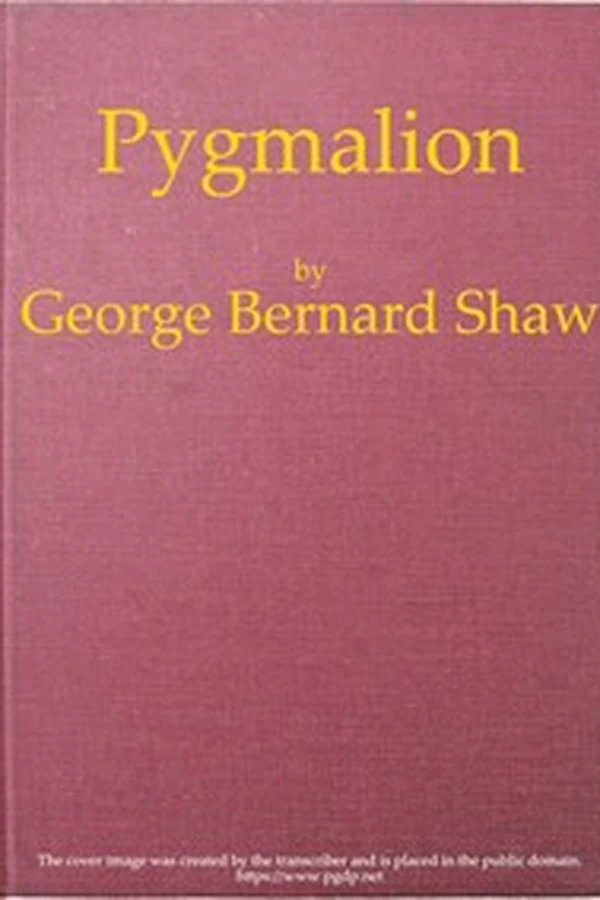
Pygmalion
📖 Click to Read the Opening Pages Online Preview
The play opens
Covent Garden at 11.15 p.m. Torrents of heavy summer rain. Cab whistles blowing frantically in all directions. Pedestrians running for shelter into the market and under the portico of St. Paul’s Church, where there are already several people, among them a lady and her daughter in evening dress. They are all peering out gloomily at the rain, except one man with his back turned to the rest, who seems wholly preoccupied with a notebook in which he is writing busily.
The church clock strikes the first quarter.
THE DAUGHTER [in the space between the central pillars, close to the one on her left] I’m getting chilled to the bone. What can Freddy be doing all this time? He’s been gone twenty minutes.
The excerpt stops a few lines into Act I, before Freddy comes back soaked and the flower girl is knocked into the mud. The rest of the play, Shaw’s Preface and the sequel continue in the free EPUB below.
Download Full EPUB1913
~37,000 words (estimated)
Approx. 2.0 hours
Standalone
London, 1912
Acts
EPUB · AZW3 · KEPUB
0.3 MB (EPUB) · 0.4 MB (AZW3) · 0.3 MB (KEPUB)
Public domain in the United States
Project Gutenberg
Pygmalion is George Bernard Shaw’s comedy of a wager made under the portico of St Paul’s Church: Henry Higgins, a professor of phonetics, bets Colonel Pickering that within six months he can pass a Covent Garden flower girl, Eliza Doolittle, off as a duchess. He takes her into his Wimpole Street laboratory, drills her vowels, feeds her chocolate, and presents her first at his mother’s at-home day and then at an ambassador’s garden party. The bet is won. The rest of the play asks what a made lady is good for, and who is expected to keep her.
It was first performed in Vienna in 1913 and published in London in 1916; the London run of 1914 turned “Not bloody likely” into a scandal and then a catchphrase. Shaw’s subject is speech and class: accent as a passport, and the thoughtlessness of people who improve other people for sport. has stayed in production ever since, through the 1938 film and the musical My Fair Lady. This page offers the complete play as a free epub, with act summaries and analysis below. See Wikipedia’s article on Pygmalion for its publication history. The text is available via Project Gutenberg #3825.
Pygmalion by George Bernard Shaw: Summary, Characters & Themes
Pygmalion is a summary and analysis of George Bernard Shaw’s play, first performed in Vienna in October 1913 and published in London in 1916 with a preface and a prose sequel. Shaw came to the theatre late, after years as a music critic, a drama critic and a socialist orator, and the play keeps the habits of all three trades: it argues, it heckles, and it refuses to let an audience settle. Its target is a habit of mind rather than a villain — the English belief that accent is character, and that a person who drops an aitch has dropped something moral too.
The author is George Bernard Shaw, and the text of Pygmalion itself has a long critical history. The author is George Bernard Shaw, and the text of Pygmalion itself has a long critical history. The author is George Bernard Shaw, and the text of Pygmalion itself has a long critical history. The author is George Bernard Shaw, and the text of Pygmalion itself has a long critical history. The author is George Bernard Shaw, and the text of Pygmalion itself has a long critical history. Act I sets the wager in a rainstorm outside Covent Garden. A flower girl, Eliza Doolittle, has her violets knocked into the mud; a note-taking stranger turns out to be able to place every speaker in the crowd by accent alone, down to the street. Higgins and Pickering meet by accident, discover a shared interest in phonetics, and fall into the famous boast: “in three months I could pass that girl off as a duchess at an ambassador’s garden party”. Act II takes Eliza to Wimpole Street, where she asks for lessons, the bet is made, and her father, a dustman, talks his way into five pounds.
Act III is the first test. Higgins takes Eliza to his mother’s flat on her at-home day, where the guests include the family from the portico, and tells her to talk only about the weather and her health. She does, in a parody of drawing-room English, until the story of the aunt who was “done in” for her straw hat escapes her, and the exit line, “Walk! Not bloody likely,” empties the room. Act IV is the aftermath: the party is over, the two men congratulate each other, and Eliza, in hired diamonds, asks what is to become of her now that she is fit for nothing else.
Shaw would not leave the question open. The published text adds a prose sequel, “What Happened Afterwards”, in which Eliza marries Freddy Eynsford Hill and opens a flower shop in a railway arcade, while Higgins stays single, fond and impossible. Shaw insisted that she does not marry her teacher, and said so again when the play was filmed in 1938; the musical that became My Fair Lady gave audiences the marriage he had refused them, which is why the last page of the sequel still reads like an argument with a theatre.
George Bernard Shaw was born in Dublin in 1856 and died at Ayot St Lawrence in 1950; he won the Nobel Prize in 1925 and gave the money away. Pygmalion, first staged in 1913, is his most performed play and among his least typical: almost no plot, no platform speeches, and a heroine who does the arguing. For his life and the rest of his work, see George Bernard Shaw. The full text is available from Project Gutenberg #3825. A related shelf on this site is a dolls house free epub. A related shelf on this site is the importance of being earnest free epub. A related shelf on this site is romeo and juliet free epub.
Historical Context
Shaw learned phonetics from Henry Sweet, the Oxford scholar generally taken as the model for Higgins, and the Preface says as much. Sweet had helped to shape the alphabet of the International Phonetic Association and could place a speaker by his vowels, but he was a poor populariser and a worse colleague. In 1913 the science was still a novelty to theatre audiences, and elocution was a thriving trade: an accent could be bought, and was bought, by anyone with the money for lessons.
The London of the play is a city of accents. Covent Garden market was still a working flower market, and the costermongers and flower sellers of Lisson Grove and Drury Lane were a short walk from the drawing rooms of Chelsea. What Shaw calls the “undeserving poor” had recently been given a name by charity reformers, and Alfred Doolittle’s defence of himself is a parody of the case against him: he cannot afford morals, and says so with more logic than the people who fund the missions.
The Lord Chamberlain still licensed plays, and “bloody” had not been spoken on the English stage before the London premiere at His Majesty’s Theatre in April 1914, when Beerbohm Tree played Higgins. The audience laughed for several minutes and the press made the line a national joke. Vienna had seen the play first, in October 1913, because London managers hesitated over a comedy with a flower girl at its centre.
Key Characters & Literary Archetypes
- Henry Higgins: A professor of phonetics of about forty, author of Higgins’s Universal Alphabet, who can place any man within six miles and treats people as specimens. He is frank, loud, boyish and entirely without malice, which makes his carelessness worse rather than better: he never asks what will become of the girl he has remade.
- Eliza Doolittle: The flower girl of Lisson Grove, perhaps eighteen, who comes to Wimpole Street to buy lessons and becomes the subject of a wager. Quick-eared, quick-tempered and proud; she learns the accent faster than the manners, and by the last act she can hold her own with her teacher, which is the point.
- Colonel Pickering: The amiable retired officer from India, author of Spoken Sanscrit, who makes the bet and pays for the experiment. His courtesy — he calls her Miss Doolittle from the first day — does more to make a lady of Eliza than all Higgins’s vowels, and the play is careful to say so.
- Alfred Doolittle: Eliza’s father, a dustman and a philosopher of the undeserving poor, who talks his way into five pounds and then into three thousand a year from a dead American’s will. His complaint that he has been delivered into the hands of middle class morality is the play’s funniest and most serious joke.
- Mrs. Higgins: Henry’s mother, a widow in a Chelsea flat with a drawing-room and a day at home. She is the one person he cannot bully, and she sees the experiment plainly: the girl is a live doll, and the question is what happens to her afterwards. Her exasperation is the play’s judgment on both men.
Core Literary Themes
- Speech as a passport: The play takes the oldest English prejudice — that a voice tells the truth about a person — and makes it a plot device. Higgins can identify anyone by accent, and Eliza can be relabelled by changing hers; what does not change is the way people listen. Shaw’s point is not that accent is meaningless but that it is treated as destiny.
- Class and the making of a lady: Eliza is not taught to be good or clever, only to sound as if she had been. The at-home day proves the trick works and proves how little it costs to pass. Mrs. Higgins’s objection — that a fine lady’s manners unfit her for earning a living — states the play’s real social argument in two sentences.
- Creation and its cost: The title names the myth in which a sculptor falls in love with the statue he has made. Shaw keeps the making and drops the romance: Higgins creates a duchess and then cannot see that he has made a person with a claim on him. The comedy is that the creator is a child, and the statue is the adult in the room.
- Independence and being treated well: What changes Eliza is Pickering’s habit of addressing her as a lady, which she names in the last act as the beginning of her self-respect. The play’s ethic is simple and hard: people are made by how they are treated, and a soul is not a reward for good pronunciation.
Why Download Our Custom E-Reader Edition of Pygmalion?
This is the complete play, not a study guide: Shaw’s Preface, all five acts and the prose sequel “What Happened Afterwards”, in the order the 1916 text prints them. The transcription comes from the Project Gutenberg file of that edition, checked and reset, so the stage directions, the dialect spellings and the long dialogue paragraphs arrive as Shaw wrote them.
It is built for e-readers rather than for scans: real paragraphs, dialogue set off from stage directions, working navigation from act to act, and a cover made for a modern shelf. The whole play fits in a file smaller than a photograph.
It is short. At roughly 36,600 words it is a two-hour read, or one evening on stage, which makes it the easiest of Shaw’s major plays to read cold and the one that argues best with itself.
- Project Gutenberg transcription, via Project Gutenberg #3825 — the complete text, unabridged, with the chapter headings the author set.
- Made for reading Project Gutenberg transcription, via Project Gutenberg #3825 — the complete text, unabridged, with the chapter headings the author set.
- Made for reading Made for reading Project Gutenberg transcription via,Project Gutenberg #3825 — the complete text, unabridged, with the chapter headings the author set.
- Made for reading Made for reading Made for reading,Project Gutenberg transcription via Project Gutenberg #3825 — the complete text, unabridged, with the chapter headings the author set.
- A Doll’s House — free EPUB, AZW3 & KEPUB
- The Importance of Being Earnest — free EPUB, AZW3 & KEPUB
- A Doll’s House — free EPUB, AZW3 & KEPUB
Chapter summaries
The play has five acts and a sequel. Each entry below follows one act in order, from the portico of St Paul’s Church to Mrs. Higgins’s drawing-room, and then the prose sequel Shaw added when he published the play in 1916.
- Act I — Covent Garden, 11.15 p.m.: A summer downpour traps a mother, her daughter and a crowd of strangers under the portico of St Paul’s Church. Freddy is sent for a cab and fails; the flower girl Eliza Doolittle, sheltering with her basket of violets, is knocked into the mud and tries to sell a bunch to an elderly military gentleman. A note taker with a notebook turns out to be able to place everyone in the crowd by accent, and the gentleman turns out to be Colonel Pickering. Higgins ends the act by throwing a handful of money into Eliza’s basket, having already promised he could pass her off as a duchess, since she has “the English that will keep her in her gutter to the end of her days”.
- Act II — Wimpole Street: the bet and the lessons: Eliza arrives at Higgins’s laboratory the next morning with a taxi outside and a shilling in her pocket, asking for lessons because she wants to work in a flower shop rather than sell in the street. Pickering makes the wager that Higgins cannot pass her off as a lady, and Higgins accepts it as a joke against himself, promising “I shall make a duchess of this draggletailed guttersnipe”. Mrs. Pearce raises the questions nobody else raises — where the girl will sleep, what will become of her — and Eliza’s father, the dustman Alfred Doolittle, arrives to sell his daughter for five pounds and refuses ten because it would make him prudent.
- Act III — Mrs. Higgins’s at home: Months later Higgins brings Eliza to his mother’s flat on her day at home, and tells her to keep to the weather and her health. Among the guests are the Eynsford Hills with Clara and Freddy, the family from the portico, so the test is public in the worst way. Eliza’s careful small talk collapses into a story about an aunt who was done in for her straw hat, and her verdict on walking home, delivered as “not bloody likely”, scandalises the room and delights Clara. Alone with her son afterwards, his mother asks what is to be done with the girl now that she has been made into a lady.
- Act IV — midnight after the party: The experiment has been a triumph at the ambassador’s garden party, and Higgins and Pickering sit in the Wimpole Street laboratory congratulating each other and complaining how bored they were. Eliza, still in her borrowed finery, is invisible to both of them until she hurls his slippers at his head and asks what is to become of her. Higgins offers to marry her off and cannot understand why that is an insult, and his own answer is that the whole thing is “purely subjective.” She returns the diamond ring he gave her, he throws it into the fireplace, and the act ends with her smiling and looking for it in the ashes.
- Act V — Mrs. Higgins’s drawing-room, next morning: Higgins has set the police looking for Eliza, who has gone to his mother for refuge. Alfred Doolittle arrives in a silk hat and a frock-coat, having inherited three thousand a year on condition that he lecture for the Moral Reform World League, a fortune he calls a ruin. Eliza is brought in, composed and polite, and refights the last act in front of the two older women: she will not be ordered about, she would rather teach phonetics for a rival professor, and she tells Higgins that “the difference between a lady and a flower girl is not how she behaves, but how she’s treated”. The play ends with the two of them bickering over errands, and nothing settled.
- What Happened Afterwards — the sequel: Shaw closes the question in prose: Eliza does not marry Higgins — “her instinct tells her not to marry Higgins” — she marries Freddy, and with Pickering’s backing the two of them open a flower shop in a railway arcade near the Victoria and Albert Museum. It fails at first because neither of them can keep accounts, then succeeds once bookkeeping is learned. Clara, converted to the serious life by Wells and Galsworthy, takes a job in a furniture shop. Eliza, married and independent, still manages Wimpole Street, and Higgins, the sequel says, remains incorrigible.
Pygmalion: Frequently Asked Questions
What is Pygmalion about?
Is Pygmalion in the public domain?
How long does it take to read Pygmalion?
Who are the main characters in Pygmalion?
Does Eliza marry Higgins at the end?
Why was “Not bloody likely” so shocking in 1914?
Why did Shaw write a sequel to Pygmalion?
What do the free downloads include?
Part of: Drama classics · Classic fiction