Great Expectations by Charles Dickens: Free EPUB, AZW3 & KEPUB Download
Discover the Great Expectations free epub and experience Charles Dickens’s classic tale.
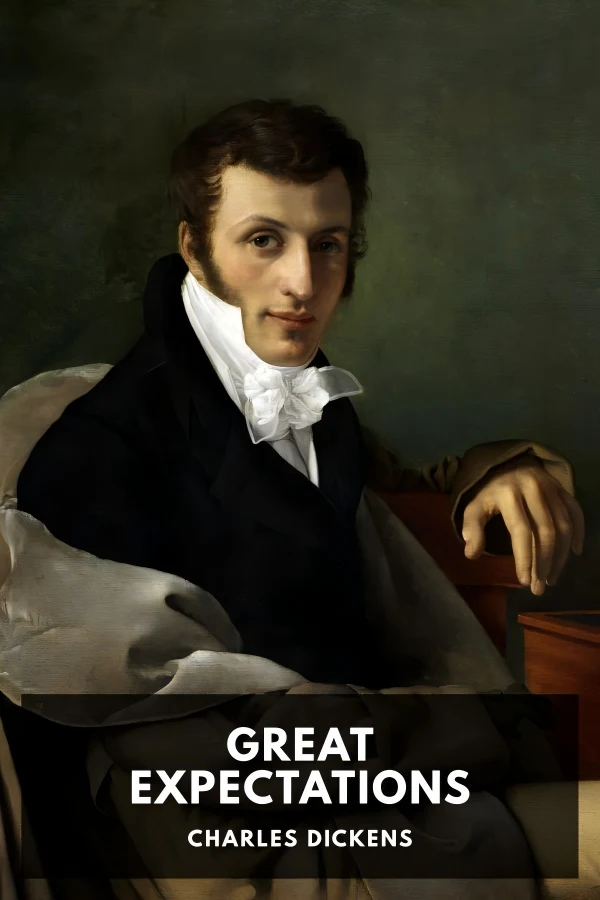
Great Expectations
📖 Click to Read Chapter I Online Preview
Chapter I
My father’s family name being Pirrip, and my christian name Philip, my infant tongue could make of both names nothing longer or more explicit than Pip. So, I called myself Pip, and came to be called Pip.
I give Pirrip as my father’s family name, on the authority of his tombstone and my sister,—Mrs. Joe Gargery, who married the blacksmith. As I never saw my father or my mother, and never saw any likeness of either of them (for their days were long before the days of photographs), my first fancies regarding what they were like were unreasonably derived from their tombstones. The shape of the letters on my father’s gave me an odd idea that he was a square, stout, dark man, with curly black hair. From the character and turn of the inscription, “Also Georgiana Wife of the Above,” I drew a childish conclusion that my mother was freckled and sickly.
Ours was the marsh country, down by the river, within, as the river wound, twenty miles of the sea. My first most vivid and broad impression of the identity of things seems to me to have been gained on a memorable raw afternoon towards evening. At such a time I found out for certain that this bleak place overgrown with nettles was the churchyard; and that Philip Pirrip, late of this parish, and also Georgiana wife of the above, were dead and buried; and that Alexander, Bartholomew, Abraham, Tobias, and Roger, infant children of the aforesaid, were also dead and buried; and that the dark flat wilderness beyond the churchyard, intersected with dikes and mounds and gates, with scattered cattle feeding on it, was the marshes; and that the low leaden line beyond was the river; and that the distant savage lair from which the wind was rushing was the sea; and that the small bundle of shivers growing afraid of it all and beginning to cry, was Pip.
Follow Pip’s transformative journey from the misty Kent marshes to the glittering salons of Victorian London. Download the complete unabridged classic for your e-reader.
Download Full EPUBMasterpieces of Victorian Society & Realism
About Charles Dickens’s Great Expectations
First serialized weekly in Dickens’s magazine All the Year Round between December 1860 and August 1861, and published in three volumes in 1861 by Chapman & Hall, Great Expectations is Charles Dickens’s penultimate completed novel and his most compactly constructed coming-of-age masterpiece—hailed by George Bernard Shaw as Dickens’s “most compactly perfect book.”
Written during a period of personal melancholy and artistic maturity, Dickens returned to the semi-autobiographical first-person retrospective voice he had mastered a decade earlier. The result is a piercing examination of class ambition, moral guilt, and spiritual redemption—and one of the defining bildungsromans of Victorian literature.
Set across the fog-bound marshes of Kent and the grim streets of London, the novel follows Philip Pirrip (“Pip”), an impoverished orphan raised by his abusive sister and her gentle blacksmith husband, Joe Gargery. Pip’s humble life is shattered when he aids an escaped convict in a churchyard, followed by an invitation to visit Satis House.
At Satis House, the eccentric, jilted heiress Miss Havisham lives decaying in her bridal gown amidst a frozen wedding feast, raising her beautiful ward Estella to break men’s hearts. Pip falls desperately in love with Estella, becoming ashamed of his blacksmith roots and coarse hands.
When an anonymous benefactor provides Pip with “great expectations” of a fortune, he moves to London to become a high-society gentleman, mistakenly presuming Miss Havisham is his sponsor. However, the unexpected midnight return of the transported convict Abel Magwitch shatters Pip’s aristocratic illusions, forcing a painful moral reckoning of true nobility.
Frequently asked: Great Expectations is a bildungsroman (coming-of-age novel) tracing Pip’s moral education. Its central theme is the false veneer of the “gentleman.” Pip’s anonymous benefactor is Abel Magwitch, not Miss Havisham.
Key Characters & Literary Archetypes
- Pip / Philip Pirrip (The Fallen Pilgrim & Flawed Bildungsroman Hero): An impressionable orphan seduced by superficial aristocratic status and wealth. Pip’s moral journey represents the painful descent into snobbery, followed by the humiliating collapse of worldly illusions and ultimate spiritual redemption through genuine empathy.
- Miss Havisham (The Jilted Bride & Traumatized Sovereign): A jilted heiress who stopped every clock at twenty minutes to nine and lives in decaying bridal attire, symbolizing arrested emotional development, consuming bitterness, and the destructive desire to avenge female heartbreak through proxy.
- Estella Havisham (The Cold Muse & Engineered Weapon): Beautiful, proud, and emotionally insulated, Estella is trained by Miss Havisham to lack a heart. Despite her icy aloofness toward Pip, she is herself a tragic victim of psychological manipulation, forced into a brutal marriage with Bentley Drummle before suffering softens her spirit.
- Abel Magwitch / “Provis” (The Criminal Outcast & Secret Benefactor): An escaped convict brutalized by a class-biased penal system, who amasses a fortune as an Australian sheep-farmer. He functions as Pip’s grotesque surrogate father, proving that authentic nobility and selfless generosity can dwell within society’s most rejected pariahs.
- Joe Gargery (The Gentle Giant & Moral Anchor): Pip’s blacksmith brother-in-law, characterized by unpretentious kindness, patience, and absolute integrity. Untouched by greed or class pretense, Joe serves as the uncorrupted moral baseline against which Pip’s snobbish urban pretensions are measured and found wanting.
- Mr. Jaggers (The Cynical Legal Automaton): The formidable, pragmatic London lawyer who manages Magwitch’s trust. Constantly washing his hands with scented soap to scrub away the moral taint of his desperate clients, he embodies the amoral, ruthless machinery of Victorian legalism.
- Biddy (The Grounded Pure Spirit): The clever, humble country girl who becomes Pip’s childhood teacher. Insightful and emotionally mature, she sees through Pip’s foolish infatuation with Estella, eventually marrying Joe and creating the warm domestic home Pip abandoned.
Core Literary Themes & Historical Significance
- The False Veneer of the “Gentleman”: Dickens systematically dismantles Victorian class snobbery, demonstrating that genuine gentlemanly character is defined by loyalty, kindness, and moral humility (Joe Gargery), rather than tailored coats, inherited money, and idle luxury.
- Complicity, Crime, and Society’s Underbelly: Through the physical shackles of the prison hulks that haunt Pip’s youth, Dickens reveals that respectable bourgeois society is inextricably linked to, and built upon, the exploitation and suffering of its criminal class.
- The Delusion of Wealth and Vain Expectations: The narrative serves as a cautionary tale against building personal happiness upon external fortunes and narcissistic ambition, concluding that authentic peace comes only from honest labor, self-knowledge, and humble human fellowship.
editions.ink Digital Archival Standards
Scans of Victorian serials frequently suffer from clumsy OCR word joins, stripped character dialogues, and missing chapter subdivisions. Our digital release provides:
- Complete Unabridged 59 Chapters: Faithfully transcribed from the authoritative 1861 three-volume Chapman & Hall edition of Dickens’s Victorian masterpiece, preserving his original prose without abridgment or modernization of language.
- Calibrated E-Ink Display Standards: Meticulously styled typography with proper scene dividers, proportional drop caps, and optimal margins configured specifically for Kindle and Kobo e-paper screens, with no forced hyphenation.
- Triple Format Verification: Hand-tested EPUB, AZW3, and KEPUB packages guaranteed to load with full table-of-contents navigation and zero line-wrap artifacts.