The Mysterious Affair at Styles by Agatha Christie: Free EPUB, AZW3 & KEPUB Download
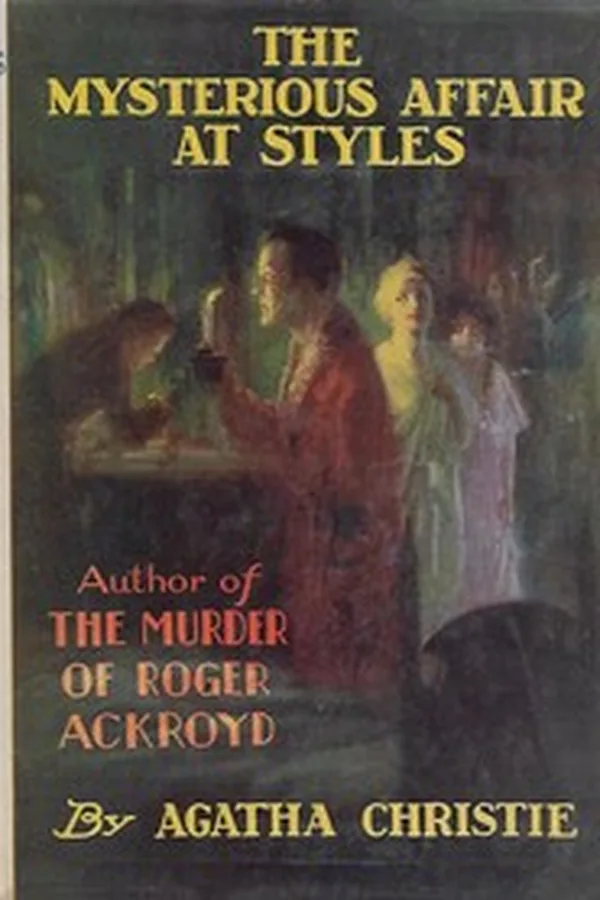
The Mysterious Affair at Styles
📖 Click to Read the Opening Pages Online Preview
Chapter I: I Go to Styles
The intense interest aroused in the public by what was known at the time as “The Styles Case” has now somewhat subsided. Nevertheless, in view of the world-wide notoriety which attended it, I have been asked, both by my friend Poirot and the family themselves, to write an account of the whole story. This, we trust, will effectually silence the sensational rumours which still persist.
I will therefore briefly set down the circumstances which led to my being connected with the affair.
I had been invalided home from the Front; and, after spending some months in a rather depressing Convalescent Home, was given a month’s sick leave. Having no near relations or friends, I was trying to make up my mind what to do, when I ran across John Cavendish. I had seen very little of him for some years. Indeed, I had never known him particularly well. He was a good fifteen years my senior, for one thing, though he hardly looked his forty-five years. As a boy, though, I had often stayed at Styles, his mother’s place in Essex.
The opening pages are shown here; the complete novel can be read online, or downloaded, from the free edition below.
Download Full EPUB1920
~60,000 words (estimated)
Approx. 3.3 hours
Standalone
Styles Court, Essex, during the First World War
13 chapters
EPUB · AZW3 · KEPUB
0.37 MB (EPUB) · 0.49 MB (AZW3) · 0.41 MB (KEPUB)
Public domain in the United States
Project Gutenberg #863
The Mysterious Affair at Styles is Agatha Christie’s first novel, published in 1920, and the book that introduced Hercule Poirot. A rich widow of nearly seventy dies in her bed at an Essex country house in the middle of the First World War, and everyone under the roof had some reason to want the will changed, the marriage ended or the scandal buried. Hastings, a convalescent officer with a wounded arm, narrates, cheerfully and wrongly. A small Belgian refugee with an egg-shaped head and a waxed military moustache does the thinking. The reader is handed the same evidence, early and in plain sight, and left to make the same mistakes.
Christie builds the case out of household furniture: a coffee cup smashed on the carpet, a half-charred scrap of paper in the grate, a smear of candle grease where no candle should have been, a key that went missing at lunch. Each object is described inside the first few chapters, and each is explained wrongly at least once by the people who saw it. The pleasure is watching sensible men and women talk themselves into nonsense, then watching Poirot untangle it by asking one question four different ways. See Wikipedia’s article on The Mysterious Affair at Styles for its publication history. The text is available via Project Gutenberg #863.

The Mysterious Affair at Styles by Agatha Christie: Summary, Characters & Themes
This page is a summary and analysis of The Mysterious Affair at Styles by Agatha Christie, with the historical context, the characters, the themes, chapter summaries and the free download links. Styles Court stands in flat Essex country, a mile beyond the village of Styles St. Mary, and it is July, in the middle of a war that has emptied the great house of servants and filled the village with Belgian refugees. Its mistress, Emily Inglethorp, is close to seventy, rich, autocratic and used to arranging other people’s lives; three months ago she announced her engagement to her own secretary, a man at least twenty years younger than she is, and the family has not settled since. Hastings arrives for a month’s sick leave, expecting a quiet summer. Within a week the household has quarrelled at the dinner table, the companion has walked out of the house, and a doctor has explained how easily poisons go unnoticed. Then the old woman is found dying behind a locked bedroom door.
The author is Agatha Christie, and the book is soaked in what she was doing during the war. She worked in the dispensary of a hospital in Torquay, and her first novel is full of the things that passed through her hands there: a bottle of strychnine, a box of bromide powders, a mixture that deposits crystals if it is left standing and not shaken before use. Christie never writes the war up as a subject; she uses it as weather. It is in the wounded arm that keeps Hastings at home, in the economies that mean nothing at Styles is ever thrown away, in the seven Belgian refugees lodged in the village because a rich woman chose to be kind. The result is a small, nervous, immensely practical household, and a murder that fits it exactly, down to the shortage of waste paper. She had written stories before, and this was the first book of hers that reached a publisher.
The puzzle is built out of physical evidence, and Christie is scrupulous about showing it. Poirot walks through the dead woman’s bedroom and counts what he sees: a coffee cup smashed almost to powder, a damp stain still smelling of coffee, a torn scrap of dark green cloth, a splash of white candle grease, a despatch case whose lock has been forced while the key was in it, and one further point he declines to share with anybody. All of it is on the page within a chapter or two, and the reader is given no clue the detective does not have. The trick is that the facts are plain and the explanations are not, and the narrator supplies most of the wrong ones. Hastings is a bad detective in the most useful possible way: he jumps to a conclusion, states it as obvious, and carries the reader along with him. The joke is at his expense, and Christie makes sure the reader has earned it.
Poirot is the other half of that joke. He is a refugee of a certain age with a stiff military moustache and a passion for neatness so exact that, as Hastings says, a speck of dust would have caused him more pain than a bullet wound. The family treats him as a harmless foreigner, the police as an amateur, and he works without a magnifying glass or a laboratory, by asking the same thing politely until somebody contradicts himself. His method is psychology and patience and an eye for what a person is trying not to say. The world he moves in is made of inheritance, marriage, reputation and servants who notice more than their employers believe, and most of the motive in it is money. That small world made the book’s reputation, and it set a pattern that detective fiction has been copying ever since. He is also funny, and the novel knows it, which is rarer in detective fiction than it ought to be.
Readers who enjoy the reconstruction at the end will find the same pleasure in two other free editions on this site. The Murder of Roger Ackroyd is Christie being audacious about who may be trusted to tell a story, while The Hound of the Baskervilles takes Sherlock Holmes onto a moor with a family curse and a very cold trail. Both are complete texts, both are free to download, and both sit on the same shelf as this one. They use the same three formats, and neither asks you for an account. Each has real chapter marks, so the shelf can be read as a short course in how the genre works. The novel itself is short enough for a long evening or two, and it has never been out of print since 1920. The text used here is the Project Gutenberg transcription (#863), in the public domain in the United States.
Historical Context
Christie wrote the book during the war, in 1916, and finished it before the fighting ended; it was turned down by several publishers before it appeared in 1920, when its author was thirty. The delay is visible in the texture of the thing. The war is still being fought inside the novel, the wounded are still coming home, servants are scarce, and a household that once kept late dinners now eats at half past seven in order to set an example of economy. None of this is decoration. It is the reason the house is full of people with time to watch each other, and the reason a marriage to a younger man is treated as a financial emergency rather than a romance.
The form is the country-house mystery, a shape already old in 1920, and Christie’s contribution is the severity of its rules. The suspects are all under one roof, the police are competent but limited by what they are allowed to ask, and the detective is an outsider who can put the questions that family loyalty forbids. The novel also does something the genre had not done so coldly: it makes the narrator likeable, then shows how unreliable liking is. Contemporary reviewers read the book as an ingenious puzzle rather than as literature, and were not entirely wrong, but the construction is better than they thought. Christie was suspicious of mystery writing that cared more about prose than about the solution.
What has lasted is the fairness. The reader is given the same objects as the detective, in the same order, with no withheld clue except the one Poirot openly says he is keeping back. That contract, plus a narrator who misreads the evidence in public, became the template the golden age of detective fiction spent the next twenty years repeating: a closed circle, a limited cast, a small set of physical facts, and a detective who explains rather than performs. Christie loosened these rules in later books, and eventually broke them on purpose, but the machinery here is complete and working. It is also unusually domestic for a first novel: no chases, no secret societies, and a murder that turns on a medicine bottle and a bad temper.
Key Characters & Literary Archetypes
- Hercule Poirot: A Belgian refugee detective lodged in the village, small, vain, immaculate and entirely without mercy when he is thinking. He has retired from the Belgian police, walks with a limp, and solves the case by asking the same question in four different shapes until somebody contradicts himself. Nothing in the house is too small for his attention, and he says so, repeatedly, with obvious enjoyment. The family finds him comic until the moment he stops being funny. His vanity is real and entirely without malice.
- Arthur Hastings: The narrator, a wounded officer on a month’s sick leave, who admits he has always had a secret hankering to be a detective and proves to be a poor one. He is loyal, cheerful and wrong about nearly everything, and his confident summaries of other people’s characters are the novel’s main source of comedy. The reader is invited to share his mistakes and then to feel them. He is also the reason the book is readable: his enthusiasm keeps the case moving when the police have stalled.
- Emily Inglethorp: Mistress of Styles Court, close to seventy, rich, managing and used to being obeyed by everybody in the house. She keeps stepchildren, servants and dependants in order by paying for them and arranging their lives, and she has just married her secretary against the family’s wishes. Her generosity is real and her temper is real, and both are described by people who want something from her. She is dead before the household understands how much of its routine depended on her decisions.
- Alfred Inglethorp: Her second husband, a black-bearded man in gold-rimmed glasses and patent leather boots, at least twenty years her junior, who was her secretary before he was her husband. He is carefully dressed, soft spoken, oddly composed, and absent from the house on the night she dies, with an explanation that arrives late and does not improve. Everybody suspects him, including the reader, which is exactly the position the book wants them to occupy while it prepares the ground elsewhere. His composure is what unsettles the house most.
- Evelyn Howard: Emily’s companion and oldest friend, blunt, furious, and openly at war with the marriage. She speaks in short bursts, wears thick boots, and says what the rest of the family only thinks, which makes her both the most honest person at Styles and the least useful witness. Her certainty about the husband is the loudest sound in the house, and Poirot spends a long chapter working out how to use it. She is also the person who tells Hastings, in the first week, to watch that devil.
- Mary Cavendish: John Cavendish’s wife, handsome, dark eyed and deliberately unreadable, with an English father and a Russian mother. She keeps her own counsel, dislikes the house, and is seen more than once in a conversation that stops when Hastings enters the room. Christie uses her as the novel’s controlled experiment in withholding: she is not lying, exactly, and she is not telling anybody what she knows. Her silences do more work than most of the dialogue. Her marriage, when it is finally explained, is one of the book’s sadder passages.
Core Literary Themes
- Evidence and misreading: Every clue in the book is a fact plus an interpretation, and the narrator supplies the wrong interpretation with enormous confidence. Christie lets the reader feel clever, then foolish, then clever again, and the structure depends on that rhythm. The objects do not change; only the story told about them changes, which is the novel’s whole argument about detection. Poirot’s advantage is not better eyes but a refusal to accept a comfortable explanation merely because it is comfortable, and because everybody else, including the man telling the story, has already agreed with it. The reader is the second unreliable witness.
- Money, wills and inheritance: The household runs on wills, marriage settlements and the fear of scandal. A widow’s second marriage is treated by her stepsons as a threat to their expectations, and the novel is honest about how much of the family grief is really arithmetic. The murder itself is less a crime of passion than a way of solving a financial problem, and the plot turns on documents: a will made in an afternoon, a will signed by two gardeners and burnt in a grate in July, and an older will still sitting in the desk. Property, not love, is what everybody is counting. Christie never lets the reader forget whose money is being spent.
- The closed household: Servants see everything and are believed about nothing, while the family sees little and is believed about everything, and the gap between those two positions is where the case lives. Christie maps the house as carefully as a stage set: who sleeps where, which door is bolted, which corridor is watched, who hears a table fall. The result is a society in miniature, with its own rules of deference and silence, and a murder that could only have happened inside it, in a room where everybody already knew the way. Doors, in this book, are evidence.
- War as background and pressure: Wounded officers, economies, refugees and a village full of strangers make the great house fragile, and the novel never lets the war drop out of hearing. It is the reason there are Belgian lodgers down the lane, the reason nothing is thrown away, and the reason a doctor can walk the roads at three in the morning without being asked why he is out. Christie uses the war the way she uses weather, as pressure rather than subject, and the book is more truthful for refusing to make a speech about it. The war, in other words, is the reason the house is quiet enough to hear a murder.
- Marriage as an arrangement: Two marriages organise the plot: an old woman’s late marriage to a younger man, and a young woman’s marriage entered into as a way of escape. Neither is presented as romance, and both are discussed by the family in the language of property, reputation and inconvenience. Christie is not moralising; she is describing a world in which a wedding changes who owns the house, who inherits, and who has to be polite at dinner. A wife, in this world, can be a suspect simply because nobody knows what she wants. Christie lets the money do the talking, and the talking is very polite.
Why Download Our Custom E-Reader Edition of The Mysterious Affair at Styles?
This is a puzzle before it is anything else, and the edition is built to let a reader work it. All thirteen chapters are marked as Christie divided them, the paragraphs keep the 1920 breaks, and nothing has been modernised, abridged or smoothed out. If you want to test yourself, every object Poirot finds in the bedroom is described in the same early chapter, and the rest of the book plays fair with the reader. The files are small enough to keep on a phone for a journey and to open years from now without hunting for a particular app.
It is also a short novel, and the files are made for reading it in a few sittings: real chapter marks in the table of contents, clean typography, no page by page furniture, and a text that reflows properly at any font size. The EPUB, AZW3 and KEPUB carry the same text in three wrappers, so you can read on a phone, a Kindle or a Kobo without losing your place or your bookmarks. Bookmarks, highlights and your position in the text stay with the file rather than with an account.
There is no DRM and no account to create. Download the format your reader prefers, keep it, and read it as often as you like. The novel is in the public domain in the United States, so the file is yours to copy, lend or print, and the edition will not disappear behind a subscription. Each download is a single file, so there is nothing to install and nothing to manage before you begin. If one format will not open on your device, the other two will, and the words inside them are identical.
- Project Gutenberg transcription, via Project Gutenberg #863 — the complete text, unabridged, with the chapter headings the author set.
- Chapter marks that match the book all thirteen chapters are marked in the EPUB and KEPUB, so the table of contents lands in the right place and the progress bar counts the novel rather than the front matter at either end.
- Set as a reading text the paragraphs follow Christie’s own chapter divisions, the dialogue keeps its 1920 punctuation, and the typography is sized for long sittings rather than for show.
- No DRM, three formats EPUB for most readers, AZW3 for older Kindles, and KEPUB for Kobo hardware, all carrying the complete unabridged text and nothing else.
- The Murder of Roger Ackroyd — free EPUB, AZW3 & KEPUB
- The Hound of the Baskervilles — free EPUB, AZW3 & KEPUB
- The Secret Adversary — free EPUB, AZW3 & KEPUB
Chapter summaries
Thirteen chapters, about 59,600 words, and a narrator who is wrong about almost everything. These summaries follow Christie’s chapters in order and describe what each one investigates, without giving away the solution. Read them as a map of the case rather than a substitute for it.
- I Go to Styles: Hastings, invalided home from the Front with a month’s sick leave and no family to go to, runs into John Cavendish and is invited down to Styles. He finds a household already arguing: John’s stepmother Emily, rich and autocratic; her new husband Alfred, twenty years her junior; John’s wife Mary, who says very little; his brother Lawrence, who says even less; and Evelyn Howard, the companion, who says everything. Poisons are discussed at the dinner table, and before the day is out the companion has announced that she is off.
- The 16th and 17th of July: Two ordinary summer days, laid out like a timetable. A charity bazaar and an evening entertainment at which Mrs. Inglethorp recites a war poem; a visit to the Red Cross dispensary at Tadminster, where Cynthia keeps the poisons in a cupboard; a chance meeting at the post office with a small Belgian detective Hastings knew in Belgium. In the evening there is a quarrel, coffee is poured and carried upstairs untasted, and the master of the house walks off to the village with the latch key in his pocket, saying that nobody need sit up.
- The Night of the Tragedy: Lawrence wakes Hastings before five. Mrs. Inglethorp’s door is locked, the room beyond it is in an uproar, and the two men break the door in with a struggle. She is in convulsions, her body arched until she seems to rest on her head and her heels, and her husband’s bed next door has not been slept in. Both connecting doors are bolted on the inside. Dr. Bauerstein arrives from the lane, then the family doctor, and the word poison is said out loud for the first time, though nobody yet knows which poison.
- Poirot Investigates: Poirot walks through the bedroom and counts what the household has walked past: a coffee cup smashed almost to powder, a damp stain on the carpet, a fragment of dark green cloth, a splash of white candle grease where only a reading lamp was burning, and a despatch case with its lock forced. A sixth point he keeps to himself. He interviews Dorcas about the quarrel and Annie about a tray of cocoa left standing in the hall, and the household’s afternoon acquires a shape, an hour and a disputed order of events.
- “It Isn’t Strychnine, Is It?”: Poirot tastes the coffee grounds and is half puzzled, half relieved. Cynthia takes no sugar, which turns out to matter. The grate gives up a half-charred scrap of paper, and two gardeners remember being called in to sign something under blotting paper in the boudoir that afternoon, which makes the fragment a will. Then a second will turns up in the desk, leaving everything to the husband, and the local chemist’s assistant arrives at the door in a panic about a sale he made to a man he had never seen before.
- The Inquest: The village inn fills up with neighbours, reporters and two men from Scotland Yard. The medical evidence puts the dose at three quarters of a grain of strychnine at least, and Dr. Bauerstein explains why a smashed cup means nobody can analyse what she drank. Lawrence’s theory of an accidental overdose is demolished by the family doctor. A stationer’s record shows a will form bought in the village, a chemist identifies the man who bought strychnine to poison a dog, and the jury, held back by the coroner, returns a verdict that names nobody.
- Poirot Pays His Debts: The police are certain they have their man, so Poirot tells them to arrest him, then takes the case apart in front of them. He produces an alibi with five witnesses from a farm two and a half miles away, explains how easily a man’s beard, glasses and rather noticeable clothes can be worn by somebody else, and sets out what is wrong with the stories of the two brothers and the two women. By the end of the chapter the obvious suspect is free and everybody else has become more interesting than they were.
- Fresh Suspicions, and Dr. Bauerstein: A black beard turns up in the attic chest where the household keeps its fancy dress, and it has been trimmed to fit a particular face. Poirot sends a message to Lawrence about a missing cup, then asks Miss Howard whether she really believes what she has been saying, and her answer surprises her more than it surprises him. Attention shifts to the doctor who walks the lanes at night: his rest cure in the village, his knowledge of poisons, and the gossip that links his name to one of the household.
- The Arrest, and the Case for the Prosecution: An arrest is made, and it is not the one the village expected; the family lives with police in the house. A parcel’s wrapping paper is traced to a theatrical costumier, whose books record a false beard ordered by post in June. Fingerprints go on the table, one set from a bottle in the hospital cupboard. In September the case reaches the Old Bailey, where the prosecution builds a net out of a will, a quarrel, a beard and a phial in a drawer, and the defence pulls a different thread. Poirot sits and watches the jury.
- The Last Link, and Poirot Explains: Poirot gathers the household, the police and a few uncomfortable guests in the drawing room, and walks them through the night of the death from the evidence upward: who moved, who lied, why a fire was lit on an eighty degree day, and why the poison acted when it did rather than when everybody assumed. The last link is a torn letter hidden in a spill vase on the mantelpiece. The final chapter is where Poirot names the murderer, and where Hastings finally understands what he has been looking at all along.
The Mysterious Affair at Styles: Frequently Asked Questions
What is The Mysterious Affair at Styles about?
Is this the first Hercule Poirot novel?
Should I read the Poirot books in order?
Is The Mysterious Affair at Styles in the public domain?
How long does it take to read?
Is it suitable for younger readers?
Is The Mysterious Affair at Styles a war novel?
How can I read The Mysterious Affair at Styles free?
Part of: Detective and Mystery Classics · Classic fiction