The Expedition of Humphry Clinker by Tobias Smollett: Free EPUB, AZW3 & KEPUB Download
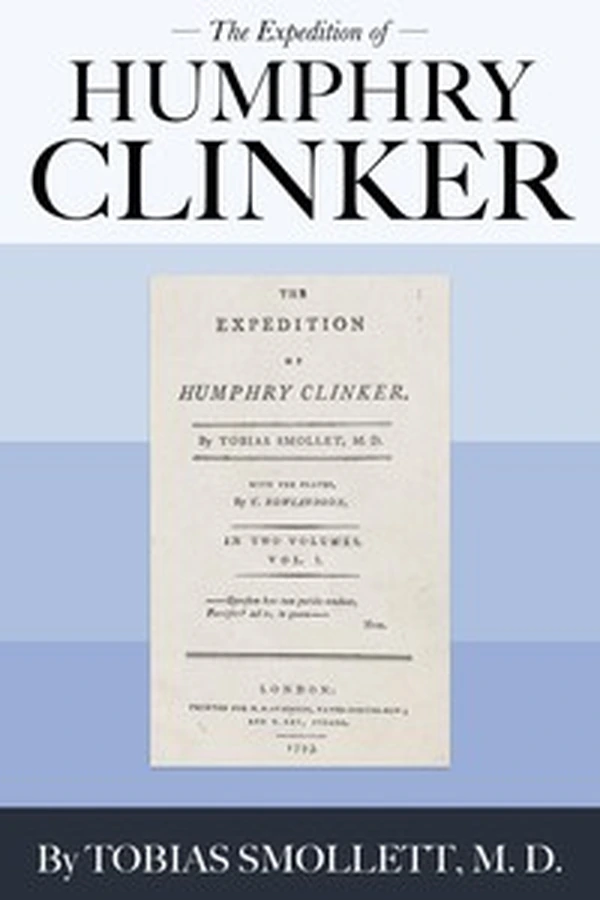
The Expedition of Humphry Clinker
📖 Click to Read the Opening Pages Online Preview
The story begins
I have done with the waters; therefore your advice comes a day too late I grant that physic is no mystery of your making. I know it is a mystery in its own nature; and, like other mysteries, requires a strong gulp of faith to make it go down—Two days ago, I went into the King’s Bath, by the advice of our friend Ch—, in order to clear the strainer of the skin, for the benefit of a free perspiration; and the first object that saluted my eye, was a child full of scrophulous ulcers, carried in the arms of one of the guides, under the very noses of the bathers. I was so shocked at the sight, that I retired immediately with indignation and disgust—Suppose the matter of those ulcers, floating on the water, comes in contact with my skin, when the pores are all open, I would ask you what must be the consequence?—Good Heaven, the very thought makes my blood run cold! we know not what sores may be running into the water while we are bathing, and what sort of matter we may thus imbibe; the king’s-evil, the scurvy, the cancer, and the pox; and, no doubt, the heat will render the virus the more volatile and penetrating. To purify myself from all such contamination, I went to the duke of Kingston’s private Bath, and there I was almost suffocated for want of free air; the place was so small, and the steam so stifling.
After all, if the intention is no more than to wash the skin, I am convinced that simple element is more effectual than any water impregnated with salt and iron; which, being astringent, will certainly contract the pores, and leave a kind of crust upon the surface of the body. But I am now as much afraid of drinking, as of bathing; for, after a long conversation with the Doctor, about the construction of the pump and the cistern, it is very far from being clear with me, that the patients in the Pump-room don’t swallow the scourings of the bathers. I can’t help suspecting, that there is, or may be, some regurgitation from the bath into the cistern of the pump. In that case, what a delicate beveridge is every day quaffed by the drinkers; medicated with the sweat and dirt, and dandriff; and the abominable discharges of various kinds, from twenty different diseased bodies, parboiling in the kettle below. In order to avoid this filthy composition, I had recourse to the spring that supplies the private baths on the Abbey-green; but I at once perceived something extraordinary in the taste and smell; and, upon inquiry, I find that the Roman baths in this quarter, were found covered by an old burying ground, belonging to the Abbey; through which, in all probability, the water drains in its passage; so that as we drink the decoction of living bodies at the Pump-room, we swallow the strainings of rotten bones and carcasses at the private bath. I vow to God, the very idea turns my stomach! Determined, as I am, against any farther use of the Bath waters, this consideration would give me little disturbance, if I could find any thing more pure, or less pernicious, to quench my thirst; but, although the natural springs of excellent water are seen gushing spontaneous on every side, from the hills that surround us, the inhabitants, in general, make use of well-water, so impregnated with nitre, or alum, or some other villainous mineral, that it is equally ungrateful to the taste, and mischievous to the constitution. It must be owned, indeed, that here, in Milsham-street, we have a precarious and scanty supply from the hill; which is collected in an open bason in the Circus, liable to be defiled with dead dogs, cats, rats, and every species of nastiness, which the rascally populace may throw into it, from mere wantonness and brutality. Well, there is no nation that drinks so hoggishly as the English.
What passes for wine among us, is not the juice of the grape. It is an adulterous mixture, brewed up of nauseous ingredients, by dunces, who are bunglers in the art of poison-making; and yet we, and our forefathers, are and have been poisoned by this cursed drench, without taste or flavour—The only genuine and wholesome beveridge in England, is London porter, and Dorchester table-beer; but as for your ale and your gin, your cyder and your perry, and all the trashy family of made wines, I detest them as infernal compositions, contrived for the destruction of the human species—But what have I to do with the human species? except a very few friends, I care not if the whole was—.
Heark ye, Lewis, my misanthropy increases every day
Download Full EPUB1771
~149,000 words (estimated)
Approx. 8.3 hours
Standalone novel
Bath, London, Yorkshire and the Scottish Highlands in the 1760s, seen through letters
10 stages
EPUB · AZW3 · KEPUB
0.60 MB (EPUB) · 0.88 MB (AZW3) · 0.63 MB (KEPUB)
Public domain in the United States
Project Gutenberg #2160
The Expedition of Humphry Clinker is Tobias Smollett’s last novel and the funniest road book of the eighteenth century. Matthew Bramble, a gouty Welsh squire who believes the age is going to the dogs, sets out with his sister, his niece, his nephew and their servants on a tour of Britain, and the tour is reported by five of the travellers in their own letters. They take the waters at Bristol and Bath, endure London, go north to Harrogate and Edinburgh, cross into the Highlands and come home through Wales. On the road they acquire a preaching postilion called Humphry Clinker, and everybody’s prejudices, the squire’s included, are turned inside out.
Because five people write, no two letters agree. Bramble complains of noise, stink and the degeneracy of the times; Jeremy Melford, his nephew, reports duels, actresses and card debts; Lydia, his niece, writes in the language of sensibility and keeps a secret; Tabitha, his sister, writes about cheese, flannel and husbands; and Winifred Jenkins, her maid, spells everything wrong and understands it sideways. The letters run from April to November, from Gloucester and Bath to London, Harrogate, Edinburgh, the Highlands and Monmouthshire, and are an experiment in letting five minds disagree on one page. See Wikipedia’s article on The Expedition of Humphry Clinker for its publication history. The text is available via Project Gutenberg #2160.
The Expedition of Humphry Clinker by Tobias Smollett: Summary, Characters & Themes
The Expedition of Humphry Clinker is a summary and analysis of Tobias Smollett’s epistolary novel of 1771, and of the five letter-writers who make it. Matthew Bramble of Brambleton-hall in Monmouthshire, a rich, gouty, charitable misanthrope, is ordered to travel for his health. He takes with him his sister Tabitha, his niece Lydia, his nephew Jeremy Melford and two servants; at Marlborough they hire a bare-legged postilion, Humphry Clinker, and the tour becomes a comedy of five temperaments. The letters carry the party from the Hot Well at Bristol to Bath, London, Harrogate, Edinburgh, the Highlands and home by Wales, and on the way they examine spa medicine, the marriage market, Scottish poverty, English snobbery and the family’s own secrets. Smollett keeps the days and months but not the year, so the tour reads as a continuous present, and the letters arrive in the order they were posted.
Tobias Smollett (1721-1771) was a Scottish surgeon, translator and journalist before he was a novelist. He sailed as a surgeon’s mate to the West Indies, practised in London, and made his name with Roderick Random (1748) and Peregrine Pickle (1751); he also translated Cervantes and edited the Critical Review, which kept him at the centre of the literary quarrels his novels satirise. The Tobias Smollett of the 1760s was a sick, quarrelsome, prodigiously industrious man, and Humphry Clinker, published in the year of his death, is his sunniest book: the misanthropy belongs to the character, not to the style. He had begun as a ship’s surgeon and ended as a literary controversialist, and the novel’s pleasure in noise, food and quarrelling is the pleasure of a man who had spent years in sick-rooms.
The novel appeared in three volumes in 1771 and is built of eighty-four letters, dated from 2 April to 20 November, with no year given in the text. Smollett frames them as a manuscript offered to the bookseller Henry Davis by a Welsh clergyman, the Reverend Jonathan Dustwich, a joke that lets the letters masquerade as found documents. Correspondents write from Gloucester, Clifton, Bath, London, Harrogate, Edinburgh, Glasgow and the Welsh border, and the same events recur in different hands: a coach overturns, Tabitha’s dog Chowder is kicked at the Rooms, Clinker is arrested, and each writer records a different version of the quarrel. The datelines are the only structure, and they are enough. The prefatory letters also warn the reader that the manuscript is property, libel and lottery, which is to say literature.
Smollett’s technical gamble is to give each correspondent a fixed prose. Bramble’s letters are long, splenetic and medically exact; Jeremy’s are dry and anecdotal; Lydia’s are sentimental and literary; Tabitha’s are managing and money-minded; and Winifred Jenkins’s are phonetic, devout and full of malapropisms, so that some of the best jokes exist only in her spelling. Lydia quotes novels and sermons, Winifred mangles the psalms, and the squire’s paragraphs are full of medical Latin, so that each voice is also a reading list. The comedy darkens as the party moves north, and the last hundred pages convert satire into recognition: the postilion is the squire’s son, the strolling player is a gentleman, and the misanthrope ends the book giving away a niece, a sister and a maid in a single week.
This page uses the Project Gutenberg #2160 transcription of Humphry Clinker, with all eighty-four letters unabridged and the original spelling kept. The EPUB, AZW3 and KEPUB files below are built from that text, with the letter headings preserved so that the reader can always see who is writing and from where. For the other great comic novels of the period, see The History of Tom Jones, Fielding’s foundling on the road to London, and Gulliver’s Travels, the satire of travel and invented societies. Both are free to download, like this edition. The preview above is the opening of Bramble’s first Bath letter, dated 28 April, in which he has done with the waters and begins to suspect the company.
Historical Context
Smollett published Humphry Clinker in 1771, the year of his death, after a decade of illness, journalism and translation. It is a British book of the 1760s rather than an English or a Scottish one: the Union of 1707, the Jacobite rising of 1745 and the slow pacification of the Highlands are recent history to its characters. The tourists travel on turnpikes and cross the Tweed expecting another country; the novel was written at the moment when domestic tourism and spa medicine were becoming industries, and it examines both as industries. It is also a book about transport, since chaises, postilions, turnpike gates and inns are the machinery of every letter.
The novel’s Scotland is the Scotland of emigration to America, of the tacksman economy and of the dress act that had banned the plaid. Lismahago, the half-pay lieutenant who has fought in America and lived among the Miamis, argues that poverty is no reproach and that the Union has been a bad bargain for his country; the Edinburgh professors Matthew meets are the men of the Scottish Enlightenment; and the Highland funeral, with its coronach and its whisky, is recorded by a visitor who has been told that the natives speak no English. Smollett gives the case for Scotland to a comic pedant, then lets the landscape make it for him.
Smollett had translated Don Quixote and knew the picaresque from inside, and his contemporaries had made the novel out of letters: Richardson’s Pamela and Clarissa, Fielding’s Joseph Andrews and Tom Jones, Sterne’s Tristram Shandy. Humphry Clinker takes the letter form and uses it for a group rather than a single heroine: five pens, one coach, and no narrator to settle the truth. The result is a road novel that is also a debate about whether Britain is one country or several, and a comedy that ends by marrying its travellers into the families they have been satirising.
Key Characters & Literary Archetypes
- Matthew Bramble: Squire of Brambleton-hall in Monmouthshire, gouty, rich and convinced that Britain is going to ruin. He gives a widow twenty pounds at the Hot Well, quarrels with a Bath baronet over a dog, faints at a ball from the stink of the company, and is carried out of a flooded coach by the postilion he has been scolding. His letters are the longest and the most exact, and his cure is the book’s plot, since the misanthrope has to be turned into a father before the journey can end.
- Tabitha Bramble: The squire’s sister, forty-five, raw-boned and managing, with a fortune of about four thousand pounds made in cheese and Welsh flannel. She packs her negligee and her jowls for Bath, quarrels with the Master of the Ceremonies when Chowder is kicked, mistakes Barton’s civility for a proposal, and ends the novel as the wife of Lieutenant Lismahago, still ordering the servants about and still counting the butter.
- Humphry Clinker: The bare-legged postilion hired at Marlborough, a foundling reared in a workhouse who can shoe a horse, bleed and rowel, sing Black-eyed Susan and preach. He beats the valet Dutton, is arrested as a highwayman, converts a Methodist congregation at Long Acre, and dives into a flooded coach to save the squire; a cornelian seal in an old snuff-box then proves him Matthew Loyd, Bramble’s natural son and the heir of a name he never knew.
- Lydia Melford: Bramble’s niece, young, sentimental and secretly in love with the actor Wilson, who turns up disguised as a Jew pedlar at the Hot Well and later as Mr Gordon at a ball at Leith. She returns his miniature, refuses Barton, writes to her friend Letty Willis in the language of sensibility, and is finally married to George Dennison, the player she had thought beneath her. Her letters are the book’s barometer of feeling, and they faint whenever the plot requires it.
- Winifred Jenkins: Tabitha’s maid, a Methodist convert whose letters to Mary Jones are written in phonetic spelling and are the funniest thing in the book. She is courted by the valet Dutton, mobbed by Newcastle colliers, married to Humphry Clinker in the last chapter, and her account of the wedding, with its three kiple chined in the holy bands of mattermoney, closes the novel. She is also the only character who gains status by marriage, and the only one who says so.
- Lieutenant Obadiah Lismahago: A threadbare Scottish half-pay officer, taken by the Miamis, tortured, married to the squaw Squinkinacoosta and elected a sachem. He argues that oatmeal beats wheat, that commerce ruins nations and that the English speak their own language worst, rides a toothless grey gelding, horsewhips a nephew who turned the family house into a weaving shop, and marries Tabitha with a bear’s skin for a present. His pride is the comedy’s most durable joke and its most serious argument.
Core Literary Themes
- Medicine and the body: Everybody is ill and everybody is selling a cure. The Bath pump-room water is the scourings of the bathers, the Harrigate spring smells of bilge-water, the pump-room doctor offers to drink the water from Bramble’s tapped abdomen, and the squire’s hot bath ends in a violent haemorrhage. Smollett, a surgeon, makes illness the physical engine of the comedy: fainting, dosing, bleeding and the search for a stool that will answer. The joke is that the patients are far more interested in their symptoms than in their cure, and the cure, when it comes, is exercise and company.
- Five pens, one journey: The same coach accident is a farce in Jeremy’s letter, a providence in Tabitha’s and a courtship in Lydia’s. Because no narrator arbitrates, the reader learns to weigh testimony: Bramble’s misanthropy against his charity, Tabitha’s complaints against her accounts. The epistolary form is not decoration but the argument, since Britain is a country of incompatible reports and the novel’s truth exists only between them. Every letter is a partial truth, and the reader becomes the only person who sees the whole coach, which is exactly what no character can do.
- Rank and the marriage market: Sir Ulic Mackilligut courts Tabitha for a fortune he has overestimated by six thousand pounds; Barton’s civility is taken for a proposal and turns out to be aimed at Lydia; Captain Brown, a weaver’s son, comes home from India with twelve thousand pounds and is sneered at for his origins even as he pays his father’s debts. Money is counted in every letter, and marriage is the market where rank and cash are priced against each other. The Browns’ recognition scene, in which a rich son kneels to a paviour father, is the counter-argument to Sir Ulic’s arithmetic.
- Scotland on trial: The tour north tests English prejudice against Scottish fact. Edinburgh is a hot-bed of genius with a workhouse that has no beggars, while Lismahago defends oatmeal, poverty and the lost independence of his country; a laird recites Ossian in the original Gaelic, a piper plays an hour by the clock, and a funeral ends with a hundred gallons of whisky. Smollett gives the case for Scotland to a comic pedant and then lets the landscape and the hospitality make it. The novel’s answer is neither Lismahago’s nor the squire’s, but the road home through Dumfries and the friends made on it.
- Providence and the foundling: Clinker’s Methodism is treated as comedy and then as evidence: he preaches on a stool at St James’s, tells the squire that reason is a farthing candle to the sun at noon, and saves him from drowning. The plot’s machinery is equally providential, with a snuff-box seal, a baptismal certificate and a strolling player who is a gentleman’s son, so that the satire ends in forgiveness, three weddings and a squire who has learned to stop complaining. The weddings are the satire’s reward rather than its refutation: the families get what they wanted, and the joke is that they deserve it.
Why Download Our Custom E-Reader Edition of The Expedition of Humphry Clinker?
Because the comedy still works. Five narrators, a gouty misanthrope, a maiden aunt in pursuit of a baronet, a postilion who quotes scripture and a maid who cannot spell: the jokes are two hundred and fifty years old and they land. The letters are short, the stages are journeys, and the book can be read the way it was written, a letter at a time, in an inn, with the rain coming on. Smollett wrote it in a race with his own body, and the haste is part of the pleasure.
Because it is the best guide we have to eighteenth-century Britain as it was lived: the pump-room at Bath, the clamour of a London levee, a Yorkshire squire’s dinner, the High-street of Edinburgh at two in the afternoon, a Highland funeral and a Welsh hall in November. Smollett notices prices, smells, wages, roads and the exact wording of snobbery, and his five letter-writers notice different things. It is also a book about weather, beds, food and the price of a post-chaise, which is what travel actually is.
Because this edition is built for reading rather than for show: the 1771 text in full, all eighty-four letters with their headings and datelines intact, so that you always know who is writing and from where, in EPUB, AZW3 and KEPUB. No modernisation, no abridgement, and no editorial voice between you and the squire’s temper. The text is checked against the Gutenberg transcription, and the file works on Kindle, Kobo and phone alike. The tour can be followed on any device that reads an EPUB, and the letter headings make the dates easy to find.
- Project Gutenberg transcription, via Project Gutenberg #2160 — the complete text, unabridged, with all eighty-four letter headings intact.
- The 1771 text eighty-four letters dated 2 April to 20 November, with the original spelling and the letter headings kept.
- Five correspondents, five voices every letter is headed with its writer, its addressee and its town, so the tour can be followed letter by letter.
- Reading aids the ten stages on this page name the correspondents and the towns, so the journey can be followed in the book or beside it.
- The History of Tom Jones, a Foundling — free EPUB, AZW3 & KEPUB
- Gulliver’s Travels — free EPUB, AZW3 & KEPUB
- A Modest Proposal — free EPUB, AZW3 & KEPUB
Chapter summaries
The novel has no chapter numbers, only letters. These ten stages follow the coach from Gloucester to Monmouthshire, name the correspondents who write from each place, and keep the dates of the letters.
- I. Gloucester, the player, and the Hot Well (April 2-21): Five letters open the book from Gloucester and Clifton. Tabitha packs her negligee and her jowls for Bristol, Winifred Jenkins reports that Liddy nearly ran away with a player, and Jeremy admits that he intercepted the actor Wilson’s letter and challenged him. At Clifton Matthew describes the duel prevented by the mayor, Liddy’s surrender of three letters, and the consumptive invalids at the Hot Well. Wilson, disguised as a Jew pedlar, whispers I am Wilson over a pair of spectacles, and the squire gives a dying widow’s family twenty pounds.
- II. Bath: the pump-room, the dog, and the ball (April 23 – May 19): Bath is the very centre of racket and dissipation. Matthew suspects the water of being the scourings of the bathers, Tabitha flirts with Sir Ulic Mackilligut, and the dog Chowder is kicked at the Rooms, provoking a riot. Jeremy describes Quin at dinner, a tea-party fight between a baroness and a knight’s dowager, and Tabitha’s monstrous opinion of her own beauty; the squire faints at a ball from the stink of the company, and a duel is fought over a living worth a hundred and sixty pounds a year.
- III. London, the road, and Humphry Clinker (May 20 – June 2): The coach overturns on Marlborough Downs and the party hires a bare-legged postilion, Humphry Clinker, whose qualifications include bleeding horses, hog’s puddings and psalmody. Tabitha offers an ultimatum, the postilion or her dog, and loses. In London the squire finds the capital an overgrown monster, Lydia hears the castrato Tenducci and is told that he is not a man, Jeremy watches Clinker preach against swearing on a stool at St James’s, and the duke of N- takes Bramble for Mr Blackberry.
- IV. London: authors, a proposal, and an arrest (June 3-14): Jeremy’s longest letter describes a Sunday dinner of ten literary originals, including a man who wears spectacles at table and a novelist who borrows the bookseller’s new boots and runs off in them. Barton courts Lydia and Tabitha mistakes it for a proposal to herself, a scene that ends with a double curtsy fit for Hogarth. Then a constable arrests Clinker as a highwayman on the word of Justice Buzzard, and the real robber proves to be the well-dressed Mr Martin who had examined the witnesses.
- V. The North road and Harrogate (June 14 – July 13): With Clinker armed and a new valet, Dutton, the party drives north. Martin saves them from two horsemen and then asks for a place as steward, quoting Save a thief from the gallows. Harrogate’s water smells of rotten eggs and the squire’s hot bath ends in a haemorrhage; at Squire Burdock’s table a trepanning is proposed, and the patient leaps up to throw the surgeon’s instruments out of the window. A highway robbery reintroduces Grieve the apothecary as the Count Fathom of Smollett’s earlier novel.
- VI. Morpeth, the Border, and Lismahago (July 13-18): On the road south of the Tweed the party meets Lieutenant Obadiah Lismahago, a threadbare Scot on a toothless grey gelding who has been tortured by the Miamis, married a squaw and made a sachem. His account of the stake, and of his wife’s bridal dress of red bays fastened with a copper skewer, fascinates Tabitha. He argues that oatmeal is better than wheat and that the Scots speak English better than the English; at Newcastle the colliers mob Winifred in her finery, and Dutton elopes with an heiress.
- VII. Edinburgh (July 18 – August 8): Edinburgh is very romantic, with a castle at the top and a palace at the bottom, and the party lodges four flights up in the High-street. Matthew admires the infirmary, a workhouse without beggars and a university that makes the city a hot-bed of genius; Jeremy goes to the caddies’ ball at Leith, where Lydia faints at the sight of a man who looks exactly like Wilson. Tabitha is reconciled to Scotland by a Seceder sermon, criticises the ladies’ dancing, and Dr Gregory prescribes Highland air and goat’s whey.
- VIII. Fife, Glasgow, and the Highlands (August – September 7): A crossing to Fife nearly drowns the party, and the tour goes on to Glasgow, Dumbarton and Loch Lomond, where a kinsman of Smollett hosts them at Cameron. The squire visits Inverary, hears Ossian recited in the original Gaelic, watches a piper play an hour by the clock, sleeps on heather and attends a funeral that ends with a hundred gallons of whisky. The Highland poor, the emigrant ships and the tacksmen’s rents are all recorded, and the squire’s misanthropy begins to fail.
- IX. The return: Carlisle, the Solway, and Wales (September 7 – October 4): Coming south through Dumfries, the party finds Lismahago’s horse drowned in the Solway and Tabitha in tears; the lieutenant himself is discovered alive at Carlisle, bargaining for another. At a borough on the road a captain in a blue frock turns out to be the weaver’s son who has made twelve thousand pounds in India and now pays his father’s debts. The squire visits the ruined Baynard and the gouty practical joker Sir Thomas Bullford, and the coach heads for Monmouthshire.
- X. The flooded ford, the weddings, and the end (October 8 – November 20): At a flooded ford the coach overturns and Clinker carries the squire out as if he had been an infant of six months. A snuff-box seal identifies the postilion as Matthew Loyd, the squire’s natural son, and the neighbour Dennison turns out to be the father of the player Wilson. Three weddings follow in one week, Lydia and George Dennison, Tabitha and Lismahago, Winifred and Loyd, and the novel closes with Winifred’s letter about her pea-green sack and the family’s Christmas at Brambleton-hall.
The Expedition of Humphry Clinker: Frequently Asked Questions
What is The Expedition of Humphry Clinker about?
Who wrote the letters in Humphry Clinker?
Is Humphry Clinker an epistolary novel?
Is Humphry Clinker hard to read?
How long is Humphry Clinker?
Who is Humphry Clinker?
What happens at the end of Humphry Clinker?
Where can I read the full text of Humphry Clinker?
Part of: Classic fiction · Long classic novels