The History of Tom Jones, a Foundling by Henry Fielding: Free EPUB, AZW3 & KEPUB Download
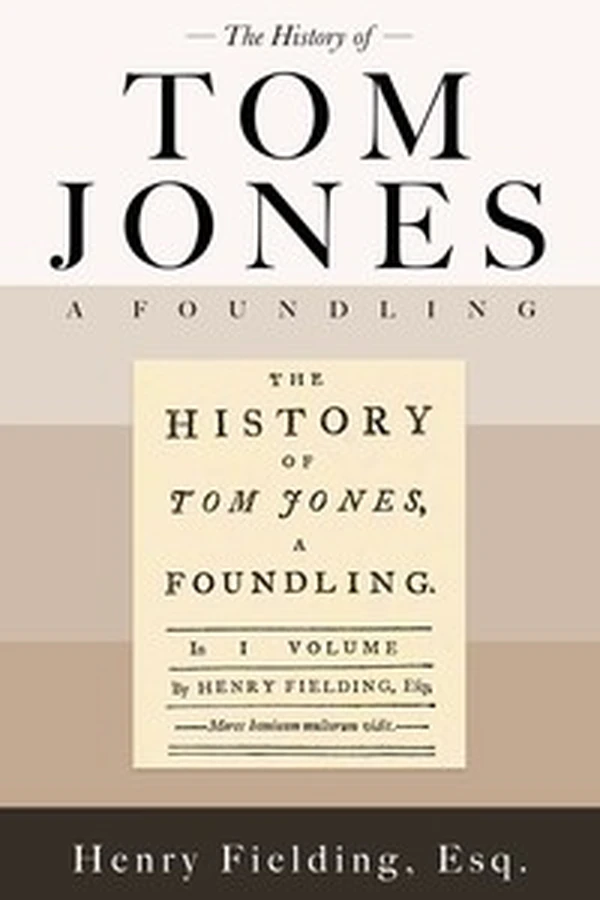
The History of Tom Jones, a Foundling
📖 Click to Read the Opening Pages Online Preview
Read the opening of Tom Jones
An author ought to consider himself, not as a gentleman who gives a private or eleemosynary treat, but rather as one who keeps a public ordinary, at which all persons are welcome for their money. In the former case, it is well known that the entertainer provides what fare he pleases; and though this should be very indifferent, and utterly disagreeable to the taste of his company, they must not find any fault; nay, on the contrary, good breeding forces them outwardly to approve and to commend whatever is set before them. Now the contrary of this happens to the master of an ordinary. Men who pay for what they eat will insist on gratifying their palates, however nice and whimsical these may prove; and if everything is not agreeable to their taste, will challenge a right to censure, to abuse, and to d—n their dinner without controul.
To prevent, therefore, giving offence to their customers by any such disappointment, it hath been usual with the honest and well-meaning host to provide a bill of fare which all persons may peruse at their first entrance into the house; and having thence acquainted themselves with the entertainment which they may expect, may either stay and regale with what is provided for them, or may depart to some other ordinary better accommodated to their taste.
As we do not disdain to borrow wit or wisdom from any man who is capable of lending us either, we have condescended to take a hint from these honest victuallers, and shall prefix not only a general bill of fare to our whole entertainment, but shall likewise give the reader particular bills to every course which is to be served up in this and the ensuing volumes.
As we do not disdain to borrow wit or wisdom from any man who is capable of lending us either, we have condescended to take a hint from these honest victuallers, and shall prefix not only a general bill of fare to our whole entertainment, but shall likewise give the reader particular bills to every course which is to be served up in this and the ensuing volumes.
Download Full EPUB1749
~339,000 words (estimated)
Approx. 18.8 hours
Standalone novel
Somerset, London and the road, 1745
18 books, 208 chapters
EPUB · AZW3 · KEPUB
1.01 MB (EPUB) · 1.69 MB (AZW3) · 1.11 MB (KEPUB)
Public domain in the United States
Project Gutenberg #6593
Tom Jones is Henry Fielding’s comic novel of 1749: the story of a foundling raised at Paradise Hall in Somerset by the benevolent Squire Allworthy, and of the campaign of whispers by which his cousin Blifil turns the old man against him. Tom is generous, hot-blooded and constantly in trouble; Sophia Western, the squire’s daughter, is the woman he loves and hardly dares hope for. Fielding sends them both on the road to London, through duels, inns, disguises and mistaken beds, while a narrator who never lets the reader forget him comments on the show. The plot is one of the most tightly built in English fiction, and its ending is famously exact.
Fielding called the book a comic epic poem in prose, and its eighteen books alternate moral essays with farce: the foundling’s three boyhood robberies, the muff snatched from the fire, the Homeric battle in a churchyard, the night with the Man of the Hill, the bed at Upton, the masquerade at the Haymarket. The road matters as much as the drawing room – the best chapters happen at night, among strangers, over a bad supper. Almost nothing is wasted; in the last book a deathbed letter, a lawyer’s memory and a servant’s superstition unwind the whole tangle of Tom’s birth. The text is available via Project Gutenberg.
The History of Tom Jones, a Foundling by Henry Fielding: Summary, Characters & Themes
This page gives a summary and analysis of Tom Jones: the story in order, the people who drive it, the arguments Fielding builds into it and the history that shaped it. Published in six volumes in February 1749, the novel was an immediate success in London and a scandal to the pious, who objected to a hero who is a bastard, a keeper of low company and, for much of the book, a kept man. Fielding had been a successful playwright until the Licensing Act of 1737 closed his theatre, then a barrister and a hack; by the time Tom Jones appeared he was also a Westminster magistrate, and the book’s courtrooms, warrants and prisons are written by somebody who knew their paperwork. It sold out its first printing within a year and was being argued over in France before Fielding died in 1754. Fielding wrote it in fourteen months, at the height of his powers and near the end of his health.
Henry Fielding was born in 1707, a gentleman’s son with a gentleman’s debts, and spent the 1730s writing comedies that mocked Walpole’s government until the Stage Licensing Act shut him out of the theatre. He read law, edited newspapers, wrote Joseph Andrews in 1742 and Jonathan Wild in 1743, and buried a beloved wife in 1744; the grief is in the dedication here. That dedication to George Lyttelton is a strange, proud performance: Fielding refuses to flatter his patron and insists that the only merit worth praising is good nature. His life reads like one of his own plots – improvidence, courage, a late and exhausting respectability – and it explains the sympathy for debtors, soldiers and servants that runs through the novel. He died at forty-seven, in Lisbon, still working on a last book.
The moral scheme is simple and then complicated by the story. Allworthy is charity itself, but he is credulous and loves his own judgement; Blifil is cold, cautious and plausible, and his malice works through other people’s hands. Square and Thwackum, the philosopher and the divine, are two kinds of hypocrite who agree only in disliking Tom. Squire Western is a comic tyrant, all hunting, port and paternal rage, and Sophia his daughter has more sense than every man around her. Fielding lets each of them be partly right. Tom himself is not a model: he is imprudent, sensual and easily led, and the novel’s argument is that goodness of heart is worth more than the prudence he lacks, though it will not save him without it. Even the minor figures have a reason for what they do.
Structurally the book is a machine of eighteen books, each opening with an essay in which the narrator discusses history, critics, love or the marvellous, and each closing where the story needs him. Fielding borrows the language of the theatre and the tavern: the novel is an ordinary where the reader pays for his dinner, the chapters are courses, the narrator is the host who chats between them. The mock-heroic manner lets him compare a churchyard brawl to Homer and a serving girl to Helen, and the irony is never merely decorative – it is how he judges hypocrisy without preaching. The narrator is a character in his own right, and his judgements are part of the comedy. The result is a long book that feels designed rather than accumulated, and the design is the point. The chapters are short enough to read on a journey, which is how many of them were written.
Readers coming to Tom Jones from later fiction may be surprised by how modern its sympathy is, and by how much it shares with the books around it. Defoe’s Robinson Crusoe had shown that a single life could fill a book; Swift’s Gulliver’s Travels had shown that a voyage could be a satire; Dickens, a century later, would learn from Fielding how to make a plot carry a social argument, and Bleak House is the descendant of this book’s law courts and lost wills. Tom Jones taught the English novel how much plot it could carry without losing its manners, and it remains a serious inquiry into what a good man owes his neighbours. The text here is the complete Project Gutenberg transcription, unabridged, with the dedication and all 208 chapter headings. The novel is long, but it is not slow. It is the work of a man who knew both the road and the courtroom, and it shows.
Historical Context
The novel is set in 1745, the year of the Jacobite rising, and the war is never far from the road. Tom enlists with a recruiting party; the volunteers he meets are marching against the Young Pretender; London is full of rumour. Fielding uses the crisis lightly, but it dates everything: the squires are Tories, the army is a career for younger sons, and a man’s politics can be read from his table talk. Fielding himself helped raise a volunteer company that year, and the mood of the time – invasion scares, loyal addresses, hurried marches – is in the book’s weather. The rising was over within a year, but the fear it left behind shaped the England of the novel, and Tom’s decision to volunteer is the closest he comes to a career.
Theatre and law shaped the book as much as politics. The Licensing Act of 1737 drove Fielding from the stage, and he turned to prose fiction with the same comic timing. Pamela, Richardson’s virtuous servant, had been a bestseller in 1740, and Fielding answered it with parody and then with Joseph Andrews. Tom Jones, published in 1749, is the mature version of that quarrel: a novel that refuses to make virtue smug or vice merely ugly. The argument between Richardson’s moralism and Fielding’s laughter is still the liveliest disagreement in eighteenth-century fiction. The quarrel was personal as well as literary. Fielding’s answer was to make the reader laugh at virtue that knows its own price, and Richardson never forgave him for it.
The England of the novel is a country of game laws, vagrancy statutes, press-gangs and sponging houses. A bastard has no legal father; a poacher can be transported; a debtor can die in the Gatehouse. Fielding, as a magistrate at Bow Street, saw all of this at first hand and wrote about it with the familiarity of a man who signed the warrants. He campaigned against gin and street crime, and his pamphlets read like notes for the novel’s darker scenes. The book’s comedy is never far from the gallows or the workhouse. His court work began the year this novel came out. A justice of the peace in those years was also a local administrator, a licensing authority and, on occasion, a jailer.
Key Characters & Literary Archetypes
- Tom Jones: The foundling of Paradise Hall: generous, impulsive, physically brave and hopelessly imprudent. Fielding gives him a temper, an appetite and a heart that cannot refuse a request, and then tests all three. He is no saint – he is drunk, seduced and seducing – but the novel insists that his good nature is real, and that a world which punishes it while rewarding Blifil’s smoothness has its values upside down.
- Sophia Western: Squire Western’s only child, black-eyed, tall and quietly determined. She rides better than the men, plays Handel, and has been taught by an aunt to value sense over show. Her love for Tom survives his scandals, her father’s rage and Lady Bellaston’s drawing room, but she will not be handed over like a parcel; when the novel ends she sets her own terms. Fielding describes her as a copy from nature, and she is the most credible person in the book, and the one whose anger we feel.
- Squire Allworthy: The owner of Paradise Hall and the most benevolent magistrate in English fiction. He adopts a foundling on sight, forgives his tenants and believes the best of everyone, which is precisely why Blifil can manage him. His judgements are honest and often wrong, and the novel is careful to show that goodness without suspicion is a kind of vanity. When he finally sees the truth, his repentance is as entire as his charity.
- Master Blifil: Tom’s cousin and the novel’s quiet villain. Cold, methodical and never in the wrong place, he collects evidence against Tom for years and releases it at the right moment. He wants the Western estate, and he wants Sophia, and he tells himself he is acting for the family. Fielding’s portrait is a study in plausible malice: Blifil never commits a crime that could be proved, and that is what makes him frightening.
- Squire Western: Sophia’s father, a Somerset Tory who lives for hounds, port and the House of Commons. He loves his daughter and bullies her, roars and relents, and treats a marriage as a piece of estate business. His comic energy is enormous – the horn under the window, the challenge to Tom, the sudden fondness at the end – and Fielding lets him be both absurd and affectionate. He is not a villain; he is a force of nature in a bob wig, and the novel would be duller without him.
- Partridge: The schoolmaster whom Allworthy ruined on suspicion of being Tom’s father, now a barber and surgeon in Gloucester. Superstitious, talkative and full of Latin, he attaches himself to Tom as servant and cheerfully misunderstands everything. His running commentary is one of the book’s great comic resources, and his panic at the end – he believes Tom has slept with his own mother – sets off the last movement of the plot.
Core Literary Themes
- Good nature and prudence: Fielding’s central argument is that goodness of heart is a real virtue, and that it is not enough. Tom gives away his horse, his Bible, his money and his coat; the world calls him a fool and Blifil calls him a villain. The narrator’s essay in Book III says plainly that goodness and openness will not do their business in the world without prudence, and the plot then proves it: Tom’s generosity is always right and always costly. The book’s ending is a reward for good nature, but only after prudence has been forced on him. Fielding is too honest to pretend the lesson is cheap, and the comedy is what keeps it from turning into a sermon.
- Hypocrisy and the appearance of virtue: Square preaches Platonic virtue and takes Molly Seagrim behind a rug; Thwackum preaches grace and thrashes boys for pleasure; Blifil speaks of duty while hoarding evidence. Fielding’s targets are not sinners but the respectable, the men who use morality as a weapon. His method is comic rather than savage: the hypocrite is exposed not by argument but by a falling rug or a badly timed letter. The famous remark that religion and virtue have suffered more from hypocrites than from wits is the book’s thesis in one line, and the comedy keeps it from sounding like a sermon.
- Appetite: Tom Jones is a novel of hunger. Its people eat, drink, hunt, fight and fall into bed with an energy that is comic and slightly alarming. The first chapter compares the book to a public ordinary; the inns along the road are theatres of appetite; Allworthy’s deathbed scene is followed by a drunken celebration. Fielding treats the body as the ground of comedy and of morality at once: a man’s appetite shows what he is, and a man who can master it, or fail honestly, is more interesting than one who has none. The novel never despises the flesh it enjoys, and that is why its morality feels generous rather than sour.
- Fortune, coincidence and providence: The plot runs on coincidence, and Fielding knows it. Letters are lost, beds are mistaken, the right person arrives one minute too late. The narrator compares human lives to a lottery in which blank years are drawn with the prizes, and he dares the reader to call it improbable. The effect is double: we laugh at the machinery and then accept it, because the coincidences are moral rather than random. The ending, where a deathbed letter and a lawyer’s memory solve everything, is both absurd and satisfying, and Fielding has prepared it for six hundred pages.
- Justice and charity: The law in Tom Jones is a comedy and a threat. Partridge is ruined by a trial at which he is hardly heard; Molly is marched off to a house of correction; Tom is pressed, arrested and lodged in the Gatehouse; Black George steals five hundred pounds and is forgiven. Fielding, who signed warrants for a living, contrasts the letter of the law with the charity Allworthy preaches and sometimes practises. The book’s final judgement is a legal metaphor: the truth comes out, but only because somebody chooses mercy over a case, and the choice is made by a man who has been wrong.
Why Download Our Custom E-Reader Edition of The History of Tom Jones, a Foundling?
The voice. Fielding’s narrator is one of the great comic performances in English: knowing, teasing, digressive and never cruel for long. He tells you he is writing a history, then writes an essay about critics, then brings on a barber with a Latin tag. Reading three hundred thousand words in this company is not a duty but a pleasure, and it is the reason the book survives while its moral scheme dates. He is the best company in English prose between Swift and Sterne, and he knows it. The digressions are the point, not the interruption. He is also, on a good day, the fairest critic of his own book.
The road. The middle of the novel is a picaresque journey through inns, kitchens, stagecoaches and country houses, and its minor characters – landladies, serjeants, surgeons, postilions – are drawn with a speed and confidence few novelists have matched. The famous scenes, the man in the nightcap behind the rug, the ghost in the inn yard, the squire’s horn under the window, are still funny on the page. The book’s England is a country of muddy roads and shared beds, and Fielding loves every mile of it. The novel was written by a man who had travelled those roads himself, often in a hurry and short of money.
The machine. Tom Jones is often called the best-plotted novel in English, and the compliment is accurate. Eighteen books of apparent digression turn out to be load-bearing; every coincidence is planted, every minor figure returns, and the last hundred pages pay off debts the reader did not know had been incurred. If you have ever admired a novel’s ending, this is where to see how one is built, and why the building takes so long. It is a masterclass in the pleasure of a plot that closes. The last chapter is a wedding, and the book has earned it.
- Project Gutenberg transcription, via Project Gutenberg #6593 — the complete text, unabridged, with all eighteen books and their chapter headings.
- Complete in eighteen books Every introductory essay and every chapter heading survives, in the order Fielding printed them, with nothing abridged.
- The 1749 text Fielding’s capitals, italics and long sentences are kept, so the comedy of the prose is not flattened by modernisation.
- EPUB, AZW3 and KEPUB Three DRM-free downloads from the same transcription, sized for phones, e-readers and tablets.
- The Expedition of Humphry Clinker — free EPUB, AZW3 & KEPUB
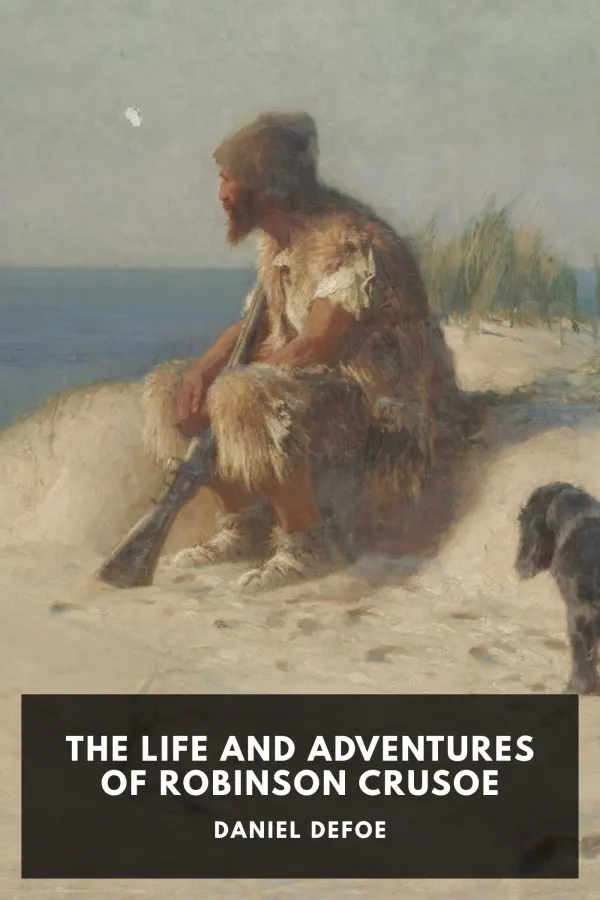
- Robinson Crusoe — free EPUB, AZW3 & KEPUB
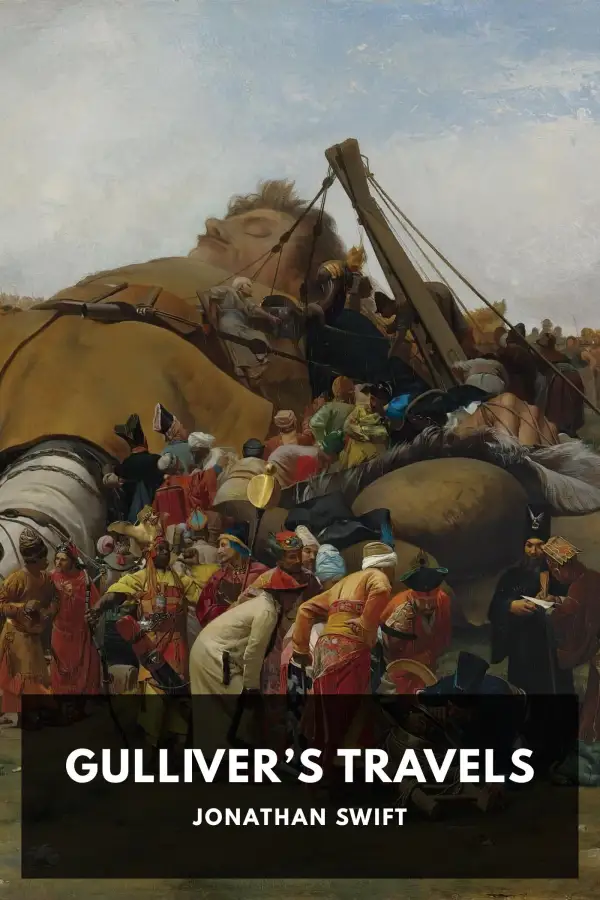
- Gulliver’s Travels — free EPUB, AZW3 & KEPUB
Chapter summaries
Tom Jones is divided into eighteen books, each opening with an essay in which the narrator discusses his craft, and most books run to between seven and fifteen chapters. The summaries below follow the eighteen books in pairs, from the foundling left in a squire’s bed to the wedding at Doctors’ Commons, and keep Fielding’s own chapter headings where they are short enough to quote. Treat them as a map of a very long road: the digressions get left out, and they are half the pleasure.
- Books I–II. A child in the squire’s bed: Squire Allworthy returns from London to find an infant asleep between his sheets and, against his housekeeper’s advice, decides to keep it. The parish hunts for the mother and settles on Jenny Jones, who confesses and is sent away. Allworthy’s sister Bridget marries the scheming Captain Blifil and bears a son; the schoolmaster Partridge is convicted of being the foundling’s father on the word of a jealous wife, and the captain dies of an apoplexy while planning improvements. Deborah Wilkins, the housekeeper, is the first of the book’s many official busybodies.
- Books III–IV. The foundling at fourteen: Tom grows up generous, rash and always in trouble: he is whipped for poaching he took the blame for, sells his horse and his Bible to feed the gamekeeper’s starving family, and is flogged again when Blifil reports him. Sophia Western, just eighteen, enters the book with black hair and a dimple, and Tom once climbed a tree and fell into the canal to save her bird. The churchyard battle over Molly Seagrim ends with Tom carrying her home. Fielding explains that Tom’s faults come from an active principle rather than a cold heart.
- Books V–VI. The muff, the will and the expulsion: Allworthy falls dangerously ill and reads his will: Blifil inherits, Tom has five hundred a year and a thousand pounds. Tom, drunk with relief at the old man’s recovery, quarrels with Blifil and fights Thwackum in the grove; Sophia faints at the blood. The squire proposes Blifil as a husband, Sophia refuses, and the aunt’s jealousy sets Western on Tom. Blifil at last produces his hoarded evidence, Allworthy banishes Tom, and Black George keeps the five hundred pounds meant for him. The whole catastrophe turns on a muff thrown into a fire.
- Books VII–VIII. Out on the road: Tom leaves Somerset with nine guineas and no plan, joins a recruiting party in a temper, and is knocked down by Ensign Northerton, whose attack he answers at midnight in a scene staged like a ghost story. At Gloucester he is attended by a barber who turns out to be Partridge, ruined by the old scandal and convinced that Allworthy is Tom’s real father. Together they walk on, meet a hermit in an ass’s skin, and hear his life story. Partridge’s Latin tags and his terror of ghosts make him the ideal companion for a journey without money.
- Books IX–X. The inn at Upton: On Mazard Hill Tom rescues a half-stripped woman from a ruffian and discovers it is Northerton, who escapes and leaves her with him. At Upton they take a bed; Sophia arrives at the same inn, hears from a drunken Partridge and a bribed chambermaid that Jones is in bed with a wench, and orders her horses. The comedy turns cruel: she leaves convinced he is a villain, while he sleeps through the one chance of an explanation. Fielding gives the innkeeper, the chambermaid and the surgeon their own voices, and each of them is right about something.
- Books XI–XII. Two journeys to London: Sophia and Honour ride across country to throw off pursuit, fall in with Mrs Fitzpatrick and her Irish peer, and reach London two days later, having lost the hundred-pound bill her father gave her. Tom follows at a slower pace with Partridge, giving away his money to beggars, losing the road in the rain, and drinking a bottle with Dowling, Allworthy’s attorney, who is moved by his story and troubled by what he has heard of Blifil. Mrs Fitzpatrick’s own marriage is a warning, and she tells it as a story she has learned to perform.
- Book XIII. Bond Street: Tom lodges in Bond Street with Mrs Miller, a clergyman’s widow fallen on hard times, and meets the fashionable Mr Nightingale. At a masquerade he follows a masked woman he takes for Mrs Fitzpatrick and finds that she is Lady Bellaston, who promises him an interview with Sophia at the price of his leave-taking. She sends him fifty pounds, which he immediately gives to a ruined family in the house, and so begins his career as a kept man. Mrs Miller’s household is the moral centre of the London books, and Nancy’s fate keeps the comedy honest.
- Book XIV. Nightingale’s honour: Nancy Miller is pregnant and young Nightingale, engaged to her in all but name, has been summoned home by a father who has other plans. Tom lectures him on honour, promises to stand his friend, and enlists Allworthy’s name and Mrs Miller’s tears; the old merchant is brought to the house and talked into consenting. The book ends with two weddings in prospect. The old merchant is not a fool; he is a man of business who can be argued out of a bad plan when the argument is put by someone he respects.
- Book XV. Lady Bellaston’s design: Lady Bellaston, furious at Sophia’s coldness, decides to marry her to Lord Fellamar, a young nobleman who has already caught her in his arms at the playhouse. She paints Tom as a beggar and a bastard and lends Fellamar her instrument, a club of wits required to tell one merry fib a day. A rumour that Jones has been killed in a duel makes Sophia faint at the card table, and her aunt’s house becomes a prison with a drawing room. Fellamar is a coward dressed as a lover, and his proposal is a piece of property business.
- Book XVI. The pullet and the letter: Sophia is carried home by her father and locked up; Jones, at Mrs Miller’s, receives a letter from her hidden in a pullet from market, and goes to the playhouse that evening with Mrs Miller and Partridge. Western rages, Blifil smiles, and Lady Bellaston, discovering that her lover has been corresponding with the girl she means to marry off, resolves to have him removed. The book ends with the trap closing. The letter in the pullet is one of the book’s happiest inventions, and it arrives at the worst possible moment.
- Book XVII. The Gatehouse: Fitzpatrick, mistaking Jones for a rival, fights him in the street; Jones is arrested and lodged in the Gatehouse, where Nightingale, Mrs Miller and finally Allworthy’s attorney come and go. Two hired witnesses swear he struck first. Mrs Waters, now married to Fitzpatrick, visits and tells him his opponent will live. Partridge, meanwhile, has worked out the secret of Tom’s birth and is terrified of what it means. The prison is cold, expensive and full of people with something to sell. Fielding keeps the comedy going even here, but the jokes are colder.
- Book XVIII. A nephew found: Allworthy comes to the prison, hears Partridge, and is confronted by Mrs Waters, who confesses that she is Jenny Jones and that Tom’s mother was Bridget Allworthy. Square’s deathbed letter and Dowling’s memory of a dying woman’s message complete the case against Blifil, who is turned out. Tom is released, forgives his cousin, and waits a year for Sophia, who sets her own terms before marrying him at Doctors’ Commons. The last book is a machine of revelations, and Fielding times each one like a scene change. The last chapter gives every survivor a fate, down to the servants.
The History of Tom Jones, a Foundling: Frequently Asked Questions
Is Tom Jones difficult to read?
How long is Tom Jones?
Do I have to read the essays at the start of each book?
Is Tom Jones a romance?
Why does Fielding call it a comic epic poem in prose?
Is Tom Jones suitable for younger readers?
Which edition is this page based on?
Where can I download the free EPUB?
Part of: Classic fiction · Long classic novels