The Confessions of St. Augustine by Augustine of Hippo: Free EPUB, AZW3 & KEPUB Download
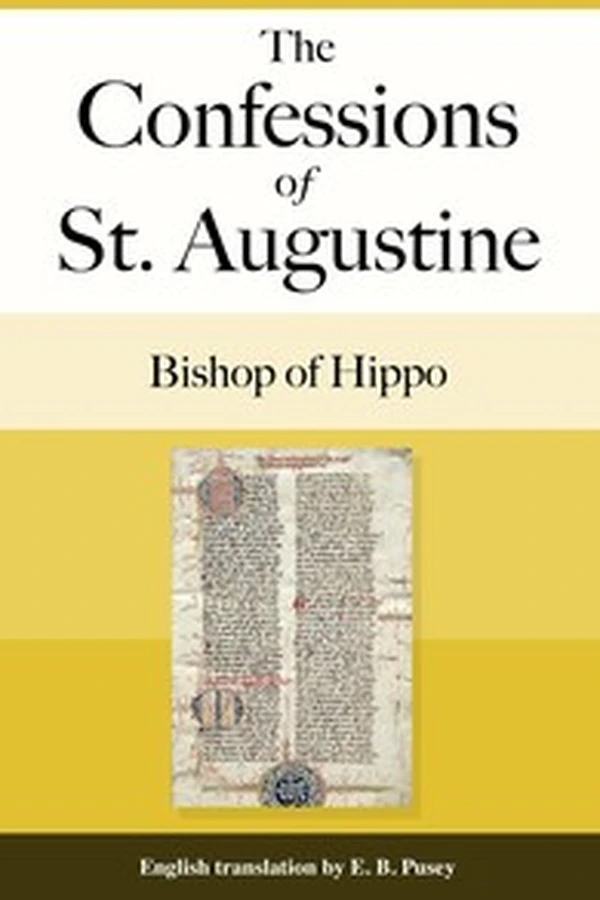
The Confessions of St. Augustine
📖 Click to Read the Opening Pages Online Preview
Book I — the opening of the Confessions
Great art Thou, O Lord, and greatly to be praised; great is Thy power, and Thy wisdom infinite. And Thee would man praise; man, but a particle of Thy creation; man, that bears about him his mortality, the witness of his sin, the witness that Thou resistest the proud: yet would man praise Thee; he, but a particle of Thy creation. Thou awakest us to delight in Thy praise; for Thou madest us for Thyself, and our heart is restless, until it repose in Thee. Grant me, Lord, to know and understand which is first, to call on Thee or to praise Thee? and, again, to know Thee or to call on Thee? for who can call on Thee, not knowing Thee? for he that knoweth Thee not, may call on Thee as other than Thou art. Or, is it rather, that we call on Thee that we may know Thee? but how shall they call on Him in whom they have not believed? or how shall they believe without a preacher? and they that seek the Lord shall praise Him: for they that seek shall find Him, and they that find shall praise Him. I will seek Thee, Lord, by calling on Thee; and will call on Thee, believing in Thee; for to us hast Thou been preached. My faith, Lord, shall call on Thee, which Thou hast given me, wherewith Thou hast inspired me, through the Incarnation of Thy Son, through the ministry of the Preacher.
And how shall I call upon my God, my God and Lord, since, when I call for Him, I shall be calling Him to myself? and what room is there within me, whither my God can come into me? whither can God come into me, God who made heaven and earth? is there, indeed, O Lord my God, aught in me that can contain Thee? do then heaven and earth, which Thou hast made, and wherein Thou hast made me, contain Thee? or, because nothing which exists could exist without Thee, doth therefore whatever exists contain Thee? Since, then, I too exist, why do I seek that Thou shouldest enter into me, who were not, wert Thou not in me? Why? because I am not gone down in hell, and yet Thou art there also. For if I go down into hell, Thou art there. I could not be then, O my God, could not be at all, wert Thou not in me; or, rather, unless I were in Thee, of whom are all things, by whom are all things, in whom are all things? Even so, Lord, even so. Whither do I call Thee, since I am in Thee? or whence canst Thou enter into me? for whither can I go beyond heaven and earth, that thence my God should come into me, who hath said, I fill the heaven and the earth.
Do the heaven and earth then contain Thee, since Thou fillest them? or dost Thou fill them and yet overflow, since they do not contain Thee? And whither, when the heaven and the earth are filled, pourest Thou forth the remainder of Thyself? or hast Thou no need that aught contain Thee, who containest all things, since what Thou fillest Thou fillest by containing it? for the vessels which Thou fillest uphold Thee not, since, though they were broken, Thou wert not poured out. And when Thou art poured out on us, Thou art not cast down, but Thou upliftest us; Thou art not dissipated, but Thou gatherest us. But Thou who fillest all things, fillest Thou them with Thy whole self? or, since all things cannot contain Thee wholly, do they contain part of Thee? and all at once the same part? or each its own part, the greater more, the smaller less? And is, then one part of Thee greater, another less? or, art Thou wholly every where, while nothing contains Thee wholly?
The first paragraphs of Book I in Pusey’s 1909 translation. Download all thirteen books to keep reading.
Download Full EPUBc. 397-400
~112,000 words (estimated)
Approx. 6.2 hours
Standalone
Thagaste, Carthage, Rome, Milan and Ostia, 354-430
13 books, 10 summaries
EPUB · AZW3 · KEPUB
0.44 MB (EPUB) · 0.59 MB (AZW3) · 0.46 MB (KEPUB)
Public domain in the United States
Project Gutenberg #3296
The Confessions of St. Augustine is a prayer in thirteen books, written about 397 to 400, in which a bishop in his forties tells God the story of his own life. It begins with infancy at Thagaste, moves through school and the pears he stole with friends, nine years as a Manichee, a career in rhetoric at Carthage, Rome and Milan, and ends with his baptism in 387 and his mother’s death at Ostia. The narrative stops there. The last four books leave autobiography behind for memory, time and the opening of Genesis, so that a life story becomes an argument about what any life is.
The book’s method is confession in the old sense: praise and accusation at once. Augustine does not narrate his sins to display them but to ask what they were for, and the small sins interest him as much as the large ones, a stolen pear as much as a lost faith. Readers who want doctrine will find it in Books X to XIII; readers who want a life will find it in the first nine, and the two halves are joined by the same question. See Wikipedia’s article on The Confessions of St. Augustine for its publication history. The text is available via Project Gutenberg #3296.
The Confessions of St. Augustine by Augustine of Hippo: Summary, Characters & Themes
This page is a summary and analysis of The Confessions of St. Augustine, the thirteen books of prayer, memory and argument that a North African bishop finished at the end of the fourth century. It follows the work from its first sentence to the closing meditation on the sabbath, sets out the people who appear in it, and marks the passages that have kept it in print. It is written for a reader who has not opened the book before, and it quotes the Pusey translation printed in this edition so that the phrasing can be recognised when it comes. The book summaries follow in order, the Latin terms are glossed as they occur, and nothing here assumes that the reader knows either the period or the church history behind it.
The author is Augustine of Hippo, and the text of The Confessions of St. Augustine itself has a long critical history. He was born at Thagaste in 354, the son of a small landowner and a Christian mother whose patience with a violent husband is one of the book’s quiet subjects. School at Madaura and rhetoric at Carthage led to teaching posts at Carthage, Rome and Milan; Cicero’s lost Hortensius made him want philosophy at nineteen, the Manichees held him for nine years, and a chair of rhetoric at Milan brought him within hearing of Ambrose. He was baptised in 387, made bishop of Hippo in 395 or 396, and died there in 430 with the Vandals inside the walls. The distance between the bishop writing and the young man he describes is the book’s engine, and the Confessions were composed in the years between his consecration and the end.
The English text is E. B. Pusey’s translation, printed in 1909 and descended from his version of 1838. Pusey was a leader of the Oxford Movement and Regius Professor of Hebrew at Oxford, and his prose keeps the Latin’s long sentences and the second person singular of prayer: it capitalises the pronouns of address, retains ‘Thou’ and ‘art’, and does not break Augustine’s periods into modern short ones. The cost is a certain Victorian heaviness and a handful of words that have drifted since 1909. The gain is that the shape of the Latin survives, and the archaic prayer voice sits closer to the original’s register than a contemporary version would, which matters in a book that is addressed to God from the first word to the last.
The book matters historically because it invented a way of writing about a self. Earlier writers recorded deeds and opinions; Augustine records the movements of his own will, the wishes he did not act on, the memory that will not obey him. Petrarch carried a copy up Mont Ventoux; Luther read it as a defence of grace; Rousseau borrowed its title and inverted its aim. The nearest ancient relatives are Meditations, which also turn a life into examination, and Republic, whose cave stands behind the ascent of Book VII and whose philosopher-kings stand behind Augustine’s later politics. Neither book talks to God, and that is the difference. What separates the Confessions from both is the address: the book is spoken to God, not written about oneself for a reading public, and the reader overhears a prayer rather than receiving a memoir.
Readers expecting an autobiography are usually surprised by the last four books, and it helps to know that the work is arranged as a confession in three senses: of praise, of sin and of faith. Books I to IX are the narrative, and the famous scenes are there, the pear tree, the theatres of Carthage, the garden at Milan, the window at Ostia. Book X examines memory, and Books XI to XIII comment on the first verses of Genesis until the commentary becomes an inquiry into time. The child who stole pears for the pleasure of the theft is the man who cannot say what time is, and the two halves of the book belong to one argument. The text used here is the Project Gutenberg #3296 transcription of the 1909 Pusey edition, in the public domain.
Historical Context
Roman North Africa in the fourth century was wealthy, urban and quarrelsome. Carthage was the second city of the West, its schools of rhetoric full of provincial boys who wanted careers in Rome, and Christianity had been legal since Constantine and official since Theodosius. The African church carried its own burdens: the Donatist schism, eighty years old, was still the majority church in many towns when Augustine became bishop, and the Manichean sect he had joined as a young man was a small, disciplined mission from Persia, visible enough in Africa that Augustine was still writing books against it twenty years after he left it.
The intellectual weather of the 380s was Neoplatonist. Plotinus taught that reality descends from a single source, that evil is a falling away rather than a thing, and that the soul ascends by turning inward; his Latin translator Marius Victorinus had been a professor of rhetoric in Rome, and Augustine heard his story from Simplicianus at Milan. Against that background the Confessions answer the Manichees by showing a life ruined by their cosmology and healed without it, and answer the pagans who blamed Christianity for Rome’s troubles by producing a convert who held the empire’s prizes and quietly let them go while the empire still seemed to need such men.
The text has never been out of use. It was copied in monasteries, quoted in florilegia, printed in the 1470s soon after movable type reached Italy, and edited continuously since. Pusey’s version appeared in 1838 and was reprinted in 1909 in the form used here. The Project Gutenberg file was made from that edition, with its chapter divisions and archaic pointing kept, so a reader comparing a quotation with the Latin will find the same order of sentences; what will not match is the punctuation, regularised in the Victorian manner, and the capitalisation of divine pronouns, which follows the Victorian convention of his day.
Key Characters & Literary Archetypes
- Augustine: both narrator and subject, and the gap between them is the book. The man writing is a bishop of forty-three with authority, enemies and a settled faith; the man described steals pears for the pleasure of stealing, weeps in theatres, keeps a concubine for fifteen years because marriage was impossible, and prays to be made chaste later rather than now. He refuses to flatter either self, and his recurring image of himself is a barren land that God waters without being asked.
- Monica: his mother, whom Pusey prints as Monnica, double n from the Latin. Book IX gives her own history: as a girl sent to fetch wine she acquired the habit of sipping, and was cured not by reproof but by a servant’s taunt of ‘wine-bibber’. She married a hot-tempered pagan and managed him by patience and silence during his rages. Her dream of standing on a wooden rule, told in Book III, is the first sign that her prayers are answered slowly. She dies at Ostia at fifty-six, asking only to be remembered at the altar.
- Alypius: the friend from Thagaste who becomes bishop there and appears at every hinge of the story. He has a taste for spectacle, and two of his scenes are miniature essays on compulsion: at the gladiators he covers his eyes, opens them at a shout, and is hooked for life; at the chariot races he is dragged in as a spectator and infected within a day. He is also the man who, in the Milan garden, reads one more verse after Augustine has read his, and stays.
- Nebridius: the friend who dies young and whose absence shadows Book IX. He was gifted, poor and incorruptible, had followed Augustine from Carthage to Milan, and is remembered for an argument: if the Manichees’ nation of darkness is a real substance, what could it do to God that God did not permit, and if nothing, why call it a power? The question is put so plainly that it survives as a refutation. He was baptised before his death, and Augustine says only that he lives ‘in Abraham’s bosom’.
- Faustus: the Manichean bishop whose arrival Augustine awaits as the answer to every objection, and whose failure is the turning point of Book V. He is eloquent, courteous and shallow: he cannot explain the eclipses and the phases of the moon that had troubled Augustine since Carthage, admits as much with disarming honesty, and is revealed as a man of pleasing speech rather than learning. The scene is comic and cruel, a young provincial meeting his hero and finding a professional talker. Augustine does not leave the sect that day, but the ground is gone.
- Ambrose: the bishop of Milan to whom Augustine goes to hear a sermon on style and stays to hear a doctrine. He reads the Old Testament figuratively, so the embarrassments of the literal sense fall away, and his method solves in an afternoon a problem that had kept Augustine out of the church for years. He is also a political bishop who stands up to the court, and the Milan of the 380s is a city where Justina’s Arian party besieges the basilicas and the congregation sings Ambrose’s hymns through the night.
Core Literary Themes
- Sin as misdirected love: The pear tree of Book II is the book’s most famous argument and its most ordinary crime. Augustine and his friends shake down a tree they do not want, take fruit they do not eat and throw it to the pigs, and the interest of the scene is that the pleasure lay in the company and not the fruit. ‘Alone I had never done it’, he writes, and in that sentence sin becomes a social act rather than an appetite. The pattern holds for everything after: the theatres where he wept over fictional griefs, the rhetoric he taught for money, the woman he could not marry and would not leave.
- The divided will: Book VIII states the problem in the language it has kept: two wills, one old and one new, neither strong enough to dismiss the other. He describes habit as a chain forged link by link, a lust that became a custom and a custom that became a necessity, and the paralysis of a man who can command his body and not himself. The prayer ‘Give me chastity and continency, only not yet’ is not hypocrisy but diagnosis: he wants the end and fears the means. The conversion in the garden happens without argument and without merit, when the will stops negotiating.
- Memory and the self: Book X turns from narrative to a search for God in the mind, and finds a memory so large the mind cannot contain it, ‘a fearful thing, O my God, a deep and boundless manifoldness’. Augustine catalogues what memory holds, the skills of the schools, the rules of grammar, the images of places he has left, the emotions he can recall without feeling, and discovers that he remembers having forgotten, which ought to be impossible. The chapter is the first sustained analysis of an inner world in Western prose, and its questions remain: what is a self that can be looked for and not found? ‘Men go abroad to admire the heights of mountains’, he writes, ‘and pass themselves by.’
- Time and eternity: Book XI asks what time is, and answers that anyone can ask and no one can say. Past and future do not exist, since the past is no longer and the future is not yet; what exists is a present of things past, a present of things present and a present of things future, which is to say memory, attention and expectation. Augustine tests the argument on a line of hymn verse, eight syllables long, and finds the poem measured in the mind even as it passes. Time is a distension of the mind, and God, who made it, stands outside it, so the question what God was doing before creation has no sense.
- Reading and interpretation: From Book XII onward the book becomes a commentary on Genesis, and the commentary is also a theory of reading. Augustine finds that the opening verses can be understood in several ways and that all may be true provided charity is kept; he warns against the reader who insists on his own reading and turns scripture into a quarrel. The ‘heaven of heavens’ becomes created wisdom contemplating God, the ‘deep’ becomes formless matter waiting for form, the six days become the church’s growth, and the seventh becomes the rest the whole book has been walking toward.
Why Download Our Custom E-Reader Edition of The Confessions of St. Augustine?
This edition gives you the complete thirteen books in Pusey’s 1909 English, unabridged, with the chapter divisions the printed edition carries, so the guide on this page can be checked against the text line by line. The passages most readers come for are here in the form they know them: the pears, the theatre, the garden, the window at Ostia and the question about time, which reads differently when you meet it in its place rather than in an anthology.
The files are DRM-free and come in three formats from one page: EPUB for most readers, AZW3 for older Kindles and KEPUB for Kobo devices. Each has a linked table of contents with the thirteen books and their chapters, which matters in a work this long, because the argument of Book XI is easier to follow if you can return to the hymn without scrolling through a conversion narrative to find it. An unabridged edition matters here, because abridgements usually stop at Book IX, and the argument of the last four books is the reason the narrative exists.
The guide above is written for the reader who wants context as well as text: what the Manichees taught and why it attracted him, who Ambrose was and why his manner of reading mattered, why a bishop wrote about his own sins at all. It also marks the places where the book stops being a life and becomes an inquiry, so that the last four books do not arrive as a surprise on the reader. The reading list at the end of the page continues the same argument about how a life should be lived, in Marcus Aurelius, Plato and Aristotle.
- Project Gutenberg transcription, via Project Gutenberg #3296 — the complete text, unabridged, with the chapter divisions of the Pusey edition.
- Translation E. B. Pusey’s English version, first published in 1838 and reprinted in 1909 in the form used here.
- Formats included EPUB, AZW3 and KEPUB, DRM-free, each with a linked table of contents for the thirteen books and their chapters.
- Reading companion The notes on this page explain the Manichees, the Neoplatonists, Monica’s vision at Ostia and the argument about time in Book XI.
- Meditations — free EPUB, AZW3 & KEPUB
- The Republic — free EPUB, AZW3 & KEPUB
- The Nicomachean Ethics — free EPUB, AZW3 & KEPUB
Chapter summaries
The Confessions runs to thirteen books, but the narrative of Augustine’s life occupies only the first nine; the last four turn to memory, time and the opening of Genesis. The summaries below group the thirteen into ten movements and follow them in order, quoting the text where the phrasing carries the argument.
- Books I-II: Thagaste, school and the pear tree: The book opens with a question: what can a finite creature say of an infinite God? He goes back to the baby crying for the breast, and to school, remembered as flogging. Then the pear tree: he and his friends shake down a neighbour’s tree at night and throw the fruit to the pigs. He loved the theft itself and the company of thieves; ‘alone I had never done it’.
- Book III: Carthage, the theatre and the Hortensius: He arrives at Carthage for rhetoric and is engulfed in ‘a cauldron of unholy loves’. The theatres teach him false feeling; he weeps at the griefs of actors, and the audience wants to be made sad. ‘I loved not yet, yet I loved to love.’ Cicero’s Hortensius makes him want wisdom, but the name of Christ is not in it, and he falls among the Manichees, whose two-substance account of evil answers a question nobody at home had answered.
- Book IV: Rhetoric, the dead friend and the beautiful: He teaches rhetoric at Thagaste, takes a woman not his wife, and loses the friend whose death nearly destroys him. The friend’s baptism, the quarrel and the funeral fill a few pages, and afterwards everything looks like death; he writes a book on beauty that is lost. He had loved a mortal thing as though it could not die, and ‘every inordinate affection should be its own punishment’.
- Book V: Faustus, Rome and Ambrose at Milan: The Manichean bishop Faustus arrives and disappoints him: he cannot answer the astronomical objections, and says so. Augustine drifts, goes to Rome against his mother’s prayers, falls ill, is cheated by students, and is offered the public chair of rhetoric at Milan through Symmachus. There Ambrose reads the Old Testament spiritually, and the Catholic faith becomes intellectually respectable, which makes him miserable in a new way.
- Book VI: Monica, Alypius and the beggar of Milan: Monica follows him to Milan, and the book becomes a gallery of false starts. Alypius goes to the gladiators with his eyes shut, opens them at a shout and is never free of the sight. A beggar in the street has had his dinner and is happy, and Augustine measures his own anxiety against that. He is engaged, dismisses the woman he lived with for fifteen years, and takes another while he waits.
- Book VII: The Platonists and the problem of evil: Two things break the Manichean system. Platonist books teach him that God is immaterial and evil is privation rather than substance; he reads the opening of John’s Gospel and finds the Word there, but not the Word made flesh. The other is his own will, which he cannot explain as a battle of substances. The ascent to ‘the Light Unchangeable’ leaves him outside the church.
- Book VIII: The garden at Milan and ‘tolle lege’: Simplicianus tells him of Victorinus, baptised at last and cheered by a crowd; Pontitianus tells him of Antony and of two officials at Trier who read a life of Antony and left their careers. Augustine goes into the garden at Milan, throws himself under a fig tree and weeps, because the will that commands the body cannot command itself. A child’s voice chants ‘Take up and read’; he opens Paul, reads Romans 13, and needs no more.
- Book IX: Cassiciacum, baptism and Ostia: He gives up his chair of rhetoric and retires to a country house with his mother, his son and a few friends. Cassiciacum is the happiest stretch in the book: the Psalms, the arguments about the happy life, the dialogues he wrote down. He is baptised at Milan at Easter 387. Then Monica’s death: at Ostia they lean at a window looking into a garden and rise together in thought past all created things; five days later she dies at fifty-six.
- Book X: Memory, temptation and the bishop’s confession: The narrative stops and the examination begins. Augustine searches for God in memory, described as a place with fields and palaces and storehouses, larger than the mind that holds it. He finds the liberal arts there, and the memory of having forgotten, which puzzles him. Then the prayer turns to the present: food, music, curiosity, and above all the desire for praise, the ‘daily furnace’ of his life.
- Books XI-XIII: Time, Genesis and the sabbath rest: The last books begin with a question about time. Augustine asks what God was doing before creation, decides the question is badly formed, and asks what time is: a distension of the mind, a present of memory, attention and expectation. He measures a hymn verse syllable by syllable, then reads Genesis in several senses at once, insisting that charity, not certainty, is the rule of interpretation. The seventh day is rest.
The Confessions of St. Augustine: Frequently Asked Questions
What is The Confessions of St. Augustine about?
When was it written, and is it really an autobiography?
Who was Augustine of Hippo?
How should a first-time reader approach it?
What is the Pusey translation and why use it?
What is the ‘tolle lege’ scene?
Why does an autobiography end with time and Genesis?
Where can I get The Confessions of St. Augustine as a free EPUB?
Part of: Philosophy classics · All classic books