The Prisoner of Zenda by Anthony Hope: Free EPUB, AZW3 & KEPUB Download
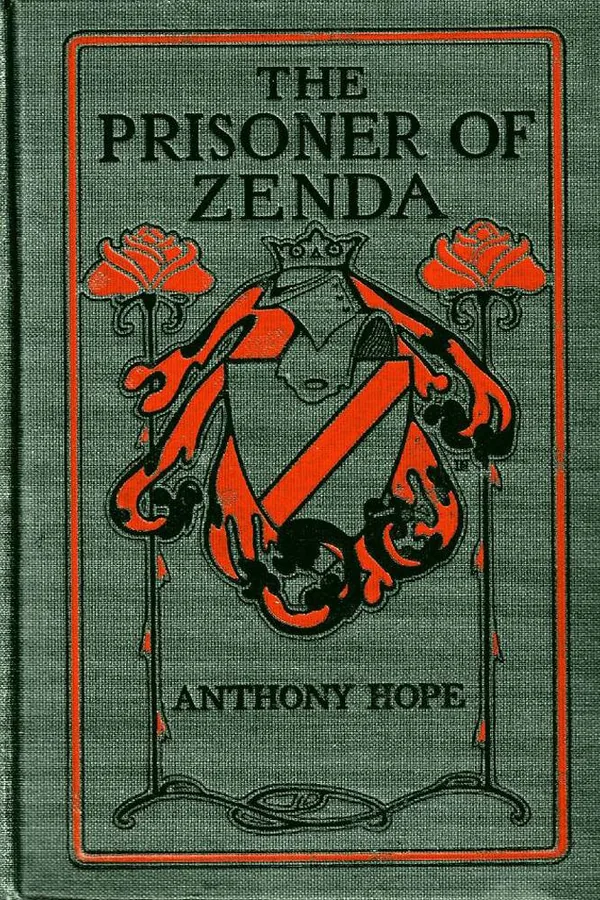
The Prisoner of Zenda
📖 Click to Read the Opening Pages Online Preview
A question at the breakfast table
“I wonder when in the world you’re going to do anything, Rudolf?” said my brother’s wife.
“My dear Rose,” I answered, laying down my egg-spoon, “why in the world should I do anything? My position is a comfortable one. I have an income nearly sufficient for my wants (no one’s income is ever quite sufficient, you know), I enjoy an enviable social position: I am brother to Lord Burlesdon, and brother-in-law to that charming lady, his countess. Behold, it is enough!”
The excerpt stops after Rudolf’s answer that his income and his position are enough, before Rose’s retort about his nine-and-twenty years and the entrance of his brother.
Download Full EPUB1894
Novel
~54,000 words (estimated)
Approx. 3.0 hours
Standalone
Ruritania, in the 1890s
Twenty-two chapters in ten parts
EPUB · AZW3 · KEPUB
0.37 MB (EPUB) · 0.47 MB (AZW3) · 0.40 MB (KEPUB)
Public domain in the United States
Project Gutenberg #95
Rudolf Rassendyll, a well-off Englishman of nine-and-twenty, travels to Ruritania for a coronation and discovers that he is the double of the new king, a distant cousin. On the eve of the ceremony a drugged flagon leaves the king insensible, and two of his servants persuade the Englishman to take his place in Strelsau. He is crowned, he falls in love with the Princess Flavia, and then he learns that the real king is a prisoner in the castle at Zenda. What follows is a rescue, a feud with the reckless Rupert of Hentzau, and a choice between love and duty. The book is short, quick, and careful about what the deception costs.
Anthony Hope’s novel is a first-person adventure told by the man who wore another man’s crown for a few weeks. It moves from a London breakfast table to Paris, a forest inn, the cathedral at Strelsau and the moat under the castle at Zenda, and it keeps its speed by letting the narrator admit how much he enjoys the deception. Hope writes in short scenes and lets the reader do the guessing. Background on the book is on the The Prisoner of Zenda page. The text is available via Project Gutenberg #95.
The Prisoner of Zenda by Anthony Hope: Summary, Characters & Themes
This page is a reading guide, summary and analysis of The Prisoner of Zenda by Anthony Hope, first published in 1894. The book is short and fast, twenty-two chapters that run from a London breakfast table to a castle in an invented country, and it is narrated by a man who is honest about his own vanity. It belongs to the adventure fiction of its decade and to the older tradition of the swapped-identity story, and it does both jobs in plain, quick prose. The guide follows the chapters in order, names the people who matter, and marks the scenes where the plot turns. It is also a book about acting, and about how easily an honest man can be persuaded to enjoy a part. Quotations are short, and the page does not replace the novel.
Anthony Hope (1863-1933), whose real name was Anthony Hope Hawkins, trained as a barrister before this book made his name. The novel prints almost nothing about him: a title page, a name and a date, and then the story. The Wikipedia entry on Anthony Hope supplies the biography that the volume leaves out, including the legal career, the other novels and the later book that returned to Ruritania. That background is worth having, but the story stands without it, and a reader who comes to the novel first will find the entry more interesting afterwards.
The opening chapters do their work quickly. Rudolf Rassendyll is idle, good-humoured and twenty-nine, with the red hair and long nose that the Rassendylls inherit from a scandal of 1733. He goes to Ruritania to watch his distant cousin crowned, is seen in the forest by two of the king’s friends and told, half in joke, that a shave would make him the king, and is drawn into the plot when the king is drugged on the eve of the ceremony. Sapt and Fritz, the king’s friends, ask him to take the throne for a day; the day becomes weeks. Rose’s question is the kind of question a clever family asks, and Rudolf’s answer is the kind of answer that sounds better at breakfast than it does at midnight. Readers who like this kind of brisk, well-made adventure will find a different but equally deliberate opening in A Study in Scarlet.
The second half changes key. Rudolf, crowned and in love with Flavia, must keep the imposture alive while the real king wastes in a cell under the castle at Zenda, guarded by the duke’s men and by the young Rupert of Hentzau. The rescue is planned like a campaign and fought like a duel, and the novel is careful about what it costs. Its comedy of manners is thinner than its adventure, but the scenes at court have a wit of their own, and the ball in Strelsau is a fine piece of comic staging; for comedy of a cooler kind, The Importance of Being Earnest is the companion piece. The duel with Rupert is the best of the fights, and the last chapter is the quietest thing in the book.
This edition follows the Project Gutenberg transcription of the 1894 text, with the twenty-two chapter headings as printed. The novel has no preface, notes or introduction, and this page does not invent any; it also does not tidy the narrator’s asides, which are part of the book’s manner. The chapter titles are Hope’s own, and a few of them are jokes. The full text is at Project Gutenberg #95, and the rest of the shelf is gathered under Classic Fiction. Readers who know the story only from films will find the book narrower, drier and more interested in the mechanics of the deception than any adaptation.
Historical Context
Ruritania is invented, and the novel is careful to keep it so. It gives the country a capital, Strelsau, a frontier, a small town called Zenda fifty miles short of the capital and ten from the border, a forest, a cathedral and a castle with a moat, and it gives almost nothing else: no constitution, no neighbours and no history beyond a duel in 1733. The names are invented too: Ruritania, Strelsau, Zenda and the Elphbergs belong to the book alone. That is enough for the story and not enough for a map. The book never asks to be read as a portrait of a real state, and nothing in it identifies a real one.
The novel appeared in 1894, in the middle of a decade that liked imaginary kingdoms and court intrigue. Its speed is the point: short chapters, a first-person narrator who explains what he is doing, and a plot that keeps moving between London, Paris, the road to the Tyrol and the Ruritanian capital. Hope had been a barrister, and the book has a lawyer’s pleasure in arrangements, alibis and forged signatures. Hope’s prose is plain and his scenes are short, and the book asks for no historical knowledge at all. The adjective Ruritanian later came to describe exactly this kind of invented court, which is a measure of how completely the novel made its own country.
The politics are the politics of romance, not of argument. The coronation is a religious ceremony with an oath, a cardinal and a crown, and the king’s authority is treated as a fact of the world rather than as a question. The novel’s interest is in what a man will do when he holds that authority without owning it, and in the difference between the king as a person and the king as a symbol. The book is careful to keep the king’s cause just: Michael has a claim, but he is a kidnapper, and the political argument never excuses the murder planned in the cellar. That is why the novel can be read as an adventure and still leave a question behind: what makes a king, the blood, the oath, or the performance?
Key Characters & Literary Archetypes
- Rudolf Rassendyll: The narrator, twenty-nine, red-haired and long-nosed, with a private income and no occupation. He is vain, funny and braver than he admits, and he takes to the role of king more easily than he expects. His honesty about his own motives is the book’s best effect, and his likeness to the king is the plot’s engine. He is the book’s eyes as well as its hero, and its jokes are mostly his.
- Princess Flavia: The king’s cousin, red-haired and proud, who falls in love with the man she believes to be the king. She is not a fool and not a prize: she sees the change in him, asks the questions that matter, and at the end chooses her country over her love. Her dignity in the last chapters is the novel’s moral centre. She has the hardest sentence to say, and she says it without bitterness.
- Colonel Sapt: The old colonel who has eaten the king’s bread and will not desert him. Gruff, practical and unscrupulous in a good cause, he proposes the impersonation, forges the order that covers it, and keeps the impostor steady. He is the book’s strategist and its conscience of service, and he is fonder of Rudolf than he lets on. His remark about the king’s bread is the shortest statement of the novel’s ethics.
- Duke Michael of Strelsau: The king’s half-brother, son of the old king by a morganatic marriage, and master of the castle at Zenda. He is called Black Michael, and the nickname is unfair only in part: he is patient, proud and in love with Flavia, and he would rather rule than murder. His quarrel with Rupert destroys him. He is a villain of policy rather than appetite, and the book gives him a kind of dignity.
- Rupert of Hentzau: The youngest of the duke’s Six, a Ruritanian gentleman, handsome, insolent and entirely without scruples. He stabs Rudolf in the shoulder, betrays Michael, kills him, and escapes at the end, laughing. He is the book’s most attractive villain and the one the narrator cannot quite forget. He is the only character who seems to enjoy the story as much as the reader does.
- Antoinette de Mauban: The rich widow from Paris who follows Michael to Ruritania and finds herself his tool. She writes the warning letters, keeps the appointment at the summer-house only to warn Rudolf, and at the end fires at Rupert over the duke’s body. Jealous, compromised and finally brave, she is the novel’s study of a woman used and using in return. Her last appearance is her best: she tells the truth and asks for nothing.
Core Literary Themes
- The double and the borrowed life: Rudolf Rassendyll is not the king and never pretends to be for his own gain, but the novel is fascinated by how quickly a borrowed part becomes a life. He learns the king’s habits, signs in the king’s name and falls in love in the king’s name, and the book lets him enjoy it. The double is an old device, and Hope uses it to ask a sharper question: how much of a person is a performance? Rudolf’s answer, at the end, is that the performance must be given up, and the giving up is harder than the fighting. The novel never lets him forget that the face is a coincidence and the crown is a loan.
- Love and the claims of honour: Flavia’s choice at the end is the hinge of the book. She loves Rudolf, not the king, and she says so; but she is of the royal house, and she stays to marry a man she does not love because her country needs a queen. The novel does not call this a sacrifice in so many words, and it does not let Rudolf off either: he has to let her go. The rose and the slip of paper he sends and receives each year are all that is left of the love, and the book treats that as enough. Hope keeps the sentiment short and puts the argument in dialogue, which is why the scene does not turn into a sermon.
- The king as a symbol: The coronation chapters are the book’s set piece, and they are careful about what a crown does. The cardinal anoints, the oath is sworn, the people cheer a man who is not the king, and the ceremony works anyway. Hope keeps the ritual serious while letting his narrator see the comedy inside it. The point is not that kingship is a fraud but that it is a role with real power, which is why an Englishman with the right face can carry it and why the real king, when he returns, has to look the part again. The impostor is a better king than the king, and the book notices that without saying it outright.
- Service and its limits: Sapt says that he has eaten the king’s bread, and that sentence does most of the work of the novel’s ethics. Loyalty here is not blind: Sapt lies, forges and risks a war for the man he serves, and he knows exactly what he is doing. Fritz is the gentler version of the same thing, and Johann the keeper is the bought and resentful version. The book asks what loyalty is worth when the person you serve is not the person you thought, and it answers with work rather than with speeches. Sapt’s loyalty is the more impressive because he is not a sentimental man.
- The charm of the villain: Rupert of Hentzau takes the energy of the book with him whenever he appears. He is a liar, a bully and a murderer, and the narrator calls him reckless and wary, graceful and graceless, handsome, debonair, vile, and unconquered. That description is also the novel’s admission that villainy can be attractive, and the last chapter leaves him alive and at large, planning wickedness somewhere. The book is honest enough not to punish him, and the honesty is what makes him memorable. Hope gives him the best lines and the last laugh, and the book is the better for it.
Why Download Our Custom E-Reader Edition of The Prisoner of Zenda?
The text here is the complete Project Gutenberg transcription of the novel, not an abridgement or a retelling. All twenty-two chapters are present, with their headings, their divisions and the narrator’s asides exactly as the transcription prints them. Nothing has been modernised, cut or rewritten, so a passage quoted in a classroom or a review can be found where the book puts it. The transcription keeps the original punctuation, including the dashes that carry so much of the narrator’s humour. The story is short enough to read in a few evenings, and this edition keeps every part of it.
The file is built for reading rather than for study. The chapter headings open as headings, the ten groups below follow the printed order, and the paragraphs keep their original breaks instead of collapsing into one block. It opens in any reader, on a phone, a tablet or a dedicated e-reader, and it is small enough to keep on a device beside a dozen other titles. There are no page images to wait for and no scans to zoom into. Long paragraphs are broken where the printed book breaks them, so the pace of a scene survives.
The novel has no preface, notes or critical apparatus, and this edition does not invent any. What it adds is clean type and usable navigation, and nothing that would come between a reader and the page. If you want the source, the transcription used here was released as Project Gutenberg #95, and the chapters there are the same twenty-two, in the same order, with the same wording. A comparison of any paragraph will show that nothing has been smoothed out to make the book easier to teach. If a sentence seems odd, it is probably the 1894 sentence and not a scanning error.
- Project Gutenberg transcription, via Project Gutenberg #95 is the complete text used for this edition, with all twenty-two chapters and the original chapter headings kept.
- Twenty-two chapters, complete Every chapter of the 1894 novel appears here in full, from the breakfast in Park Lane to the last page at Dresden, rather than as an extract or a summary.
- Ten groups for navigation The chapters are gathered into ten parts that follow the printed order, so the coronation, the captivity and the rescue can be found at a tap without losing the narrator’s thread.
- Small file, no scans The book is plain text, with no page images, so it opens quickly, searches cleanly and keeps its place on any reader, and the whole book fits in a single evening.
- Every Anthony Hope title on the shelf, with this novel and the rest of his fiction listed together, all in the same clean format. — free EPUB, AZW3 & KEPUB
- The wider shelf of free classics, from Conan Doyle and Wilde to the adventure writers of the same years. — free EPUB, AZW3 & KEPUB
- Wilde’s comedy of borrowed names and invented selves, the closest thing in the period to Hope’s joke about a man who is taken for another. — free EPUB, AZW3 & KEPUB
Chapter summaries
The novel prints twenty-two chapters with titles of their own, and the groups below follow that order. The labels are editorial, not the author’s, and the chapter headings in the text are longer and often funnier. Each group covers two or three chapters and keeps to what the narrator reports; short quotations are his own words or those of the people he talks to. No scene is described that the text does not put on the page.
- Part 1 – The Rassendylls and the Elphbergs (Ch. 1-2): Breakfast in Park Lane, where Rose asks her brother-in-law what he means to do with his life, and Rudolf explains that his income and his position are enough. The family story of the 1733 duel over Countess Amelia explains his red hair. He leaves for Ruritania, meets Antoinette de Mauban in Paris, and reaches the inn at Zenda, where the keeper Johann stares at him.
- Part 2 – The King keeps his appointment (Ch. 3-4): A walk through the forest, a view of the castle across its moat, and a meeting with Colonel Sapt and Fritz von Tarlenheim, who see the likeness and say that a shave would make him the king. The king himself invites him to dinner at the hunting-lodge, drinks from a flagon sent by his brother, and collapses. The king’s laugh and his heavy drinking are the last things Rudolf sees of him before the flagon does its work. Sapt proposes the impersonation; Rudolf rides for the train to Strelsau.
- Part 3 – The coronation (Ch. 5-6): Marshal Strakencz meets him at the station, the procession crosses the Old Town to the cathedral, and the cardinal anoints him. He takes the crown himself, and the cathedral cheers a man who is not the king. Princess Flavia kisses his hand. The Old Town is sullen and the New Town cheers, and Rudolf rides through both. That evening Sapt forges an order, and the two ride back to the lodge to find Josef murdered and the king gone. Sapt decides that the imposture must continue.
- Part 4 – The king who stays in Strelsau (Ch. 7-8): Rudolf keeps the throne warm, learns the king’s habits, signs documents with a mark because of his wounded finger, and receives the diplomatic corps. Fritz wants to arrest the duke, and Sapt explains why neither side can move. Michael presents three of his men, De Gautet, Bersonin and the Englishman Detchard, and Flavia warns Rudolf to be careful. The chapter’s comedy is in the paperwork, and its tension is in the ante-room where Michael waits.
- Part 5 – The summer-house and the ball (Ch. 9-10): A letter in a woman’s hand takes Rudolf to a summer-house at midnight, where Antoinette de Mauban warns him that three men are coming to kill him. He holds them off with an iron tea-table and escapes over a wall. Then the police report, a ball, and a waltz with Flavia; by morning Sapt has decided that they must go to Zenda. Sapt’s comment on the night’s work is that he has the finest tea-table story ever told.
- Part 6 – The road to Zenda (Ch. 11-12): Rudolf gives Marshal Strakencz a sealed order that would depose Michael and stand by Flavia if no courier comes. He says goodbye to the princess, then takes a party to the Tarlenheim chateau, five miles from Zenda, under cover of a boar hunt. Rupert of Hentzau arrives with an insolent embassy, and Johann the keeper is lured to a meeting outside the town. The embassy is a warning, and the shooting in the wood is a plainer one.
- Part 7 – Jacob’s Ladder (Ch. 13-14): Rupert offers Rudolf a safe-conduct and a fortune, then stabs him in the shoulder and rides off. Johann, caught in the snare, explains the cell under the castle, the steel chains, and the great pipe called Jacob’s Ladder that leads to the moat. Rudolf swims the moat by night, kills Max Holf, hears the king’s voice, and escapes while two of the Six are killed. The pipe is the novel’s best invention, and the plan to use it is the worst thing in the book.
- Part 8 – The tempter and the plan (Ch. 15-16): Rudolf issues an edict against duelling and exchanges courtesies with Michael while a police inquiry looks for the missing Englishman. Rupert proposes a treacherous bargain during a funeral procession, and Antoinette sends a note begging to be rescued. The betrothal date is fixed, and Johann brings the guard rota and the plan for two in the morning. Rudolf’s promise to tell the truth if the king is not restored is the chapter’s real threat.
- Part 9 – The night of the rescue (Ch. 17-19): Rudolf swims the moat with a ladder and waits below the wall while Rupert visits Antoinette. Her cry comes early, Michael is stabbed by Rupert, and Rudolf takes the keys from De Gautet. He kills Bersonin, fights Detchard while the imprisoned doctor pins the murderer’s arms and the delirious king pushes a chair, and pursues Rupert into the forest. The fight there leaves a gash in Rupert’s cheek, and he rides off on a farm-girl’s horse while Fritz brings the news that the king is alive. The king’s delirium is the book’s one scene of pure pity.
- Part 10 – The prisoner and the King (Ch. 20-22): Antoinette tells how Rupert came to her room and killed the duke, and Sapt arranges the official story of a king who rescued his friend. Flavia learns the truth and chooses her country; the king thanks Rudolf and keeps the secret. Rudolf returns to England, declines the embassy at Strelsau, and meets Fritz each year at Dresden, where a rose and a message pass between them. The last pages are quiet, and the book ends on a prayer rather than a triumph.
The Prisoner of Zenda: Frequently Asked Questions
What is The Prisoner of Zenda about?
Is Ruritania a real country?
Why does Rudolf impersonate the king?
Who are the Six?
What happens at the Castle of Zenda?
Does Rudolf Rassendyll marry Princess Flavia?
How does the novel end?
Where can I read the full text?
Part of: Classic Fiction · Anthony Hope