The Three Musketeers by Alexandre Dumas: Free EPUB, AZW3 & KEPUB Download
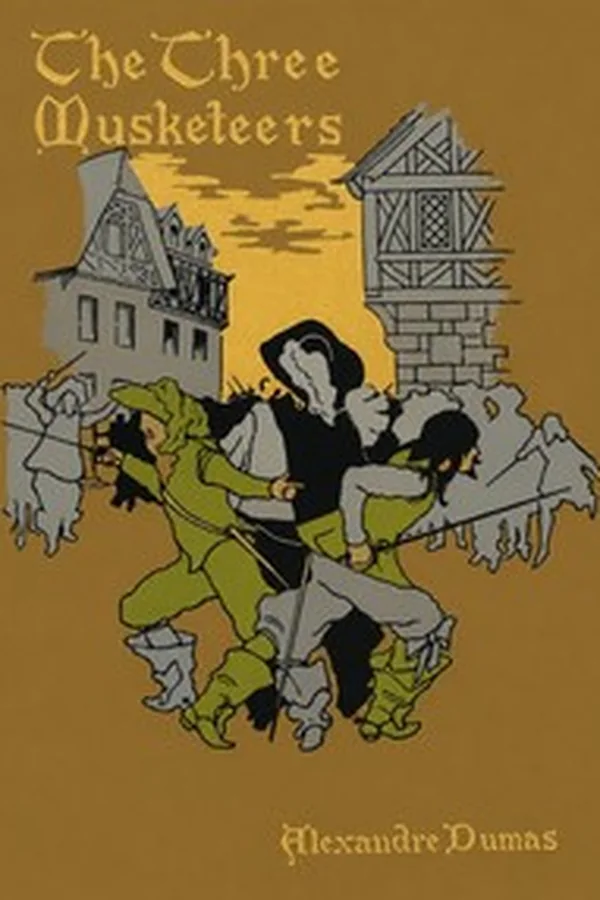
The Three Musketeers
📖 Click to Read the Opening Pages Online Preview
The story begins
On the first Monday of the month of April, 1625, the market town of Meung, in which the author of Romance of the Rose was born, appeared to be in as perfect a state of revolution as if the Huguenots had just made a second La Rochelle of it. Many citizens, seeing the women flying toward the High Street, leaving their children crying at the open doors, hastened to don the cuirass, and supporting their somewhat uncertain courage with a musket or a partisan, directed their steps toward the hostelry of the Jolly Miller, before which was gathered, increasing every minute, a compact group, vociferous and full of curiosity.
In those times panics were common, and few days passed without some city or other registering in its archives an event of this kind. There were nobles, who made war against each other; there was the king, who made war against the cardinal; there was Spain, which made war against the king. Then, in addition to these concealed or public, secret or open wars, there were robbers, mendicants, Huguenots, wolves, and scoundrels, who made war upon everybody. The citizens always took up arms readily against thieves, wolves or scoundrels, often against nobles or Huguenots, sometimes against the king, but never against the cardinal or Spain. It resulted, then, from this habit that on the said first Monday of April, 1625, the citizens, on hearing the clamor, and seeing neither the red-and-yellow standard nor the livery of the Duc de Richelieu, rushed toward the hostel of the Jolly Miller. When arrived there, the cause of the hubbub was apparent to all.
A young man—we can sketch his portrait at a dash. Imagine to yourself a Don Quixote of eighteen; a Don Quixote without his corselet, without his coat of mail, without his cuisses; a Don Quixote clothed in a woolen doublet, the blue color of which had faded into a nameless shade between lees of wine and a heavenly azure; face long and brown; high cheek bones, a sign of sagacity; the maxillary muscles enormously developed, an infallible sign by which a Gascon may always be detected, even without his cap—and our young man wore a cap set off with a sort of feather; the eye open and intelligent; the nose hooked, but finely chiseled. Too big for a youth, too small for a grown man, an experienced eye might have taken him for a farmer’s son upon a journey had it not been for the long sword which, dangling from a leather baldric, hit against the calves of its owner as he walked, and against the rough side of his steed when he was on horseback.
The beating at Meung, the stolen letter and the ride to Paris stop here. The three duels, the diamond studs and everything after them are in the free EPUB below.
Download Full EPUB1844
~226,000 words (estimated)
Approx. 12.6 hours
The d’Artagnan Romances
France, 1625–1628, under Louis XIII and Cardinal Richelieu — Paris, the siege of La Rochelle, and a road that runs to the English coast
11 parts
EPUB · AZW3 · KEPUB
0.80 MB (EPUB) · 1.15 MB (AZW3) · 0.89 MB (KEPUB)
Public domain in the United States
Project Gutenberg #1257
The Three Musketeers is Alexandre Dumas’s 1844 novel of a Gascon boy who arrives in Paris with fifteen crowns, a letter to the captain of the Musketeers and an unmanageable temper. Within a week d’Artagnan has promised three duels to three strangers, fought the cardinal’s guards beside them, and acquired the friendship that carries him through the book. Against him stands Milady, a woman with a fleur-de-lis burned into her shoulder, and behind her Cardinal Richelieu, who holds the king, the queen’s secrets and most of the plot. It is a comedy of appetite — dinner, wine, unpaid tailors — and a thriller about a diamond errand that decides whether a queen is shamed and a duke murdered.
The text is complete: sixty-seven chapters and an epilogue, with Dumas’s own headings, one of them runs “The Shoulder of Athos, the Baldric of Porthos and the Handkerchief of Aramis.” The action moves from a tavern yard in Meung to the Louvre, from the siege of La Rochelle to a castle on the English coast, and closes at Surgères with a blank commission and a name written into it. The summaries below follow the novel in eleven parts, with each duel, journey and poisoning where Dumas put it; the parts are grouped by movement rather than chopped chapter by chapter. See Wikipedia’s article on The Three Musketeers for its publication history. The text is available via Project Gutenberg #1257.
The Three Musketeers by Alexandre Dumas: Summary, Characters & Themes
The Three Musketeers is a summary and analysis of Alexandre Dumas’s 1844 novel: the story it tells, the people who tell it, the France behind it and the reasons it outlived its own century. It begins in April 1625, in the yard of the Jolly Miller at Meung, where d’Artagnan — eighteen, on a fourteen-year-old Béarn pony yellow in the hide, carrying fifteen crowns and a letter to M. de Tréville — is mocked by a stranger in a violet doublet, beaten by the innkeeper’s men and robbed of the letter. He reaches Paris anyway, presents himself at the hôtel of the captain of the Musketeers, and by evening has offended Athos, Porthos and Aramis and promised each of them a duel. Next morning the duels are broken up by the cardinal’s guards; the four fight them in a field behind the Luxembourg; the king pardons them; and the novel has its engine.
The author is Alexandre Dumas, and the novel has a long critical history. The first movement is a court intrigue. D’Artagnan’s landlord Bonacieux is the husband of the queen’s linen-maid, and his wife is carried off by men in the cardinal’s pay; d’Artagnan, listening through the floorboards of a shop that has become a mousetrap, rescues her and is drawn into her secret. Anne of Austria has given the Duke of Buckingham a casket of twelve diamond studs, and Richelieu means to have two of them cut away so that the king may see a queen who cannot produce what she promised to wear. The errand that follows — four men riding for the coast, three of them lost on the road, one fight at Calais, two studs made overnight in London — is the most famous sequence. Dumas built it out of rumour and invention, and it ends at the aldermen’s ball on 3 October, with the queen wearing fourteen studs where the cardinal had counted twelve.
Between the ball and the war comes the figure the book is really built around. Milady de Winter, the cardinal’s agent, is introduced at the church of St. Leu and then at her hôtel in the Place Royale; she is beautiful, a widow, the sister-in-law of Lord de Winter, and she writes letters to a Comte de Wardes that d’Artagnan, in the vanity of his twenty years, intercepts and answers. The comedy of the forged letter turns into something else when he comes to her chamber and sees, on her shoulder, the fleur-de-lis of the public executioner. After that the novel has two plots running at once: the siege, where the four friends breakfast inside a battered bastion to win a wager and d’Artagnan refuses a commission from Richelieu in person, and the private war, in which Athos recognises the woman as his wife and the boy from the pony has to grow up in a hurry.
Milady is shipped to England, where her brother-in-law locks her in a castle and a Puritan officer named Felton guards her. The five days of that captivity are the coldest chapters in the book — a conversion worked by lies — and they end with a knife at Portsmouth on 23 August 1628 and the Duke of Buckingham dead on his own floor. The last movement is a pursuit. The four friends ride for Béthune, where Constance Bonacieux has been hidden in a Carmelite convent; Milady reaches her first, and a grain of powder in a glass of wine settles the debt. What remains is the trial in the red house by the Lys, the masked executioner of Lille who takes off his mask, and a sentence carried out on a dark bank of the river — the one scene Dumas refuses to make exciting.
The novel was written quickly, in 1844, with Auguste Maquet, from the Memoirs of M. d’Artagnan and the Memoirs of the Comte de la Fère that Dumas describes in his preface as his sources; the real d’Artagnan was a Gascon who became a lieutenant of Musketeers, and the real Richelieu, Louis XIII, Anne of Austria and Buckingham are all here at their proper ages. The manner is the manner of the serial: short chapters, a hook at every end, dialogue carrying the plot, and a narrator who interrupts to explain a duel or a dyke. If you like this, Dumas wrote The Count of Monte Cristo straight afterwards, brought these men back in Twenty Years After, and Victor Hugo set the other great French romance of the same city in The Hunchback of Notre-Dame. The complete English text is at Project Gutenberg.
Historical Context
Richelieu was forty when the novel opens, first minister since 1624, a man who ran the kingdom from a study and preferred to be feared. Louis XIII was twenty-four, childless, jealous of his own wife and dependent on a minister he could not dismiss; the court was a machine of favourites, spies and lettres de cachet, and the Louvre was a place where the queen’s linen was searched and her letters read. The Musketeers, a company of gentlemen-cavaliers who served as the king’s escort, were the visible edge of that competition: the king’s men against the cardinal’s guards, two rival companies whose quarrels were settled in the streets and paid for at court.
La Rochelle, the last Huguenot port on the Atlantic, held out for a year. Dumas calls it this last bulwark of Calvinism and gives the siege its real machinery: a dyke driven across the harbour mouth, batteries, and an English fleet hovering off the Isle of Ré under the Duke of Buckingham. A line drawn on a map in the cardinal’s study and then built in stone and timber did what the guns could not. The novel’s dates are the historical ones — the campaign of 1627–28, the capitulation signed on 28 October 1628 — and its politics are no simpler than the real thing: a Catholic king besieging his own Protestant subjects, a cardinal who wants the port for the state, and a duke who wants the queen.
Anne of Austria was Spanish, twenty-six, married at fourteen to a king who did not visit her, and watched by a household of people who reported what she said. The novel’s Louvre is a place of tapestries and back stairs, where a woman can be brought in through the wicket of the Rue de l’Échelle and a letter can be sewn into a bodice; the queen’s linen-maid is as good a spy as the cardinal’s agent, and the apartments are arranged so that a young man may listen through a ceiling. The tension is domestic before it is political. Around this politics of the bedroom he sets the ordinary machinery of 1625 — coach-hire, post-horses, rented rooms, tailors who must be paid before a campaign, and the racket of four men who share one purse.
Key Characters & Literary Archetypes
- d’Artagnan: The engine of the book. He is eighteen, Gascon, proud to the point of idiocy, quick with a sword and quicker with an insult; Dumas loves him for his appetite — for dinner, for promotion, for the beautiful linen-maid — and punishes him with a month of grief. His cleverness is real but never quite enough, which is what keeps the plot moving: he is the young man who rides into traps, fights his way back out, and learns what a friend costs. He is also funnier than he knows.
- Athos: The eldest, the best swordsman, and the most mysterious. Athos is a count who serves as a common Musketeer, drinks in silence and will not speak of women; the reason is the story he tells drunk in an inn cellar in Picardy. He is the moral centre of the group: the one who keeps the cardinal’s paper, who insists on a trial rather than an assassination, and who writes a name into a commission at the end, having refused it three times for the others. He is the least talkative and the most quoted.
- Porthos: The largest, the vainest and the most generous. Porthos is a giant with a baldric embroidered in gold only on the front, a tailor who will not be paid, and a duchess who turns out to be the wife of a Châtelet procurator of seventy-six. He is the comic engine of the group, but not a fool: his courage is the plain physical sort, and in the bastion he is the one who holds the wall while the others do the talking. Nobody in the book is fonder of him than Dumas is.
- Aramis: The theologian who has not yet taken orders. Aramis is gentle, perfumed, embroiled with the Duchesse de Chevreuse, and forever on the point of leaving the sword for the Church; he fences as neatly as he argues, and his thesis on the two hands of the benediction gives Dumas one of his best comic scenes. He is the group’s tactician in matters of the heart, the one who knows which convent a letter must come from, and the last of them to give up the world. His letters are the most dangerous in the novel.
- Milady de Winter: The antagonist who gives the novel its pulse. Introduced as a woman in a coach at Meung, then as a widow in the Place Royale, she is the cardinal’s agent, de Winter’s sister-in-law, Athos’s wife and a branded criminal; her weapon is not the sword but the five days she is given with a Puritan officer. Dumas makes her intelligent, patient and entirely without pity, and the novel darkens every time she is on the page, because she is the only person in it who never stops calculating. Her scenes are the ones that frighten.
- Cardinal Richelieu: The most dangerous man in the book, and he never lifts a weapon. He owns the queen’s secrets, hires Milady, signs the order that could send d’Artagnan to the Bastille, and interviews the young man twice: the first time to offer a commission, the second to hear that his own agent is dead. He is a great administrator shown as a great spider, courteous, patient and absolute, and Dumas lets him keep the last word of state. He is also, in his own way, the most honest man in the story.
Core Literary Themes
- All for one — friendship as an engine: Dumas’s motto is not a sentiment but a technique. The four men win because they can be counted on: Athos fights left-handed, Porthos holds the wall, Aramis takes the shot at the right moment, and d’Artagnan, who is the newest and the least, is the one who charges. The friendship is tested by money, by women and by the cardinal’s offers, and it survives all three because it is founded on something the novel takes seriously — a word given in a field behind the Luxembourg. “All for one, one for all” is a slogan, but the plot keeps proving it, from the bastion wager to the four letters written the same evening.
- Appetite — dinner, wine and gold: Dumas’s heroes are always hungry. They eat at the Pomme-de-Pin, drink at the Parpaillot, borrow horses, dodge tailors and gamble away their equipment; the comedy of the Anjou wine begins with a purveyor’s letter and ends with a servant dying in convulsions on the floor. This material life is not decoration. It is what makes the danger feel real: the men risk a dinner, a horse and a quarter’s pay as well as their heads, and the cardinal’s spies can be bought for a hundred pistoles and a promise. It is also a moral: men who care about dinner are harder to buy than men who do not.
- Milady — the woman with the brand: Milady is the novel’s argument about appearances. She is beautiful, well-born, articulate and entirely without mercy, and her power is the power of a person nobody suspects; the fleur-de-lis on her shoulder is the one fact that cannot be dressed up. Dumas uses her to turn the adventure inside out: the scenes in her chamber are a young man’s fantasy that becomes a horror, and the five days at Portsmouth are a conversion story told by a liar. In her the novel finds its real subject — how a state uses a woman, and how she uses it back. She is also the only character who works out the plot before the heroes do.
- The state in the bedroom: The public plot and the private one are the same plot. Richelieu does not fight the queen in a field; he has her linen searched, her letters copied and her confidante kidnapped, and the diamond studs are a weapon because they can be shown to the king. Dumas understands that a court is an information system, and that the most valuable thing in France is a sentence overheard through a broken stovepipe. The Musketeers are as much spies as swordsmen, which is why one of their bravest acts is a breakfast in a ruin. Everything in the book that looks private is being reported to somebody.
- The code of the sword: Duels are forbidden, which is why there are so many of them. The novel’s men live by a code the law does not recognise, and the code has rules: seconds, apologies, the choice of weapons, the courtesy owed to an enemy who fights well. Athos will not assassinate Milady, he will try her; d’Artagnan spares de Winter for his sister’s sake. The code is a fiction, but Dumas shows what it is for: it lets men who have no power behave as if they had some, and it makes the few moments when they break it terrible. The duel in the goat field and the trial on the bank of the Lys are the same argument, held twice.
Why Download Our Custom E-Reader Edition of The Three Musketeers?
This page carries the whole novel — sixty-seven chapters and the epilogue, in the order Dumas wrote them — and around it a guide: an eleven-part summary, six character notes, five themes and a short account of the France the book assumes. Nothing in the story has been abridged, and the chapter headings are the author’s own, which matters more than it sounds: they are part of the joke and part of the suspense, announcing a bastion or a stovepipe and letting you wonder how either can matter.
The files are made for reading rather than for archiving. EPUB works in Apple Books, Kobo, Calibre and most phones; AZW3 is the Kindle format; KEPUB is the Kobo-native version with proper page turns and chapter marks. All three are generated from the same text, so chapter numbers and headings line up across them, the navigation works in each, and none of them carries DRM, advertising or a retailer’s name stamped on the cover.
At 226,000 words it is a long book, and the guide is built to make the length usable: read a part, then read its summary, and the minor nobles, the borrowed horses and the four separate campaigns will stay in place. If you have read it before, the summaries work as a refresher on who was at the Red Dovecot and which day the wine was poisoned. If you have not, they will not spoil the trial, the execution or the blank commission at the end, because the detail is where the pleasure is.
- Project Gutenberg transcription, via Project Gutenberg #1257 — the complete text, unabridged, with the chapter headings the author set.
- Complete text, unabridged Sixty-seven chapters and the epilogue, with Dumas’s own headings and nothing cut.
- Eleven-part chapter guide A summary of every part of the novel, with the duels, journeys and poisons in the order they come.
- Three formats, one text EPUB, AZW3 and KEPUB generated from the same transcription, DRM-free and ready for any reader.
- The Count of Monte Cristo — free EPUB, AZW3 & KEPUB
- Twenty Years After — free EPUB, AZW3 & KEPUB
- The Hunchback of Notre-Dame — free EPUB, AZW3 & KEPUB
Chapter summaries
The novel runs to sixty-seven chapters and an epilogue. This guide follows them in eleven parts, from the yellow pony at Meung to the blank commission at Surgères.
- I–VI: The Three Presents of d’Artagnan the Elder … His Majesty King Louis XIII.: Meung, April 1625: an eighteen-year-old Gascon on a yellow Béarn pony is beaten and robbed of his letter to M. de Tréville. In Paris he offends Athos’s shoulder, Porthos’s baldric and Aramis’s handkerchief, and promises three duels in one morning. The cardinal’s guards arrive first, the duels become a battle in a field behind the Luxembourg, and the king, after hearing both sides and calling him a mere boy, pardons them and d’Artagnan into the Guards, with forty pistoles and a cadet’s place.
- VII–XII: The Interior of the Musketeers … George Villiers, Duke of Buckingham: Four households, four lackeys and a great deal of wine. Then Bonacieux’s wife is kidnapped, and d’Artagnan, who has bored a peephole in his floor, rescues her from four men in black and learns what the cardinal wants: two of the queen’s twelve diamond studs. In the Louvre, at night, Anne of Austria gives Buckingham a rosewood casket and a promise, and Richelieu writes to Milady in London to have two studs cut away at the first ball the duke attends.
- XIII–XVIII: Monsieur Bonacieux … Lover and Husband: Richelieu interrogates Bonacieux over a plan of La Rochelle and makes him a spy for a hundred pistoles; Milady reports from London that she has the studs but cannot leave without money. The king orders the queen to wear the diamonds, the queen says she is lost, and the linen-maid’s wife offers to carry a letter to England. D’Artagnan, listening again through his ceiling, takes the errand — and the cardinal’s own purse to pay for it.
- XIX–XXIV: Plan of Campaign … The Pavilion: The four ride for Calais. Porthos stays behind at Chantilly with a duel, Aramis takes a ball in the shoulder near Beauvais, and Athos is arrested at Amiens for false coin, leaving d’Artagnan and Planchet to fight a cardinalist for his passport, cross the Channel, and see two studs made overnight. The queen wears fourteen at the ball. Then a letter signed C.B. lures d’Artagnan to St. Cloud, where a wrecked supper room and a pair of muddy shoes tell him that Constance is gone and who helped carry her.
- XXV–XXXI: Porthos … English and French: Collecting the friends: Porthos in a Chantilly inn besieged by creditors and writing to a procurator’s wife; Aramis defending a thesis on the benediction while a wound keeps him in bed; Athos dead drunk in an Amiens cellar, holding the door with a pistol and forty charges. Back in Paris, a duel with four Englishmen ends with Athos killing his man in one thrust and d’Artagnan sparing Lord de Winter, who presents him at his sister-in-law’s hôtel in the Place Royale. The sister-in-law is Milady.
- XXXII–XXXVII: A Procurator’s Dinner … Milady’s Secret: A dinner of pale soup and bare bones, a war of equipments, and the machinery of vanity. D’Artagnan, jealous of a Comte de Wardes, forges answers to Milady’s letters and comes to her chamber at eleven in his rival’s name; she gives him a sapphire, which Athos recognises as his own family jewel. At the second visit she tears her night-dress, and he sees the fleur-de-lis on her shoulder and a poniard in her hand.
- XXXVIII–XLII: How, Without Incommoding Himself, Athos Procures His Equipment … The Anjou Wine: Athos, hearing of the brand, confirms that it is his wife: fair, blue-eyed, a missing tooth. The sapphire pays for four equipments. At Chaillot a carriage passes and Constance warns him to silence; at eight the cardinal offers d’Artagnan a commission, is refused, and promises to settle accounts after the campaign. Before La Rochelle, two arquebus shots miss him, and a dozen bottles of Anjou wine kill the servant who drinks them.
- XLIII–XLVIII: The Sign of the Red Dovecot … A Family Affair: Through a broken stovepipe Athos hears Richelieu brief Milady and sign a paper that will cover anything she does; at night he takes it from her at pistol-point and calls her his wife. The four then win a wager by breakfasting in the bastion St. Gervais under fire, kill a working party, and so impress the cardinal that d’Artagnan is made a Musketeer. Two letters go out: Planchet to London with a warning, Bazin to Tours with a question.
- XLIX–LIV: Fatality … Captivity: The Third Day: Milady lands in England, is recognised at Portsmouth by her brother-in-law, and is locked in a castle with a Puritan officer for a guard. The first days are a campaign of fainting fits and psalms; she asks for the knife to kill herself, and is given an exile order in the name of Charlotte Backson, needing only Buckingham’s signature. Felton, who has begun to listen, has not shown the order to de Winter.
- LV–LXI: Captivity: The Fourth Day … The Carmelite Convent at Béthune: She tells Felton her life — the drugged wine, the masked man, the brand — and lets him believe the ravisher was Buckingham. He files the bars, takes her to a sloop, and stabs the duke at Portsmouth on 23 August 1628. In France the four ride for Béthune with an order to remove Constance from the Carmelites, and arrive to find Milady there before them; a grain of red powder in a glass of wine ends the race.
- LXII–LXVII and the Epilogue: Two Varieties of Demons … Conclusion: A trial in a red house by the Lys: the executioner of Lille takes off his mask, the crimes are recited, and the sentence is death by each hand in turn. At Surgères the cardinal produces his paper, tears it, and hands back a blank lieutenant’s commission which three friends refuse and Athos signs. La Rochelle capitulates on 28 October 1628; Porthos marries, Aramis disappears into a convent, Athos retires to Roussillon, and d’Artagnan keeps the command.
The Three Musketeers: Frequently Asked Questions
Is The Three Musketeers difficult to read?
Do I need to read anything first?
Is it suitable for younger readers?
Is it historically accurate?
Who is the villain?
Why is it called The Three Musketeers when there are four of them?
How long does it take to read?
Where can I read the original text?
Part of: Adventure & Sea Stories · Classic Fiction