Robinson Crusoe by Daniel Defoe: Free EPUB, AZW3 & KEPUB Download
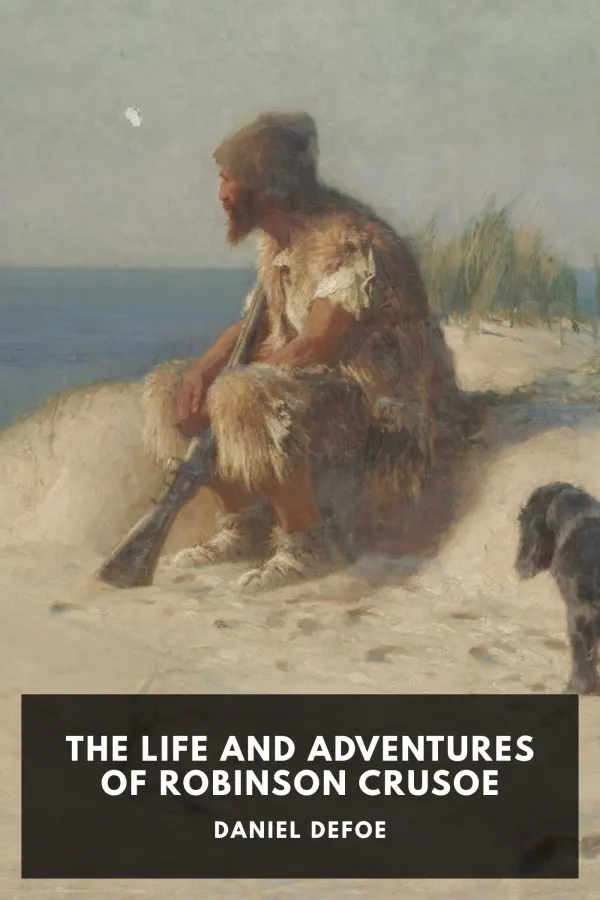
Robinson Crusoe
📖 Click to Read Chapter 1 Online Preview
Chapter I — Start in Life
I was born in the year 1632, in the city of York, of a good family, though not of that country, my father being a foreigner of Bremen, who settled first at Hull. He got a good estate by merchandise, and leaving off his trade, lived afterwards at York, from whence he had married my mother, whose relations were named Robinson, a very good family in that country, and from whom I was called Robinson Kreutznaer; but, by the usual corruption of words in England, we are now called—nay we call ourselves and write our name—Crusoe; and so my companions always called me.
I had two elder brothers, one of whom was lieutenant-colonel to an English regiment of foot in Flanders, formerly commanded by the famous Colonel Lockhart, and was killed at the battle near Dunkirk against the Spaniards. What became of my second brother I never knew, any more than my father or mother did know what was become of me.
Being the third son of the family and not bred to any trade, my head began to be filled very early with rambling thoughts. My father, who was very ancient, had given me a competent share of learning, as far as house-education and a country free school generally go, and designed me for the law; but I would be satisfied with nothing but going to sea; and my inclination to this led me strongly against the will, nay, the commands of my father, and against all the entreaties and persuasions of my mother and other friends.
Follow Robinson Crusoe’s twenty-eight-year trial of ingenuity, faith, and solitude on a remote desert island. Download the full unabridged edition for your e-reader.
Download Full EPUB
About Robinson Crusoe: Summary, Characters & Themes
First published in 1719, Robinson Crusoe is Daniel Defoe’s pioneering classic. Often called one of the first true English novels, it created the enduring literary genre of the “Robinsonade.”
This Robinson Crusoe summary and analysis explores its plot, characters, and themes. Presented as an authentic autobiography, the book documents humanity’s struggle against nature, solitude, and spiritual despair.
Drawing loose inspiration from the real-life four-year marooning of Scottish privateer Alexander Selkirk, Defoe crafted a masterclass in realistic narrative prose.
The story follows Robinson Crusoe, an adventurous youth from York who defies his father’s counsel to pursue an ordinary middle-class legal career.
Shipwrecked multiple times and surviving Moorish enslavement, Crusoe sets sail from Brazil on an illicit slaving voyage.
A catastrophic storm destroys the ship near the Orinoco river basin, leaving Crusoe as the sole survivor washed ashore on an uninhabited tropical island.
Confronted by utter isolation, he methodically salvages tools, arms, and timber from the stranded wreckage.
Through relentless labor, Crusoe builds a fortified cave, domesticates wild goats, cultivates barley and rice, and bakes pottery.
His crushing solitude is broken years later by the horrifying discovery of a single human footprint in the sand, heralding the arrival of mainland cannibals.
Rescuing a young native captive whom he names Friday, Crusoe teaches him English and trades survival skills for steadfast loyalty.
Together, after twenty-eight years, two months, and nineteen days in exile, they secure passage home aboard an English ship whose mutinous crew Crusoe helps subdue.
Robinson Crusoe Key Characters
These are the most memorable Robinson Crusoe characters.
- Robinson Crusoe (The Self-Reliant Pioneer & Homo Economicus): An adventurous spirit driven by wandering restlessness and practical ingenuity. Crusoe embodies Enlightenment individualism, Protestant work ethic, and the archetype of the colonizing craftsman who tames wilderness through labor, discipline, and empirical calculation.
- Friday (The Loyal Companion & The Noble Savage): A native rescued from ritual execution who becomes Crusoe’s devoted servant and companion. Intelligent, loyal, and quick to learn, Friday predates the Romantic ideal of the virtuous primitive, though his relationship with Crusoe fundamentally reflects early modern colonial hierarchies.
- Crusoe’s Father (The Voice of Bourgeois Wisdom): An elder merchant who passionately advocates for the “middle station of life” as the state best suited to human happiness. His unheeded advice haunts Crusoe throughout his exile as original sin against filial duty and divine providence.
- Xury (The Innocent Subordinate): A Moorish youth who aids Crusoe in his daring escape from Sallee enslavement. His loyalty is rewarded with pragmatic betrayal when Crusoe sells him into long-term servitude to a Portuguese captain, underscoring Crusoe’s commercial ruthlessness.
- The Spanish Castaway & Friday’s Father (The Redeemed Allies): Rescued by Crusoe and Friday from cannibal captives, they expand Crusoe’s solitary existence into a mini-commonwealth, positioning him as the benevolent governor of a multi-ethnic island colony.
Robinson Crusoe Themes & Historical Significance
These are the central Robinson Crusoe themes.
- Individualism and Economic Self-Reliance: Karl Marx famously used Crusoe to illustrate labor value in isolated economies; Defoe portrays human civilization as something built through methodical manual labor, bookkeeping, resource management, and rational planning.
- Divine Providence, Solitude, and Spiritual Rebirth: Suffering from a violent tropical fever, Crusoe experiences profound repentance, finding solace in a salvaged Bible. His physical survival evolves into a spiritual pilgrimage from sinful rebellion to grateful piety.
- Colonial Mastery and Eurocentric Power: Defoe candidly reflects early eighteenth-century British mercantile and imperial ambitions, portraying foreign lands as empty spaces waiting to be enclosed, fortified, named, and governed under English law and religion.
Why Download Our Custom E-Reader Editions?
Original 18th-century printings of Robinson Crusoe were often presented as continuous, unbroken text without formal chapter subdivisions.
This can result in illegible digital scans and awkward navigation on modern electronic reading devices. Our custom editions have been carefully standardized for modern electronic paper.
- Authoritative Text Verification: Carefully formatted against the 1719 edition (via Project Gutenberg eBook #521), preserving Defoe’s authentic diary entries, lists of salvages, and natural narrative progression while removing archaic printer defects.
- Balanced Typographic Structure: Enhanced with elegant, non-intrusive chapter markers, legible drop caps, and calibrated paragraph indents designed to prevent visual crowding on E-Ink displays.
- Universal Device Readiness: Download reflowable EPUB (compatible with Boox, PocketBook, and mobile readers), Amazon-ready AZW3 (tailored for Kindle Paperwhite, Voyage, and Oasis displays), and dedicated KEPUB (providing per-chapter reading time and instant pagination on Rakuten Kobo ereaders).
Robinson Crusoe: FAQ, Summary & Analysis
What kind of novel is Robinson Crusoe?
It is often called one of the first true English novels. It also founded the literary genre known as the “Robinsonade”—a survival story set on a deserted island.
What is Robinson Crusoe about?
After shipwrecks and slavery, he is cast away on a deserted island, where he survives alone for 28 years.
He builds a shelter, farms, raises goats, and eventually rescues a native companion named Friday. Together they escape the island aboard an English ship.
Who are the main characters in Robinson Crusoe?
Crusoe is the narrator and survivor; Friday is his loyal companion; Xury is the Moorish youth who helps him escape slavery.
Was Robinson Crusoe inspired by a real castaway?
Defoe transformed this into a 28-year epic, relocated it near the Orinoco River, and added Friday, cannibals, and extensive spiritual reflection.
What are the main themes of Robinson Crusoe?
Crusoe’s island life becomes both a survival experiment and a spiritual pilgrimage from rebellion to gratitude.
How does Crusoe’s relationship with Friday reflect colonial ideas?
Their bond includes real affection, but it also reflects 18th-century colonial hierarchy: Crusoe as master, Friday as servant.
This makes Friday central to modern discussions of colonialism in the novel.
Is Robinson Crusoe in the public domain?
The novel is in the public domain in the United States. Copyright laws differ by country, so readers outside the US should check their local laws.
Which e-reader format should I download for Robinson Crusoe?
Choose KEPUB for Rakuten Kobo e-readers to get instant page turns and live chapter reading statistics across all 20 chapters.
For Apple Books, Android tablets, Onyx Boox, or mobile apps, select the standard reflowable EPUB.