The Brothers Karamazov by Fyodor Dostoevsky: Free EPUB, AZW3 & KEPUB Download
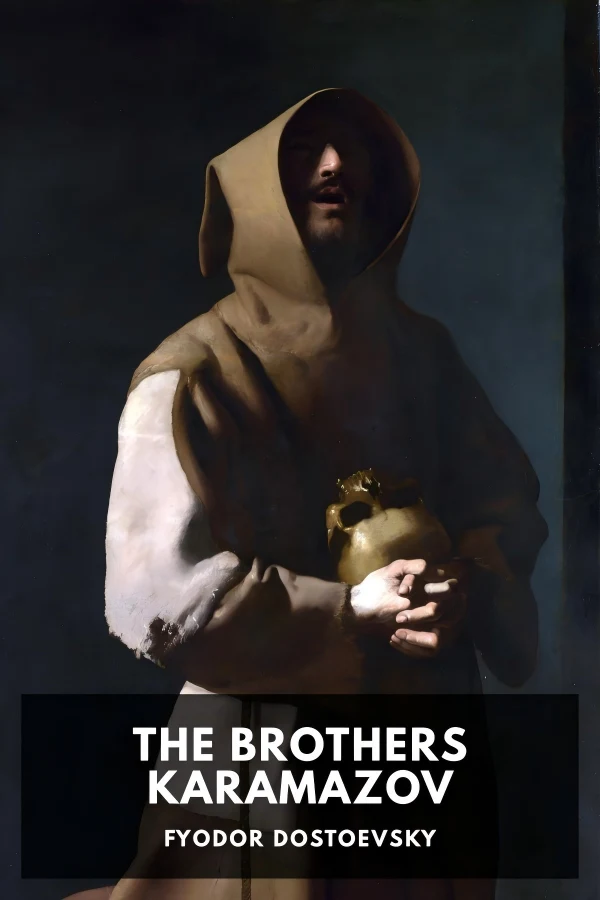
The Brothers Karamazov
📖 Click to Read Book I, Chapter I: Fyodor Pavlovitch Karamazov Online Preview
Book I, Chapter I: Fyodor Pavlovitch Karamazov
Alexey Fyodorovitch Karamazov was the third son of Fyodor Pavlovitch Karamazov, a land owner well known in our district in his own day, and still remembered among us owing to his gloomy and tragic death, which happened thirteen years ago, and which I shall describe in its proper place. For the present I will only say that this “landowner”—for so we used to call him, although he hardly spent a day of his life on his own estate—was a strange type, yet one pretty frequently to be met with, a type abject and vicious and at the same time senseless.
He was married twice, and had three sons, the eldest, Dmitri, by his first wife, and two, Ivan and Alexey, by his second. Fyodor Pavlovitch’s first wife, Adelaïda Ivanovna, belonged to a fairly rich and distinguished noble family, also landowners in our district, the Miüsovs.
Immediately after the elopement Adelaïda Ivanovna discerned in a flash that she had no feeling for her husband but contempt. The marriage accordingly showed itself in its true colors with extraordinary rapidity.
You’ve read the opening chapter. Download the full DRM-free EPUB to continue Dostoevsky’s final novel.
Download Full EPUBThe Brothers Karamazov is an 1880 philosophical novel by Fyodor Dostoevsky, a monumental Russian masterpiece set in 19th-century provincial Russia that follows the turbulent Karamazov family surrounding a parricide that scandalizes the town, exploring themes of faith versus rational doubt, free will, moral culpability, and spiritual redemption. This Standard Ebooks edition, based on Project Gutenberg #28054 and Internet Archive scans, is in the public domain in the United States; readers outside the US should check their local laws. The text is available via Standard Ebooks.
The Brothers Karamazov by Fyodor Dostoevsky: Summary, Characters & Themes
Fyodor Dostoevsky completed The Brothers Karamazov in 1880, capping his literary career with a monumental theological and philosophical drama. This comprehensive summary and critical analysis examines how a provincial patricide investigates free will, existential suffering, moral culpability, and divine grace.
The narrative centers on the toxic rivalries tearing through the Karamazov family in the Russian town of Skotoprigonyevsk. The vulgar, hedonistic patriarch Fyodor Pavlovitch provokes intense enmity from his three legitimate sons. The passionate former lieutenant Dmitri, the brilliant rationalist Ivan, and the gentle novice monk Alyosha each react in their own way. The explosive friction between Fyodor and Dmitri over money and the affections of Grushenka drives the household toward inevitable disaster.
Philosophical tensions culminate in Ivan’s searing rebellion against divine justice, embodied in his celebrated prose poem, “The Grand Inquisitor.” When Fyodor Pavlovitch is brutally murdered in his home, circumstantial evidence immediately condemns Dmitri. The illegitimate fourth brother and bitter servant, Pavel Smerdyakov, later confesses to carrying out the murder. He had absorbed Ivan’s nihilistic premise that without immortality, all things are lawful.
Smerdyakov takes his own life before testifying, leaving Dmitri to stand trial alone before a sensational courtroom. Dmitri is wrongly convicted of patricide and sentenced to hard labor in Siberia, choosing spiritual regeneration through suffering. Alyosha gathers a devoted circle of schoolboys around the memory of young Ilyusha, affirming compassionate faith and community resilience.
Dostoevsky explored similar psychological depths and moral turmoil across his earlier masterworks, notably in Crime and Punishment (1866) and The Idiot (1869). While his previous novels probed individual transgressive guilt, this final magnum opus expanded those inquiries into an epic cosmic struggle between intellect and faith.
This digital edition presents the complete, unabridged English translation by Constance Garnett first published in 1912. The transcription is sourced from Project Gutenberg #28054 alongside Internet Archive print scans. Readers can also examine the edition curated by Standard Ebooks.
Historical Context
Serialized in The Russian Messenger between 1879 and 1880, the novel emerged during intense social ferment in post-Emancipation Russia. Dostoevsky observed Western rationalism, judicial modernization, and revolutionary terrorism unsettling traditional Slavic values. Drawing on personal grief and on conversations with monastic elders, he crafted the work as an urgent spiritual bulwark for modern society.
Key Characters & Literary Archetypes
- Dmitri Karamazov (The Sensual Seeker): The passionate eldest brother whose chaotic desires and fierce sense of personal honor drive him to the brink of catastrophe, leading ultimately to spiritual transformation through accepted suffering.
- Ivan Karamazov (The Rational Skeptic): The intellectually formidable middle brother who wrestles with cosmic injustice and moral nihilism, collapsing into psychological madness when confronted by the consequences of his secular logic.
- Alexey “Alyosha” Karamazov (The Spiritual Healer): The devout youngest brother whose serene Christian empathy, guided by Father Zosima’s teachings, anchors the fractured community and inspires the next generation.
- Fyodor Pavlovitch Karamazov (The Carnal Patriarch): The cynical, rapacious father whose shameless self-interest and neglect of his sons spark the domestic conflict culminating in his murder.
- Pavel Smerdyakov (The Resentful Sycophant): The presumed illegitimate son and epileptic valet who coldly translates Ivan’s abstract philosophical arguments into violent patricide.
- Father Zosima (The Holy Elder): Alyosha’s beloved spiritual mentor who advocates universal responsibility, active love, and mutual forgiveness over rigid dogmatic retribution.
Core Literary Themes
- Faith Versus Intellectual Rationalism: The existential clash between Ivan’s razor-sharp critique of suffering and Father Zosima’s practice of universal reconciliation forms the novel’s philosophical core.
- Universal Moral Responsibility: Dostoevsky asserts through Zosima that every human being shares guilt for everyone and everything, transcending legal codes of blame.
- The Burden of Free Will: Ivan’s “The Grand Inquisitor” articulates the terrifying freedom of human choice, showing that trading liberty for security leads to spiritual bondage.
- Redemption Through Suffering: Dmitri’s wrongful legal conviction proves that outer worldly justice cannot heal the soul, while inner acceptance of moral guilt unlocks profound spiritual rebirth.
Why Download Our Custom E-Reader Edition of The Brothers Karamazov?
Published in 1880, Fyodor Dostoevsky’s final masterpiece stands as one of the supreme achievements in world literature. This custom digital release pairs Constance Garnett’s celebrated 1912 unabridged English translation with refined typography calibrated for sustained reading on modern e-reader displays.
The epic narrative spans twelve distinct books and an epilogue, probing profound theological and moral crises through the unraveling drama of the Karamazov family. From the iconic philosophical debate of “The Grand Inquisitor” to the dramatic courtroom climax, the work demands an uninterrupted and comfortable reading layout.
Unvetted digital copies of massive 19th-century Russian epics frequently suffer from flattened chapter structures, inconsistent diacritics in Russian names, and broken table of contents links. We resolved these recurring flaws one by one, so the free EPUB reads cleanly on any dedicated reader.
- Based on the Standard Ebooks Edition, via Project Gutenberg #28054: Prepared from verified public domain files and historical print scans, preserving Garnett’s complete translation without abridgment.
- Granular Architectural NCX/Nav Structural Navigation: Features an exhaustive multi-level table of contents allowing direct jumps to all twelve books, every chapter, and the epilogue.
- Calibrated Typographical Layout for Philosophical Fiction: Styled with tailored CSS rules, balanced line heights, and elegant chapter headers optimized to reduce visual fatigue on e-ink screens.
- Verified Public Domain Sources: Built from open-access transcriptions hosted at Project Gutenberg and formatting standards developed by Standard Ebooks.