On Liberty by John Stuart Mill: Free EPUB, AZW3 & KEPUB Download
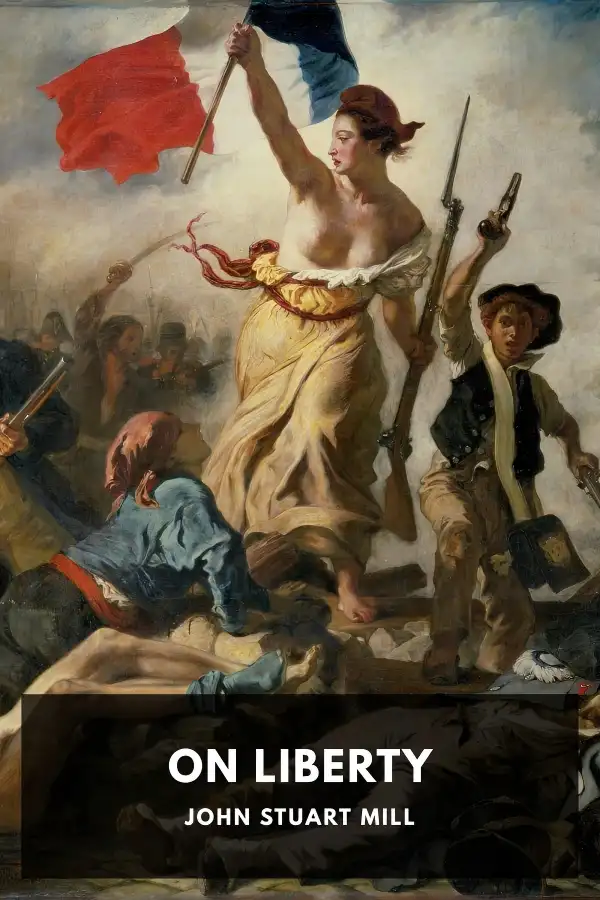
On Liberty
📖 Click to Read Chapter I: Introductory — Online Preview
Chapter I: Introductory
The subject of this Essay is not the so-called Liberty of the Will, so unfortunately opposed to the misnamed doctrine of Philosophical Necessity; but Civil, or Social Liberty: the nature and limits of the power which can be legitimately exercised by society over the individual. A question seldom stated, and hardly ever discussed, in general terms, but which profoundly influences the practical controversies of the age by its latent presence, and is likely soon to make itself recognised as the vital question of the future.
The struggle between Liberty and Authority is the most conspicuous feature in the portions of history with which we are earliest familiar, particularly in that of Greece, Rome, and England. But in old times this contest was between subjects, or some classes of subjects, and the government. By liberty, was meant protection against the tyranny of the political rulers.
A time, however, came, in the progress of human affairs, when men ceased to think it a necessity of nature that their governors should be an independent power, opposed in interest to themselves. It appeared to them much better that the various magistrates of the State should be their tenants or delegates, revocable at their pleasure. In that way alone, it seemed, could they have complete security that the powers of government would never be abused to their disadvantage.
This is the opening of Mill’s argument on the limits of social authority. Download the full EPUB to continue reading all five chapters, including Of the Liberty of Thought and Discussion.
Download Full EPUBOn Liberty is an 1859 philosophical essay by John Stuart Mill, a foundational text of liberal political thought set against the industrial and democratic transformations of Victorian Britain that examines the legitimate limits of state and social power over the individual, exploring themes of the Harm Principle, freedom of speech and discussion, individuality as an element of well-being, and protection against the tyranny of the majority. This Standard Ebooks edition, based on Project Gutenberg #34901 and Google Books scans, is in the public domain in the United States; readers outside the US should check their local laws. The text is available via Standard Ebooks.
On Liberty by John Stuart Mill: Summary, Characters & Themes
John Stuart Mill published On Liberty in 1859. The book is a political essay and one of the defining texts of classical liberalism. This critical summary and analysis examines how Mill delineates the boundaries of state and social authority over the individual, argues for radical freedom of speech, and champions human individuality against conformist coercion.
The essay begins by addressing a fundamental shift in political history. Classical struggles pitted citizens against autocratic tyrants. Modern representative democracy introduced a subtler and more pervasive danger: the “tyranny of the majority.” Mill warns that societal opinion and collective moral pressure can stifle dissent and crush unique human agency even more effectively than legal penalties.
To resolve the tension between collective authority and personal autonomy, Mill articulates his famous “Harm Principle.” The only purpose for which power can be rightfully exercised over any member of a civilized community, against their will, is to prevent harm to others. Purely self-regarding actions — even those deemed foolish or self-destructive by public consensus — fall outside the legitimate jurisdiction of society.
In his impassioned defense of free expression in Chapter II, Mill argues that silencing any opinion robs the human race. Suppressed perspectives might prove true. If partly true, they supply vital corrective nuance. And even if entirely false, challenging them prevents true convictions from decaying into unthinking dogmatic prejudice.
Mill grounded his moral defense of liberty not on abstract natural rights, but on utilitarian grounds. He viewed utility as the ultimate appeal on all ethical questions, rooted in the permanent interests of human beings as progressive creatures. Across five chapters, he builds the institutional and intellectual case for open, progressive societies.
This digital edition presents the complete 1859 text of On Liberty, together with W. L. Courtney’s 1901 introduction. The digital transcription is sourced from Project Gutenberg #34901 and Google Books scans. Readers can also consult the edition curated by Standard Ebooks.
Historical Context
Mill published the essay in Victorian England, at the zenith of industrial expansion and moral conventionalism. He conceived and refined it alongside his collaborator and wife, Harriet Taylor Mill. After her death in 1858, Mill dedicated the treatise to her memory. The book’s defense of nonconformity is a direct rebuttal to the social puritanism and rigid public expectations of mid-19th-century Britain.
Key Characters & Literary Archetypes
- John Stuart Mill (The Author): The essayist and philosopher who argues for individual liberty as the foundation of social progress.
- Harriet Taylor Mill (The Collaborator): Mill’s wife and intellectual partner, whose influence shaped the essay’s defense of nonconformity and women’s rights.
- Wilhelm von Humboldt (The Precursor): The German philosopher whose 1792 treatise on the limits of state action supplies the essay’s epigraph on human development in its richest diversity.
- Socrates and Marcus Aurelius (The Classical Exemplars): Historical figures Mill cites as examples of intellectual courage and ethical self-discipline.
- The Tyrannical Majority (The Antagonist): Not a person but a force — the collective opinion that enforces conformity and silences dissent.
Core Literary Themes
- The Boundaries of Social Control: Formulating precise criteria to distinguish harmless eccentricities from actions that actively infringe upon external rights.
- Freedom of Thought and Discussion: Advocating total intellectual liberty across philosophy, science, religion, and politics as the engine of societal enlightenment.
- The Value of Experiments in Living: Encouraging diverse lifestyles and non-traditional life choices so society can discover superior modes of existence.
- Utilitarian Justification for Freedom: Demonstrating that preserving individual autonomy ultimately maximizes long-term collective flourishing and human progress.
Why Download Our Custom E-Reader Edition of On Liberty?
Published in 1859, John Stuart Mill’s On Liberty remains one of the most enduring foundational works of political philosophy and ethics. This custom digital edition pairs Mill’s complete text with typography engineered for focused, long-form reading on modern screens. It is offered as a free EPUB, with AZW3 and KEPUB versions available for Kindle and Kobo devices.
The essay spans five chapters, moving from the formulation of the Harm Principle to defenses of individual eccentricity and free discussion. Engaging with Mill’s layered 19th-century prose demands a clean, balanced layout with ample margins, crisp contrast, and distinct section breaks.
While uncorrected public domain conversions often suffer from broken chapter navigation, missing paragraph indents, and inconsistent quotation styling, we resolved these flaws directly. The result is an intuitive, distraction-free reading experience across all major e-ink readers and mobile apps.
- Based on the Standard Ebooks Edition, via Project Gutenberg #34901: Prepared directly from verified public domain texts and Google Books scans, preserving Mill’s complete 1859 text and W. L. Courtney’s 1901 introduction, DRM-free and without abridgment.
- Granular Architectural NCX/Nav Structural Navigation: Features a fully articulated table of contents allowing direct jumps to each of the five core chapters and analytical subsections.
- Calibrated Typographical Layout for Political Philosophy: Styled with customized CSS rules, optimized line spacing, and distinct typographic hierarchies designed to reduce visual fatigue on e-ink displays.
- Verified Public Domain Sources: Built from open-access transcriptions hosted at Project Gutenberg and typesetting standards maintained by Standard Ebooks.