The Secret of Chimneys by Agatha Christie: Free EPUB, AZW3 & KEPUB Download
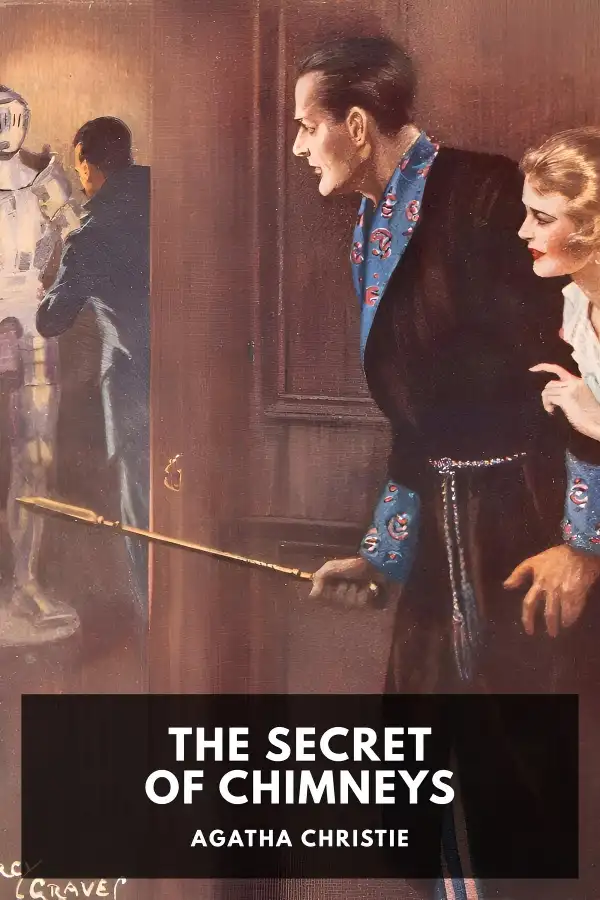
The Secret of Chimneys
📖 Click to Read Chapter I Online Preview
I — Anthony Cade Signs On
“Gentleman Joe!”
“Why, if it isn’t old Jimmy McGrath.”
Castle’s Select Tour, represented by seven depressed-looking females and three perspiring males, looked on with considerable interest. Evidently their Mr. Cade had met an old friend. They all admired Mr. Cade so much, his tall lean figure, his suntanned face, the lighthearted manner with which he settled disputes and cajoled them all into good temper. This friend of his now—surely rather a peculiar-looking man. About the same height as Mr. Cade, but thickset and not nearly so good-looking. The sort of man one read about in books, who probably kept a saloon. Interesting, though. After all, that was what one came abroad for—to see all these peculiar things one read about in books. Up to now, they had been rather bored with Bulawayo. The sun was unbearably hot, the hotel was uncomfortable, there seemed to be nowhere particular to go until the moment should arrive to motor to the Matoppos. Very fortunately, Mr. Cade had suggested picture postcards. There was an excellent supply of picture postcards.
Anthony Cade and his friend had stepped a little apart.
A stolen manuscript, a missing diamond, and a house party full of secrets. Download the complete unabridged edition for your e-reader.
Download Full EPUBTL;DR
The Secret of Chimneys is a Golden Age detective novel by Agatha Christie, published in 1925, following Anthony Cade as he delivers a dead statesman’s memoirs to London and is drawn into a Balkan succession dispute, a stolen diamond, and a murder at the country house Chimneys, exploring themes of political intrigue, impersonation, and hidden identity. This Standard Ebooks edition is based on Project Gutenberg eBook #65238 and digital scans from the Internet Archive, and the text is in the public domain in the United States; readers outside the US should check their local laws. Available via Standard Ebooks.
The Secret of Chimneys by Agatha Christie: Summary, Characters & Themes
Published in 1925, The Secret of Chimneys is Agatha Christie’s early detective novel of a manuscript, a missing diamond and a country house full of secrets. This summary and analysis follows Anthony Cade from Bulawayo to London to Chimneys, where an assassination and a very suspicious house party force him to work out who is lying about what.
Anthony Cade agrees to deliver the late Count Stylptitch’s memoirs to a London publisher on behalf of his friend Jimmy McGrath. Almost as soon as he arrives in England, two parties try to stop him: one offers money, the other sends a waiter with a knife. He hands the manuscript over anyway, collects his fee, and is about to leave the country when a dead man turns up in a friend’s house and a scrap of paper mentions Chimneys at 11:45.
Chimneys belongs to Lord Caterham, who is hosting a discreet political weekend at the request of George Lomax. Prince Michael of Herzoslovakia is there to negotiate a loan and a British-backed restoration of the Herzoslovakian monarchy. Before the weekend gets properly under way, Prince Michael is found shot dead in the Council Chamber.
Superintendent Battle of Scotland Yard arrives to take charge, and Anthony stays on as an unofficial helper. The investigation keeps circling back to a famous diamond that disappeared at Chimneys seven years earlier, and to a French detective, M. Lemoine, who seems less interested in the murder than in catching the jewel thief King Victor. It turns out that King Victor has already been in the house, under an assumed name, looking for the diamond.
The truth comes out in stages. The murderer is Mademoiselle Brun, the governess, who is not a governess at all but the surviving Queen Varaga of Herzoslovakia. Anthony Cade, meanwhile, is not a travel courier: he is Prince Nicholas of Herzoslovakia, the next heir to the throne. He marries Virginia Revel, settles the oil concession with the financiers, and leaves for his new kingdom. The text is based on Project Gutenberg eBook #65238 and the Standard Ebooks edition.
Historical Context: Post-War Britain and the Balkans
Christie wrote The Secret of Chimneys in the early 1920s, and the novel carries the mood of a Britain that had just come through the First World War and was still sorting out what it thought about the small European states. Herzoslovakia is invented, but its revolutions, oil concessions and exiled princes were drawn from the newspaper headlines of the period.
The country-house setting is equally of its moment. Chimneys is a working relic of the diplomatic weekends of the pre-war era, staffed by servants who see everything and a host who would rather be reading sale catalogues. Christie uses the house, its secret passages and its very mixed house party to stage a comedy of manners as much as a mystery.
Key Characters & Literary Archetypes
- Anthony Cade (The Adventurer Hero): A former tour courier with a taste for trouble. He is sharp, unflappable, and not quite what he seems — a fact Christie saves for the end of the book.
- Virginia Revel (The Charming Widow): An intelligent and very composed young widow whose name has been used on letters she did not write. She is the most socially assured person in the novel, and one of the few who is never flustered.
- Superintendent Battle (The Quiet Professional): A Scotland Yard officer whose calm, unremarkable manner hides a very good mind. He is the novel’s patient centre, and he later reappears in other Christie books.
- Lord Caterham (The Reluctant Host): A melancholy peer who has inherited Chimneys and its obligations along with the title. He would much rather be left alone, and Christie plays his irritation for comedy.
- Herman Isaacstein (The Financier): A powerful, unreadable City man negotiating the Herzoslovakian loan. He is one of several figures in the novel whose real interests are financial rather than political.
- Mademoiselle Brun (The Governess): A quiet presence in the schoolroom, and the last person anyone suspects. Her identity is the novel’s biggest surprise, and her motive goes back to the revolution in Herzoslovakia.
Core Literary Themes
- Identity and Impersonation: Almost everyone in the book is concealing who they are. Anthony, Mademoiselle Brun, King Victor and the various Herzoslovakian agents all trade on mistaken identity, and the plot turns on discovering which identity is real.
- Politics as Theatre: The restoration of the Herzoslovakian monarchy is treated as a performance, staged for financiers and newspaper readers. Christie is not much interested in the politics, but she is very interested in the men who profit from them.
- The Country House as Closed World: Chimneys works the same way as a locked room. Everyone present is suspect, everyone has something to hide, and the house itself — its passages, its panelling, its garden — holds part of the answer.
- Theft, Jewels and Inheritance: The missing diamond is not just a MacGuffin. It links the murder, the political plot and the family history of Chimneys, and it raises the question of who has a legitimate claim to what.
- Comedy and Detection: Unlike the darker Poirot novels, this book keeps its tone light. Christie lets the mystery and the comedy run side by side, and allows her detectives and her amateurs to enjoy themselves.
Why Download Our Custom E-Reader Edition of The Secret of Chimneys?
Agatha Christie published The Secret of Chimneys in 1925, early in her career and before Poirot had settled into the shape readers now expect. It is a country-house mystery, but also a comedy of manners and a light political thriller, with a stolen manuscript, a missing diamond and a house party in which nearly everyone is lying.
The plot follows Anthony Cade, a former tour courier who agrees to deliver a dead statesman’s memoirs to a London publisher. He is followed, threatened and finally drawn to Chimneys, where Prince Michael of Herzoslovakia is shot in the Council Chamber. Superintendent Battle investigates; the mystery keeps circling a famous diamond that vanished from the same house seven years earlier.
Generic digital transcriptions of Christie often flatten her pacing, lose the italics that mark interior thought, and silently modernise the 1920s idiom. This edition keeps the original text, the chapter divisions and the dialogue as Christie wrote it, so the mystery reads at the speed she intended.
- Based on the Standard Ebooks Edition, via Project Gutenberg #65238: Sourced from the Standard Ebooks edition of the novel, itself based on a transcription produced for Project Gutenberg and digital scans from the Internet Archive. Preserves the full text across all thirty-one chapters, without abridgement or modernised spelling.
- Granular Architectural NCX/Nav Structural Navigation: Jump directly to any chapter from the table of contents. Christie’s plot depends on a steady drip of clues across a long weekend, and the indexed structure lets you move between the discovery of the body, the library scene and the final unmasking without scrolling through the whole book.
- Calibrated Typographical Layout for Golden Age Detective Fiction: Christie’s quick exchanges and her shifts between narration and dialogue require clean visual breathing room. Speaker turns, letters, telegrams and newspaper extracts are styled distinctly, and contrast is set for comfortable reading across Kindle (AZW3), Kobo Clara/Libra (KEPUB), and open EPUB readers.
- Verified Public Domain Sources: The source text is in the United States public domain; users outside the United States should check their local laws. Sourced from Project Gutenberg eBook #65238 and the Standard Ebooks edition.