Metamorphosis by Franz Kafka: Free EPUB, AZW3 & KEPUB Download
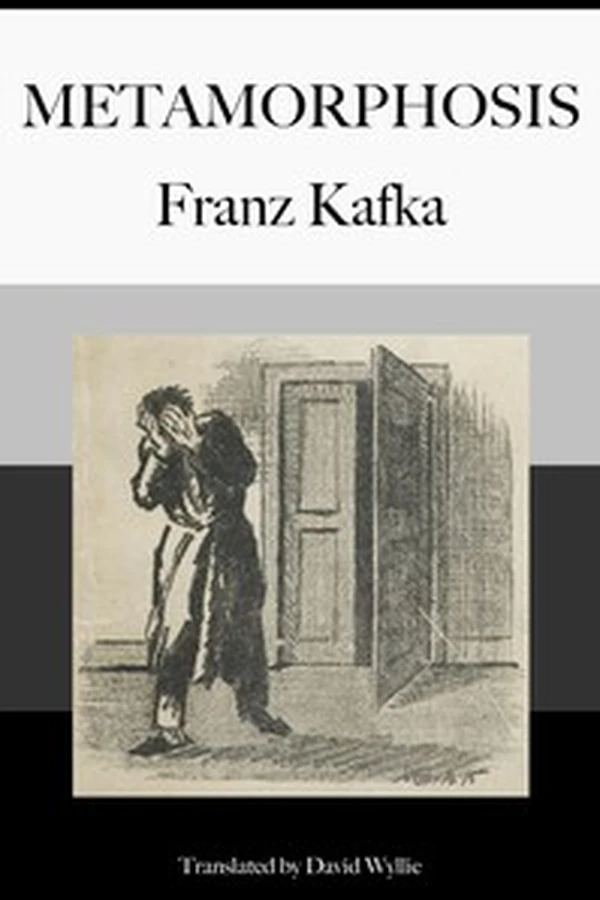
Metamorphosis
📖 Click to Read the Opening Pages Online Preview
Read the opening of Metamorphosis
One morning, when Gregor Samsa woke from troubled dreams, he found himself transformed in his bed into a horrible vermin. He lay on his armour-like back, and if he lifted his head a little he could see his brown belly, slightly domed and divided by arches into stiff sections. The bedding was hardly able to cover it and seemed ready to slide off any moment. His many legs, pitifully thin compared with the size of the rest of him, waved about helplessly as he looked.
“What’s happened to me?” he thought. It wasn’t a dream. His room, a proper human room although a little too small, lay peacefully between its four familiar walls. A collection of textile samples lay spread out on the table—Samsa was a travelling salesman—and above it there hung a picture that he had recently cut out of an illustrated magazine and housed in a nice, gilded frame. It showed a lady fitted out with a fur hat and fur boa who sat upright, raising a heavy fur muff that covered the whole of her lower arm towards the viewer.
Gregor then turned to look out the window at the dull weather. Drops of rain could be heard hitting the pane, which made him feel quite sad. “How about if I sleep a little bit longer and forget all this nonsense”, he thought, but that was something he was unable to do because he was used to sleeping on his right, and in his present state couldn’t get into that position. However hard he threw himself onto his right, he always rolled back to where he was. He must have tried it a hundred times, shut his eyes so that he wouldn’t have to look at the floundering legs, and only stopped when he began to feel a mild, dull pain there that he had never felt before.
The first page is nearly the whole method: a man wakes in the body of an insect, the story never explains how it happened, never names the creature, and never lets him leave the room. The three paragraphs above are printed as David Wyllie translated them, with the original paragraphing.
Download Full EPUB1915
~22,000 words (estimated)
Approx. 1.2 hours
Standalone novella
Gregor Samsa’s bedroom and the Samsa family flat in an unnamed European city
Three parts
EPUB · AZW3 · KEPUB
0.30 MB (EPUB) · 0.35 MB (AZW3) · 0.31 MB (KEPUB)
Public domain in the United States
Project Gutenberg #5200
Metamorphosis is Franz Kafka’s novella of a travelling salesman who wakes one morning in his parents’ flat to find that his body is no longer human. Gregor Samsa has supported the household for five years and has been paying off a debt owed to his employer; within a day he is an animal in a locked room, listening to his family decide what to do with him. The story runs in three numbered parts and stays inside the flat, from the chief clerk’s visit to the lodgers’ supper. It was published in 1915, and has been read as comedy, as parable and as a report on office life.
Kafka gives no transformation scene and no explanation: the change has already happened when the first sentence begins, and the prose stays level while the family’s care hardens into management and then into judgement. The comedy is dry – a charwoman who is not afraid of him, three lodgers who want their supper quiet – and the ending is colder still, with three people riding a tram into the country and thinking about their daughter’s marriage. The novella is short enough for one evening and strange enough to argue with for years. See Wikipedia’s article on Metamorphosis for its publication history. The text is available via Project Gutenberg #5200.

Metamorphosis by Franz Kafka: Summary, Characters & Themes
This summary and analysis of Metamorphosis follows the novella from the morning Gregor Samsa finds himself changed to the afternoon his family rides a tram out of town. What makes the book unusual is how little it explains. There is no transformation scene, no cause, no doctor’s verdict and no name for what Gregor has become: the German word Kafka uses, Ungeziefer, means vermin, and translators have argued about it for a century. Everything else is domestic and exact – a room, a door, a bowl of milk, an apple. Kafka keeps the register of a household account while describing something impossible, and that flatness is the method: who feeds him, who cleans, who pays, carry the horror better than any description could.
The author is Franz Kafka, and the text of Metamorphosis itself has a long critical history. Kafka was born in Prague in 1883 into a German-speaking Jewish family, studied law, and spent most of his working life at an insurance institute, writing at night. He had published little when the First World War began, and this novella came out in 1915 in Die Weissen Blaetter, the monthly edited by Rene Schickele; Kurt Wolff brought it out as a book the following year. Kafka wanted the insect left unseen on the cover and was overruled, which is one of the small ironies of its history: the story that refuses to picture its creature has been illustrated ever since. He died in 1924, before most of the fame arrived.
The household is the whole of the plot. Gregor is a salesman who travels, hates the early trains and has been paying his father’s debt to the firm’s owner; his parents and his sister live on what he brings home. Once he cannot work, the flat’s economy has to be rebuilt in front of him, and Kafka lets us watch the arithmetic: the maid is dismissed, a charwoman is hired, the father takes a job as a bank messenger, the mother sews for strangers, and Grete, who is seventeen, stands behind a counter and studies shorthand and French. A cash box saved from the father’s failed business is opened at the table, and the savings last a year or two.
The third part tightens the screw by making the family happier as Gregor declines. They take in three bearded lodgers, wear their good clothes and eat in the living room; Grete plays her violin for the lodgers, who are disappointed, and Gregor crawls out to listen. That is the last time anyone tries to reach him. Grete’s speech afterwards – that they must try to get rid of it, that she will not call this monster her brother – is spoken calmly and is more shocking than the change on the first page. Kafka does not make the family villains. They are tired, frightened and short of money, and the ending gives them a tram, sunshine and a blossoming daughter.
The text on this page is the Project Gutenberg transcription of David Wyllie’s English translation, the one that begins “One morning, when Gregor Samsa woke from troubled dreams” and keeps the three parts as Kafka numbered them. It is the English version most readers meet first, it is the one quoted throughout this page, and it is still the translation that libraries and reading groups hand to newcomers. Nothing has been abridged, and the paragraphing follows the translator’s text. Readers who want more of Kafka’s world can go on to The Trial, the unfinished novel of a man arrested without a charge, or to The Yellow Wallpaper, Charlotte Perkins Gilman’s account of a woman confined to a room. Both are free here, and the novella itself is at Project Gutenberg #5200.
Historical Context
Kafka wrote in German in a city where Czech was the language of most of the population and German the language of an educated minority, and his family belonged to that minority. He worked for the Workers’ Accident Insurance Institute, drafting reports on factory injuries, and his letters and diaries are full of the office and of writing done late at night. The novella belongs to the years just before and during the First World War, when Prague’s German-language literary scene was small and closely connected: Kafka’s friends included Max Brod, and his early work appeared beside the expressionist writing in Die Weissen Blaetter. The flat in the story is never named as Prague.
Metamorphosis appeared in the October 1915 number of Die Weissen Blaetter, a monthly that also printed expressionist poetry and prose, and then as a slim book from Kurt Wolff in 1916. Kafka’s letters show him fussing over the cover: he wanted the insect kept off it, and the publisher’s illustrator drew one anyway. The text was reprinted with small revisions, and most translations follow the book version rather than the magazine. Because Kafka left no explanation of the change, the story has been read as autobiography, as religious parable and as a joke about office life. His own remarks are few.
The word Ungeziefer is the translator’s problem. It means vermin, an unclean animal, without naming a species; English versions have offered insect, beetle and cockroach, and each choice closes a door Kafka left open. The Project Gutenberg text used here is David Wyllie’s translation, made for the plain-text edition, with an ordinary vocabulary and short sentences that suit a story in which a family talk about rent, food and work while something impossible happens in the next room. The adjective Kafkaesque entered English only after his death, when Max Brod disobeyed the dying instruction to burn the manuscripts and published the novels instead.
Key Characters & Literary Archetypes
- Gregor Samsa: A travelling salesman of twenty-nine who has kept his parents and sister for five years and paid down his father’s debt. He wakes as a vermin and spends the rest of the story trying to be reasonable: apologising through a door, hiding under a couch so as not to frighten anyone, listening to the family’s finances. Kafka gives him a clerk’s conscience inside an animal’s body. His death is quiet and almost administrative, and the family’s relief is the last thing the book allows him to hear.
- Grete Samsa: Gregor’s seventeen-year-old sister, the only person who comes into the room at first and the one who arranges his food, his furniture and his cleaning. She brings him milk and bread, then the half-rotten vegetables he actually wants, and she removes the furniture to give him space to crawl. Her violin is the sound that draws him out of hiding. She is also the first to say that the creature must go, and her growth from nurse to judge is the book’s most carefully plotted change.
- Mr Samsa: Gregor’s father, a man whose business collapsed five years earlier and who has been living on his son’s earnings since. Once Gregor cannot work he takes a job as a bank messenger, and the uniform with gold buttons changes him: he stands straighter, combs his hair flat and becomes the household’s authority again. He throws the apples that lodge in Gregor’s back, and he is the one who says thanks to God when the body is found. His recovery is real, and it is paid for by his son.
- Mrs Samsa: Gregor’s mother, asthmatic and easily frightened, who wants to see her son and cannot bear the sight of him. She faints when he appears in the doorway on the first morning, and again when she sees him on the wall during the removal of the furniture. She clings to her husband and begs him to spare Gregor’s life during the apple throwing. In the last part she is coughing too hard to answer Grete’s speech, and her silence is part of the family’s decision.
- The chief clerk: The office’s representative, who arrives at the flat on the first morning to ask why Gregor has missed his train. He is pompous, easily offended and quick to threaten: he mentions the cash entrusted to Gregor, the firm’s poor turnover that season, and the suspicion that Gregor is malingering. His retreat down the stairs, with his hat and overcoat left behind, is the first comedy in the book. He shows what Gregor’s working life was, and how quickly an employer’s goodwill turns into a warning.
- The charwoman: The huge, white-haired cleaner hired after the old maid is dismissed, a woman who is not afraid of Gregor and calls him an old dung-beetle when she opens the door to look at him. She talks to him, threatens him with a chair for fun and keeps working through the household’s crises. It is she who finds the body in the morning and shouts that it is dead, stone dead, and she is dismissed soon afterwards. The one person who never pretends to be delicate treats it all as ordinary.
Core Literary Themes
- The creature that is never named: Kafka calls Gregor a vermin and stops there. No species is given and the narrator never explains the change. The refusal is not vagueness but technique: it keeps the reader inside the family’s uncertainty, where the thing in the room is at once a son, an animal and a problem of household management. Translators who supply a beetle or a cockroach make the book easier and smaller. What the text insists on is that the household has to act, and that it can act without agreeing on what it is acting about.
- Debt, work and the family ledger: Money runs through the story like a second pulse. Gregor travels for a firm his father owes money to, keeps a sample case, and calculates the cost of missing a train; the family counts savings, dismisses a maid, lets rooms to lodgers and takes in sewing. Even the horror is costed: how much food does he eat, who will clean the room, can they afford a bigger flat. Kafka shows that Gregor’s usefulness was the terms of his membership in the family, and that the terms were never stated.
- Care that turns into judgement: Grete’s nursing is the book’s tenderness and its evidence. She learns what he will eat, sweeps his room, pushes the chair to the window and puts the furniture back where he can crawl. Then the work wears her down, the lodgers arrive and her language changes: it, not he. The shift is gradual, spoken in the same practical voice she used for his meals, and it is more disturbing than the transformation because it is recognisably ordinary. Kafka shows that pity has a budget, and that families reach the limit without noticing.
- Music and the appetite for another life: Grete’s violin is the one art in the story. The lodgers ask for a performance and are disappointed; Gregor, who has been losing his human tastes, is drawn forward and thinks he is being shown the way to a nourishment he has been wanting. That sentence is the closest the book comes to saying what he has lost: not his shape, but a way of being moved that other people can share. The scene ends with the lodger seeing him, and the music is never mentioned again.
- The room as a body: Gregor’s bedroom is the novella’s second character. Its double doors, its window, its chest of drawers, its emptiness and its junk all register his condition: when the furniture is taken out he is free to crawl and stripped of his past; when it is filled with rubbish he is put away. He presses himself against the glass of the fur-lady picture to keep it, and later the apple stays in his back as a reminder. The last door is bolted at night, and he dies in the room they have stopped entering.
Why Download Our Custom E-Reader Edition of Metamorphosis?
Metamorphosis is short, but it is dense in a way that badly made ebooks flatten. This edition keeps the three numbered parts exactly as Kafka set them, so the pauses between them survive: the first morning and the door, the household’s slow rearrangement, and the last night and the tram. The paragraphs are spaced for reading devices rather than for a browser window, the dialogue is left in the plain register of the translation, and no scene has been cut or summarised.
The text follows the Project Gutenberg transcription of David Wyllie’s English translation, the version whose first sentence most readers know. Kafka’s German keeps a distance from its own horror and the translation keeps that distance: the office vocabulary, the household arithmetic and the refusal to explain are all intact. This is the reading text and not a retelling, so the ambiguity that has kept the story alive is left where Kafka put it, including the creature that is never named.
Three formats are offered because readers differ. The EPUB suits phones and tablets and reflows if you raise the type; the AZW3 is for Kindle devices and keeps the part divisions in the device’s own table of contents; the KEPUB is built for Kobo readers, which handle pagination and bookmarks better in that container. All three are DRM-free and unabridged, so the same text moves between the devices you already own.
- Project Gutenberg transcription, via Project Gutenberg #5200 — the complete text, unabridged, with the three numbered parts exactly as Kafka set them.
- Three parts, unbroken Part I, Part II and Part III in Kafka’s order, with no chapters invented to break the flow and no scene moved out of place.
- The creature is never illustrated and never named The text is left as Kafka wrote it, a vermin on the page and nothing more.
- EPUB, AZW3 and KEPUB Three DRM-free files of the same unabridged text for a phone, a Kindle or a Kobo.
- The Trial — free EPUB, AZW3 & KEPUB
- The Yellow Wallpaper — free EPUB, AZW3 & KEPUB
- The Turn of the Screw — free EPUB, AZW3 & KEPUB
Chapter summaries
Metamorphosis is divided into three numbered parts rather than chapters, and the divisions matter: the first part is a single morning, the second a season of hidden housekeeping, the third a short decline and a family outing. The summaries follow those parts in order, with the scenes that carry each one.
- Part I: the waking and the locked doors: Gregor wakes in his room to find his body changed into something armoured and many-legged. He looks at his samples, the fur-lady picture and the rain, tries to turn over. His mother knocks at a quarter to seven; his voice has become an animal’s. The doors are locked. Grete whispers through the wood, his father rattles the handle, and the chief clerk is announced downstairs.
- Part I: the chief clerk, the key and the door: The chief clerk threatens him through the door, mentioning the cash entrusted to him, and Gregor makes a long, reasonable speech of excuse. He gets himself upright on the chest of drawers, turns the key with his jaws and cuts himself. The door opens: the clerk recoils, the mother collapses into her skirts, the father weeps. Gregor gives a speech about duty and prejudice while the clerk flees downstairs, and the father drives him back with a stick and a newspaper, hissing, then shoves him into his room.
- Part II: milk, vegetables and the new household: Gregor wakes at dusk with one leg dragging. Grete has left sweetened milk and bread, which he cannot drink, and later brings a tray of half-rotten vegetables, bones and cheese he eats eagerly. He hides under the couch when she comes in, and she locks the door and sweeps. In the evenings he hears the family at the table, no longer reading the paper aloud; his father explains the finances. The maid goes, a charwoman arrives, and the household settles into its new shape.
- Part II: the furniture, the picture and the apples: Grete decides to clear the room so that Gregor can crawl, and she and her mother carry out the chest of drawers and the desk. Frightened of losing his human past, Gregor presses himself against the glass of the fur-lady picture. His mother sees him and faints; Grete shakes her fist and shouts at him. The father comes home, takes the situation in, and bombards Gregor with apples. One lodges in his back, and the mother clings to her husband, begging him to spare her son.
- Part III: the lodged apple, the lodgers and the violin: The apple stays in his back for more than a month and his walking is ruined. The door is left open in the evenings so that he can watch the family, and Grete takes over his room entirely. Three bearded lodgers rent a room and insist on order, so the flat fills with their furniture and his room with junk. The charwoman calls him an old dung-beetle. Grete plays her violin for the lodgers, who are disappointed, and Gregor crawls forward to listen; the middle lodger sees him.
- Part III: Grete’s sentence: The lodgers give notice and demand explanations, and the family stands in the living room in its working clothes. Grete, striking the table, says they cannot carry on like this, that she will not call this monster her brother, and that they have to try and get rid of it; her mother is coughing and her father agrees. Gregor, who has understood, turns back to his room and is pushed through the door, which is bolted behind him. There is no violence beyond the sentence itself.
- Part III: three o’clock, the cleaner and the tram: Gregor dies at three in the morning, as the church tower strikes, with his last breath leaving him. The cleaner finds him, whistles and shouts that it is dead, stone dead. Mr Samsa crosses himself and says they should give thanks to God, and the family dismisses the lodgers. They write letters of excuse, then take the tram out to the open country, discuss smaller and cheaper flats, and notice that Grete has become a beautiful young woman. The last sentence is her, stretching in the sun.
Metamorphosis: Frequently Asked Questions
What is Metamorphosis about?
Is Metamorphosis hard to read?
How long is Metamorphosis?
What kind of creature does Gregor become?
Why does the family change?
What happens to Grete?
Does the story have a happy ending?
Where can I read the full text of Metamorphosis?
Part of: Modern Classics · Classic Fiction