Beowulf by Anonymous: Free EPUB, AZW3 & KEPUB Download
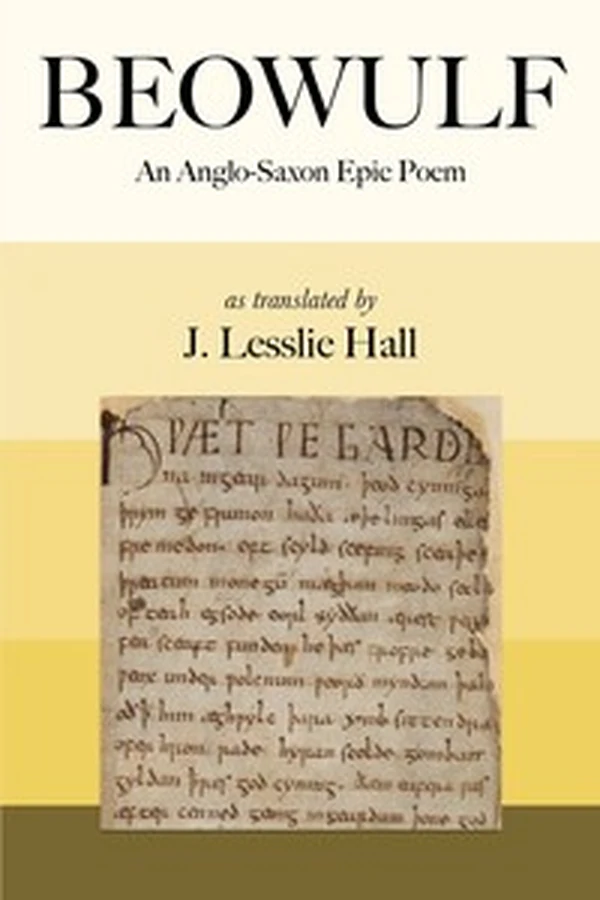
Beowulf
📖 Click to Read the Opening Pages Online Preview
Beowulf opens on the funeral ship of Scyld:
Lo! the Spear-Danes’ glory through splendid achievements The folk-kings’ former fame we have heard of, How princes displayed then their prowess-in-battle.
Oft Scyld the Scefing from scathers in numbers From many a people their mead-benches tore. Since first he found him friendless and wretched, The earl had had terror: comfort he got for it,
Waxed ’neath the welkin, world-honor gained, Till all his neighbors o’er sea were compelled to Bow to his bidding and bring him their tribute: An excellent atheling! After was borne him
The dirge of the Danish kings runs on into Heorot and the coming of Grendel. Download the complete poem.
Download Full EPUBc. 1000
~25,000 words (estimated)
Approx. 1.4 hours
Hall’s verse translation, 1892
Sixth-century Scandinavia: Denmark and Geatland, across the sea
43 fits (verse sections)
EPUB · AZW3 · KEPUB
0.38 MB (EPUB) · 0.58 MB (AZW3) · 0.42 MB (KEPUB)
Public domain in the United States
Project Gutenberg #16328
Beowulf is the oldest long poem in English, and it begins with a funeral and ends with one. A Geatish warrior crosses the sea to Denmark because a creature called Grendel has been emptying King Hrothgar’s new mead-hall, Heorot, for twelve winters. Beowulf wrestles him bare-handed in the dark, tears off his arm at the shoulder, and when Grendel’s mother comes the next night for revenge he follows her down into a mere and kills her with a sword made by giants. He sails home, becomes king of the Geats, rules fifty winters, and dies fighting a dragon over a cup stolen from its hoard.
Hall’s 1892 translation keeps the four stresses of the Anglo-Saxon line and as much alliteration as a modern ear will take, so the poem reads as something meant to be heard rather than seen. What comes through it is a hard, grieving world: vows made over mead-cups, gold given and taken back, feuds that outlive the men who began them, and a hero who wins every fight except the last. The dragon is not the only monster in the poem. Old age is the other one. See Wikipedia’s article on Beowulf for its publication history. The text is available via Project Gutenberg #16328.
Beowulf by Anonymous: Summary, Characters & Themes
This summary and analysis of Beowulf follows the poem from Scyld’s funeral ship to the barrow on Whale’s-Ness. It is the oldest surviving long poem in English, copied by two scribes into a manuscript that was damaged by fire in 1731, and it is the work every later English epic has had to answer to. The text on this page is J. Lesslie Hall’s verse translation of 1892, made from the Heyne-Socin edition and set in a four-stress line with the alliteration kept wherever a modern ear would tolerate it. Hall wanted his reader to hear what he called “the clanging tread of a warrior in mail”. His preface argues against prose versions on one side and against “ballad measures, tripping lightly and airily along” on the other, and he says plainly that the grave speeches of Beowulf and Hrothgar will stand neither treatment.
The poem has no author and no title in its manuscript, where it opens with the single word “Hwæt”, listen, and a scribe’s hand simply runs on. Its world is the sixth-century Baltic: Danes on Zealand, Geats in what is now southern Sweden, Swedes, Frisians, Franks, and the sea roads between them, all recalled by a poet writing centuries later in Anglo-Saxon England. The story is built on three fights. Grendel first, then Grendel’s mother, then the dragon; the first two are won in Beowulf’s youth, and the third kills him in old age. Between them the poem sets long speeches, a genealogy, two funerals, a necklace with its own violent history, and two songs sung in a hall, one about a dragon-slayer named Sigmund and one about a woman who lost her brother and her son in the same winter.
The digressions are the method, not the padding. A poet who wanted only the three fights could have told them in a thousand lines; this one keeps stopping to explain what a feud costs, who paid whom, and which king broke which oath. When the Danish coast guard first sees Beowulf’s ship he asks who the armed men are, and the answer he gets is a family tree. When Hrothgar thanks Beowulf he does it by preaching at him about a king named Heremod who grew arrogant, gave no rings, and killed his own table-companions. The poem’s idea of character is a man’s place in a chain of obligations, and its idea of a scene is a room full of people who already know what everyone else owes. Even the monsters are introduced by their family connections, which is part of why they are frightening.
Two belief systems sit inside the same sentences. The poet is a Christian who calls the Danes’ idols a heathen error and says Grendel is descended from Cain, and he is also telling a story in which the strongest thing in the world is Weird, the doom that has already been decided. Beowulf’s own last words before the dragon are an accounting of a life lived without treachery, and his last request is a barrow that sailors can see. The narrator keeps interrupting to say which of these people are heathens, and then lets their speeches stand unrefuted. Nothing in the poem promises him anything after death except fame, and fame is exactly what it gives him: the Geats ride round the mound saying he was the kindest of kings and the most eager for praise. The funeral is the only heaven on offer, and the poem does not pretend otherwise.
The translation itself is a period piece worth reading as one. Hall keeps a regular cadence, four stresses to the half-line, an archaic vocabulary drawn from standard modern poetry, and internal rhyme only now and then; his Beowulf speaks in the same register as his Hrothgar, which is the point. The complete text, with Hall’s preface, notes and glossary, is free at Project Gutenberg #16328. Readers who want the other ancient war poem can take the Iliad from the same shelf, and Dante’s Divine Comedy for the medieval afterlife of the heroic dead. Hall’s notes and glossary are included in the file, so a reader who wants to know what a word like “burnie” or “wergild” is doing in a line can find out without leaving the page. The poem rewards a first reading for the story and a second for the sound.
Historical Context
Hall published in 1892, at a moment when Anglo-Saxon was a young university subject and Beowulf was being argued over as a national origin story. The Victorian debate was mostly about how to translate it. Prose, said one party, because the original is too rough for modern metre; verse, said another, because a prose Beowulf stops being a poem at all. Hall takes the second position and names his allies and targets in the preface: he follows the Heyne-Socin text, praises Garnett’s translation, and complains that some of his predecessors had set the grave speeches of Beowulf and Hrothgar to ballad measures that trip along lightly. His own line keeps four stresses and a good deal of alliteration, with the alliteration usually falling on the first stressed syllable of the second half-line, the position Old English metre requires.
Everything we have of the poem comes from one manuscript, Cotton Vitellius A.xv, written about the year 1000 by two scribes who worked from an older copy and who sometimes disagree about what it said. The Cotton library fire of 1731 shrank and scorched the edges of the leaves, and some readings are now lost at the margins; the first printed edition came in 1815, from a transcription made before the damage. Scholars still argue about the date of composition, with the plausible range running from about 700 to about 1000, and about how much of the text is oral formula and how much is a literate poet’s design. What is not in dispute is that the poem was made to be performed: it is full of direct address, of “listen”, of speeches that run a hundred lines, and of a narrator who keeps telling us what people felt.
The history inside the poem is mostly real, or real enough that other records touch it. The Geats and the Swedes fight the wars the poem remembers at Ravenswood and on the ice; the raid on Frisia in which Higelac dies is the one event in the poem that outside history also records, in a Frankish chronicle that knows the raider as a Danish king killed by the Franks about the year 520. Beowulf himself has left no trace anywhere, which is why the poem is usually read as a heroic fiction set in a documented world. That mixture is the point of it. The hall, the gifts, the oaths and the feuds are the furniture of a real aristocracy, and the monsters are what comes in from outside it.
Key Characters & Literary Archetypes
- Beowulf: a Geat of Higelac’s household, strongest of his people, who arrives at Heorot with fourteen companions and asks to fight Grendel with his hands alone because the monster uses no weapon. His boasts are exact and he keeps them all. In old age he rules the Geats for fifty winters, goes to the barrow with eleven men and a stolen cup, and dies of a dragon’s bite after his sword Nægling shivers on the beast’s skull. His last gift to Wiglaf is the ring, helmet and mail he once meant to leave to Higelac.
- Hrothgar: king of the Danes, builder of Heorot, and the poem’s great figure of a man whose power has stopped working. He cannot hold his own hall, cannot buy off Grendel with treasure, and weeps when he names the dead Æschere, his shoulder-companion: “Ask not of joyance! Grief is renewed to the folk of the Danemen.” When the fighting is done he turns preacher, warning Beowulf against arrogance with the example of King Heremod, who gave no rings and killed his own men.
- Grendel: the hall-thane who is not a man and will not be paid. The poem calls him a moor-dweller, a descendant of Cain, a walker in the fens; he takes thirty thanes on his first night and comes back for twelve winters. He cannot approach Hrothgar’s gift-throne because it is protected, he eats his victims in the hall, and he keeps a glove “spacious and wondrous” in which he means to carry Beowulf home. His arm, claw and shoulder together, is nailed up under the roof as a trophy.
- Grendel’s mother: the avenger the poem takes seriously. She lives in a mere where “none liveth so wise that wot of the bottom”, keeps the water burning at night with a fire-flood, and has ruled her currents for fifty winters. She kills Æschere in Heorot, carries off Grendel’s claw, and nearly wins: she throws Beowulf down, sits on him and swings a broad war-knife until his woven breast-armour holds. He kills her with a giant-sword from her own wall, and the blade melts like ice in her blood.
- Unferth: Hrothgar’s spokesman and the poem’s resident envious courtier. He sits at the king’s feet, taunts Beowulf with losing a seven-night swimming match to Breca, and is answered with a reminder that he killed his own brothers and that Grendel has never had to fear him. He lends Beowulf his sword Hrunting for the mere, and then does not go down into the water himself: “there he forfeited glory”. He is the one man in the poem whose words improve, quietly, as the hero proves them wrong.
- Wiglaf: Weohstan’s son, a young Scylfing kinsman of Beowulf’s, who alone of eleven companions goes through the smoke to help his lord. He reminds the others of the vows they made over the mead-cups, and his first words as he enters the fight are an offer to share shield, helmet and brand. He carries the sword that was Eanmund’s, an heirloom Weohstan took from a slain exile; after the death he is the one who rouses the hero with water, taunts the ten who ran with a sentence of exile, and speaks over the mound.
Core Literary Themes
- The mead-hall bargain: Heorot is a machine for turning loyalty into treasure and treasure into loyalty, and the poem measures everyone by how he keeps that bargain. Beowulf states the exchange plainly to Hrothgar: give me the hall and I will fight for your people, or die in the monster’s grip. Wiglaf’s speech before the barrow reduces the same contract to arithmetic, reminding the ten shirkers of the swords and helmets they were given for exactly this day. When the ten come back from the wood with their shields over their heads, the hall has failed at the one thing it was built to do.
- Feud and the price of a life: The poem begins with a feud, ends with one, and keeps one running as a threat in the margins. Ecgtheow killed a man and Hrothgar paid the wergild and took him in; the Danes and the Heathobards are bound by a marriage that will not hold; the Finn episode turns a truce into a night of slaughter in a hall. Beowulf’s own summary of the ethics is a sentence that could be carved on the barrow: “each it is better, his friend to avenge than with vehemence wail him”. The tragedy is that the feud system works, and keeps working, long after the men who started it are underground.
- Weird and the Christian narrator: The poem’s own characters are pagans who trust in doom, and its narrator is a Christian who tells us so. Beowulf says that Weird goes as she must; before the dragon he says the outcome will befall them as fate decreeth, each one’s Creator. Hrothgar’s sermon adds a third voice, warning that God gives a man land and then sends an arrow from nowhere when he grows proud. The three positions never argue with each other. Beowulf credits Weird when he wins and blames no god when he loses. They are stacked, the way the poem is stacked, so that a hero can be brave, doomed and judged at once.
- Monsters at the boundary: Grendel lives in the fens, his mother under a mere whose bottom nobody has seen, the dragon under a stone barrow on the heath. Each monster holds the edge of the map, and each one enters when the hall is full and happy. The poem is careful to make them not-quite-human and not-quite-animals: Grendel has a glove and a mother, the mere-woman fights with a knife, the dragon is a “ward of the barrow” with a hoard and a temper. What they violate is not just the hall but the accounting, since no wergild can be paid to a creature that will not take one.
- Gold that cannot be spent: The poem’s last movement is an argument about treasure. A last survivor buries the hoard and tells the earth to hold what heroes no longer may; the dragon sleeps on it for three hundred winters; the cup that starts the war is carried out by a slave who took it to please his master. Beowulf dies buying the gold for his people, and the Geats put it back in the ground with him. The barrow is called Beowulf’s after him, which is the only interest the gold ever pays. The final image is not glory but accounting: rings and jewels that were “as useless to mortals” as they had been before.
Why Download Our Custom E-Reader Edition of Beowulf?
This page carries Hall’s complete 1892 verse translation, the whole poem in its forty-three fits, from the funeral ship of Scyld to the twelve riders going round the mound. Nothing is abridged, modernised or rewritten in the body: the archaisms, the compounds, the long speeches and the marginal notes are Hall’s, and the fit headings are his descriptive titles, so a reader can see how a Victorian translator cut a continuous poem into readable sections without turning it into prose. The thirty-two page glossary that Hall printed with it is in the file as well, which is more than most modern readers expect from a free edition.
The download is DRM-free and comes in three formats from a single page. EPUB for most readers, AZW3 for older Kindles, KEPUB for Kobo devices; each file carries the full text with the fit headings kept as chapter marks, so the voyage, the three fights and the funeral are all reachable from the contents list. The type is reflowable, the line breaks are the translator’s, and the poem can be read at whatever size suits the screen, on a phone or on an e-ink page. Each format is built from the same source file, so the page numbers and the fit headings do not drift between them.
Read it with the alliteration audible if you can, because the translation was built for that. Hall keeps the four stresses of the Old English line and uses alliteration where a modern ear will accept it, which means the poem rewards a slow voice more than a fast eye. If you only know the poem from a prose crib, Hall is a good place to hear what the alliteration was for. The guide above is here for the second reading: the feuds, the manuscript, the monsters, and the long argument about fate that the poet never quite settles. The barrow is worth reaching twice: once for the dragon, once for the twelve riders who have the last word.
- Project Gutenberg transcription, via Project Gutenberg #16328 — the complete text, unabridged, with Hall’s preface, notes and fit headings.
- Formats included EPUB, AZW3 and KEPUB, DRM-free, with the forty-three fit headings kept as chapter marks.
- Reading time About an hour and a half at a steady pace, across the forty-three fits.
- Best read Aloud, or with the alliteration at least audible in the head. Hall wrote for the ear.
- The Iliad — free EPUB, AZW3 & KEPUB
- The Divine Comedy — free EPUB, AZW3 & KEPUB
- The Odyssey — free EPUB, AZW3 & KEPUB
Chapter summaries
Hall divides the poem into forty-three numbered fits with descriptive titles. These ten summaries follow those divisions and cover the whole poem, from Scyld’s ship to the words spoken round Beowulf’s mound.
- Scyld’s ship and the building of Heorot: The poem opens with a genealogy and a funeral. Scyld the Scefing is laid in a ring-stemmed ship heaped with jewels and armour, and no one can say to what haven he went. His great-grandson Hrothgar builds Heorot, the greatest of hall-buildings, and fills it with feasting until Grendel hears the harp, takes thirty thanes in the night, and comes back for twelve winters. The hall stands empty at night, and the Danes pray at their idols for help that does not come.
- The Geatish crossing: Beowulf, Higelac’s liegeman, hears of it across the water and takes fourteen companions. The ship crosses in a day; a coast guard rides out to challenge them; Wulfgar carries the stranger’s name to Hrothgar, who remembers him as a boy and knew his father Ecgtheow. Beowulf asks for the hall, and Hrothgar says he has never entrusted it to anyone else. He has come because sailors’ talk reached Geatland, and he means to win the hall or die in it.
- Boasts at the mead-bench: Before the fight there is a formal exchange of boasts. Hrothgar recalls the feud Ecgtheow fled and the fee he paid to settle it. Beowulf says he will meet Grendel with his hands, and that if he dies his mail must go back to Higelac. Unferth answers with the swimming match against Breca, and is answered in turn with the sea-monsters Beowulf killed and the brothers Unferth killed. Wealhtheow, the queen, carries the beaker round the benches and takes the vow from the guest herself.
- The grip in the dark: Beowulf strips off his mail and gives his sword to a henchman. The Geats lie down, and all of them sleep except one watcher. Grendel shoulders the door open, eats a sleeping soldier, and catches Beowulf’s hand. The wrestling shakes the hall to its timbers, benches bend, and the monster screams as the arm comes out at the shoulder; he runs for the fens to die, leaving the claw nailed up.
- Song, gifts and a second grief: Morning is a festival. Riders follow the blood-trail to the mere, a scop sings of Sigmund and the dragon he killed, and Hrothgar calls Beowulf his son in spirit. The gifts arrive: a golden standard, helm, mail, four bright jewels and eight gold-bridled horses. Then the singer tells how Hnæf died in Frisia and Hildeburg lost brother and son on one pyre, and Wealhtheow fills the cup again. The hall is cleaned and hung with gold webs before the feast begins.
- The mere: Grendel’s mother comes the next night, kills Æschere, Hrothgar’s oldest counsellor, and takes back her son’s claw. Hrothgar describes a mere under overhanging frost-white woods where the water burns at night and no one alive knows the bottom. Beowulf rides out, finds Æschere’s head on the cliff, shoots a mere-dragon, puts on his boar-crested helmet, and takes Unferth’s sword Hrunting down with him while Unferth waits on the bank.
- The hall under the water: She grips him at the bottom and carries him into her hall, where firelight burns bright. Hrunting will not bite her, the first time the excellent jewel has failed its fame. She throws him down and swings a war-knife until his woven armour holds; he takes the giant-sword from her wall and cuts her neck, then Grendel’s. The blade melts like ice in the blood. The Danes have given him up by the ninth hour. He swims up at the ninth hour with the hilt and Grendel’s head, and the Geats can hardly believe it.
- Sermon and homecoming: Hrothgar’s gratitude becomes a sermon: he warns Beowulf against arrogance with the example of Heremod, and against the arrow that comes when the warder sleeps. The hilt Beowulf gives him is old work of the giants, with runes naming its first owner. Then the parting, the old king’s tears, a ship loaded with horses, and home to Higelac and Hygd, whose court the poem sets against Queen Thrytho. Beowulf gives Higelac the boar-standard, the mail and the horses, and Hygd the Brosing necklace.
- Fifty winters and a stolen cup: Beowulf reports his adventure and gives Higelac the gifts; the poem then runs through the years: Higelac dies in Frisia, Heardred is killed in a Swedish war, Beowulf rules the Geats for fifty winters. Then a slave shelters in a barrow and takes a cup from a hoard a dragon has guarded for three hundred winters. The dragon wakes, finds a footprint, and burns the countryside. Beowulf takes eleven men and the thief, and sits down on the headland to say goodbye to them.
- Wiglaf, the dragon and the barrow: Nægling shivers on the dragon’s skull, the shield burns, and the ten companions run for the wood. Wiglaf alone goes through the smoke, and together they kill the worm, but its bite has poisoned Beowulf. He sits by the wall, sends Wiglaf into the hoard for a sight of the gold, and dies thanking God. The Geats build the mound on Whale’s-Ness, lay the treasure back in the earth, and twelve riders praise him. The dragon is pushed over the cliff into the waves, and the gold is buried with the king.
Beowulf: Frequently Asked Questions
What is Beowulf about?
Who wrote Beowulf?
Why does Beowulf fight Grendel without a sword?
Who is Grendel?
How does Beowulf die?
Is this a verse translation?
How long does Beowulf take to read?
Where can I read the full text?
Part of: Poetry & Epics · Adventure & Sea