White Nights by Fyodor Dostoevsky: Free EPUB, AZW3 & KEPUB Download
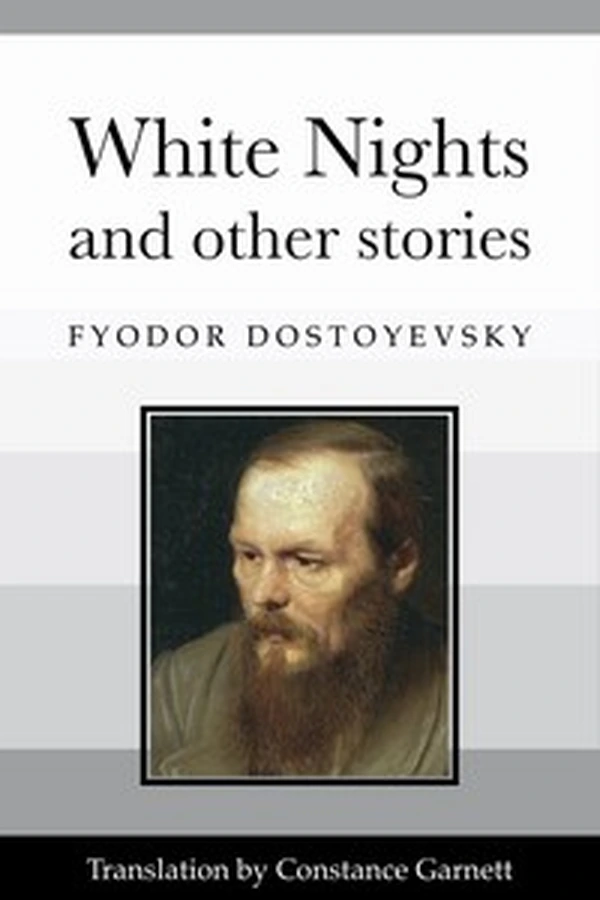
White Nights
📖 Click to Read the Opening Pages Online Preview
First Night: a canal railing, a yellow hat, ten o’clock
It was a wonderful night, such a night as is only possible when we are young, dear reader. The sky was so starry, so bright that, looking at it, one could not help asking oneself whether ill-humoured and capricious people could live under such a sky. That is a youthful question too, dear reader, very youthful, but may the Lord put it more frequently into your heart!… Speaking of capricious and ill-humoured people, I cannot help recalling my moral condition all that day. From early morning I had been oppressed by a strange despondency. It suddenly seemed to me that I was lonely, that every one was forsaking me and going away from me. Of course, any one is entitled to ask who “every one” was. For though I had been living almost eight years in Petersburg I had hardly an acquaintance. But what did I want with acquaintances? I was acquainted with all Petersburg as it was; that was why I felt as though they were all deserting me when all Petersburg packed up and went to its summer villa. I felt afraid of being left alone, and for three whole days I wandered about the town in profound dejection, not knowing what to do with myself. Whether I walked in the Nevsky, went to the Gardens or sauntered on the embankment, there was not one face of those I had been accustomed to meet at the same time and place all the year. They, of course, do not know me, but I know them. I know them intimately, I have almost made a study of their faces, and am delighted when they are gay, and downcast when they are under a cloud. I have almost struck up a friendship with one old man whom I meet every blessed day, at the same hour in Fontanka. Such a grave, pensive countenance; he is always whispering to himself and brandishing his left arm, while in his right hand he holds a long gnarled stick with a gold knob. He even notices me and takes a warm interest in me. If I happen not to be at a certain time in the same spot in Fontanka, I am certain he feels disappointed. That is how it is that we almost bow to each other, especially when we are both in good humour. The other day, when we had not seen each other for two days and met on the third, we were actually touching our hats, but, realizing in time, dropped our hands and passed each other with a look of interest.
I know the houses too. As I walk along they seem to run forward in the streets to look out at me from every window, and almost to say: “Good-morning! How do you do? I am quite well, thank God, and I am to have a new storey in May,” or, “How are you? I am being redecorated to-morrow;” or, “I was almost burnt down and had such a fright,” and so on. I have my favourites among them, some are dear friends; one of them intends to be treated by the architect this summer. I shall go every day on purpose to see that the operation is not a failure. God forbid! But I shall never forget an incident with a very pretty little house of a light pink colour. It was such a charming little brick house, it looked so hospitably at me, and so proudly at its ungainly neighbours, that my heart rejoiced whenever I happened to pass it. Suddenly last week I walked along the street, and when I looked at my friend I heard a plaintive, “They are painting me yellow!” The villains! The barbarians! They had spared nothing, neither columns, nor cornices, and my poor little friend was as yellow as a canary. It almost made me bilious. And to this day I have not had the courage to visit my poor disfigured friend, painted the colour of the Celestial Empire.
They are painting me yellow!
Download Full EPUB1848
~119,000 words (estimated)
Approx. 6.6 hours
Standalone
Saint Petersburg: the canal embankment, a bench, and a little wooden house with three windows
6 stories in 12 groups
EPUB · AZW3 · KEPUB
0.50 MB (EPUB) · 0.67 MB (AZW3) · 0.54 MB (KEPUB)
Public domain in the United States
Project Gutenberg #36034
White Nights is a short story about a Petersburg dreamer of twenty-six who has never spoken to a woman, and about the four evenings he spends with Nastenka, a girl he finds crying on a canal railing at ten o’clock. She is waiting for a lodger who promised to come back from Moscow. The dreamer gives her his arm, walks her home, listens to her story and falls in love with her. Dostoevsky keeps the whole thing to a canal, a bench, a blind grandmother, a yellow hat and a few days of Petersburg weather. It is tender, self-mocking and short enough for one sitting, and its last sentence asks whether a single moment of happiness is too little for a whole life.
The story appeared in 1848, two years after Poor Folk made its author famous, and it draws directly on the Petersburg solitude he knew. Nastenka has her own story, a blind grandmother who pins the girl’s dress to her own, and a lodger in the attic who took her to The Barber of Seville; the dreamer has his rooms near X bridge, his servant Matrona and his habit of talking to the houses on his walk. This Macmillan collection adds five more stories, from the office panic of A Faint Heart to the hoard sewn into Mr. Prohartchin‘s mattress. The text is available via Project Gutenberg #36034, and the White Nights article at Wikipedia gives the publication history.

White Nights by Fyodor Dostoevsky: Summary, Characters & Themes
White Nights is a summary and analysis of Dostoevsky’s 1848 story and of the Macmillan collection of 1918 that gave it its English title. The volume is White Nights and Other Stories, translated by Constance Garnett and printed in New York; it carries six stories and, in the copy used for this edition, also prints Notes from Underground in full. The first piece is the one that matters here: a sentimental story, as the subtitle says, from the diary of a dreamer, in which a young man of twenty-six who has never spoken to a woman meets a girl on a Petersburg canal embankment and has four evenings and one morning of something like a life. The other five stories were written between 1846 and 1857 and show the same city at different angles, from a children’s party to a copying office. The title on the cover belongs to the first story, but the volume is a collection, and this page treats it as one.
The story is built as a diary. On the first night the dreamer, walking home along the canal at ten, sees a woman in a yellow hat and a black mantle leaning over the railing and crying, and a staggering gentleman in evening dress coming after her; he offers his arm, and the two of them talk for a long time, and she makes him promise to meet her again in the same place. On the second night she tells him about her grandmother, who is blind and pins the girl’s dress to her own so that she cannot leave the flat, and about the lodger who once came upstairs with books and took her to The Barber of Seville, and who has now gone to Moscow. The dreamer, who lives alone with his servant Matrona, listens, advises and begins to hope. The whole conversation happens within a few hundred yards of the canal, and the weather does most of the emotional work.
By the third night there is still no letter, and the dreamer talks about himself for the first time: the corners he has lived in, the houses he knows by heart, the way he has spent his youth waiting for something he cannot name. Nastenka refuses to let him be sorry for himself and plans his future instead, a room on her grandmother’s top floor, evenings together, lessons and a salary. On the fourth night she has waited three days for a line and has decided that she no longer loves the lodger; the dreamer, unable to keep quiet any longer, tells her that he loves her, and she does not send him away. They walk and talk about a flat, a pension, Matrona, Fyokla and twelve hundred roubles, and then a young man passes them on the pavement. The dreamer’s account of his own evenings, his tea, his walks and his imaginary romances, is the passage readers remember.
The five shorter pieces would be worth the collection on their own. A Faint Heart follows two copying clerks who share a flat on the fourth storey, one of them engaged to be married, and spends a whole night over papers that are not wanted for two days and loses his nerve entirely. A Christmas Tree and a Wedding compresses five years of a wealthy household into a children’s party and a whispered sum. Polzunkov is a shabby guest climbing on a chair at a party to explain why he never married, and A Little Hero is a boy of nearly eleven watching the adults at a country house near Moscow. Mr. Prohartchin closes the volume with a lodger behind a screen and a mattress that has to be cut open. None of the five is a sketch for the novels; each is a finished story with its own weather.
Dostoevsky wrote White Nights at twenty-six, between the success of Poor Folk and the arrest that sent him to Siberia, and it is the most direct thing he wrote about the Petersburg loneliness he knew himself. The dreamer’s habit of living in other people’s lives, and of preferring the idea of a woman to the woman, returns in the later novels: Raskolnikov’s isolation in Crime and Punishment, the underground man’s self-justifying talk, Myshkin’s helpless honesty in The Idiot. The Brothers Karamazov (1880) is the other end of the same road. The text here follows the Project Gutenberg transcription, and the Fyodor Dostoevsky page at Wikipedia carries the biography behind the story’s setting. Garnett’s version has been revised by later translators, but it remains the one that shaped the English idea of the story.
Historical Context
In 1848 Saint Petersburg was a planned city of canals, granite embankments and long straight streets, and Dostoevsky had lived in it since he entered the engineering school in 1838. The Petersburg of this story is not the Nevsky Prospect of Gogol’s crowd scenes but the quiet edge of it: a canal, a railing, a bench, houses that the dreamer greets like acquaintances. The year matters too. Across Europe 1848 was the year of revolutions, and in Russia the censorship tightened; the Petrashevsky circle, which Dostoevsky had been attending, was arrested in the spring of 1849, and the writer was sentenced to death, reprieved on the scaffold and sent to hard labour in Omsk. The story gives no year and needs none: the canal, the bench and the empty streets are enough.
The story came a year after Poor Folk made him the young hope of Russian letters. Between the novel’s success and the arrest he wrote comparatively little fiction and a great deal of journalism, including the Petersburg feuilletons in which a narrator walks the same streets and watches the same houses. The dreamer of White Nights is that figure turned into a character: a man who lives at night, who knows the city’s buildings better than its people, and who has trained himself to be happy in a room with his imagination rather than in the world. The subtitle, from the diary of a dreamer, tells the reader to hear it as a confession, and the first-person voice keeps the irony close to the pity. The feuilleton voice, with its mock-serious address to the reader, survives in the story’s opening pages.
The English text has its own history. Constance Garnett translated Dostoevsky throughout the 1910s, and the Macmillan edition of 1918 collected White Nights with five shorter stories under a title that English readers have used for the single tale ever since. Garnett’s version became the standard English Dostoevsky for half a century, and its slightly formal, period-flavoured prose is part of how the story sounds in English: the yellow hat, the black mantle, the little wooden house with three windows, the gentleman who says he is twenty-six and has never seen anyone. The text reproduced here is that edition, without modernised spelling and without an editor’s paraphrase. Garnett went on to translate the novels, and the 1918 volume is still the text most English readers meet first.
Key Characters & Literary Archetypes
- The Dreamer: Twenty-six, living alone with his servant Matrona near X bridge in the Barannikov Buildings. He knows every house on his evening walk and greets them, he has never spoken to a woman, and he calls himself a dreamer with a mixture of pride and self-contempt. His speeches are long, funny and honest about his own case, which is what makes him more than a figure of pity. He is funny about himself, which is unusual in Dostoevsky’s lonely men, and he knows exactly what he is doing when he talks.
- Nastenka: A girl who lives with her blind grandmother, who pins the girl’s dress to her own so that she cannot leave the flat unnoticed. She has been in love with the lodger upstairs since he lent her books and took her to The Barber of Seville, and she talks about him, and about everything else, without guile. She is direct, warm, a little theatrical, and she turns the dreamer first into a friend and then into a plan. Her letters, when they come, are short and decisive.
- The Lodger: The young man who rented the attic room, had it papered, lent Nastenka books and took her to the opera. A year before the story opens he left for Moscow and promised to send for her, and he is present for most of the tale only as an absence, a letter that does not come and a name she will not stop saying. He appears in person on the last evening, on the pavement, and says very little. His rooms, the papering and the books are described by Nastenka long after he has gone.
- Yulian Mastakovitch: The official who recurs through the collection. In A Christmas Tree and a Wedding he is the honoured personage in the empty parlour, pricing an eleven-year-old heiress at three hundred thousand roubles and four per cent; in A Faint Heart he is the benefactor who pays a bonus out of his own pocket after five months without money. Rank, charm and calculation arrive in the same suit. He is not a villain so much as a man who has learned that kindness can be charged for.
Core Literary Themes
- Dreaming and living: The dreamer’s problem is not that reality is dull but that he has trained himself to prefer the version of it he can arrange indoors. Dostoevsky lets him describe his own case accurately and without self-pity, which is what keeps the story from being a complaint about loneliness. The story’s irony is that the dreamer understands his condition better than anyone who tries to cure him.
- Petersburg as a stage: The story is walkable: the canal, the bench, the yellow hat, the pink house painted yellow, the little wooden house with three windows. The city supplies the weather and the distances, and it is empty at ten o’clock in a way that makes the meeting possible in the first place. The bench, the railing and the yellow hat do the work that a plot would do in a longer book.
- The moment that has to be enough: Dostoevsky measures happiness in minutes here rather than in years, and the closing question asks whether one moment is too little for a whole life. The story refuses to answer it, which is why the question outlives the plot.
- Money, rank and the marriage market: A Christmas Tree and a Wedding prices a child at three hundred thousand roubles, Polzunkov’s prospects die of a joke on the first of April, and Prohartchin hoards his salary in a mattress. In this collection love is almost never separate from income, and the clerks know exactly what a bonus is worth. Even the wedding of the title is a transaction, and the narrator says so in one line.
Why Download Our Custom E-Reader Edition of White Nights?
Because the title story is short enough for one evening and built to be read twice: four nights and a morning, each one a single conversation on the same stretch of embankment. This edition gives the whole Macmillan volume in its original order, the five shorter stories included, in Constance Garnett’s translation, so the collection reads as it was printed in 1918 and not as an excerpt with the other stories cut away. The story is also a good first Dostoevsky: short, funny, and free of the ideological arguments that make the novels long.
The file is made for e-readers rather than for scans: a working table of contents, clean paragraphing, no page images and no OCR debris, and the same text on a phone, a Kindle or a Kobo. It is DRM-free, so you can move it between devices and keep it, and it opens at the first night rather than at a title page full of publisher’s advertisements. The table of contents lists each night and each story separately, so you can read the title story alone or the whole volume in order.
Read it as a Petersburg story, as a study of a man who talks himself out of his own life, or as the early Dostoevsky that the great novels keep rewriting; the text is given without an introduction so that you can decide. The summary, the character notes and the context on this page are meant to be read beside the stories, not instead of them. If you have only met Dostoevsky through the novels, this is the book that shows what he could do in twenty thousand words.
- Project Gutenberg transcription, via Project Gutenberg #36034 is the source text for this edition, including all six stories, the opening of the first night and the Macmillan volume’s front matter.
- Complete Macmillan text Six stories and 118,526 words, with no abridgement and no modernised spelling: the collection as Macmillan printed it in New York in 1918.
- EPUB, AZW3 and KEPUB One download per format, so the book opens properly on Kindle, Kobo, Apple Books and every other reader, with the chapter breaks intact.
- Free and DRM-free Public domain in the United States, no account, no sample chapter and no lock on the file; download it once and keep it.
- Crime and Punishment — free EPUB, AZW3 & KEPUB
- The Brothers Karamazov — free EPUB, AZW3 & KEPUB
- Siddhartha — free EPUB, AZW3 & KEPUB
Chapter summaries
The Macmillan volume of 1918 runs to 118,526 words and prints six stories under the title White Nights and Other Stories; the copy used here also carries Notes from Underground in full, which has its own edition on this site. These twelve groups follow the collection in order, five for White Nights and the rest for the shorter stories. The first five groups cover the nights in order, and the last seven take the shorter stories one or two at a time.
- First Night: the canal railing at ten o’clock: The dreamer is twenty-six, lives near X bridge in the Barannikov Buildings with his servant Matrona, and knows every house on his evening walk, including a pink one that has just been painted yellow and now looks at him reproachfully. At ten o’clock, on the canal embankment, he finds a girl in a yellow hat and a black mantle crying over the railing, with a staggering gentleman in evening dress coming after her. He gives her his arm, walks her home, talks far too much, and is told to come back the next evening at ten. Everything the story will do later is already here: two strangers, a bench, and a city that keeps them apart by being large.
- Second Night: the grandmother’s pin: Nastenka tells him about her grandmother, who is blind and pins the girl’s dress to her own so that she cannot go out alone, and about the lodger who came to the flat, asked to have his rooms papered, lent her books and took her to The Barber of Seville. A year ago he left for Moscow promising to send for her, and she has heard nothing since. She has given him a letter to deliver and the names of her friends to visit; he spends the next day on her errands, sleeps, and wakes an hour before they are to meet, and at eleven the lodger has still not come.
- Third Night: one more evening, and no letter: There is no answer, and the dreamer fills the evening with talk about himself: the corners he has lived in, the dreams he has built out of other people’s lives, the youth he has spent waiting for something he cannot name. Nastenka refuses to let him be sorry for himself and begins arranging his future instead, a room on her grandmother’s top floor, evenings together, lessons and a salary. He goes home convinced that his life has changed, and the wait before the next meeting passes at a crawl. His hope is described with the same precision as his self-mockery, and the reader can see the fall coming even if he cannot.
- Fourth Night: nine o’clock, and the letter that never came: She has waited three days for a line and has decided that she no longer loves the lodger. The dreamer, who cannot keep silent any longer, tells her that he loves her; she does not send him away, and the two of them plan a flat, a pension for the grandmother, Matrona and Fyokla, twelve hundred roubles and a bonus. They walk home through the empty streets, and on the pavement a young man passes them, stops and looks. Nastenka’s decision, made out loud on a bench, is the hinge of the whole story.
- Morning: rain on the window: The next day is wet, with rain on the window, and Matrona brings in a letter. What Nastenka writes, and what the dreamer answers, takes less than a page; the story closes with his question about a single moment of happiness and the whole of a man’s life. It is the shortest of the five nights and the one that fixes the tone of everything before it, and it is worth reading twice before going back to the first night.
- A Faint Heart, part one: the papers that are not wanted for two days: Two copying clerks share a flat on the fourth storey: Vasya Shumkov, engaged to Lizanka of the Artemyevs and counting on a bonus from Yulian Mastakovitch, who once paid him out of his own pocket, and Arkady Ivanovitch Nefedevitch, who teases him and then hugs him. Vasya has brought work home, papers that are not wanted for two days, and on New Year’s Eve he cannot make himself copy the last of them. Arkady offers to help, wakes him at eight, and finds him at the table with a dry pen going over blank paper. The comedy is in the details: the tea, the boots, the copying hand and the terror of a superior’s frown.
- A Faint Heart, part two: the office and the word Present: The office is the machine that drives the story: a copying clerk’s whole existence depends on the good opinion of a superior who barely notices him, and on the timidity that keeps him from saying anything plain. Vasya disappears, the flat fills with doctors, and Arkady runs to the office to be told that the work was not important and not urgent in the least. When Vasya does appear he is small, polite and somehow finished, and the kindness of his friend cannot repair him. What breaks him is not the work but the certainty that he has been found out, and the story never says what he has done.
- A Christmas Tree and a Wedding: the party and the arithmetic: A narrator remembers a children’s party on New Year’s Eve, five years earlier, in the house of a business-like host: a Christmas tree, presents handed out according to the rank of the parents, a thin red-haired boy whose present is a book about the marvels of nature, and a pale girl of eleven described as a little Cupid. In the empty parlour a personage called Yulian Mastakovitch whispers arithmetic about three hundred thousand roubles and five years, then kisses her and asks whether she will love him when he comes to see her parents. The story returns to the same official five years later, at a wedding in the sleet. The arithmetic is the point: the official counts the years until the girl is old enough, and the counting is the proposal.
- Polzunkov: the man on the chair: At a party a shabby, jumpy little man called Osip Mihalitch Polzunkov climbs on a chair and announces that he knew Fedosey Nikolaitch better than anyone, and that his story is comic and somewhat tragic. The guests crowd round, a fair-haired young man with moustaches, a youth with ringlets and an officer, to hear why he never married. The answer involves a district town, a bribe in paper notes, a reconciliation with tears, a proposal to Mashenka, and a letter handed in with the daily report on the first of April. Polzunkov tells it all at speed, standing on a chair, and the guests laugh in the wrong places.
- A Little Hero: the house near Moscow: A boy of nearly eleven is sent for the summer to a relation’s house near Moscow, where fifty guests, private theatricals and a great deal of adult flirtation are in progress and the host is spending his fortune. He is in love with Mme. M., a young married woman whose husband carries a lorgnette, and everyone else treats him as a child and a page. When a late guest refuses to ride a fierce horse called Tancred, the boy volunteers, and the day ends with a chill, and a walk in the garden by the river Moskva the next morning. The horse, the taunt, the boy’s pride and the adults’ amusement are all one scene, and it is the best thing in the story.
- Mr. Prohartchin, part one: the lodger behind the screen: Semyon Ivanovitch Prohartchin rents the darkest corner of Ustinya Fyodorovna’s flat, behind a screen, and lives on tea, economy and the fear that the office will be abolished and his salary with it. The other lodgers, Mark Ivanovitch, Zinovy Prokofyevitch, the drunken Zimoveykin and the rest, treat him as a joke until the night he is found after three days’ absence, in bed, terrified, begging to be protected and insisting that he is a law-abiding man. His fear is not death but the office, and the other lodgers’ kindness is mixed with the pleasure of watching a miser.
- Mr. Prohartchin, part two: the mattress and what is sewn into it: The lodgers take up a subscription, sit with him, quarrel over cards played on credit and fall asleep, and then a shriek comes from behind the screen and the flat has a body to deal with. What follows is a comedy of inventory: a box holding rags, a pair of socks, half a handkerchief, an old hat and buttons, a mattress with no sheets, a kitchen knife, paper screws of money and a rare fifteen-kopeck piece pierced for an earring. The last pages are strange even by his standards. The money, when it comes out, is counted to the last half rouble, and the count is the story’s verdict on him.
White Nights: Frequently Asked Questions
What is White Nights about?
Is White Nights a short story or a novel?
Who is Nastenka?
Is White Nights autobiographical?
Which stories are in this collection?
Is White Nights a love story?
How long does White Nights take to read?
Where can I read the full text online?
Part of: Classic Books by Length and Reading Time · Authors