Kidnapped by Robert Louis Stevenson: Free EPUB, AZW3 & KEPUB Download
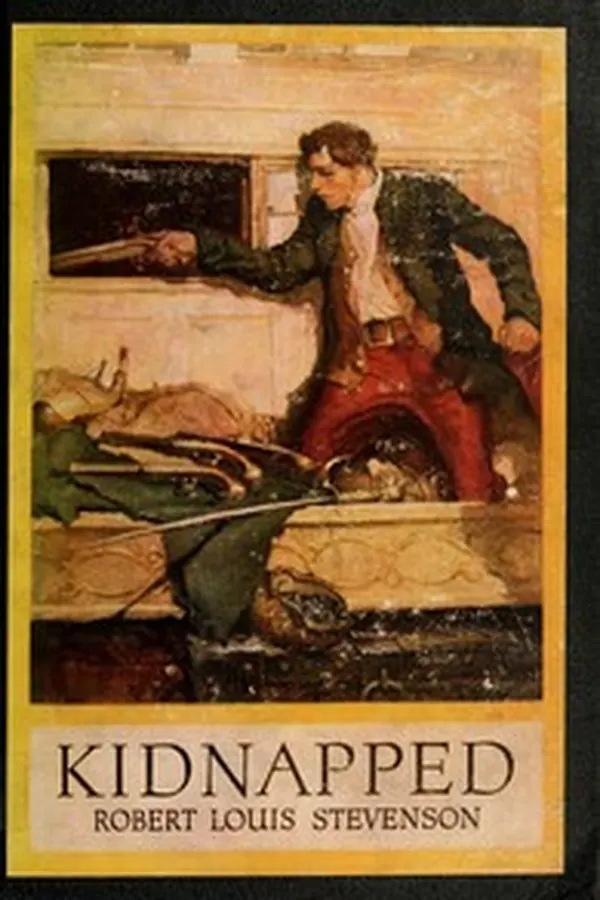
Kidnapped
📖 Click to Read the Opening Pages Online Preview
Kidnapped opens:
Mr. Campbell, the minister of Essendean, was waiting for me by the garden gate, good man! He asked me if I had breakfasted; and hearing that I lacked for nothing, he took my hand in both of his and clapped it kindly under his arm.
“Well, Davie, lad,” said he, “I will go with you as far as the ford, to set you on the way.” And we began to walk forward in silence.
“Are ye sorry to leave Essendean?” said he, after awhile.
And we began to walk forward in silence.
Download Full EPUB1886
~85,000 words (estimated)
Approx. 4.7 hours
David Balfour
1751 · Edinburgh, Mull and the Appin Highlands
Chapter summaries
EPUB · AZW3 · KEPUB
0.3 MB (EPUB) · 0.4 MB (AZW3) · 0.3 MB (KEPUB)
Public domain in the United States
Project Gutenberg #421
A seventeen-year-old orphan walks north from Essendean to a decayed house near Cramond, expecting a title and finding a miser. His uncle pays a ship’s captain to sell him in the Carolinas, and the brig goes on the rocks off Mull instead. Kidnapped is David Balfour’s own account of the months that follow: a tidal islet, a hunted flight with a Jacobite swordsman, a murder he did not commit, and a debt he cannot put down. Stevenson keeps the story close to the ground, among weather, hunger, coin and the exact weight of an obligation.
Stevenson published the novel in 1886, the year after Treasure Island, and gave it the plain subtitle of memoirs, as though the manuscript had come from a survivor. The setting is 1751, six years after Culloden, when Highland dress was banned, Jacobite chiefs were forfeited and Appin was watched by Campbell factors. The murder of Colin Campbell of Glenure is a real case, though Stevenson moves it a year earlier. The sequel, Catriona (1893), carries David and Alan into Edinburgh and the courts. See Wikipedia’s article on Kidnapped for its publication history. The text is available via Project Gutenberg #421.
Kidnapped by Robert Louis Stevenson: Summary, Characters & Themes
This page is a summary and analysis of Kidnapped by Robert Louis Stevenson, with the historical context, the characters and the themes, followed by chapter summaries and the free download links. Kidnapped is Robert Louis Stevenson’s 1886 novel of a stolen inheritance and a forced voyage, told in the first person by David Balfour. David is seventeen when his father dies, and the letter he carries to his uncle at Shaws leads to a locked door, a night on a broken stair and a berth on a brig bound for the American plantations. Thirty chapters carry him from the Forth to Mull, Appin and the Highland moor, and back to Queensferry with a lawyer and a claim.
The author is Robert Louis Stevenson, and the text of Kidnapped itself has a long critical history. The author is Robert Louis Stevenson, and the text of Kidnapped itself has a long critical history. Stevenson was born in Edinburgh in 1850 into a family of lighthouse engineers, and trained as an advocate before turning to writing. By 1886 he had published Treasure Island and the Strange Case of Dr Jekyll and Mr Hyde, which appeared in the same year as this novel. His health kept him moving between France, America and Samoa, where he died in 1894. The Scottish past, its speech and its quarrels, never left his work.
The book pretends to be a memoir: David writes as an old man about the year 1751, and the prose keeps to what a schoolmaster’s son might have put down. Stevenson gives the Highlands a separate voice in Alan Breck, all oaths, flattery and sudden offence. The comedy is constant and so is the violence, and the narrator does not pretend to have been wiser at seventeen than he was.
Two subjects run underneath the chase. One is inheritance: who was the elder son, what was signed, and whether a claim can be proved in a court owned by the other party. The other is loyalty, which Stevenson tests by shutting a Whig and a Jacobite into the same hiding place for months. The ending is deliberately small, a legal agreement and a farewell on a hill, with no battle and no wedding, only a debt partly paid.
This page offers the complete text in thirty chapters, taken from the Project Gutenberg transcription of the 1886 book (eBook #421) and set for reading on a phone, a tablet or an e-reader. Nothing is cut or summarised, the chapter divisions are kept, and the Scots dialogue is left as Stevenson wrote it. Project Gutenberg released the text in 2006, and the novel itself has been in the public domain for far longer. The text used here is the Project Gutenberg transcription (#421), which is in the public domain in the United States. A related shelf on this site is treasure island free epub. A related shelf on this site is strange case dr jekyll and mr hyde free epub. A related shelf on this site is the count of monte cristo free epub.
Historical Context
Kidnapped opens six years after the Jacobite rising of 1745. The defeat at Culloden in April 1746 ended the Stuart cause in arms, and the government answered with executions, forfeited estates, garrison forts and military roads. An Act of 1746 banned Highland dress and the bearing of arms, so tenants cut trousers from their plaids, as David notices on Mull. Chiefs such as Ardshiel and Cluny Macpherson lived in exile or in hiding, and their rents were collected by men like Alan Breck Stewart.
The murder at the centre of the book is historical. On 14 May 1752 Colin Campbell of Glenure, the government factor on the forfeited Appin estate, was shot in the wood of Lettermore. James Stewart of the Glens was tried at Inverary before a jury of fifteen Campbells, eleven of whom voted to convict, and was hanged at Ballachulish. Alan Breck Stewart, a real Appin Stewart under suspicion, escaped to France. Stevenson knew the case through his family and moved the killing to 1751 to fit David’s story.
The kidnapping is drawn from fact as well. In the eighteenth century shipmasters and merchants sold servants and prisoners into the American colonies, and the trade in unwilling passengers was common enough to need the word spiriting. The cabin boy on the Covenant calls such men twenty-pounders, because that was the price of a passage sold. By the 1880s the Highlands had become a holiday country, and Stevenson wrote against the fashion for tartan romance by keeping to mud, hunger and money.
Key Characters & Literary Archetypes
- David Balfour: The narrator, seventeen in 1751, son of a schoolmaster at Essendean and heir to the estate of Shaws. He is cautious, proud and unwilling to lie, and he learns to keep his word under pressure rather than to enjoy danger.
- Alan Breck Stewart: A Jacobite swordsman of the Appin Stewarts, small, freckled and vain, with a French commission in his pocket and a belt of gold for his exiled chief. He is generous, quarrelsome and quick to take offence, and he holds the friendship together by acts rather than apologies.
- Ebenezer Balfour: David’s uncle and the laird of Shaws, a miser who keeps the house dark and the doors bolted. He won the estate by a bargain over a woman, and he protects it by sending his nephew to sea. Fear makes him cruel, and fear makes him confess.
- Captain Hoseason: Master of the brig Covenant, sober, civil and entirely unscrupulous. He buys David from his uncle, plots to kill Alan for his gold, and covers the death of the boy Ransome with a story. Stevenson remarks that he was two men, and left the better one ashore.
- James of the Glens: James Stewart, chieftain of the Appin Stewarts and a wanted man after Glenure’s death. He is a man with a family, afraid of the gallows, and willing at first to advertise David to save himself. His trial hangs over the last third of the book.
Core Literary Themes
- Inheritance and proof: The plot turns on an entail, a letter and a signature: David’s claim is legally sound and practically worthless without witnesses. Stevenson shows property held by paperwork, and paperwork denied by the man who controls the house.
- Loyalty and debt: Alan owes David his life and then his money, and the debt embarrasses him; David owes Alan his escape and cannot say so. The novel measures friendship by what each man will risk, and it is honest about the resentment that grows inside gratitude.
- Two nations: The Covenant’s pious name covers a slaver, and the Whig lawyer’s Latin covers a refusal to know too much. Against that Stevenson sets Alan’s Jacobite loyalty, absurd and generous by turns, and a clan country where a hunted chief still judges his people’s disputes.
- Law and its loopholes: Kidnapping cannot be proved, a murder can be pinned on the wrong man, and a Highland jury will convict a Stewart on Campbell evidence. The lawyer’s answer is a private bargain rather than a trial, and the book accepts the compromise while showing what it costs.
Why Download Our Custom E-Reader Edition of Kidnapped?
This is the full novel, all thirty chapters in Stevenson’s order, from the road out of Essendean to the parting above Corstorphine. Nothing is abridged and no chapter is replaced by a summary, so the long set pieces, the siege of the round-house and the four days on Earraid, keep their original pace.
The text is set for reading straight through on a phone, a tablet or a dedicated e-reader. Paragraphs reflow, chapter breaks are preserved, and the Scots dialogue keeps its spelling and punctuation rather than being modernised into something easier and flatter.
The book is free to download here in three formats, with no account and no payment. Chapter summaries, a character list and a short historical note are provided for orientation; the novel itself is complete, unannotated and left to speak for itself.
- Project Gutenberg transcription, via Project Gutenberg #421 — the complete text, unabridged, with the chapter headings the author set.
- Made for reading Project Gutenberg transcription, via Project Gutenberg #421 — the complete text, unabridged, with the chapter headings the author set.
- Made for reading Made for reading Project Gutenberg transcription Project Gutenberg #421 supplied the full 1886 text, released in 2006 and used unchanged for this edition.
- Made for reading Made for reading Unabridged, in thirty chapters Every chapter from I Set Off Upon My Journey to the House of Shaws to Good-bye, including passages that adaptations cut: the card game at Cluny’s Cage, the quarrel on the road and the talk of the trial.
- Treasure Island — free EPUB, AZW3 & KEPUB
- Strange Case of Dr Jekyll and Mr Hyde — free EPUB, AZW3 & KEPUB
- Treasure Island — free EPUB, AZW3 & KEPUB
Chapter summaries
Kidnapped has thirty chapters. This guide groups them into fourteen movements, from the road to Cramond to the parting above Corstorphine.
- 1. I Set Off Upon My Journey to the House of Shaws, I Come to My Journey’s End: David Balfour, seventeen, leaves Essendean after his father’s death with a letter to Ebenezer Balfour of Shaws, and the minister gives him a shilling, a Bible and a recipe for lily-of-the-valley water. Villagers and a barber warn him off the house, and Jennet Clouston curses it: “Blood built it; blood stopped the building of it; blood shall bring it down.” He knocks, and a blunderbuss answers through the door.
- 2. I Make Acquaintance of My Uncle, I Run a Great Danger in the House of Shaws: Ebenezer is a stooping miser who serves cold porridge, refuses a light and locks his nephew in a chamber. A chap-book inscribed to his brother on a fifth birthday suggests that David’s father was the elder twin. That night the uncle sends him up the unfinished tower stair without a candle, and David finds the steps end in empty air. The stair had been carried no higher, and “to set a stranger mounting it in the darkness was to send him straight to his death”.
- 3. I Go to the Queen’s Ferry, What Befell at the Queen’s Ferry: A cabin boy brings word from Captain Hoseason of the brig Covenant, and Ebenezer proposes a walk to the Hawes Inn to see the lawyer Rankeillor. At the ferry the landlord says the uncle was once suspected of killing his brother “to get the place”. On board, David is seized, struck down and carried off, crying “Help, help! Murder!”
- 4. I Go to Sea in the Brig Covenant of Dysart, The Round-House: David wakes bound in the hold, wounded and seasick, and learns he has been sold to the plantations. Mr. Riach moves him forward, where he recovers among sailors who are rough but not all bad. The chief mate Shuan then beats the cabin boy Ransome to death, and Hoseason arranges the record: “this night’s work must never be kennt in Dysart.”
- 5. The Man with the Belt of Gold, The Siege of the Round-House: In fog the brig runs down a small boat, and the survivor is Alan Breck Stewart, a Jacobite with silver pistols, a great sword and a belt of gold. Hoseason plans to murder him for the gold; David warns him and the two barricade themselves in the round-house. Alan’s sword clears the deck, David shoots from the skylight, and afterwards Alan cries “am I no a bonny fighter?”
- 6. The Captain Knuckles Under, I Hear of the “Red Fox”: A truce is struck: Alan is to be landed within thirty miles of his country, and he gives David a silver button as a token. In the calm the two exchange histories. Alan carries the Appin rents to the exiled chief Ardshiel, and names the factor Colin Campbell of Glenure, “the Red Fox”, who means to clear the tenants.
- 7. The Loss of the Brig, The Islet: Off Mull the tide takes the brig and carries her onto a reef near Earraid, and David is washed overboard with a spare yard. He crawls ashore on Earraid, which turns out to be a tidal islet, and lives four days on limpets and shell-fish while fishermen sail past laughing. At last he catches the word “tide” and wades free, though he has lost most of his money to a hole in his pocket.
- 8. The Lad with the Silver Button: Through the Isle of Mull, The Lad with the Silver Button: Across Morven: On the Ross of Mull the button passes David from hand to hand, and a blind catechist and a surly guide teach him how carefully a wanted man must travel. He crosses to Morven with Neil Roy Macrob, hears an emigrant ship singing “Lochaber no more”, and is sent by Ardgour and Balachulish towards Aucharn. On the road a catechist called Henderland speaks of the Appin people and of Alan as a fair heather-cat.
- 9. The Death of the Red Fox, I Talk with Alan in the Wood of Lettermore: In the wood of Lettermore David meets Glenure and his party. A shot from the hillside kills the factor in front of him: “O, I am dead!” David runs at the gunman, and the lawyer shouts “Ten pounds if ye take that lad!” Alan swears on his dirk that he had no part in the killing, and the two take to the heather: “Either take to the heather with me, or else hang.”
- 10. The House of Fear, The Flight in the Heather: The Rocks: At Aucharn, James of the Glens is burying arms by torchlight and sees the gallows coming. He wants to advertise David to clear himself, and Alan refuses to sell the lad. They leave with swords, meal, an iron pan and barely three shillings, and spend the next day hidden between two rocks while soldiers search below. “I am a man that has a family.” It does him no good.
- 11. The Flight in the Heather: The Heugh of Corrynakiegh, The Flight in the Heather: The Moor: In the cleft of Corrynakiegh the two live five days on trout, and Alan sends a fiery cross and his button to a tenant for money. Then they make for Ben Alder across the moor, crawling from bush to bush while dragoons sweep the heather. David falls asleep on watch and wakes to see the troops riding down. When David cannot walk, Alan says “I’ll carry ye”, and on Ben Alder they are taken by Cluny’s sentries.
- 12. Cluny’s Cage, The Flight in the Heather: The Quarrel: Cluny Macpherson keeps a wattled cage high on Ben Alder, and entertains his guests with collops, brandy and cards. Alan gambles away both purses, and on the road to Loch Rannoch the two fall into a cold quarrel that ends with David drawing his sword. Feverish and unable to walk, David draws his sword, and Alan throws his own down rather than fight. David then asks for help: “if ye cannae help me, I must just die here.”
- 13. In Balquhidder, End of the Flight: We Pass the Forth: A Maclaren household in Balquhidder nurses David through a fever, and a visit from Rob Roy’s son nearly ends in a duel before the quarrel is settled by two sets of pipes. The two travellers then try the bridge at Stirling and find it watched. Alan swears that “if I cannae beg, borrow, nor yet steal a boat, I’ll make one!”, and at Limekilns a servant girl rows them over the Forth by night.
- 14. I Come to Mr. Rankeillor, I Go In Quest of My Inheritance, I Come Into My Kingdom, Good-bye: Rankeillor hears David out, explains the old bargain that gave Ebenezer the estate, and agrees to a scheme. Alan presents himself at Shaws as a Highland captor and frightens the uncle into admitting that he paid Hoseason “twenty pound”. David is left with two-thirds of the yearly income, and the friends part at Rest-and-be-Thankful, Alan bound for France.
Kidnapped: Frequently Asked Questions
What is Kidnapped about?
Is Kidnapped in the public domain?
How long does it take to read Kidnapped?
Who wrote Kidnapped, and when did it appear?
Is Kidnapped based on a true story?
Does Kidnapped have a sequel?
Is Kidnapped suitable for younger readers?
Where can I read Kidnapped as a free epub?
Part of: Adventure and Sea Stories · Free Classic Fiction