Dubliners by James Joyce: Free EPUB, AZW3 & KEPUB Download
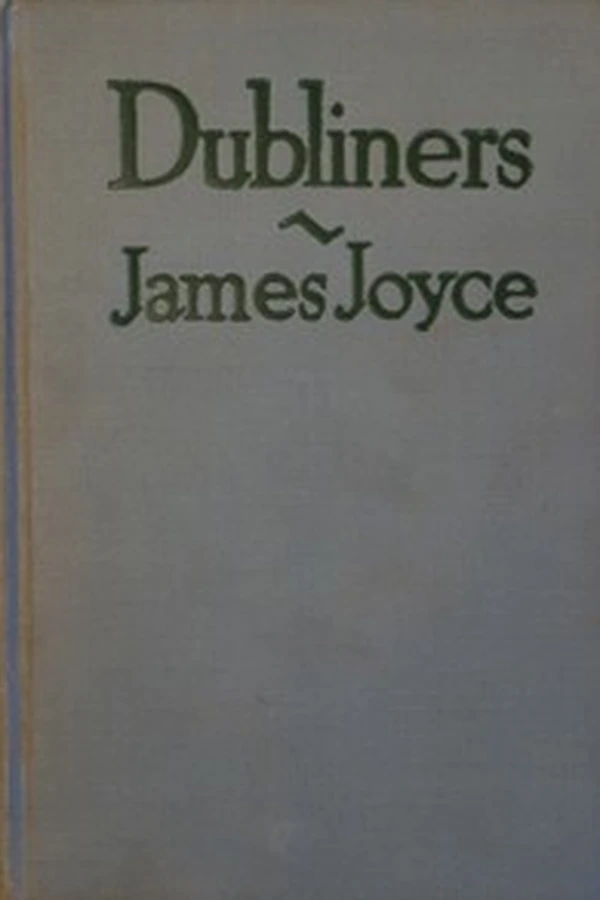
Dubliners
📖 Click to Read the Opening Pages Online Preview
The Sisters, the first story, opens:
There was no hope for him this time: it was the third stroke. Night after night I had passed the house (it was vacation time) and studied the lighted square of window: and night after night I had found it lighted in the same way, faintly and evenly. If he was dead, I thought, I would see the reflection of candles on the darkened blind for I knew that two candles must be set at the head of a corpse. He had often said to me: “I am not long for this world,” and I had thought his words idle. Now I knew they were true. Every night as I gazed up at the window I said softly to myself the word paralysis. It had always sounded strangely in my ears, like the word gnomon in the Euclid and the word simony in the Catechism. But now it sounded to me like the name of some maleficent and sinful being. It filled me with fear, and yet I longed to be nearer to it and to look upon its deadly work.
Old Cotter was sitting at the fire, smoking, when I came downstairs to supper. While my aunt was ladling out my stirabout he said, as if returning to some former remark of his:
“No, I wouldn’t say he was exactly … but there was something queer … there was something uncanny about him. I’ll tell you my opinion….”
The opening pages of The Sisters are shown here; all fifteen stories are in the free edition below.
Download Full EPUB1914
~71,000 words (estimated)
Approx. 3.9 hours
Standalone
Dublin, around 1904
Stories
EPUB · AZW3 · KEPUB
0.32 MB (EPUB) · 0.42 MB (AZW3) · 0.34 MB (KEPUB)
Public domain in the United States
Project Gutenberg #2814
Dubliners is James Joyce’s 1914 collection of fifteen short stories about one city, arranged in the order of a life: children first, then adolescents, then adults, then the public life of Dublin. Nobody in it is a hero. A boy watches a priest’s coffin and listens to the women talk; a girl grips the rail of a mail boat and cannot let go; a clerk beats his son after a day of humiliation; a woman at a party hears a song and remembers a boy who died for her. Joyce wrote the stories in Dublin and brought them into print ten years later, in London and from Trieste, after a long argument with publishers and printers, and the book that came out of that argument changed the short story in English.
The famous scenes are small ones: the chalice on the dead priest’s breast, the coins in the boy’s pocket at the bazaar, the gold coin shining in Corley’s palm, the snow falling on the churchyard at Oughterard. What holds the fifteen stories together is a method rather than a plot. Each one is built around a moment when a character sees the shape of their own life and cannot change it, and Joyce refuses to explain the moment or console the reader. The prose is exact, the dialogue is caught from the street, and the last story, The Dead, widens the book until the whole of Ireland is in the room. Readers who come for the famous stories stay for the sentences. See Wikipedia’s article on Dubliners for its publication history. The text is available via Project Gutenberg #2814.
Dubliners by James Joyce: Summary, Characters & Themes
This page is a summary and analysis of Dubliners, the collection of fifteen stories James Joyce published in 1914, with the historical context, the characters, the themes and free download links. The book begins with a boy in a dark house where a priest has died and ends with a man in a hotel room watching snow fall on a churchyard. Between them Joyce follows a whole city: children who cannot understand what the adults know, adolescents who promise themselves a life elsewhere, men and women whose jobs and marriages have narrowed into routine, and public men who talk about Ireland while doing nothing. No story has a plot worth summarising without loss; each is a few hours in a place, told so exactly that Dublin in 1904 can be followed on foot. What they share is a way of seeing: a character stands in an ordinary moment, the floor gives way, and the story ends before anyone recovers.
The author is James Joyce, and the text of Dubliners itself has a long critical history. The stories were written in Dublin in 1904 and 1905, when Joyce was in his early twenties, and published in London ten years later, while he was living in Trieste. He had already left Ireland for Paris and then Pola, and from the continent he sent the manuscript to London and Dublin publishers who read it with alarm. Printers objected to the language, the politics and the treatment of the clergy; the book was set twice, the plates were destroyed, and one publisher after another asked for changes. Joyce refused most of them for years, then accepted changes he later regretted, and the book finally appeared in June 1914. By then he had begun Ulysses, and Dubliners was read as the early work of a difficult writer rather than as the beginning of a new kind of short story.
Joyce arranged the fifteen stories in four movements, and the order was deliberate: childhood, adolescence, mature life and public life. The first three stories are told by a boy, the next four by adolescents and young adults, the next four by men and women in their thirties and forties, the next three by the city itself in committee rooms and concert halls, and The Dead to close. The order is the argument. A child sees a priest’s death but not its meaning; an adolescent promises himself escape and is humiliated; an adult understands that the promise was not kept. The narration stays close to a character’s own vocabulary and eyes, then withdraws, and the reader does the rest. Joyce called this style a scrupulous meanness, and the phrase describes the sentences as well as the lives they describe.
Dublin in these stories is not a backdrop but a system of small pressures. The city holds about three hundred thousand people, a tram network, a few department stores, a great many pubs and offices, and churches whose bells mark the hours. The stories stay in those rooms and streets: a house of mourning in Great Britain Street, a boarding house in Hardwicke Street, a committee room in Wicklow Street, the North Wall, the bazaar in Ballsbridge, a room in Usher’s Island. The ordinary objects are as exact as the streets: a dusty cretonne curtain, a chalice on a coffin, a plate of peas and a bottle of ginger beer, a gold coin held under a lamp. Joyce does not explain Dublin to English readers; he assumes it, which is why the city is still legible a century later. Later fiction that confines itself to a single city and a single day took notes from this book.
Critics have spent a century on the collection and on its central word, paralysis, which appears in the first story and returns through all of them. The stories are built on small failures of nerve and on the moments of insight that follow, and the last story, The Dead, is usually read as the book’s summary and its correction: it widens a private room until the whole of Ireland is inside it. Dubliners is standard reading in schools and universities and remains the one Irish short-story collection against which later writers measure themselves. In American fiction of the same years the closest reading is the naturalist novel of the city: editions.ink has The Gift of the Magi and Sister Carrie, both free in the same formats. The text used here is the Project Gutenberg transcription (#2814), which is in the public domain in the United States.
Historical Context
Dublin in 1904 was a city of about three hundred thousand people in a country of four and a half million, still recovering from the Famine and still governed from London. The great political question of the previous generation, Home Rule for Ireland, had been defeated in the Commons, and Charles Stewart Parnell, the leader who had seemed to promise a nation, had died in 1891 after the Church and the Irish party turned against him. The stories are full of that aftermath: men in committee rooms arguing about Parnell’s memory, a canvass for a candidate who will not appear, a mother who knows exactly what her daughter’s concert is worth. The Catholic Church ran most of the schools and much of the social life, and its clergy appear in the collection as ordinary men with ordinary authority, not as villains.
James Joyce was born in Rathgar in 1882, the eldest of ten children in a family that slid steadily from comfort into debt. He was educated at Clongowes Wood and Belvedere College, both Jesuit schools, and then at University College Dublin, where he studied languages and wrote a pamphlet against the Irish literary theatre. In June 1904 he met Nora Barnacle, a Galway woman working in a Dublin hotel, and in October they left Ireland together for the continent, unmarried, and stayed away for most of his life. He worked as a language teacher in Pola, Trieste and Zurich, wrote at night, and supported a family on lessons and loans. The city he left is the city he wrote about for the rest of his career, and the accuracy of the streets in Dubliners comes partly from distance.
The publication history is part of the book’s meaning. Grant Richards accepted the manuscript in 1905 and then asked for changes; Maunsel and Company set it in 1910 and destroyed the sheets after objections from the printer; Richards took it again in 1914 and published it in London in June of that year, a few weeks before the First World War began. The stories were written when the modern short story was still being invented, alongside Chekhov’s translations and the early work of Katherine Mansfield, and they assume a reader who will notice what a character does not say. Joyce’s later books dissolved the form he had built here, but he never wrote another collection, and the fifteen stories remained the clearest demonstration of what he thought fiction could do.
Key Characters & Literary Archetypes
- Gabriel Conroy: A university teacher and newspaper reviewer, the most educated man in the collection and the least free. He arrives at his aunts’ dance with his wife, gives a speech about hospitality, and spends the evening being corrected by women: by Lily the caretaker, by Molly Ivors, by his own memory of Gretta in a hotel room in Galway. He is loyal, vain, generous and afraid of being laughed at, and his final vision of the snow is the closest thing to a hero’s recognition that Dubliners allows.
- Eveline Hill: A shop girl of nineteen who has agreed to leave Dublin with a sailor named Frank for a new life in Buenos Ayres. At the North Wall she holds the iron railing and cannot move onto the boat. She is not stupid and not cowardly; she is a daughter who promised her dying mother to keep the house together, and the story is the exact weight of that promise measured against an unknown life.
- Little Chandler: A clerk in the King’s Inns who writes no poetry and dreams of the Celtic note that London reviewers might praise. Meeting Gallaher, a friend who has succeeded in Fleet Street, gives him eight years of comparison in an hour, and the evening ends with him shouting at his own child in a small flat in Capel Street while his wife is out at the shops.
- Farrington: A copy clerk and a heavy drinker who is humiliated by his employer, Mr Alleyne, in front of the office, pawns his watch to buy drink, loses an arm-wrestling match in a pub, and comes home to beat his son. He is the collection’s study of violence as a routine, and Joyce gives him no excuse and no epiphany, only the child’s voice at the end.
- Maria: A small, kind, unmarried woman who works in the Dublin by Lamplight laundry and looks forward to a Halloween evening with Joe Donnelly’s family. She is the one character in the book who is loved without complication, and the story’s cruelty is that the children’s game gives her the clay, the sign of death, and nobody tells her what it means.
- Mrs Mooney: A butcher’s daughter who separated from a violent husband, opened a boarding house in Hardwicke Street and governs it with credit and sternness. She watches her daughter Polly and a lodger named Mr Doran with the patience of a woman who has already decided what should happen, and the story ends with her remembering what she had been waiting for.
- Mr James Duffy: A cashier in a private bank in Baggot Street who lives in Chapelizod to be far from the city, dislikes disorder, and refuses the friendship of Mrs Sinico until a newspaper paragraph reports her death. He is the most self-possessed man in Dubliners and the one who learns most clearly that his self-possession was a kind of poverty.
Core Literary Themes
- Paralysis: The word is spoken in the first paragraph of the first story, and every story that follows is an instance of it: a will that knows what it wants and cannot act. Joyce took the term from the language of medicine and made it a diagnosis of a city, and the collection’s ordering turns it from a child’s word into an adult’s condition.
- Epiphany: Joyce used a religious word for the secular moment when a character or reader suddenly sees a situation whole. The moments are rarely announced and often arrive in the last sentence: the coins in the boy’s pocket, the clay in Maria’s saucer, the snow on the churchyard. The insight does not change the life that follows it.
- Escape and emigration: The stories are full of boats, trains, contracts and ships to Buenos Ayres or London, and almost nobody gets on them. Emigration was the ordinary fact of Irish life in 1904, and Joyce treats it not as romance but as a decision with a price, usually paid by the people left in the room.
- Money, class and respectability: A few pounds decide most of the plots: a boarding-house bill, a concert fee of eight guineas, a pawned watch, a card game with a rich friend. Joyce is exact about small sums because respectability in Dublin is exact about small sums, and the stories show how much of the city’s cruelty is financial.
- Drink and humiliation: Pubs are the social machinery of the collection, and drink is where humiliation is performed and passed on. Men borrow, lose, pawn, boast and go home to hit someone smaller; the women in the same rooms do the accounting. Joyce neither moralises about it nor lets anyone off.
- Religion and its failures: Priests are present at deaths, retreats and Christmas dinners, but the Church in Dubliners is mostly an institution of routine, career and social pressure. The famous retreat sermon in Grace treats religion as a matter of tidying up one’s accounts, which is also the governing metaphor of the whole book.
Why Download Our Custom E-Reader Edition of Dubliners?
This edition gives you the complete text of Dubliners without an introduction, a critical apparatus or a publisher’s note. The fifteen stories appear in their published order, from The Sisters to The Dead, and each story is its own chapter in the file, so the table of contents works as a table and not as a list of page numbers. Nothing has been abridged, modernised or explained in a footnote.
The text is the Project Gutenberg transcription of the 1914 collection, checked and reflowed for e-readers. Paragraph breaks, italics and the dashes that carry dialogue are the ones the book uses, and the typography is set for a screen rather than a printed page: a readable measure, generous leading, and no pagination artefacts in the middle of a story. The book is in the public domain in the United States, so the download is free and carries no DRM.
Three formats are offered because readers do not all read the same way. The EPUB works in Apple Books, Google Play Books and most e-readers; the AZW3 is the Kindle format, with a working table of contents; the KEPUB is for Kobo devices and keeps proper chapter breaks and reading progress. Each file is a few hundred kilobytes, small enough to keep on a phone for a train journey, which is how many of these stories were first read.
- Project Gutenberg transcription, via Project Gutenberg #2814 — the complete text, unabridged, with the chapter headings the author set.
- Complete text — All fifteen stories, unabridged, in their published order, from The Sisters to The Dead.
- Real chapter marks — Each story is a separate chapter in the table of contents, so you can finish one and jump to the next.
- Three formats — EPUB, AZW3 and KEPUB downloads, each built from the same public-domain transcription and free of DRM.
- The Gift of the Magi — free EPUB, AZW3 & KEPUB
- Sister Carrie — free EPUB, AZW3 & KEPUB
- The Awakening — free EPUB, AZW3 & KEPUB
Chapter summaries
Dubliners has fifteen stories and no chapter numbers. They are summarised here in the order Joyce published them; the two middle stories about money and display share one entry.
- The Sisters: The first story, and the one that names the book’s condition. A boy whose old friend, a priest, has died is taken by his aunt to the house of mourning, where the corpse is coffined with a chalice on its breast and the women talk in the kitchen. Old Cotter calls the dead man a bad influence; the boy resents him and cannot say why. The story keeps its meaning in the last pages, when Eliza describes finding her brother laughing alone in the dark confession-box, and the adults agree that there was something gone wrong with him. Paralysis enters the collection as a word the boy says softly to himself at night, gazing up at the window.
- An Encounter: The childhood group’s second story is a day of truancy. Joe Dillon’s Wild West games lead the narrator and Mahony to skip school, cross the Liffey on the ferry and walk out towards Ringsend, where an old man in a field talks about boys, books and whipping. The man’s talk turns strange, he walks off and does something the boy does not name, and Mahony calls him a queer old josser. The narrator ends in penitence, not because of the man but because he has always despised Mahony a little. Childhood ends here, and it ends in a failure of courage rather than of innocence.
- Araby: North Richmond Street is blind, and the boy who lives there is in love with Mangan’s sister, whose name he never uses. He promises to bring her something from Araby, the bazaar in Ballsbridge, and the week before it passes in a fever of romance. His uncle comes home late, the train is slow, and by the time he reaches the hall most of the stalls are shut; the young woman at one of them is talking to two Englishmen and serves him without interest. He lets his two pennies fall against the sixpence in his pocket and sees himself as a creature driven and derided by vanity. It is the collection’s purest version of the pattern: desire, delay, deflation.
- Eveline: A girl of nineteen sits at a window with the dusty cretonne curtain and weighs her life. Her mother is dead, her father is difficult, her job in the Stores is small, and Frank the sailor offers a house in Buenos Ayres and a night boat. The story is almost entirely her interior argument, and its climax is not a decision but a physical fact: at the North Wall she cannot move, and her eyes give Frank no sign of love or farewell or recognition. The prose never tells us whether she was right. It shows a woman held in place by a promise to a dying mother and by everything the room has taught her to want.
- After the Race and Two Gallants: Two studies in money and display, both set among young men on the make. In After the Race, Jimmy Doyle rides back into Dublin with a French car owner and his friends after a continental victory, is flattered all evening, and loses more than he can afford at cards on a yacht in Kingstown harbour. In Two Gallants, Corley works a slavey from Baggot Street while Lenehan eats a plate of peas and drinks ginger beer, and the story ends with a small gold coin shining in Corley’s palm. Neither man is punished; the collection keeps its judgement in the details, especially in what Lenehan is willing to watch and wait for.
- The Boarding House: Mrs Mooney, a butcher’s daughter, has separated from a violent husband and runs a boarding house in Hardwicke Street with credit, sternness and a clear head. Her daughter Polly has been seeing Mr Doran, a respectable lodger of thirty-four or thirty-five, and the household has noticed. The story is told from several angles, and its centre is Mrs Mooney’s patience: she waits, lets the young man sweat through a Sunday morning, and then asks him a question he cannot answer. Nobody is punished either, but a marriage is arranged, and the last line gives the mother the satisfaction of a plan that has worked.
- A Little Cloud: Little Chandler meets Gallaher, a friend who left Dublin eight years earlier and has become a London journalist, and the meeting rearranges his sense of his own life. Gallaher is loud, travelled and unimpressed by Dublin; Chandler goes home to a wife, a child and the small house he has furnished on the hire system, and the poetry he has never written seems to him a whole other existence. The child cries, he shouts at it, and the story ends with tears of remorse. It is the collection’s clearest study of a man who mistakes envy for ambition, and of the moment when a person sees that he was a prisoner for life.
- Counterparts: A day in the life of Farrington, a copy clerk who is humiliated by his employer, escapes into pubs, pawns his watch, loses an arm-wrestling match to a younger man and comes home with twopence. The story is built as a chain of small defeats, each one passed down to someone weaker, and it ends in a child’s voice begging not to be beaten. The title says what the collection keeps showing: the man at the bottom of the office is the man at the top of the stairs at home, and the cruelty is ordinary, not exceptional.
- Clay: Maria, a small kind woman in the Dublin by Lamplight laundry, goes to spend Halloween with Joe Donnelly’s family. She buys cakes on the tram, is welcomed, plays the children’s game with the saucers, and touches the clay, which in the game means death. Nobody corrects her, the evening continues, and she sings I Dreamt That I Dwelt in Marble Halls, repeating the first verse because she has forgotten the rest. The story’s cruelty is entirely in what the other characters do not say, and it is the warmest story in the book until the reader notices the saucer.
- A Painful Case: Mr James Duffy, a bank cashier who lives in Chapelizod, lives a life of order and refuses the friendship of Mrs Emily Sinico, a married woman who has begun to care for him. Four years later he reads in a newspaper that she has been killed at Sydney Parade Station, and the story becomes an argument with himself about what he refused. He walks the winter roads, remembers her hand and her voice, and recognises that he has been outcast from life’s feast. The prose is the coldest in the collection precisely because Duffy’s self-knowledge arrives without any change in his circumstances.
- Ivy Day in the Committee Room: On the anniversary of Parnell’s death, a group of canvassers sit in a Wicklow Street committee room, warming themselves at a fire, opening bottles and arguing about a candidate who is late with their money. Old Jack, Mr O’Connor, Mr Henchy, Mr Hynes and Mr Lyons talk about the King, the Pope, the working man and Parnell, and Hynes reads a poem he has written for the day. Nothing happens except talk, and the story is the collection’s public-life centrepiece: the men who could act are too comfortable, too cynical or too drunk, and the dead leader is remembered as a sentiment rather than a programme.
- A Mother: Mrs Kearney, who married out of spite and has raised her daughter Kathleen to be a musician, takes on the Eire Abu Society over a concert contract for eight guineas. The committee is amateur, the hall is half full, and when Mr Fitzpatrick pays half the fee at the interval she refuses to let Kathleen go on. The argument is about four shillings and about respectability, and the story follows it through the green room and into the audience. It is the collection’s most exact account of how a small city organises its snobberies, and of a mother who is both right and impossible.
- Grace: Mr Kernan falls down the stairs of a pub, bites his tongue and is carried home by two friends who decide that his soul needs attention as well as his head. The story follows the arrangements: a retreat at the Jesuit Church in Gardiner Street, a dinner party, and a sermon by Father Purdon to a congregation of businessmen on the text of the dishonest steward. The priest tells them that the children of this world are wiser in their generation, and offers religion as a way of setting one’s accounts right. The comedy is dry and the ending is not ironic in the way it first appears: Kernan is being saved into exactly the life he already has.
- The Dead: The longest story and the collection’s destination. The Misses Morkan give their annual dance on Usher’s Island; Gabriel Conroy arrives with his wife Gretta, worries about his speech, is teased by Molly Ivors, and watches the evening fill and empty. After the party the couple go to a hotel, where Gretta hears a song in her memory and tells him about Michael Furey, a boy from Galway who died for her when he was seventeen. Gabriel’s jealousy turns into something colder and larger, and the story closes with the snow falling over Ireland. It gathers every theme in the book into one room and then opens the window, and it is the reason Dubliners is read as a whole rather than as a set of stories.
Dubliners: Frequently Asked Questions
What is Dubliners about?
Is Dubliners a novel or a collection of short stories?
How long does it take to read Dubliners?
What is the order of the stories in Dubliners?
What does paralysis mean in Dubliners?
Why is Dubliners considered important?
Is Dubliners in the public domain?
Where can I download Dubliners for free?
Part of: Modern classics · Free classic fiction