Ulysses by James Joyce: Free EPUB, AZW3 & KEPUB Download
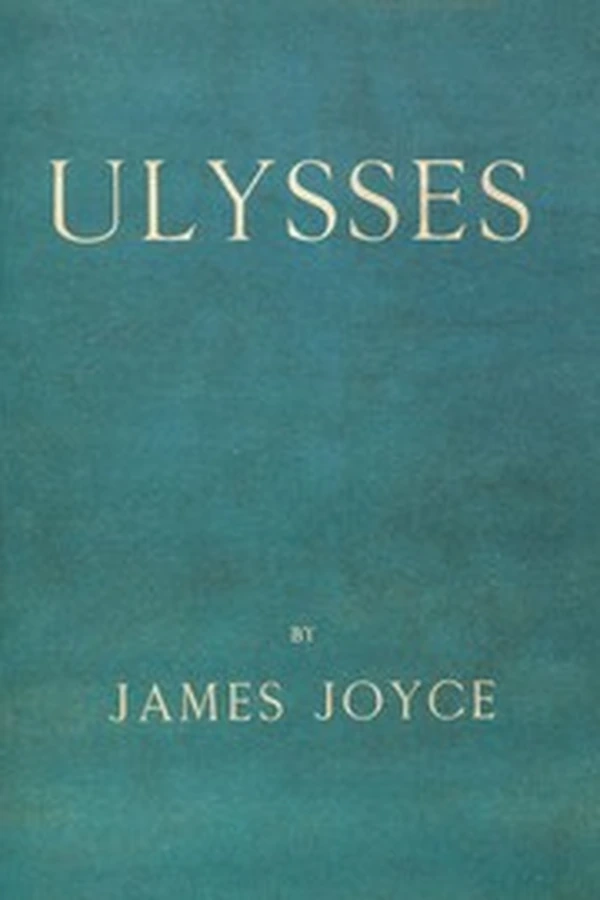
Ulysses
📖 Click to Read the Opening Pages Online Preview
The first page: Mulligan on the tower roof
Stately, plump Buck Mulligan came from the stairhead, bearing a bowl of lather on which a mirror and a razor lay crossed. A yellow dressinggown, ungirdled, was sustained gently behind him on the mild morning air. He held the bowl aloft and intoned:
—Introibo ad altare Dei.
Halted, he peered down the dark winding stairs and called out coarsely:
The opening paragraphs of Telemachus are printed here; all eighteen episodes are in the free EPUB below.
Download Full EPUB1922
~261,000 words (estimated)
Approx. 14.5 hours
Standalone
Dublin, 16 June 1904
18 episodes
EPUB · AZW3 · KEPUB
1.43 MB (EPUB) · 1.84 MB (AZW3) · 1.57 MB (KEPUB)
Public domain in the United States
Project Gutenberg #4300
Ulysses follows one day in Dublin, 16 June 1904, from the moment Buck Mulligan shaves on the roof of a Martello tower to Molly Bloom’s unpunctuated monologue in the small hours of the next morning. Leopold Bloom, a Jewish advertising canvasser, buys a kidney, attends a funeral, eats a cheese sandwich, dodges his wife’s lover and argues about everything under the sun. Stephen Dedalus, back from Paris, teaches a class, lectures a library on Shakespeare and gets drunk. Around them the city works: trams, pubs, a newspaper office, a maternity hospital, a brothel quarter. The plot is small and the book is enormous.
Joyce published the novel in 1922, and it remains the most deliberate break with the nineteenth-century novel in English: eighteen episodes, each written in a different style, from the newspaper headlines of Aeolus to the musical phrasing of Sirens and the unpunctuated sentences of Penelope. Nothing is explained. Names arrive without introductions, arguments begin mid-sentence, and the mythological and the ordinary share a paragraph. Read it first for the language, the jokes and the exact weight of a Dublin Thursday, then for the strange and generous mind at the centre of it. See Wikipedia’s article on Ulysses for its publication history. The text is available via Project Gutenberg #4300.
Ulysses by James Joyce: Summary, Characters & Themes
This page is a summary and analysis of Ulysses, the novel James Joyce set in Dublin on one day, 16 June 1904, and published in 1922. The book has eighteen episodes, but the Project Gutenberg text marks only three large parts, numbered I, II and III; the episode names most readers use, from Telemachus to Penelope, are conventional labels attached by later criticism rather than headings in the novel. The action is slight. Leopold Bloom, a Jewish advertising canvasser, buys a kidney, goes to a funeral, eats a cheese sandwich, avoids his own house while his wife’s lover visits, and late at night steers a drunk Stephen Dedalus home. What carries the book is the telling: interior monologue, parody, list, catechism, and a new style for every episode. Nothing in it is explained twice, so a summary earns its place.
James Joyce was born in Dublin in 1882 and died in 1941, and Ulysses is the book in which that city is preserved street by street and pub by pub, closely enough that readers still walk the route. Joyce wrote it abroad, over years of notes and drafts, which may be why the Dublin of the novel is at once exact and haunted: every address can be found, but the people standing at them are slightly displaced. He took the frame from Homer’s Odyssey and refused the epic’s consolation. There is no narrator to trust. Each episode hands the story to a different written voice, and the reader has to work out, sentence by sentence, who is speaking, to whom, and why the prose has changed under their feet. The style changes are not games: they are how the book keeps its distance from any single voice.
The date is load-bearing. 16 June 1904 is the day the novel happens, and readers have called it Bloomsday ever since. Within that single day Joyce packs the ordinary machinery of a colonial capital: the post office in Westland Row, the Freeman’s Journal office off Prince’s Street, Davy Byrne’s pub in Duke Street, the Ormond Hotel on the quays, Barney Kiernan’s in Little Britain Street, the National Maternity Hospital in Holles Street, the brothel quarter off Mabbot Street, and the house at 7 Eccles Street where the day ends. Bloom’s wanderings and Stephen’s are plotted against Homer’s, but the modern city keeps interrupting the pattern with trams, advertisements, race results, funerals and gossip. The clock is kept too: the light changes with the hour, from the grey morning sea to the lamp-lit windows of Eccles Street.
Technique is the subject as much as Dublin is. Episode seven, Aeolus, is cut into newspaper headlines and tells its story inside a newsroom. Episode eleven, Sirens, is built from musical phrases and closes on a long half-heard coda. Episode twelve, Cyclops, inflates a pub argument into bar-room myth, while episode fourteen, Oxen of the Sun, runs the whole history of English prose, from Anglo-Saxon alliteration to late Victorian slang, inside a maternity hospital. Episode fifteen, Circe, turns the night town into expressionist drama with stage directions, and episode seventeen, Ithaca, answers its own questions in the flat voice of a school catechism. The changing form is how Joyce thinks about memory, language and the body, not decoration added to a plot. Oxen of the Sun is the extreme case, and it is the episode most readers skip first.
What makes the book hard is also what makes it inexhaustible: it withholds explanation, shifts register without warning and expects the reader to enjoy the noise. The final episode, Penelope, gives Molly Bloom the floor in eight unpunctuated sentences and closes the novel on her “yes I said yes I will Yes”. For all its difficulty the book is comic, tender and extremely specific about money, food, weather and embarrassment. The text used here is the Project Gutenberg transcription (#4300), the complete novel, and this edition follows it episode by episode without cuts, and the chapter list uses the episode names as guidance rather than as headings. Two shorter modern texts on the same shelf make a good next step: Heart of Darkness and The Turn of the Screw.
Historical Context
The Ireland of the novel is a country between disappointments. The parliamentary party that fought for Home Rule had split over Parnell, and Parnell’s grave is one of the stops the funeral party makes in Hades: “Some say he is not in that grave at all,” says Mr Power, and the talk turns to the chief who will not come again. Around that loss Joyce arranges the smaller institutions of 1904 Dublin: the Catholic Church, the Castle administration, the pubs where Fenian songs are sung and the newspapers where nationalist politics is argued over set columns and advertisements. The carriage in Hades is a small parliament of that inheritance: Cunningham keeps the peace, Power keeps the manners, Simon Dedalus keeps the grief.
Stephen’s position at the start is the classic one of the colonised intellectual. He teaches at a Protestant school in Dalkey, takes his wages from a unionist headmaster who boasts of rebel blood, and tells the English visitor Haines that he serves two masters, the British state and the Roman church, with a third who wants him for odd jobs. Haines collects Irish sayings for a book; the Citizen, later, collects grievances in a pub. Between them stands Bloom, who is Irish and Jewish and therefore, in the eyes of the drinkers in Barney Kiernan’s, not quite either. The question of who belongs, and on whose terms, is asked in every episode, usually by someone who has had a drink.
The city is mapped with a surveyor’s care, and the map is part of the meaning. The tower at Sandycove, the strand at Sandymount, the cemetery at Glasnevin, the newspaper office, the hotel where the barmaids listen, the hospital where a child is born, the kips off Mabbot Street: each location carries its own idiom, and each episode changes its prose to match the place. The novel’s politics stay at the edge of hearing, in songs, headlines and arguments, while the day itself stays domestic: a man buying soap, a woman in bed, a funeral, a drink, a long walk home. Each place has its own idiom, from the Latin tags of the classroom to the blank-verse abuse of the pub.
Key Characters & Literary Archetypes
- Leopold Bloom: The novel’s centre. A canvasser for newspaper advertisements, married to Molly, living at 7 Eccles Street, father of a dead son, Rudy, and a daughter in Mullingar. His day is a sequence of small transactions: a kidney from Dlugacz’s, a bath at the Turkish baths, a funeral at Glasnevin, a sandwich, a charity subscription. He carries a shrivelled potato in his hip pocket as a charm, and the text gives him the line “Potato I have”. He is curious, courteous, and quietly grieving all day.
- Stephen Dedalus: A schoolteacher and would-be writer, back from Paris, staying in the Martello tower at Sandycove at the book’s start. He is still in mourning for his mother, who died after he refused to kneel and pray at her bedside, and he refuses Mulligan’s offers of comfort, money and a clean shirt. Two of his sentences carry the argument with Ireland: “I am a servant of two masters”, and “History is a nightmare from which I am trying to awake”. He is brilliant, guilty and unemployed, and the day gives him no relief.
- Molly Bloom: Bloom’s wife, a professional singer born and raised in Gibraltar among soldiers and Spanish neighbours, now planning a tour with Blazes Boylan. She spends the day in bed at 7 Eccles Street, receives Boylan in the afternoon and lies awake after midnight running through her life: Mulvey on the rocks, the afternoon’s visit, the day she got Bloom to propose, the loss of her son Rudy. The novel ends inside her head with “yes I said yes I will Yes”. Her voice is the warmest surprise in the book.
- Buck Mulligan: Malachi Mulligan, medical student, blasphemous mimic and host of the tower, where he shaves with bowl, mirror and razor crossed on the gunrest in the opening scene. He calls Stephen “Kinch”, invites the Englishman Haines to stay, calls the sea “snotgreen” and “scrotumtightening”, and asks Stephen for the key and for twopence for a pint. Stephen’s judgement of him is cooler than his charm: the cracked lookingglass of a servant. He is the most attractive bully in the book.
- Blazes Boylan: Molly’s manager and lover, a heavy man in a straw hat whose name runs through Bloom’s day like a bad rhyme. He sends the letter addressed to “Mrs Marion Bloom” that Bloom carries upstairs without comment, crosses the city in a jaunting car, visits 7 Eccles Street at four o’clock, and appears at the Ormond Hotel while Bloom is eating his dinner. In Lestrygonians Bloom sees the straw hat ahead of him and ducks into the National Museum to avoid raising his hat. He is never given an interior: he exists as noise, a hat and a rumour.
- The Citizen: The Fenian drinker who presides in Barney Kiernan’s in Little Britain Street, with a mangy mongrel called Garryowen and a biscuit tin within reach. He defines a nation for Bloom, “A nation is the same people living in the same place”, and hears the answer that Bloom’s definition includes the Irish in every country. His politics are all memory and grievance, and the episode’s inflated prose turns his shouting into epic: “the curse of my curses”. He is a parody of the heroic patriot, and the novel loves him and fears him at once.
Core Literary Themes
- History as nightmare: Stephen’s line in the schoolroom, “History is a nightmare from which I am trying to awake”, sets the terms. Mr Deasy’s boast that Ireland never persecuted the Jews because “she never let them in” shows how history is told as comfort. At Glasnevin the mourners pass Parnell’s grave and Mr Power says, “Some say he is not in that grave at all”, while Bloom, whose father killed himself, thinks about what a funeral is for. The past is not background here; it is a pressure on every conversation. Every character in the book is arguing with a version of the past.
- Wandering and homecoming: The Odyssey gives the book its shape: three episodes of Telemachus, twelve of wandering, three of return. Bloom leaves 7 Eccles Street in the morning and comes back at night; Stephen leaves the tower and finds, briefly, a father. Ithaca answers the question of their return with a catechism, and ends with Bloom in bed and “the heaventree of stars hung with humid nightblue fruit”. The catechism is funny, exact, and finally sad. Two men, one bed, and a day that will not be repeated. The homecoming is domestic and unheroic, and that is the point: a day of small errands is given the weight of an epic. The return is a walk, a conversation and a bed.
- The body and its appetites: Ulysses is the great novel of the body. Bloom cooks a kidney that burns, sits on the jakes reading a story, bathes, eats gorgonzola and drinks burgundy at Davy Byrne’s, and half-enjoys a girl on the strand in Nausicaa. Appetite and shame sit in the same paragraph: the dead sea of the Agendath prospectus as “the grey sunken cunt of the world”, the potato carried like a relic, the stink of the pub, the smallness of a body that eats and excretes. Nothing is too ordinary or too embarrassing to be written down, and the candour is one reason the book was once thought obscene.
- Style as subject: Each episode rebuilds the novel in another idiom. Aeolus prints headlines over a newsroom scene; Sirens opens with “Bronze by gold, Miss Kennedy’s head by Miss Douce’s head”; Cyclops swells into gigantism and interpolated parodies; Oxen of the Sun begins “Deshil Holles Eamus” and moves through the history of English prose; Circe is a play with stage directions; Ithaca is a catechism; Penelope has no punctuation at all. Form is not a container for the story here. It is an argument about how any story gets told, and the argument is part of the pleasure. The novel is also a comic anthology of English prose styles.
- Exile and belonging: Bloom is an outsider in a city of talkers: a Jew among Catholics and Fenians, a Dubliner with a Hungarian name, a man who does not drink enough to keep his place in the pub. The Citizen’s definition of a nation, “the same people living in the same place”, is answered by Bloom’s list of the Irish scattered everywhere, and by Molly, who remembers Gibraltar as home. Stephen, back from Paris, is between places too. The novel’s warmth comes from people who do not quite belong, making a home out of a day. Belonging, in the end, is something you make rather than inherit.
Why Download Our Custom E-Reader Edition of Ulysses?
This edition gives you the whole novel as Joyce published it in 1922, without cuts and without the explanatory apparatus that often stands between a reader and the text. The transcription is the Project Gutenberg text, all eighteen episodes in their order, so the dialogue dashes, the headlines and the unpunctuated closing episode are all present as the book prints them. The episode order is the published order, not a reading order invented for this page, and the three numbered parts are left where the novel puts them, so the shape of the book is the shape Joyce gave it.
Navigation is the practical problem with a book this size, so every episode is a chapter mark in the table of contents, named for the standard episode titles and grouped in the three parts the novel numbers. You can stop after Hades, skip to Oxen of the Sun, or read Penelope first; the book survives being entered anywhere. Each chapter mark carries the episode name and its number in the sequence, so a reader who wants to follow the Homeric parallel can, and a reader who only wants to finish the book is not asked to care about it.
The files are made for e-readers rather than for show. EPUB, AZW3 and KEPUB are generated from the same source, with a linked table of contents, no DRM, no account and no sample chapters; the typography keeps the dialogue dashes that distinguish speakers, which matters in a novel where an em dash is often the only signal that someone has started talking. The files are small, open in any reader, and keep their chapter marks, so the novel is legible on a phone as well as on a tablet or a dedicated e-reader.
- Project Gutenberg transcription, via Project Gutenberg #4300 — the complete text, unabridged.
- Complete text — all eighteen episodes, from Telemachus to Penelope, unabridged and in their published order.
- Episode navigation — each episode has its own chapter mark, grouped into the novel’s three parts, so a very long book stays enterable.
- Three formats — EPUB, AZW3 and KEPUB, all built from the same transcription, with no DRM and no account.
- Heart of Darkness — free EPUB, AZW3 & KEPUB
- The Turn of the Screw — free EPUB, AZW3 & KEPUB
- Metamorphosis — free EPUB, AZW3 & KEPUB
Chapter summaries
The eighteen episodes are grouped here into ten entries, following the standard three-part division. The episode names are the conventional ones; the Project Gutenberg text prints only the three numbered parts.
- Episodes 1-3: Telemachus, Nestor, Proteus: Morning at the Martello tower in Sandycove. Mulligan shaves on the gunrest while Stephen, still raw from his mother’s death, listens to him mock the mass; Haines, an English guest who has been shouting about a black panther in his sleep, wants Stephen’s sayings for a book. At Mr Deasy’s school in Dalkey Stephen takes his wages and hears that history is a nightmare and that Ireland never let the Jews in. Then he walks Sandymount strand alone, thinking about “the ineluctable modality of the visible” and watching a three-master come up the river. He will not sleep in the tower again.
- Episodes 4-6: Calypso, Lotus Eaters, Hades: Bloom’s day begins at 7 Eccles Street: he buys a kidney at Dlugacz’s, brings Molly her letters (one from Milly in Mullingar, one addressed to Mrs Marion Bloom), explains metempsychosis and burns the kidney. At Westland Row he collects a letter from Martha Clifford under the name Henry Flower, meets Bantam Lyons, whose “Throwaway” tip will win the Gold Cup, and takes a bath. In the afternoon he rides to Glasnevin behind Paddy Dignam’s coffin with Cunningham, Power and Simon Dedalus, and a man in a macintosh is counted among the mourners. By the end of it Bloom has heard every opinion in Dublin about death, and none of them fit.
- Episode 7: Aeolus: Noon in the Freeman’s Journal office in Prince’s Street, where Bloom comes to place Alexander Keyes’s advertisement and the talk is all rhetoric. Myles Crawford edits, Professor MacHugh recalls Taylor’s speech about the dead, Lenehan asks his riddle about “The Rose of Castile”, and Stephen, prompted by the company, produces his parable of two old Dublin women who climb Nelson’s pillar and spit plumstones over the city: “A Pisgah Sight of Palestine or The Parable of The Plums”. The episode is printed under newspaper headlines. The headlines are the joke: they turn a small errand into history. Bloom is there for a two-line advertisement and stays to watch the oratory.
- Episodes 8-9: Lestrygonians, Scylla and Charybdis: One o’clock. Bloom, hungry, is disgusted by the swarming eaters in the Burton restaurant and takes refuge in Davy Byrne’s with a gorgonzola sandwich and a glass of burgundy while Nosey Flynn talks horses and Mrs Breen shows him her husband’s postcard. The food and the smell of the city run through his head. Afterward he sees Boylan’s straw hat and slips into the National Museum. At the National Library Stephen argues before the librarians that Shakespeare wrote his own family into the plays, Hamlet above all, and that the ghost is the father who made the part. Bloom passes through, unnoticed. The two episodes are a pair: the body’s lunch and the mind’s argument.
- Episodes 10-11: Wandering Rocks, Sirens: Three o’clock, and nineteen short scenes cross the city: Father Conmee takes a tram, the viceregal cavalcade drives out to open a charity bazaar, Dilly Dedalus begs her father for money, a one-legged sailor sings for coppers, and Boylan crosses the Liffey on his way to Molly. The scene then settles in the Ormond Hotel, where Miss Kennedy and Miss Douce serve drinks, Bloom eats his dinner and watches Boylan arrive, and the prose turns into music, phrases repeated and reversed like a canon, ending in a long coda. Nineteen crossings hold the whole city in view, and the next episode hears it as music.
- Episodes 12-13: Cyclops, Nausicaa: Five o’clock in Barney Kiernan’s, where the Citizen presides with his dog Garryowen and the drinkers trade insults, and Bloom’s definition of a nation is turned against him. The narration swells into parody and myth until the Citizen throws a biscuit tin after Bloom’s jaunting car. At dusk on Sandymount strand Gerty MacDowell sits with the Caffrey children, watches the fireworks and lets Bloom look; the episode is written in the sugary idiom of a girls’ magazine. Bloom’s release, and his guilt, are given without sentiment. The two episodes sit at dusk, one loud and one soft, and both are about looking.
- Episode 14: Oxen of the Sun: Nine in the evening at the National Maternity Hospital in Holles Street, where Mrs Purefoy is in labour and the medical students drink in the common room: Mulligan, Lenehan, Lynch, Crotthers and Punch Costello. The prose moves through the history of English, from alliterative Old English, “Deshil Holles Eamus”, through Malory, the Bible, Pepys, Sterne and Dickens to the slang of the 1890s, while Stephen and Bloom talk about birth, death and the thunder outside. A son is born; the drinkers go on to Nighttown. The baby arrives at the end of a sentence, in the middle of a style. Almost nothing in the chapter is written in the voice of 1904.
- Episode 15: Circe: Midnight in Nighttown, the brothel quarter off Mabbot Street, and the novel turns into a play. Bloom is put on trial by a fantasy court, “When in doubt persecute Bloom”, and crowned emperor of the new Bloomusalem; his dead father and his dead son appear among the hallucinations. Stephen, drunk, argues with the soldiers Private Carr and Private Compton and is knocked down; Bloom stands over him and has a vision of Rudy. The episode is long, savage and funny, and it ends with a retreat and a resurrection. It is the longest episode and the one that most needs the chapter list.
- Episodes 16-17: Eumaeus, Ithaca: One in the morning: Bloom takes Stephen to the cabman’s shelter near the river for bad coffee and talk of ships, sailors and the sea, with a returned sailor, W. B. Murphy, telling tall stories. “Preparatory to anything else” is how the chapter opens, and the style is tired, cliché-ridden and kind. Then Ithaca, the catechism, asks “What parallel courses did Bloom and Stephen follow returning?”, walks them home to 7 Eccles Street, has them talk of music and the dead, and ends with Bloom in bed and “the heaventree of stars hung with humid nightblue fruit”. The catechism is funny, exact, and finally sad. Two men, one bed, and a day that will not be repeated.
- Episode 18: Penelope: Molly Bloom, awake at 7 Eccles Street after midnight, in eight sentences without punctuation. She thinks about Boylan’s afternoon visit, about her daughter Milly, about her son Rudy, about Mulvey on the rocks at Gibraltar and the day she got Bloom to propose. The monologue moves by association and returns always to “yes”: her answer to Bloom, to the day, to life. It closes the novel with “yes I said yes I will Yes”, one of the few affirmations in a book that has spent eighteen episodes doubting everything. Her last word is the last word of the book, and it is an answer. Eight sentences, almost no full stop until the end, and the whole novel turns on that yes.
Ulysses: Frequently Asked Questions
Is Ulysses as difficult as people say?
Do I need to know Homer’s Odyssey first?
Is this the complete, unabridged text?
Why was Ulysses considered obscene?
How long will it take to read?
Is there a translation or translator to look for?
Should I read it in order, or can I dip in?
Where can I download Ulysses for free?
Part of: All classic books · Classic fiction