Bel-Ami by Guy de Maupassant: Free EPUB, AZW3 & KEPUB Download
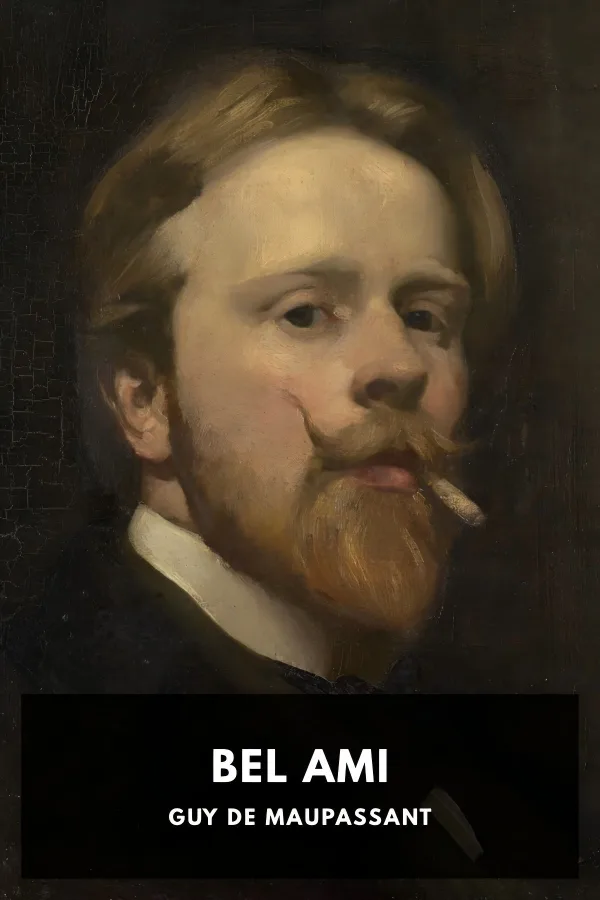
Bel Ami
📖 Click to Read Part I: Chapter I Online Preview
Part I — Chapter I
When the cashier had given him the change out of his five francpiece, George Duroy left the restaurant.
As he had a good carriage, both naturally and from his military training, he drew himself up, twirled his moustache, and threw upon the lingering customers a rapid and sweeping glance—one of those glances which take in everything within their range like a casting net.
The women looked up at him in turn—three little workgirls, a middle-aged music mistress, disheveled, untidy, and wearing a bonnet always dusty and a dress always awry; and two shopkeepers’ wives dining with their husbands—all regular customers at this slap-bang establishment.
Follow Georges Duroy’s audacious ascent through the predatory boudoirs and corrupt press rooms of Paris. Download the complete unabridged edition for your e-reader.
Download Full EPUBBel-Ami is an 1885 novel by Guy de Maupassant, a realist novel of satirical naturalism set in Paris and its press circles that follows George Duroy, a former soldier and clerk whose career rises through journalism, seduction, and social manipulation, exploring themes of ambition, corruption, the power of the press, and the role of women in Parisian high society. This Standard Ebooks edition, translated by Vizetelly and Company (1888), is based on Project Gutenberg eBook #33928 and is in the public domain in the United States; readers outside the US should check their local laws. The text is available via Standard Ebooks.
Bel-Ami by Guy de Maupassant: Summary, Characters & Themes
Published in 1885 in Paris, Bel-Ami is Guy de Maupassant’s celebrated masterpiece of satirical naturalism, here in the 1888 English translation by Vizetelly and Company. This summary and analysis follows the meteoric ascent of George Duroy from an impoverished former cavalry soldier to one of the most formidable arbiters of French politics and media, a scathing dissection of Third Republic corruption that matches the fierce urban ambition found in Balzac’s Father Goriot.
Stranded on the streets of Paris with barely two francs in his pocket, Duroy encounters Charles Forestier, a former military comrade turned political editor at La Vie Française. Recognizing Duroy’s handsome appearance and ruthless personal charm, Forestier secures him a probationary reporter position at the tabloid.
Devoid of journalistic talent or intellectual depth, Duroy quickly discovers that the real levers of Parisian power are operated in the private salons of influential women. Forestier’s brilliant, politically astute wife Madeleine ghostwrites his initial front-page articles, teaching him how public opinion is manufactured for financial gain.
Adopting the affectionate nickname “Bel-Ami” bestowed on him by the young daughter of his mistress Clotilde de Marelle, Duroy embarks on a cynical campaign of social conquest. Following Forestier’s death, Duroy marries Madeleine to gain her fortune and political connections, only to discard her when a more profitable financial alliance appears.
Leveraging a fabricated financial scandal concerning French colonial intervention in Morocco, Duroy blackmails the newspaper’s wealthy proprietor, Monsieur Walter. He subsequently abducts and marries Walter’s naive teenage daughter Susan, cementing his access to millions in stock profits and a newly minted aristocratic title. The text is based on Project Gutenberg eBook #33928 and the Standard Ebooks edition.
The novel concludes inside the magnificent Church of the Madeleine during Duroy’s triumphant society wedding. Leaving the altar alongside his new bride amid the adoration of Paris’s elite, Bel-Ami gazes down the boulevard toward the Chamber of Deputies, daydreaming of his mistress Clotilde and contemplating his imminent ascent to the French presidency.
Historical Context: The Gilded Media and the Third Republic
Set during the 1880s, Bel-Ami reflects the chaotic financialization of the French Third Republic. The proliferation of mass-circulation daily newspapers had created an incestuous triangle between yellow journalism, colonial stock speculation, and high-cabinet government ministeries.
Maupassant, who worked as a journalist for Le Figaro and Gil Blas, drew upon insider knowledge to illustrate how colonial military campaigns—particularly the French conquest of Tunisia and Morocco—were secretly engineered by corrupt press barons to artificially inflate mining shares. Duroy is the ultimate product of this era: an unprincipled opportunist who excels because society values theatrical spectacle over moral integrity.
Key Characters & Literary Archetypes
- George Duroy / Bel-Ami (The Ruthless Cad & Modern Charmer): Lacking intellect or honor, he weaponizes his physical elegance to seduce influential women, embodying the modern media opportunist who rises through optics and adaptability.
- Madeleine Forestier (The Behind-the-Scenes Strategist): The brilliant, independent woman who ghostwrites articles for both her husbands. Barred from direct political office, she uses Duroy as her public mouthpiece while maintaining an intellectual dominance he resents.
- Clotilde de Marelle (The Free-Spirited Bohemian): Capricious, passionate, and witty, Clotilde provides Duroy with genuine affection and sexual escapism. Despite his betrayals, she remains tethered to him by physical chemistry.
- Virginie Walter (The Conquered Pious Matron): The devout, middle-aged wife of the paper’s proprietor. Her desperate, late-blooming infatuation with Duroy destroys her moral equilibrium, leaving her helpless as he casts her aside to marry her daughter.
- Monsieur Walter (The Plutocratic Press Baron): The unscrupulous proprietor of La Vie Française. A master of market manipulation, he uses fake political news to enrich himself through government contracts and colonial land grabs.
- Norbert de Varenne (The Melancholy Philosopher): An aging poet at the paper who delivers a chilling meditation on aging and death, acting as the novel’s existential conscience amid frantic worldly ambition.
Core Literary Themes
- The Manufacture of Truth: Maupassant demonstrates that modern journalism is not a pillar of democracy, but a commercial enterprise manufacturing fear, patriotism, and financial bubbles for private enrichment.
- Women as Stepping-Stones and Puppeteers: The novel inverts traditional patriarchal power by showing that the male characters are largely decorative figureheads, while the true strategic intelligence resides in the women they ostensibly exploit.
- The Triumph of the Mediocre: Unlike Balzac’s Rastignac or Stendhal’s Julien Sorel, who possess formidable mental genius, Duroy succeeds precisely because of his shallow intellectual mediocrity, which allows him to flow without resistance through every moral compromise.
Why Download Our Custom E-Reader Edition of Bel-Ami?
Published in 1885, Guy de Maupassant’s Bel-Ami is the quintessential realist satire of journalistic venality, political corruption, and unscrupulous social climbing in Third Republic Paris.
Following George Duroy—an impoverished ex-hussar sub-officer who transforms into the predatory dandy “Bel-Ami” by seducing influential Parisian women to ghostwrite his sensational articles and manipulate colonial government loans—the novel exposes a cutthroat metropolis where media headlines and stock market fortunes are traded in private boudoirs.
Generic digital transcriptions and automated conversions routinely butcher Maupassant’s razor-sharp aesthetic: corrupting French names and street addresses, omitting pivotal newspaper layout excerpts, and destroying chapter rhythm. Our bespoke digital edition restores an archival, unabridged reading experience calibrated precisely for modern E-ink displays.
- Based on the Vizetelly and Company Translation (1888), via Project Gutenberg #33928: Sourced directly from the authoritative, complete English edition published in 1888 by Vizetelly and Company (London), and based on a transcription produced for Project Gutenberg #33928 and digital scans from Google Books. Delivers Maupassant’s unvarnished naturalistic gaze, cynical humor, and rapid dramatic pacing across all parts and chapters without Victorian euphemisms or twentieth-century moralistic censorship.
- Granular Architectural NCX/Nav Structural Navigation: Effortlessly trace George Duroy’s cynical rise through the grand salons and newspaper desks of Paris with an exhaustively indexed table of contents. Instantly jump between seminal milestones—from Duroy’s tense introduction to the editorial bullpen of La Vie Française and the boudoir ghostwriting sessions with Madeleine Forestier, to the dawn pistol duel, the colonial Moroccan bond scandal, and the triumphant, hypocritical wedding at the Church of the Madeleine.
- Calibrated Typographical Layout for Parisian Realism: Maupassant’s sensory evening strolls along the Parisian boulevards and tense romantic negotiations require clean visual breathing room. Our edition applies calibrated paragraph indents, distinct styling for press dispatches, telegrams, and calling cards, and zero-glare contrast across Kindle Paperwhite (AZW3), Kobo Clara/Libra (KEPUB), and open EPUB readers, preventing character clipping and sluggish page turns.
- Verified Public Domain Sources: The source text is in the United States public domain; users outside the United States should check their local laws. Sourced from Project Gutenberg eBook #33928 and the Standard Ebooks edition.