The Life and Opinions of Tristram Shandy, Gentleman by Laurence Sterne: Free EPUB, AZW3 & KEPUB Download
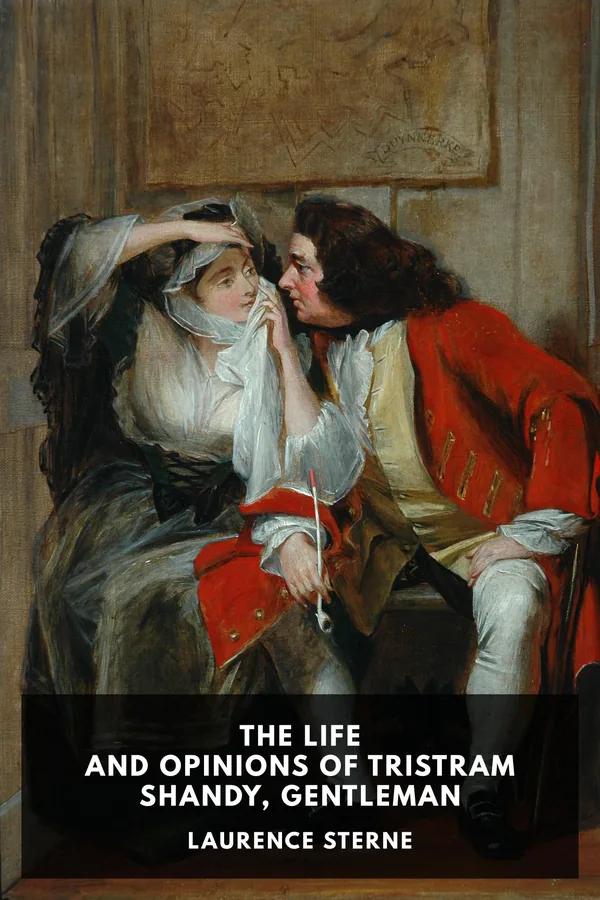
The Life and Opinions of Tristram Shandy, Gentleman
📖 Click to Read the Opening Pages Online Preview
The opening of Book I, Chapter 2
———Then, positively, there is nothing in the question that I can see, either good or bad.——Then, let me tell you, Sir, it was a very unseasonable question at least,—because it scattered and dispersed the animal spirits, whose business it was to have escorted and gone hand in hand with the Homunculus, and conducted him safe to the place destined for his reception.
The Homunculus, Sir, in however low and ludicrous a light he may appear, in this age of levity, to the eye of folly or prejudice;—to the eye of reason in scientifick research, he stands confess’d—a Being guarded and circumscribed with rights.——The minutest philosophers, who, by the by, have the most enlarged understandings (their souls being inversely as their enquiries), show us incontestably, that the Homunculus is created by the same hand,—engender’d in the same course of nature,—endow’d with the same locomotive powers and faculties with us:—That he consists as we do, of skin, hair, fat, flesh, veins, arteries, ligaments, nerves, cartilages, bones, marrow, brains, glands, genitals, humours, and articulations;—is a Being of as much activity,—and, in all senses of the word, as much and as truly our fellow-creature as my Lord Chancellor of England.—He may be benefited,—he may be injured,—he may obtain redress;—in a word, he has all the claims and rights of humanity, which Tully, Puffendorf, or the best ethick writers allow to arise out of that state and relation.
Now, dear Sir, what if any accident had befallen him in his way alone!—or that, through terror of it, natural to so young a traveller, my little Gentleman had got to his journey’s end miserably spent;—his muscular strength and virility worn down to a thread;—his own animal spirits ruffled beyond description,—and that in this sad disordered state of nerves, he had lain down a prey to sudden starts, or a series of melancholy dreams and fancies, for nine long, long months together.—I tremble to think what a foundation had been laid for a thousand weaknesses both of body and mind, which no skill of the physician or the philosopher could ever afterwards have set thoroughly to rights.
The excerpt below quotes the three paragraphs of Book I, Chapter 2, in which the narrator returns to his mother’s question about the clock, argues that the little gentleman on his way to be born was jostled by it, explains the rights of the homunculus, and wonders what nine months of fright may have done to his nerves.
Download Full EPUB1759
Novel
~188,000 words (estimated)
Approx. 10.4 hours
Standalone
Yorkshire and the Shandy household, 1718 onward
Nine books of very short chapters, grouped into twelve parts
EPUB · AZW3 · KEPUB
1.77 MB (EPUB) · 1.89 MB (AZW3) · 1.89 MB (KEPUB)
Public domain in the United States
Project Gutenberg #39270 · Standard Ebooks
The Life and Opinions of Tristram Shandy, Gentleman is Laurence Sterne’s comic novel in nine books, the first two published in 1759, in which the hero sets out to write his life and never gets much past his own conception. His father Walter theorises about names and noses, his uncle Toby rebuilds the siege of Namur on a bowling green, and Corporal Trim assists at both. The chapters are short, the digressions long, and the book is as much about the writing of a book as about the Shandy family. It ends with a story about a parish bull, told while the household is arguing about something else.
Sterne kept adding volumes until 1767, and the improvisation shows: a chapter can be a single sentence, a page can be black or marbled, and the story keeps turning back to explain what it has skipped. Walter’s hypotheses, Toby’s fortifications and the widow Wadman’s questions are all treated with the same straight face, and none of them is ever finished. Wikipedia’s entry on the novel covers its nine volumes and the long argument about its indecency. — The text is available via Project Gutenberg #39270 and Standard Ebooks.
The Life and Opinions of Tristram Shandy, Gentleman by Laurence Sterne: Summary, Characters & Themes
This page offers a summary and analysis of The Life and Opinions of Tristram Shandy, Gentleman, with its nine books set out in reading order, the Shandy household described one person at a time, and the famous pages placed where they actually fall. Laurence Sterne was a Yorkshire clergyman who had published sermons and little else before the first two volumes appeared in 1759, and the book made him the talk of a London season. He followed it with more volumes, a journey to France and a second book before he died in 1768, in debt and much admired. What the novel does is still unusual: it tells the life of a man who is only just being born, and it makes the telling itself the subject. The page follows the books in order, so it can be read beside a copy rather than instead of one.
The story begins nine months before Tristram’s birth, when his mother interrupts his father in the very act of begetting him to ask whether he has forgotten to wind up the clock. From that interruption the narrator derives every misfortune of his life, and the book proceeds from one interruption to the next: the forceps of Dr Slop that flatten his nose, the name Tristram that his father cannot endure, the sash window that falls on him at five, the campaigns that keep his uncle from the parlour. The novel is a fragment by design, and this edition prints it as one. The text described here is the Standard Ebooks edition, and a complete reading text also sits at Project Gutenberg #39270. Nothing is cut: the sermon, the Latin, the curses and the asterisks are all present.
The household is drawn with more care than the hero. Walter Shandy, a merchant retired to his estate, has a hypothesis for everything and a lecture for every occasion, and his opinions on names, noses and education fill the book. His brother Toby, wounded at Namur, has one enthusiasm, fortification, and pursues it on a bowling green with the help of Corporal Trim. Parson Yorick jokes his way into a quarrel he cannot win and dies of it; Dr Slop arrives with a bag of instruments and a new pair of forceps; Widow Wadman sets her cap at Toby and asks one question too many. Tristram himself stays a voice and a set of opinions, which is the joke, and his mother asks her one fatal question and is otherwise silent. The servants, Obadiah, Susannah and Bridget, are drawn as sharply as their masters.
The method is the point. Sterne built the book out of digressions that carry the story forward, and he says as much in a chapter on digressions; a page can hold a diagram of the narrative line, a blank space for the reader to draw in, a black rectangle for a dead friend, or a marbled sheet that stands for the whole performance. He took freely from Rabelais, from Burton and from the jest books of the century, and turned the theft into a joke about theft. Readers who enjoy the game should try The History of Tom Jones, the comic epic Sterne was answering, and Gulliver’s Travels, whose deadpan narrator taught him a good deal. The borrowings are open enough to be a joke in themselves, and the book invites the reader to go and check them.
Contemporaries disagreed about the book loudly: some found the bawdy intolerable, others thought the sentiment the finest thing in the language, and both were responding to the same pages. Its influence runs through the nineteenth-century novel and through modern fiction that plays with its own making. The nine books are short enough to read in the order they were published, which is also the order of this page, and the last of them closes on a joke rather than a conclusion, which has annoyed readers who wanted the widow married and the hero grown up. More novels and satires of the period are gathered on the classic fiction shelf, where this edition sits with Fielding, Swift and the rest, and with the novelists who learned from Sterne to talk to their readers.
Historical Context
Sterne was born at Clonmel in Ireland in 1713, the son of an ensign in a marching regiment, and he spent his childhood following the army from station to station before school at Halifax and Jesus College, Cambridge. Ordained in 1736, he held the living of Sutton-on-the-Forest, married Elizabeth Lumley in 1741, and added Stillington and later Coxwold to his income. For twenty years he did parish duty, painted, fiddled and shot, and published sermons. He was nearly fifty when the first two volumes of Tristram appeared, written, as the dedication says, in a retired thatched house in a bye corner of the kingdom, and he wrote the rest of the book much as he lived, in bursts between journeys, illnesses and London seasons, of which he complained to his friends.
The book’s furniture belongs to the thought of its moment. Locke’s Essay on the Human Understanding is quoted and teased in the second book, and the association of ideas is the engine of half the comedy. The hobby-horse, the ruling passion that makes a man ridiculous, comes out of the same moralising tradition, and Sterne’s reading of Rabelais, Burton’s Anatomy of Melancholy, Bruscambille and the jest books is never far from the surface. The army of King William’s wars is still a living memory in the novel: Toby’s siege of Namur, Trim’s knee at Landen and the talk of ravelins and counterscarps are the speech of men who were there, and the narrator assumes a reader who knows a hornwork from a half-moon, and has heard the names of the sieges at first hand.
Publishing was a trade as well as an adventure. The first two volumes were written in 1759 and printed at York for sale in London, and the later ones followed at intervals, two at a time, from the same booksellers; the seventh and eighth came in 1765 and the ninth in 1767. Sterne courted the great with a dedication to Pitt and offered a spare dedication for sale at fifty guineas, then wrote the offer into the book. He complained in print about the Monthly reviewers who cut and slashed his work, and he built the two volumes a year of his narrator’s plan out of his own practice. The subscription, the review and the London season made a novelist of a country clergyman in his fifties, and took him to London for the season.
Key Characters & Literary Archetypes
- Tristram Shandy: The narrator and hero, born at Shandy Hall on 5 November 1718, nine months after his mother’s question about the clock. His nose is flattened by Dr Slop’s forceps, he is given the one name his father detests, and at five a sash window falls on him. He tells his life and opinions with endless apology and endless delay, and is still a child when the ninth book closes.
- Walter Shandy: Tristram’s father, a merchant who has retired to his estate and turned philosopher. He believes that names shape character, that long noses are a family asset, and that a son’s education can be planned to the page; his Tristra-paedia is still unfinished when the boy grows up. He argues with everyone, grieves over his nose and his son’s, and is never more himself than when defeated by a fact.
- Uncle Toby Shandy: Walter’s younger brother, a captain wounded in the groin at Namur by a stone broken from a ball. Unable to describe the siege, he buys a map of Namur, pastes it on a board, and from that map comes the bowling-green fortification and his hobby-horse. He is modest, patient, whistles Lillabullero when moved, gives Le Fever his house, and cannot tell whether the widow means to marry him.
- Corporal Trim: Toby’s servant, James Butler, a corporal disabled by a musket ball in the knee at Landen. He shares his master’s passion for fortification, builds the towns and the mortars, reads the sermon aloud, tells the story of the King of Bohemia, and courts Bridget while his master courts her mistress. His flourishes with the stick and his Montero-cap are part of the book’s furniture.
- Parson Yorick: The parish priest, named after the jester in Hamlet and descended, the narrator claims, from a Danish court fool. He pays for the midwife’s licence, lends his sermon, and is destroyed by a whispering campaign he cannot answer; his death is the occasion of the black page. He is Sterne’s portrait of himself, and the book’s argument that a joke can cost a man his living.
- Widow Wadman: Toby’s neighbour, a widow who decides to marry him and sets about it with questions. She has heard that his wound is in the groin, and her inquiries about where he received it are the last comedy of the book: she leads him round by Namur to get at it, and he answers with a map and a pair of scissors. Her curiosity is the only force in the novel that matches the men’s obsessions.
Core Literary Themes
- Digression as method: The book is built on the principle Tristram states and then illustrates, that his work is digressive and progressive at the same time. A chapter can stop for a treatise on noses, a diagram of the narrative line, or an apology for the chapter that has not been written, and the story is carried forward by what looks like interruption. Sterne had models in Rabelais and Burton, but the use he makes of them is his own: the digressions are not ornament, they are the plot, because the subject is a mind that cannot proceed in a straight line. The novel even prints a picture of the line it fails to walk.
- Hobby-horses and the ruling passion: Everyone in the book rides a hobby-horse, and the phrase is Sterne’s for the private enthusiasm that makes a person ridiculous and keeps him alive. Toby’s is fortification, Walter’s is hypothesis, the widow’s is Toby, and the narrator’s is his own book. The joke is that these obsessions are not curable and should not be: de gustibus non est disputandum, there is no disputing against hobby-horses. Walter’s theories and Toby’s bowling green are the same activity at different temperatures, and the book is far gentler with them than a satire would be. It asks only that a man ride his horse without making others get up behind him.
- Noses, wounds and the comic body: The nose is the novel’s great innocent indecency. Walter has a family doctrine that long noses mean fortune, and a shelf of learned treatises on them; Slawkenbergius tells of a stranger whose nose sets a whole city by the ears; and the baby’s nose is flattened by the forceps before he can be named. Sterne uses the body the way he uses the dash, to make the reader supply what cannot be printed: the wound in the groin, the sash window, the asterisks. The comedy is an argument about how much of experience language can carry, and where it has to stop, and who is allowed to say it. The body is where language runs out, and the joke is that it never quite does.
- Modesty, dashes and the blank page: The book’s printerly jokes are all about what cannot be said. A dash stands in for a word, an aposiopesis for a sentence, a blank page for the widow’s face, and a marbled page for the work itself. Toby’s modesty is the moral centre of this: he cannot name the place where he was wounded, and the widow’s questions turn on exactly that gap. Sterne teases the reader who wants the missing word and the censor who would remove it, and the blank page is the joke at its purest, since only the reader can fill it. The joke is also a kind of ethics: some things are better left to the imagination, and the book trusts its reader with them.
- Sentiment and the good heart: Under the jokes the book is an argument for feeling. Toby gives his house to a dying lieutenant, weeps with the corporal, and lets a fly out of the window rather than kill it; Yorick dies of a broken heart; Trim’s account of Le Fever’s boy reduces the parlour to silence. Sterne’s contemporaries called this sensibility, and it was the quality that made the book famous and then suspect. The novel keeps the sentiment and the farce in the same room, which is why Le Fever’s death and the story of the parish bull belong to the same book, and why a tear and a smut can sit in one paragraph.
Why Download Our Custom E-Reader Edition of The Life and Opinions of Tristram Shandy, Gentleman?
The download is the whole book, nine volumes from the first chapter to the last line, with the chapters numbered as the edition numbers them and nothing abridged: the Latin, the sermon, the curses, the asterisks and the pages that are black, marbled or blank. The text is the Standard Ebooks text, set from the Project Gutenberg transcription and the scans behind it, so a passage found here can be looked up in the printed novel, and the nine books are here in the order Sterne published them.
Around the text the page supplies what a book of this shape needs: twelve groups of chapter summaries that stop where their books stop, six character notes, five themes, and a short account of the Yorkshire clergyman who wrote it and the trade that published it. The groups are ours; the books and the chapters are Sterne’s. It is meant to be read beside the novel, not instead of it, and the summaries are careful not to finish a joke the text has left hanging.
Three files carry the same text with the same breaks: the EPUB for Apple Books, Calibre and most Android readers, the AZW3 for a Kindle by cable or through Send to Kindle, and the KEPUB for a Kobo. No account is needed for any of them, and nothing in the files is locked or time limited. They are small enough to keep on a phone for the length of a long digression, and the chapter numbering survives in all three. The files open without a library or a login.
- Based on the Standard Ebooks Edition, via Standard Ebooks, whose text of Tristram Shandy is set from the Project Gutenberg transcription and the Internet Archive scans behind it.
- Complete text in nine books Every chapter from the conception scene to the story of the parish bull, numbered as the edition numbers them, with no chapter abridged and no digression tidied away.
- Twelve grouped summaries in reading order Groups that begin and end with the chapters they name, from Book I to Book IX, so the page can be read beside the novel without running ahead of it.
- EPUB, AZW3 and KEPUB files The same text in three formats, for Apple Books, Kindle and Kobo, with the chapter breaks, the Roman numbers and the odd pages intact.
- Fielding’s comic epic of 1749, the book Sterne’s first readers measured him against and the one his narrator keeps half imitating and half mocking. — free EPUB, AZW3 & KEPUB
- Swift’s travels of 1726, with the deadpan narrator and the taste for systems that Sterne turned on the Shandy family and their hobby-horses. — free EPUB, AZW3 & KEPUB
- The shelf of eighteenth-century novels and satires, where this edition sits with Fielding, Swift and the writers who learned from Sterne. — free EPUB, AZW3 & KEPUB
Chapter summaries
The novel is divided into nine books of very short chapters, and the edition prints the chapters by number only. The nine books are grouped into twelve parts, and the group names are ours, added to make the book easy to follow; each group begins where its first chapter begins and stops where its last chapter stops. Chapters are cited by book and number, so a passage can be found in any edition that keeps the numbering. The section headings below are ours too. The blank chapters of Book IX and the chapter of Book IV that the narrator says is wanting are left where they fall.
- Books I–II — The clock, the homunculus and the birth: The book opens nine months before Tristram’s birth, with his mother’s question about the clock scattering the animal spirits on their way to the homunculus. He is born on 5 November 1718, delivered by a midwife and then by Dr Slop, whose forceps flatten his nose. Yorick’s quarrel and death close Book I.
- Books II–III — Namur, the map and the hobby-horse: Toby’s attempts to describe the siege of Namur, where a stone from a ball struck him in the groin, confuse every visitor. A map of Namur pasted on a board solves the problem and leads on to the bowling green and the fortifications. Trim becomes his engineer, and Walter learns that his son’s nose is crushed.
- Books III–IV — Noses, the forceps and Slawkenbergius: Walter’s doctrine of noses fills Book III: the family jointure, the treatises, the great-grandmother’s insult. Slop curses Obadiah with the Ernulphus curse, Trim builds a drawbridge that turns out to be a bridge for the baby’s nose, and Walter lies face down on his bed. Book IV opens with Slawkenbergius’s tale.
- Books IV–V — The chestnut, the chasm and the breeches: At the visitation dinner Phutatorius sits on a hot chestnut, and the learned debate what to do about it. The narrator reports a missing chapter and a chasm of ten pages, announces himself heir, and follows Walter into the Tristra-paedia. Book V adds the breeches and the sash window.
- Book V — The sash window and the Tristra-paedia: Walter’s plan of education advances a chapter at a time while Tristram grows up beside it, and at five a sash window falls on him in the garden. Susannah carries him to Toby’s house, Trim dismantles the sashes for cannon, and the family debates the radical heat and moisture. The book ends with the white bear.
- Book VI — Le Fever, the sentry-box and the bowling green: Toby takes a dying lieutenant and his son into his house, and Trim’s account of the boy’s toast reduces the parlour to silence. The campaigns on the bowling green resume with towns, drawbridges and mortars made from two Turkish pipes. Toby composes his apology for loving war, and he falls in love.
- Books VI–VII — The straight line, the blank page and the flight: Book VI ends with the narrator’s diagrams of his own narrative line, the blank page on which the reader is asked to draw the widow, and the news that Toby means to marry. In Book VII Tristram, coughing and in debt, decides he has no time to lose and leaves England for France.
- Book VII — Calais, Paris and the ass at Lyons: The journey runs through Calais, Boulogne, Montreuil and Paris, with a stop for the abbess of Andouillets and her novice, whose mule will not stir until a word is found. At Lyons Tristram falls into talk with an ass collecting turnip-tops, which tears his breeches pocket, and he goes on to the tomb of the lovers.
- Books VII–VIII — The widow Wadman and the eye: Back at Shandy Hall, Book VIII turns to Toby’s courtship. Widow Wadman has decided to have him, and her attacks are made with questions, glances and a Bible left on the table. Trim’s affair with Bridget runs beside it. The narrator digresses on love, on cuckoldom and on the eye.
- Book VIII — The King of Bohemia and the corporal’s amour: Trim tells the story of the King of Bohemia and his seven castles, the one story of his that is not true, and it takes a chapter and a half. He then tells how he escaped love until a Beguine nursed his knee, and the widow redoubles her siege.
- Books VIII–IX — The march to the widow’s door and the blank chapters: Toby and Trim set out for the widow’s house in their best clothes, and Toby declares his love in three plain words as he sits down. Book IX interrupts itself with chapters on shaving, buttonholes and knots, prints chapters XVIII and XIX blank, and supplies their text only later.
- Book IX — The wound, the map and the bull: The widow asks where Toby received his wound, and he answers with the map of Namur and a pair of scissors. Trim explains the position to Bridget, and the gossip runs through the parish. Obadiah’s cow fails to calve, the parish bull is blamed, and Yorick calls it a cock and a bull.
The Life and Opinions of Tristram Shandy, Gentleman: Frequently Asked Questions
What is The Life and Opinions of Tristram Shandy about?
Who is Uncle Toby and what is his hobby-horse?
Why are there so many digressions?
What are the black page, the marbled page and the blank page?
How does the book end?
How many books and chapters are there?
Is the novel difficult or shocking?
How do I read the free downloads?
Part of: Classic Fiction · Laurence Sterne