On War by Carl von Clausewitz: Free EPUB, AZW3 & KEPUB Download
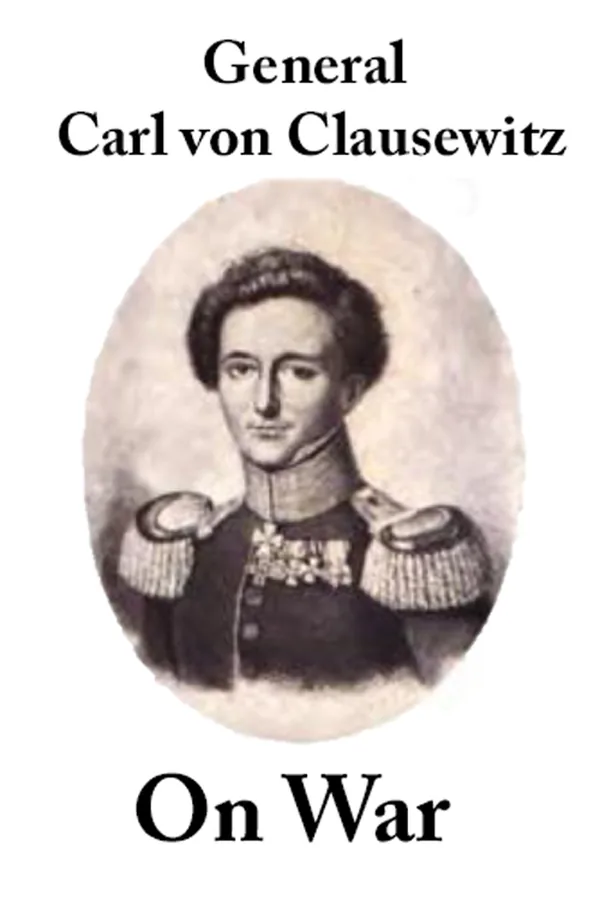
On War
📖 Click to Read the Opening Pages Online Preview
The Introduction: war stripped of all accessories
It reveals “War,” stripped of all accessories, as the exercise of force for the attainment of a political object, unrestrained by any law save that of expediency, and thus gives the key to the interpretation of German political aims, past, present, and future, which is unconditionally necessary for every student of the modern conditions of Europe. Step by step, every event since Waterloo follows with logical consistency from the teachings of Napoleon, formulated for the first time, some twenty years afterwards, by this remarkable thinker.
What Darwin accomplished for Biology generally Clausewitz did for the Life-History of Nations nearly half a century before him, for both have proved the existence of the same law in each case, viz., “The survival of the fittest”—the “fittest,” as Huxley long since pointed out, not being necessarily synonymous with the ethically “best.” Neither of these thinkers was concerned with the ethics of the struggle which each studied so exhaustively, but to both men the phase or condition presented itself neither as moral nor immoral, any more than are famine, disease, or other natural phenomena, but as emanating from a force inherent in all living organisms which can only be mastered by understanding its nature. It is in that spirit that, one after the other, all the Nations of the Continent, taught by such drastic lessons as Königgrätz and Sedan, have accepted the lesson, with the result that to-day Europe is an armed camp, and peace is maintained by the equilibrium of forces, and will continue just as long as this equilibrium exists, and no longer.
Whether this state of equilibrium is in itself a good or desirable thing may be open to argument. I have discussed it at length in my “War and the World’s Life”; but I venture to suggest that to no one would a renewal of the era of warfare be a change for the better, as far as existing humanity is concerned. Meanwhile, however, with every year that elapses the forces at present in equilibrium are changing in magnitude—the pressure of populations which have to be fed is rising, and an explosion along the line of least resistance is, sooner or later, inevitable.
The excerpt is the second, third and fourth paragraphs of the Introduction printed with this edition. It begins with the claim that the book reveals war stripped of all accessories, as the exercise of force for a political object, then compares Clausewitz with Darwin and ends with the question whether the European equilibrium of forces is in itself a good thing. The passage is the editor’s, not Clausewitz’s.
Download Full EPUB1832
Treatise
~297,000 words (estimated)
Approx. 16.5 hours
Standalone
Prussia after the campaign of 1806, the Napoleonic campaigns, and the years at Coblentz, Berlin and Breslau in which the book was written and left unfinished.
Introduction and eight books, in eleven groups
EPUB · AZW3 · KEPUB
0.80 MB (EPUB) · 1.15 MB (AZW3) · 0.87 MB (KEPUB)
Public domain in the United States
Project Gutenberg #1946
On War is Clausewitz’s attempt to think war through as a whole, not to supply rules for winning battles. War, he begins, is nothing but a duel on an extensive scale, an act of violence to compel an opponent to do our will; pursued in pure theory, that violence drives both sides towards extremes. Real war never reaches the absolute. It is checked by the political object that called it into being, by the friction of chance, fatigue and false information, and by the difference between attack and defence. The book’s subject is the relation between those forces.
The volume opens with the editor’s introduction, Marie von Clausewitz’s preface and Clausewitz’s notice, then, after the author’s introduction and Graham’s memoir, runs through the eight books: the nature of war, the theory of war, strategy, the combat, military forces, defence, the attack, and the plan of a war. The translation is Graham’s, revised with an introduction and notes by Colonel F. N. Maude. Wikipedia’s article on On War summarises the argument and its reception. The text is available via Project Gutenberg #1946.
On War by Carl von Clausewitz: Summary, Ideas & Arguments
This page offers a summary and analysis of On War, with the eight books set out in reading order, the argument of each described, and the terms the book depends on explained as they occur. Carl von Clausewitz served in the Prussian army from 1792, was wounded and taken prisoner in the campaign of 1806, and later fought on the Russian side in 1812; the memoir printed here gives the outline of his career. Carl von Clausewitz died in 1831, and the book was published in 1832 by his widow, Marie von Clausewitz. This text is Colonel J. J. Graham’s translation, revised with an introduction and notes by Colonel F. N. Maude, and it belongs with the other political and military writing on the Philosophy Classics shelf. The page follows the order of the printed volume rather than a thematic rearrangement.
The book begins from a definition rather than a doctrine. War is an act of violence intended to compel our opponent to fulfil our will, and in its pure conception each side’s effort drives the other towards an extreme. The definition is deliberately plain, and it carries the argument: if war is an act of force, it contains no principle of moderation of its own, and any moderation must come from outside it, from policy, from the limits of the means, or from the nature of the object. Clausewitz then argues that this extreme is never reached in practice, because war is called forth by a political object and remains an instrument of policy; because the means are limited by time, ground and the will of the enemy; and because chance and imperfect knowledge leave room for judgment. The political object is therefore the standard for the aim and the effort, not an external decoration on the fighting. For a different manner of writing about the same subject, see The Art of War.
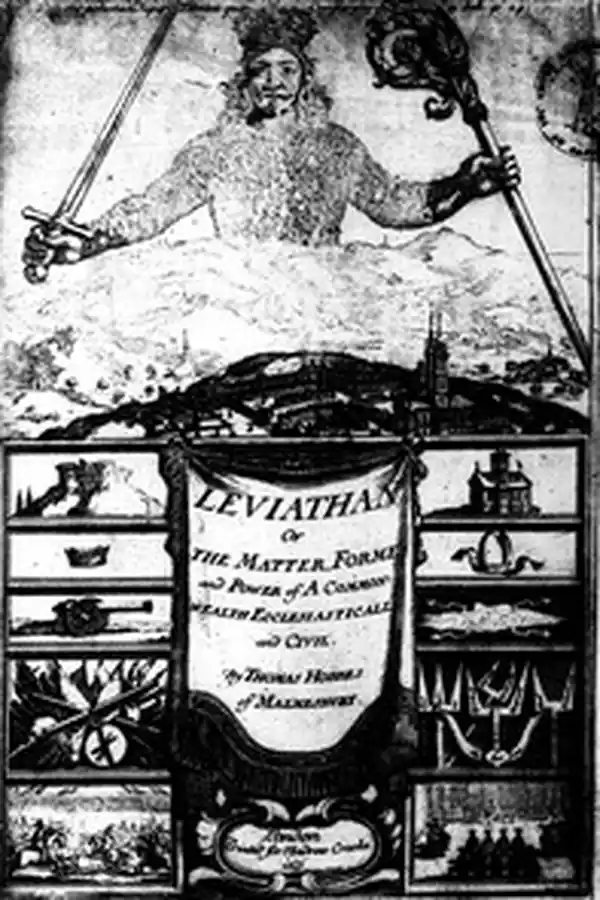
The eight books divide the subject without pretending to finish it. Book I defines war and describes its atmosphere of danger, bodily exertion, uncertain information and friction; Book II asks what a theory of war can be, and separates tactics, the use of forces in combat, from strategy, the use of combats for the object of the war; Book III turns to strategy itself, its moral forces, its numbers, surprises and economy of force. The books that follow treat the combat, the army as an instrument, defence, attack and finally the plan of a whole war. The order matters: the ideas of the first three books are used in the rest, and the final book returns to the questions of Book I at the scale of a whole war. The question of the state that wages war is put from a different direction in Leviathan.
Two arguments give the book its lasting shape. The first is that defence is the stronger form of war, since it waits for the blow, enjoys the ground and gains time, while the attack loses force as it advances and has its culminating point. The second is that a plan of war must find the centre of gravity of the enemy’s power, reduce it to one if possible, concentrate against it and act swiftly. Neither argument is offered as a formula. Clausewitz insists that the simplest thing in war is difficult, that reports are mostly false, and that a theory which leaves out courage, chance and political judgment is useless. He allows an ancillary expedition only when a decisive superiority makes it safe, and he treats the centre as a point against which the main effort is directed rather than a place to be held at all costs.
The text is the complete Graham translation as revised by Maude, with the editor’s introduction, his notes and the translator’s memoir. Marie von Clausewitz’s preface and Clausewitz’s notice are printed first, as the edition has them, and the unfinished state of the work is visible throughout: the memorandum found among his papers says that only the first chapter of the first book was complete, that the sixth was a mere essay and that the seventh and eighth were sketches. Readers who want to check a passage can turn to the Project Gutenberg transcription. The introduction and the treatise are kept apart here, so that Maude’s claims about the book can be judged against Clausewitz’s text. The footnotes signed EDITOR are Maude’s, and they are left where the edition puts them.
Historical Context
Clausewitz was born at Burg, near Magdeburg, in 1780 and entered the Prussian army in 1792. He served in the Rhine campaigns of 1793 and 1794, attracted the notice of Scharnhorst at the Berlin military school, was wounded and taken prisoner in the campaign of 1806, and went into Russian service in 1812, where he took part in the convention of Tauroggen. He returned to Prussia in 1815 and served as chief of staff to Thielman’s corps at Wavre. After the peace he was made major-general and director of the military school at Berlin; in 1830 he became inspector of artillery at Breslau, and he died of cholera in November 1831.
The book was written in the aftermath of the French Revolution and the Napoleonic wars, and those wars are its constant case. Clausewitz had fought through the campaign of 1806, which ended with his capture, and through the Russian campaign in 1812; he had also taken part in the reorganisation of the army under Scharnhorst. His intellectual formation was Kantian, by way of Kiesewetter, as the memoir notes, and the preface records that Montesquieu was the model for the short, sententious chapter. The text names Napoleon, Frederick the Great and Charles XII, and the editor’s notes name Lloyd and Bülow among the writers he is answering. The French Revolution and Napoleon are its great case because they seemed to carry war back towards its absolute form, and the book is written to explain both that appearance and the ordinary limited wars beside it.
Publication was posthumous. Marie von Clausewitz signed the preface at Potsdam on 30 June 1832; she says the work occupied the last twelve years of her husband’s life and that he had not meant it to appear while he lived. The notice is dated Berlin, 10 July 1827, and the memorandum found with the papers admits that the first six books were still a mass awaiting revision. The text printed here is Graham’s translation in Maude’s revised edition, reprinted in London in 1909, with Maude’s introduction presenting the book as the foundation of European military practice. The introduction is not dated; it speaks of the recent Hague Conference and of the danger of war with France and Russia in 1887. Its claim is the editor’s, and it should be read as such.
Key Ideas & Arguments
- War as a duel: War is nothing but a duel on an extensive scale. Clausewitz sets two wrestlers against each other, each trying to throw the other and make him incapable of further resistance, and defines war as an act of violence intended to compel our opponent to fulfil our will. Force is the means, submission the object, and disarmament the immediate object in theory.
- Friction: Friction is the accumulation of small difficulties that makes real war differ from war on paper. Danger, bodily exertion, false information and sheer accident all contribute; the weather, a broken bridge or a tired battalion can undo a plan. The only oil for it, Clausewitz says, is habituation to war, and that cannot be given to an army at once.
- The wonderful trinity: The three tendencies are the blind violence of the people, the free play of courage and chance in the general and his army, and the political instrument in the hands of the government. A theory must keep itself poised between them as between three points of attraction; to leave one out is to lose contact with reality.
- Absolute and real war: In pure conception, reciprocal action drives war towards extremes: each side answers the other’s effort, and the logic ends in absolute war. Real war is modified by limited aims, by the friction of time and space, and by politics. Book VIII uses the distinction to explain why most wars look like partial shocks rather than mutual destruction, and why Napoleon’s wars came nearer the absolute form.
- The stronger form of defence: Defence is warding off a blow, and its sign is the state of expectancy. With equal means it is easier than attack, because it gains time and the use of ground; but it is not passive, since its counterstroke is essential to the conception. From this Clausewitz draws the rule that a war should begin defensively and end offensively.
- Centre of gravity: A centre of gravity is the point on which the enemy’s power most depends, whether an army, a coalition or a province. The plan of war should reduce the enemy’s power to as few such centres as possible, preferably one, concentrate the attack there and act swiftly. The idea is set out in Book VIII and was already listed in the memorandum of 1827.
Core Arguments & Influence
- War as an instrument of policy: Clausewitz states the point twice, once in the notice of 1827 and once in the first chapter of Book I: war is only a continuation of State policy by other means, a carrying out of political commerce by other means. Policy is the object and war the means, and the means must include the object in our conception. Book VIII returns to it with the sentence that the art of war in its highest point of view is policy, but a policy which fights battles instead of writing notes. The formula is not a justification of war; it is a rule for judging what a war can and cannot be asked to do.
- The trinity and the two kinds of war: At the end of Book I war appears as a wonderful trinity: the original violence of its elements, hatred and animosity, which belongs to the people; the play of probabilities and chance, which belongs to the general and his army; and the subordinate nature of a political instrument, which belongs to the government. The notice adds a second distinction, between wars whose object is the overthrow of the enemy and wars whose object is the conquest of a province or a frontier. A theory that leaves out either distinction, Clausewitz says, contradicts reality at once.
- Friction, chance and the limits of theory: The seventh chapter of Book I states it plainly: “Everything is very simple in War, but the simplest thing is difficult.” Danger, bodily exertion, uncertain information and the accumulation of petty accidents make up the friction that separates real war from war on paper. Since most reports are false and chance is everywhere, theory cannot be a set of formulas. It can clear the ground, show the relations of things and leave the mind free to act; the rest depends on coup d’oeil, resolution and the character of the commander. The image for the theorist is a swimming master who teaches on dry land the movements that will be needed in the water.
- Defence, attack and the culminating point: Book VI argues that the defensive form is stronger than the offensive, because it waits for the blow, uses the ground and gains time, and because its counterstroke is part of the conception. The attack is the weaker form with the positive object; it loses strength as it advances, and Book VII gives the culminating point at which victory must stop or turn into defeat. Clausewitz does not conclude that defence is the aim of war. A war that only wards off blows, he says, is as absurd as a battle fought entirely on the defensive; the natural course is to begin with the defensive and end with the offensive. The two forms are therefore not symmetrical, and the attack has to be judged by what it costs as it advances.
- An unfinished book and its influence: The treatise was never finished, and its shape shows it. The first chapter of Book I is the only one the author considered complete; Book VI is called a mere essay, and Books VII and VIII are printed as sketches. Yet the book became the common ground of European military education, and Maude’s introduction goes so far as to say that every drill regulation in Europe except the British had been reared on it. That claim belongs to the editor, writing in 1909, and the reader should weigh it against the text’s own distrust of systems. The eight books are more cautious than their reputation.
Why Download Our Custom E-Reader Edition of On War?
The download is the whole volume. It opens with Maude’s introduction, then Marie von Clausewitz’s preface of 1832, Clausewitz’s notice of 1827, the author’s introduction and Graham’s brief memoir; after that come all eight books, from the definition of war in Book I to the plan of war in Book VIII. The editor’s notes and footnotes are kept, and no part of the argument is replaced by a summary.
The page is arranged to be read beside the text. Eleven groups follow the edition’s own order and stop where each division stops; six notes explain the ideas the argument turns on; five themes follow policy, the trinity, friction, defence and the unfinished state of the book. A short historical section gives the wars and the intellectual setting, and the introduction is kept separate from Clausewitz’s own text.
The files come in three formats with the same text and the same divisions. The EPUB opens in Apple Books, Calibre and most Android readers; the AZW3 is the file for a Kindle; the KEPUB is the one Kobo devices read best. No account is needed, and nothing in the downloads is locked, watermarked or time limited. The translation is Graham’s throughout, so a passage found here can be looked up in any printing of it.
- Project Gutenberg transcription, via Project Gutenberg #1946 — the complete text, with the introduction, the preface and notice, and all eight books, unabridged.
- The editor’s introduction kept apart Maude’s introduction and notes are printed as the edition’s own matter, so his claims about Clausewitz can be read separately from Clausewitz’s text.
- Eleven groups in reading order Every part of the volume has its own summary, from the introduction to the plan of war, and each stops where that division stops.
- EPUB, AZW3 and KEPUB files The same text in three formats, for Apple Books, Kindle and Kobo, with the book divisions intact and nothing to install beyond the reading app you already use.
- Sun Tzu’s short treatise on strategy, the other classic of military theory on this shelf, and a useful contrast in method: maxims and compressed counsel rather than Clausewitz’s long analysis of what war is. — free EPUB, AZW3 & KEPUB
- Hobbes on the state, sovereignty and the fear that holds a commonwealth together, the political ground against which the question of war and the state’s instrument can be put. — free EPUB, AZW3 & KEPUB
- The shelf where this edition sits, with the rest of our free philosophy and political writing in EPUB, AZW3 and KEPUB, from Plato and Hobbes to Kant and Nietzsche. — free EPUB, AZW3 & KEPUB
Chapter summaries
The eleven groups follow the edition’s own order: the introduction, Marie von Clausewitz’s preface, Clausewitz’s notice and Graham’s memoir, then the eight books, with Book VI divided where its subject changes from the forms of defence to ground and the arming of the nation. The labels use the headings the text prints, including the sketches that stand for Books VII and VIII. Each summary stops where its division stops.
- Part 1 — The introduction to the edition: Maude’s introduction presents the book as the key to the political aims of Germany. It describes war stripped of all accessories, compares Clausewitz with Darwin, argues that Europe is an armed camp held together by an equilibrium of forces, and ends with the Hague Conference, British unpreparedness and a quotation from Krishna to Arjuna.
- Part 2 — The preface, notice and memoir: Marie von Clausewitz explains why a woman signs the preface, records the last twelve years of work and the publication after his death, and dates it Potsdam, 30 June 1832. Clausewitz’s notice distinguishes two kinds of war and states that war is a continuation of policy; the unfinished memorandum and Graham’s memoir of his career follow.
- Book I — On the nature of war: Book I asks what war is and answers with the duel, the act of violence, and the three reciprocal actions that drive towards extremes. It then shows how reality checks the extreme, brings back the political object, and closes with the trinity. Four short chapters treat danger, bodily exertion, information and friction.
- Book II — On the theory of war: Book II asks what a theory of war can be. It separates tactics from strategy, reviews the attempts to make war a science of numbers and bases, and concludes that war belongs to social life rather than to the arts or sciences. Further chapters treat method, criticism and the use of examples.
- Book III — Of strategy in general: Book III is strategy: the employment of the battle for the object of the war. It treats moral forces, military virtue, boldness, superiority of numbers, surprise, stratagem, the assembly of forces in space and time, the strategic reserve, economy of force, the geometrical element, the suspension of action, and the tension and rest of the military machine.
- Book IV — The combat: Book IV turns to the combat itself. It describes the modern battle as a slow burning away of masses, examines the point at which a combat is decided, the effects of victory, the use of the battle, the exploitation of victory, retreat after a lost battle, and night fighting.
- Book V — Military forces: Book V treats the army as an instrument apart from the fighting: its numbers and organisation, the theatre of war, the army and the campaign, the relation of power, the three arms, order of battle, advanced guards, camps, marches, cantonments, subsistence, the base of operations, lines of communication and the command of ground.
- Book VI — Defence: Book VI begins with offence and defence. Defence is warding off, a state of expectancy, and the stronger form of war; the chapters then follow the methods of resistance, the defensive battle, fortresses, defensive positions, strong positions and entrenched camps, and flank positions, before turning to the defence of ground.
- Book VI — Ground, rivers and the nation in arms: The rest of Book VI takes the defence of mountains, streams and rivers, swamps, forests, the cordon and the key to the country, then operations against a flank, the retreat into the interior, the arming of the nation, and the defence of a theatre of war with and without a decision.
- Book VII — The attack: Book VII is printed as sketches for the attack. It sets the attack against the defence, describes the nature and objects of the strategical attack, its decreasing force and culminating point, then the offensive battle, the passage of rivers, attacks on positions, camps, mountains and fortresses, diversions, invasion, and the culminating point of victory.
- Book VIII — Plan of war: Book VIII is the plan of war. It returns to absolute and real war, the interdependence of the parts, the magnitude of the object and the ends more precisely defined, then treats the influence of the political object, war as an instrument of policy, limited objects in offence and defence, and the plan when the destruction of the enemy is the object, with its centres of gravity.
On War: Frequently Asked Questions
What is On War about?
Is it a practical manual of strategy?
What does Clausewitz mean by saying war is the continuation of policy by other means?
What is friction in war?
What is the wonderful trinity?
Why does Clausewitz say defence is the stronger form?
What is a centre of gravity?
How do I read the free downloads?
Part of: Philosophy Classics · Carl von Clausewitz