Poems by Emily Dickinson: Free EPUB, AZW3 & KEPUB Download
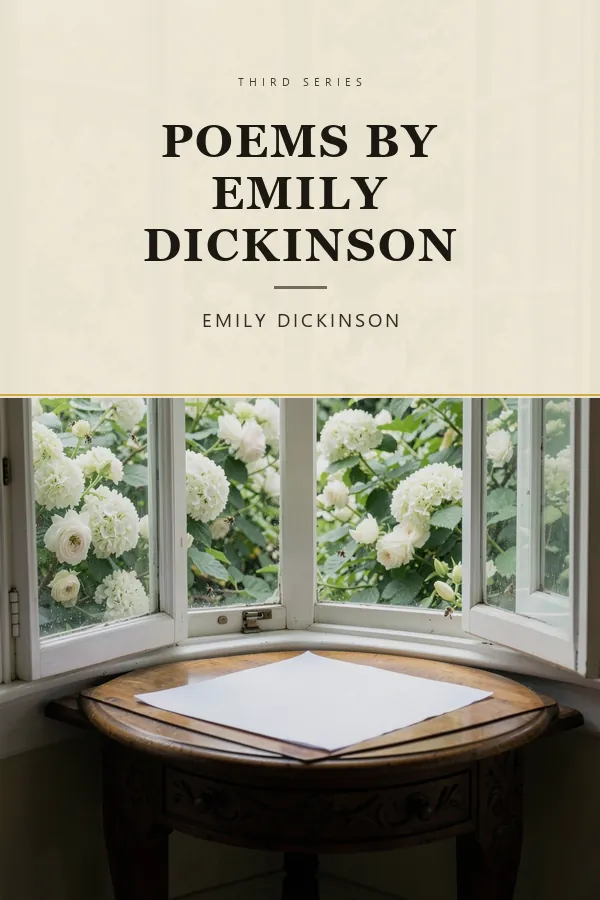
Poems
📖 Click to Read the Opening Pages Online Preview
The Chariot, from Time and Eternity
He kindly stopped for me;
The carriage held but just ourselves
And Immortality.
We slowly drove, he knew no haste,
And I had put away
My labor, and my leisure too,
For his civility.
We passed the school where children played,
Their lessons scarcely done;
We passed the fields of gazing grain,
We passed the setting sun.
We paused before a house that seemed
A swelling of the ground;
The roof was scarcely visible,
The cornice but a mound.
The excerpt is the first four stanzas of the poem the editors titled The Chariot, sixteen lines that take the speaker on a slow carriage ride with Death and Immortality. They pass the school where children played, the fields of gazing grain and the setting sun, and pause before a house that seemed a swelling of the ground. The last stanza, which counts the centuries since that ride, is not in the excerpt.
Download Full EPUB1890-1896
Verse
31,841 words
1.8 h
Standalone
Amherst, Massachusetts, in the years the poems were written, seen mostly from a house, a garden and a meadow: the school, the meeting-house, the railway, the orchard and the graveyard on the hill.
Three series in twelve parts
EPUB · AZW3 · KEPUB
0.21 MB (EPUB) · 0.51 MB (AZW3) · 0.25 MB (KEPUB)
Public domain in the United States
Project Gutenberg #12242
Poems by Emily Dickinson gathers the three series of her verse that appeared after her death, in 1890, 1891 and 1896, each with its own preface and its own run of short poems. The editors, Mabel Loomis Todd and Thomas Wentworth Higginson, sorted the poems under headings the volumes print, Love, Nature and Time and Eternity, and opened each series with a body of poems on life that carries no heading. The poems are brief, often a single stanza, built on the dash, on slant rhyme, and on a turn in the last line that leaves the question open rather than closed.
The poems come one to a page and are known by their opening lines, which the third series gathers in an index of first lines at the end. Most carry titles that the editors supplied, and those titles are part of the printed text. The punctuation is the punctuation of the 1890s, with commas and semicolons where the manuscripts had dashes. Wikipedia on Poems (Emily Dickinson) sets out the three volumes. The text is available via Project Gutenberg #12242.
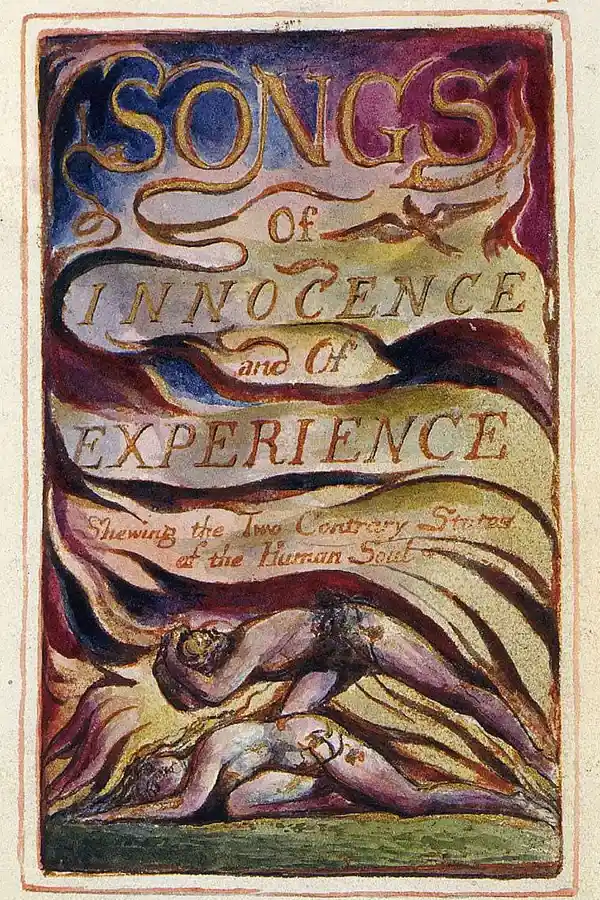
Poems by Emily Dickinson: Summary, Voices & Forms
This page gives a summary and analysis of Poems by Emily Dickinson, with the poems kept in the order the three volumes print them and the sections of each volume kept apart. Emily Dickinson is the name on the title pages, though she did not arrange these books or see them through the press. The text follows a transcription of the three series as they appeared in 1890, 1891 and 1896, each with its preface, and it ends with the index of first lines that closes the third. Poems are given whole, one to a page, with no notes between them. Each series opens with its own preface, and the headings II. LOVE., III. NATURE. and IV. TIME AND ETERNITY. stand where the volumes print them, the opening section on life left unheaded. The edition belongs with the Poetry & Epics shelf on this site.
The first series was published in 1890 with a preface by Thomas Wentworth Higginson, who had been Dickinson’s correspondent and who describes the verses as belonging to what Emerson called the Poetry of the Portfolio. He gives the dates of her life, born at Amherst on December 10, 1830 and dying there on May 15, 1886, and he says the poems are printed as they were written, with very few and superficial changes, though the titles were assigned, almost invariably, by the editors. He compares them to poetry torn up by the roots, with rain and dew and earth still clinging to them. Three named sections follow the life poems, Love, Nature and Time and Eternity, and the second and third volumes repeat the same three names. This was the first of the three volumes to appear.
The second series followed in 1891, with a preface by Mabel Loomis Todd dated at Amherst in August of that year. She tells how the portfolios were found after Dickinson’s death by her sister, tied in little fascicules of six or eight sheets, and how the handwriting grew bolder and more abrupt. In most of the poems, she writes, punctuation was discarded except numerous dashes, and all important words began with capitals. The verses were as a rule without titles; a few, among them A Country Burial and The Humming-Bird, were named by their author. The letter she quotes, dated the fifth of September, 1884, is from Helen Jackson, who asks to be Dickinson’s literary legatee.
The third series came in 1896, edited by Todd, and its preface explains why the book is a choice rather than a collection: many verses had been sent to friends in letters and had already appeared in the volumes of Dickinson’s Letters published in 1894, so they are left out here, except three or four such as A Book and With Flowers. The preface also says that many of the poems were simply spontaneous flashes of insight, and that a few, such as I had a Guinea golden, have an obvious personal origin. The volume ends with an index of first lines, alphabetical by opening line, which is how the poems are keyed throughout, from A bird came down the walk to the last poem in the book. The index runs alphabetically through the opening lines.
Read in sequence, the three volumes show a poet working in a very short form and returning to a small set of occasions: a garden, a deathbed, a letter, a train, a meeting-house, the light on a winter afternoon. The stanza is usually a four-line one, the rhyme often withheld, and the argument carried by the dash rather than by the sentence. The three are printed here as one book in the order of their publication, so that the second and third can be read against the first. Where a poem appears without a title, its first line stands in the place of one. Readers who want the English short lyric beside it can take Songs of Innocence and of Experience, and readers who want the American long line can go on to Leaves of Grass. The transcription follows the Project Gutenberg #12242 text.
Historical Context
The three volumes were made after the poet’s death, by friends who had her manuscripts and her reputation in their keeping. Higginson had urged her to print, and it was with great difficulty, he says, that she was persuaded to publish three or four poems during her lifetime; he borrows Emerson’s phrase, the Poetry of the Portfolio, for verses written for no public; Todd, whose preface is dated at Amherst, sorted and copied the papers. The papers were not in any final order, and both prefaces say as much in their different ways. The first series appeared in 1890, the second in 1891 and the third in 1896, and between them they made Dickinson’s name in the 1890s as a writer of brief, strange, consoling verses.
The text printed here is the text those editors made, and their hand is visible in it. Emily Dickinson’s poems were edited in these early editions by her friends, better to fit the conventions of the times; in particular, her dashes, often small enough to appear as dots, became commas and semi-colons, and important words were capitalised. Titles were supplied and spelling and punctuation were normalised, and a facsimile of one handwritten poem, Renunciation, is given in the second series so that a reader can see what the manuscripts looked like. The result is a text that looks more regular on the page than the manuscripts did, and a reader has to hear the dash under the comma.
The world the poems name is Amherst and the Connecticut valley: a father’s house and its garden, a school, a meeting-house, hayfields, an orchard, the railway, and the graveyard on the hill. The war enters by way of ALONG THE POTOMAC and the poems of soldiers and mourning. Beyond that the landscape is interior: the brain, the soul, the hour of death and the rumour of immortality, which the volumes place last in every series, so that each book ends at the grave and looks past it. A poem may begin at a window and end at the grave in a dozen lines. The hymnbook is never far away, in the four-line stanza and in the imagery of the sermons.
Voices & Forms
- The lyric I: Almost every poem is spoken in the first person by a voice that gives no name, no parish and no history. It can be a child, a wife, a dying woman, a bystander at a funeral or a mouse in the grass, and the poems do not explain which. The pronoun holds the whole book together, and it is the reason the poems can be read as personal without ever being confessional.
- The editors’ titles: Titles such as IN A LIBRARY, THE CHARIOT, A SERVICE OF SONG and THE MYSTERY OF PAIN were assigned by Higginson and Todd, and the second preface says as much. They are useful labels rather than the poet’s own, which is why the index of first lines, not a table of titles, is the book’s real finding aid.
- The dash: The mark that survives the editors’ tidying is the dash, and with it the comma and semicolon put in its place. A line often ends where a sentence would go on, and the pause does the work an argument would do in prose. Read aloud, the poems stop more often than they close.
- Thought-rhyme: Todd’s preface describes rhymes that answer one another in sense rather than sound, and calls them thought-rhymes; elsewhere she notes that Dickinson seems in many cases to have avoided the smoother and more usual rhymes on purpose. The result is a stanza that almost rhymes, the ear waiting for a chime that comes late or not at all.
- The letter-poem: Many of the verses were sent to friends inside letters, as the third preface says, and they keep the manner of a note: a greeting, a flower, a scrap of news, a turn at the end. Some were written to be read by one person, and the printed page has to stand in for the hand and the occasion.
- The short stanza: A four-line stanza is the common shape of the book, and many poems are a single one of them. The lines run on, the rhyme often fails to arrive, and the last line turns what has gone before. The brevity is not a fragment; the poem is as long as the thought lasts.
Core Themes
- Death as a companion: Death is not an interruption in these poems but a figure who arrives politely and is received. He stops the carriage in THE CHARIOT; in PRECEDENCE the majesty of Death invests so mean a brow; his insect bores the tree in DEATH. The dying are shown from inside, hearing a fly buzz, or from the road, watching a house where a death has happened. The consolation offered is not doctrine but company: Death rides beside the speaker, and the grave is a house with a roof. The ride to it is a courtesy call, and the driver waits.
- The mind as a place: The brain is wider than the sky and deeper than the sea in THE BRAIN, and GHOSTS says one need not be a chamber to be haunted. A funeral is held in the brain in I felt a funeral in my brain, and space tolls like a bell. Consciousness is treated as a room with corridors and cellars, and the poems walk about in it. The poems ask what a mind is made of and answer with measures: wider than sky, deeper than sea, the weight of God.
- Nature near and unaccommodating: The garden, the bee, the bird, the clover and the slant of winter light are watched closely, but they are not made to comfort. In DEATH AND LIFE the frost kills the flower while the sun proceeds; the snake is summer’s treason; nature rarer uses yellow than another hue. The poems take the natural year as a calendar of the soul without pretending that the weather cares what happens in the house. The bee and the clover are watched with a naturalist’s patience and a guest’s wariness. The seasons are followed month by month, from THE WAKING YEAR and TO MARCH to AFTERMATH.
- Love, renunciation and the wife: The love poems move between claim and refusal. Wild nights is all desire; I cannot live with you counts the impossibility; My life closed twice before its close names parting as all we know of heaven and all we need of hell. Several poems end in a marriage, the speaker saying I’m wife, and the wedding is treated as a state of the soul as much as of the household. The wife poems are among the plainest in the book and among the most guarded.
- The small word and the book: A word is dead when it is said, some say, and the poem answers that it begins to live that day. A syllable can carry an undeveloped freight, and a book is a frigate that takes us lands away without toll. The volumes are full of this attention to the smallest unit of speech, and they trust the short poem to hold what a longer one would explain away. Nothing in the three volumes is longer than a page, and most of it can be said aloud in a breath.
Why Download Our Custom E-Reader Edition of Poems?
The download is the whole of the three series: every poem of 1890, 1891 and 1896 in the order the volumes print them, with the three prefaces and the index of first lines that closes the third. Nothing is cut, no poem is replaced by a description, and the section headings the volumes print are kept, so that the book reads as its first readers read it, volume after volume. The closing index of first lines makes every poem findable by its opening words.
The page is arranged to be read beside the text. Twelve groups follow the three volumes and their kinds of poem; six notes describe the voices and the forms; five themes take up death, the mind, nature, love and the small word. A short historical section gives the printing of the volumes and the editorial work that shaped them, and the notes say where the 1890s editors intervened and what their titles do.
The files come in three formats with the same text and the same divisions. The EPUB opens in Apple Books, Calibre and most Android readers; the AZW3 is the file for a Kindle; the KEPUB is the one Kobo devices read best. No account is needed for any of them, and nothing is locked, watermarked or time limited. The same text, transcribed from the three published volumes, is also in the Project Gutenberg file numbered 12242.
- Project Gutenberg transcription, via Project Gutenberg #12242 — the three series complete, with the prefaces, the section headings and the closing index of first lines, and nothing added.
- Three volumes in one file The first, second and third series are kept apart as they were published, each with its own preface, so that the changes between 1890 and 1896 can be read in order rather than flattened into one collection.
- Twelve groups, four to a volume Every group has its own summary, from the unheaded life poems that open the first series to the last poems of time and eternity in the third, and each names the poems it covers by the titles the volumes print.
- EPUB, AZW3 and KEPUB files The same text in three formats, for Apple Books, Kindle and Kobo, with the section divisions intact and nothing to install beyond the reading app you already use, and no registration at any point.
- Whitman’s book of the self and the open road, published in the same decades and just as willing to make a poem out of a train, a bird or a hospital ward. Read it beside Dickinson for the other American voice of the century. — free EPUB, AZW3 & KEPUB
- Blake’s two series of short songs, the English counterpart to these brief stanzas: the same kind of measure, the same turn in the last line, and a heaven and a hell made out of the same green ground. — free EPUB, AZW3 & KEPUB
- The shelf where this edition sits, with the rest of the free poetry in EPUB, AZW3 and KEPUB, including Leaves of Grass and Songs of Innocence and of Experience, all in the same three formats. — free EPUB, AZW3 & KEPUB
Canto & book summaries
The twelve groups follow the three volumes in order, four to each: the life poems that open a series, then Love, Nature, and Time and Eternity. The opening section of each volume carries no heading in this text, so it is described here by the poems it contains. Titles are the editors’ and are given as the volumes print them.
- Part 1 — Life, the opening poems of the first series: The first volume opens with poems of the house and the mind: IN A LIBRARY, a poem about a book; EXCLUSION, where the soul selects her own society and shuts the door; THE SECRET, THE LONELY HOUSE, DAWN, THE BOOK OF MARTYRS, THE MYSTERY OF PAIN. A BOOK and UNRETURNING stand near the end of the run.
- Part 2 — Love in the first series: The love poems of 1890 keep to a few gestures. MINE and BEQUEST claim and give; SUSPENSE and SURRENDER wait; WITH A FLOWER and PROOF offer tokens; TRANSPLANTED and THE OUTLET look for a way through. IN VAIN counts what it would mean to live with the beloved or without, APOCALYPSE and THE WIFE speak from inside a marriage, and APOTHEOSIS ends the section.
- Part 3 — Nature in the first series: The garden and the meadow, watched closely and without sentiment. MAY-FLOWER and WHY? begin; A SERVICE OF SONG keeps the Sabbath at home; SUMMER’S ARMIES, THE GRASS and SUMMER SHOWER follow the season; THE SEA OF SUNSET, PURPLE CLOVER and THE BEE take the smaller creatures. DEATH AND LIFE, INDIAN SUMMER, AUTUMN and THE HEMLOCK close on the cold.
- Part 4 — Time and Eternity in the first series: The last section of 1890 is the book’s graveyard and its hope. TOO LATE and ASTRA CASTRA begin; Safe in their alabaster chambers and I died for beauty lie among the dead; FROM THE CHRYSALIS, SETTING SAIL, THE FUNERAL and THE FIRST LESSON keep the deathbed in view. THE CHARIOT takes its ride, RESURGAM answers it, and ALONG THE POTOMAC remembers the war.
- Part 5 — Life in the second series: The 1891 volume opens with a run of poems about work, want and endurance. HOPE is the thing with feathers; THE WHITE HEAT, THE TEST, ESCAPE and COMPENSATION measure pressure and release; THE MARTYRS and A PRAYER turn to faith; THE RAILWAY TRAIN, THE SHOW and THE RETURN to the world of machines and arrivals. SHIPWRECK, THE GOAL and HUNGER close on desire that outlasts its object.
- Part 6 — Love in the second series: Shorter than the first volume’s love poems and more abrupt. CHOICE and THE CONTRACT set terms; THE LETTER waits for an answer; Wild nights! Wild nights! gives desire without argument; AT HOME and POSSESSION describe a union already settled. THE LOVERS and The moon is distant from the sea close the section with distance kept as a form of nearness.
- Part 7 — Nature in the second series: The longest nature section in the three volumes, and the most crowded with creatures. MOTHER NATURE and OUT OF THE MORNING open; THE ROBIN, THE BLUEBIRD, THE ORIOLE and THE HUMMING-BIRD carry the birds; APRIL, THE SLEEPING FLOWERS, MY ROSE and FRINGED GENTIAN the flowers. THE SEA, A TEMPEST, THE STORM, THE SPIDER, THE RAT and A THUNDER-STORM keep the weather and the small predators in play.
- Part 8 — Time and Eternity in the second series: Death is a journey in this volume and the poems are its stages. TRIUMPH and FOLLOWING begin in the world; THE JOURNEY comes to the fork in Being’s road; A COUNTRY BURIAL makes the bed; GOING, AT LENGTH and GONE watch a life leave a house. GHOSTS finds the haunting inside the brain, VANISHED and PRECEDENCE watch a death from the world’s side, and REQUIEM sees the dead met by the gods with banners.
- Part 9 — Life in the third series: The 1896 volume opens with the sharpest of the three runs. SUPERIORITY TO FATE, FORBIDDEN FRUIT and A WORD begin in aphorism; LIFE’S TRADES, A SYLLABLE and THE LOST THOUGHT weigh small things; PARTING says my life closed twice before its close. A BOOK sends the reader abroad, I HAD A GUINEA GOLDEN tells a story with a moral, and GRIEFS, THE BRAIN and THE PAST stand near its end, with DESIRE, PHILOSOPHY, POWER, EXPERIENCE and CHILDISH GRIEFS after them.
- Part 10 — Love in the third series: Few poems, and almost all of them about devotion rather than courtship. CONSECRATION makes a pride of a broken heart; LOVE’S HUMILITY, LOVE, SATISFIED and LOYALTY keep the same register; WITH A FLOWER and SONG return to the token and the tune. FORGOTTEN, THE MASTER, DREAMS and LONGING follow, and WEDDED closes on the solemn thing it was for a woman white to be.
- Part 11 — Nature in the third series: NATURE’S CHANGES opens and gives the section its argument: the year turns and the poems turn with it. THE TULIP, THE WAKING YEAR, TO MARCH and MARCH keep the spring; DAWN, A ROSE, COBWEBS and A WELL the small hours and small things. THE WIND, THE WOODPECKER, A SNAKE, THE MOON, THE BAT and THE BALLOON follow, and EVENING, SUNSET, AURORA and THE COMING OF NIGHT close the day, with AFTERMATH last.
- Part 12 — Time and Eternity in the third series: The last section of the last volume begins with This world is not conclusion and ends at the grave and beyond it. ENDING, IMMORTALITY and DEATH state the terms; ASLEEP, THE SPIRIT and THE MONUMENT keep watch; I felt a funeral in my brain and I heard a fly buzz when I died go inside. FAREWELL, JOY IN DEATH, THE SOUL’S STORM, Water is taught by thirst and RETROSPECT close the book.
Poems: Frequently Asked Questions
What is Poems by Emily Dickinson?
Who edited these volumes and what did they change?
Are the poems numbered?
Why do some poems have titles and others not?
In what order are the poems arranged?
What do the poems sound like?
Is this the complete poems?
How do I read the free downloads?
Part of: Poetry & Epics · Emily Dickinson