An Enquiry Concerning Human Understanding by David Hume: Free EPUB, AZW3 & KEPUB Download
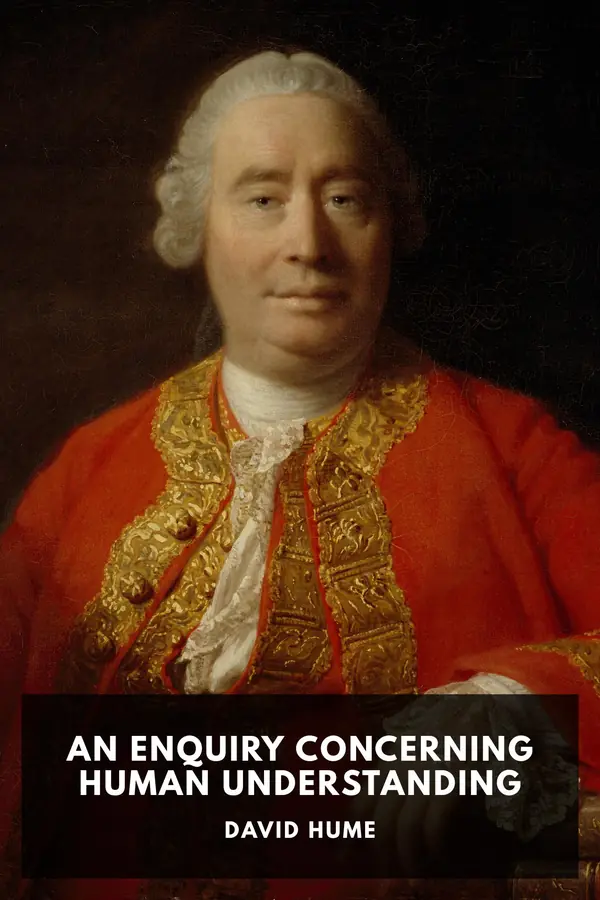
An Enquiry Concerning Human Understanding
📖 Click to Read the Opening Pages Online Preview
The opening of the Enquiry
Moral philosophy, or the science of human nature, may be treated after two different manners; each of which has its peculiar merit, and may contribute to the entertainment, instruction, and reformation of mankind. The one considers man chiefly as born for action; and as influenced in his measures by taste and sentiment; pursuing one object, and avoiding another, according to the value which these objects seem to possess, and according to the light in which they present themselves. As virtue, of all objects, is allowed to be the most valuable, this species of philosophers paint her in the most amiable colours; borrowing all helps from poetry and eloquence, and treating their subject in an easy and obvious manner, and such as is best fitted to please the imagination, and engage the affections. They select the most striking observations and instances from common life; place opposite characters in a proper contrast; and alluring us into the paths of virtue by the views of glory and happiness, direct our steps in these paths by the soundest precepts and most illustrious examples. They make us feel the difference between vice and virtue; they excite and regulate our sentiments; and so they can but bend our hearts to the love of probity and true honour, they think, that they have fully attained the end of all their labours.
The other species of philosophers consider man in the light of a reasonable rather than an active being, and endeavour to form his understanding more than cultivate his manners. They regard human nature as a subject of speculation; and with a narrow scrutiny examine it, in order to find those principles, which regulate our understanding, excite our sentiments, and make us approve or blame any particular object, action, or behaviour. They think it a reproach to all literature, that philosophy should not yet have fixed, beyond controversy, the foundation of morals, reasoning, and criticism; and should forever talk of truth and falsehood, vice and virtue, beauty and deformity, without being able to determine the source of these distinctions. While they attempt this arduous task, they are deterred by no difficulties; but proceeding from particular instances to general principles, they still push on their enquiries to principles more general, and rest not satisfied till they arrive at those original principles, by which, in every science, all human curiosity must be bounded. Though their speculations seem abstract, and even unintelligible to common readers, they aim at the approbation of the learned and the wise; and think themselves sufficiently compensated for the labour of their whole lives, if they can discover some hidden truths, which may contribute to the instruction of posterity.
It is certain that the easy and obvious philosophy will always, with the generality of mankind, have the preference above the accurate and abstruse; and by many will be recommended, not only as more agreeable, but more useful than the other. It enters more into common life; moulds the heart and affections; and, by touching those principles which actuate men, reforms their conduct, and brings them nearer to that model of perfection which it describes. On the contrary, the abstruse philosophy, being founded on a turn of mind, which cannot enter into business and action, vanishes when the philosopher leaves the shade, and comes into open day; nor can its principles easily retain any influence over our conduct and behaviour. The feelings of our heart, the agitation of our passions, the vehemence of our affections, dissipate all its conclusions, and reduce the profound philosopher to a mere plebeian.
It begins with the first three paragraphs of Section I, where Hume sets out two ways of treating moral philosophy:
Download Full EPUB1748
~48,000 words (estimated)
Approx. 2.7 hours
Standalone
Eighteenth-century Scotland and the philosophical circles of Edinburgh
Twelve sections, each summarised
EPUB · AZW3 · KEPUB
0.67 MB (EPUB) · 0.66 MB (AZW3) · 0.68 MB (KEPUB)
Public domain in the United States
Project Gutenberg #9662 · Standard Ebooks
An Enquiry Concerning Human Understanding is David Hume’s short book of 1748 on what the mind can know and how it comes to know it. It opens by separating the easy philosophy that paints virtue from the abstruse philosophy that examines the understanding, and then asks where ideas come from: every idea, Hume argues, is a faint copy of a livelier impression. From there the argument runs into cause and effect, where nothing in the objects themselves shows why one event must follow another, and the tie we feel turns out to be custom. Liberty, miracles and a measured scepticism follow.
It is also a book about the limits of argument. Reason cannot show that the future will resemble the past, testimony cannot establish a miracle, and the wise response is a mitigated scepticism that keeps enquiry inside experience. An Enquiry Concerning Human Understanding appeared in 1748, and its twelve sections run from the origin of ideas to a final test of any book. This edition follows the Standard Ebooks text, which is based on the Project Gutenberg transcription. The text is available via Project Gutenberg #9662 and Standard Ebooks.
An Enquiry Concerning Human Understanding by David Hume: Summary, Characters & Themes
This is a summary and analysis of David Hume’s An Enquiry Concerning Human Understanding, the short book of 1748 in which he asks what the mind can know and by what right it claims to know it. The first section sets out two manners of moral philosophy: the easy sort, which treats man as born for action and paints virtue in the most amiable colours, and the abstruse sort, which examines the principles that regulate the understanding. Hume defends the second while admitting that the first wins the larger audience, and proposes a mental geography of the mind’s operations. Then, in Section II, he lays the foundation for everything that follows: perceptions divide into impressions, which are lively, and ideas, which are faint copies of them. The book is not a treatise but a sequence of enquiries, and each section can be read on its own.
From that foundation the book moves by short steps. Section III reduces the association of ideas to resemblance, contiguity and cause or effect. Section IV divides all objects of reason into relations of ideas and matters of fact, and then asks what grounds our inference from one event to another; the answer, Hume shows, is never a priori reasoning, and never a proof that the future will resemble the past. Section V names the real principle, custom or habit; Section VI explains why an irregular cause still produces a graded expectation; Section VII asks what impression gives us the idea of power or necessary connexion, and finds it in the customary transition of the mind. Section VIII turns the same analysis on liberty and necessity, and the last four sections carry it into animals, miracles, providence and scepticism. Each section uses the vocabulary the previous one has fixed, so the order matters.
David Hume was born in Edinburgh in 1711 and died there in 1776. He published his Treatise of Human Nature in 1739 and 1740 and then recast its argument in shorter compass, first in the Enquiry Concerning Human Understanding of 1748. The book belongs to the Scottish Enlightenment — the Edinburgh of his day argued about such things in clubs and in print — and to the empiricist tradition in which he worked; its author was a philosopher, essayist and historian, and the Enquiry is the brief, confident statement of a case the Treatise had argued at length. The later sections carry the argument into religion, where Hume was at his most careful and his most damaging, and into the theory of testimony, where the same logic reappears as a rule for weighing reports. The calm of the book is the calm of a man who has decided what can and cannot be proved.
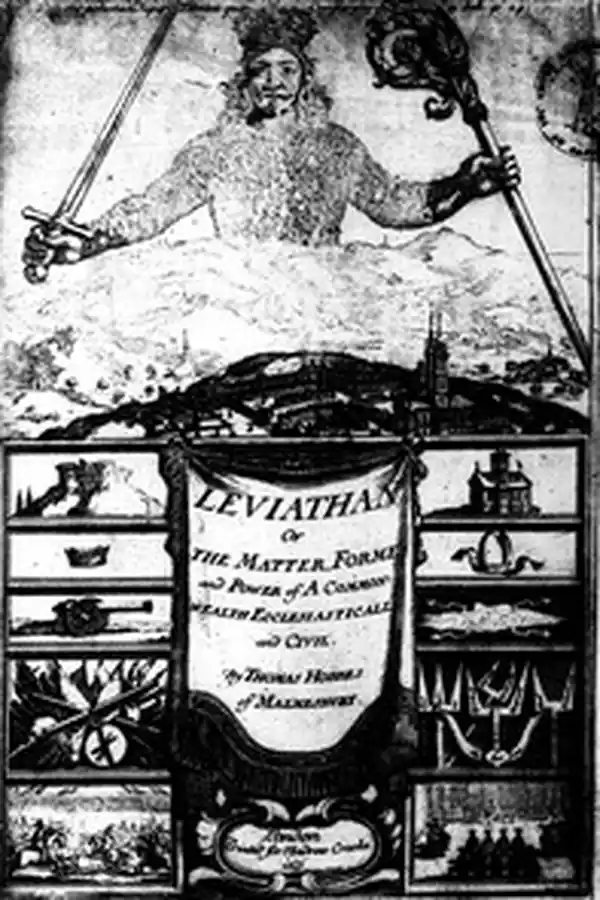
The method is what makes the book still read. Hume takes a question that looks settled and asks what evidence supports it. Cause and effect, he says, are two distinct events, and no inspection of one reveals the other; what we call necessity is a feeling produced by long habit. The same knife cuts into liberty, where he argues that the dispute is mostly verbal and that necessity is as essential to morality as liberty, and into testimony, where he weighs the evidence for miracles against the uniform course of nature. The book can be set beside Meditations, the Stoic notebook whose providence and future state Hume refuses to infer, and Leviathan, Hobbes’s account of what the mind and the commonwealth can know; the philosophy classics shelf gathers the rest of the tradition.
The text here is complete and unabridged: twelve sections, from the two species of philosophy to the closing instruction to commit volumes of divinity and school metaphysics to the flames, with the numbered parts of the longer sections and Hume’s own notes in place. The paragraphs are short, the examples are concrete, and the argument is carried by both rather than by a formal system. It follows the Standard Ebooks edition, which is based on the transcription at Project Gutenberg, numbered 9662. There is no translator, the book being English from the first; no preface by an editor has been added, and no editorial apparatus interrupts the argument or the examples. The spelling follows the Standard Ebooks text, and the italics and capitals are kept as that edition gives them. It is the whole book, and the section headings are the author’s own.
Historical Context
Edinburgh in the 1740s was a small, argumentative city with a university, a learned society and a taste for improvement, and Hume was one of the men who made its reputation. His project was a science of human nature: the mind examined with the care that natural philosophers gave to bodies, its operations reduced to general principles and its limits marked out. The Treatise of Human Nature of 1739 and 1740 had attempted this at length and in a form readers found forbidding. The Enquiry of 1748 recasts the argument in shorter compass, dropping much of the machinery and keeping the conclusions, and it is the version through which most readers have met him since. The city’s clubs gave him readers and opponents in the same rooms.
The book appeared in London in 1748, printed for A. Millar, and it is a compact volume: twelve numbered sections, several of them divided into parts, written in paragraphs rather than in the numbered propositions of the schools. The sentences are shorter than the Treatise‘s, the examples are drawn from billiard tables, bread, gunpowder and the weather, and the reader is addressed directly. It gave the argument a form that could be reprinted, quoted and answered, and the answers came: the book was read by divines as an attack on religion and by philosophers as an attack on causation. It is short enough to have been read aloud in a few evenings, and its examples are the kind a mixed audience could follow.
The Enquiry belongs to the British empiricist tradition and to a century of argument about religion. Its targets are the metaphysicians who claim to demonstrate the existence of God and the immortality of the soul from the order of nature, and the divines who defend revealed religion by historical testimony; the tenth and eleventh sections take both apart. The design argument was the strongest card in the deist’s hand, and Hume’s reply is not to deny the inference but to refuse the additions made to it. His scepticism is not the fashionable doubt of the drawing room but a technical result: if all our ideas are copies of impressions, and no impression corresponds to power or necessity, then a whole vocabulary of the schools has to be redefined. The calm of the book is part of its strategy.
Key Characters & Literary Archetypes
- The sceptic: Hume’s sceptic is not a person but a position, and the book distinguishes two kinds. The Pyrrhonian suspends judgement on everything and is refuted by the first meal he eats; the Academic keeps his doubts as a discipline. In Section XII Hume lets the sceptic press the argument against the senses as far as it will go, and then leaves him there, because nature will not let anyone live inside the conclusion.
- The experimental philosopher: The student of human nature who proceeds as the natural philosopher does: observe, collect instances, generalise. Hume calls history a collection of experiments for the moral philosopher, and his own method is to run over cases until a pattern appears. He is the reader the book is written for, patient enough to follow an argument through twelve sections and honest enough to accept a negative result when the evidence gives one.
- The ordinary reasoner: The plain man who has never read a book of philosophy and yet expects the sun to rise, avoids the fire and trusts his neighbour’s word. Hume’s point is that this man reasons exactly as the philosopher does, and that neither can give a reason for the inference; custom does the work in both. Children and animals are included in the same account, which is what makes the conclusion so unsettling.
- The divine: The theologian, the preacher and the author of the argument from design. He infers a wise and good Creator from the order of the world, and then goes further, inferring a future state and a particular providence. Section XI puts the case in the mouth of Epicurus, who grants the inference from effect to cause and then refuses every addition to it, while Section X examines the miracles offered in evidence for revealed religion.
- The cause: Not a thing but a relation. Hume defines a cause twice: an object followed by another such that all objects like the first are followed by objects like the second, and an object whose appearance always conveys the thought of the other. Both definitions look away from the cause, to the conjunction on one side and to the mind on the other, which is the whole point of the section.
- The effect: The second event, always distinct from the first. Because it is distinct, its connexion with the cause is never visible in either object; we learn it by seeing the pair repeated. The effect is also the starting point of the argument from design, and Section XI insists that a cause known only through its effect can be given no qualities beyond those the effect displays.
Core Literary Themes
- Impressions and ideas: Section II makes the copy principle the foundation of the whole book: every simple idea is derived from a preceding impression, and a term that cannot be traced to one is suspect. Hume uses the rule as a knife, testing power, necessity and the Deity, and he admits one exception, the missing shade of blue, without giving up the principle. Because the difference between an impression and an idea is one of force and liveliness rather than of content, the same analysis covers memory, imagination and belief, and the test of meaning applies to every abstract term the book meets. The rule is a test of meaning as much as a record of psychology.
- Causation as custom: Sections IV to VII are the centre of the book. Reason cannot demonstrate that the future will resemble the past, and it cannot even make the inference probable without circularity; what actually happens is that repeated conjunction produces a habit, and the mind passes from the impression of one object to the idea of its usual attendant. Hume then locates the idea of necessary connexion in that transition: the necessity is felt, not seen. The two definitions of cause at the end of Section VII are the careful record of what remains once the metaphysics has gone, and they make causation a fact about observers as well as about objects. It is a conclusion about what we mean by cause, not a denial that causes exist.
- Induction has no rational warrant: The argument of Section IV, Part II, is the one that made the book famous. Every inference from experience assumes that the course of nature continues uniformly, and that assumption cannot be proved by experience without begging the question. It is not that Hume doubts the inference; he makes it constantly, as everyone does. His claim is that it is not grounded in argument at all, and that the attempt to supply a foundation for it has failed. The conclusion is a limit rather than a refutation, and it leaves the practice of induction exactly where it was, resting on instinct. The reader who wants a foundation will not find one here, and Hume thinks that is the honest result.
- Testimony and miracles: Section X applies the theory of belief to reports of violations of nature. A miracle is defined as a violation of a law of nature, and the evidence against it is as strong as any experience can be; testimony is itself founded on experience, so the two are weighed against each other and the greater miracle is rejected. Hume then adds that no testimony in history meets the conditions, and that the passion for wonder, the credulity of the ignorant and the rivalry of religions all work against the report. The argument is about evidence, not about the truth of any particular faith. Hume’s target is the report, and the conclusion is a rule for historians.
- Mitigated scepticism: The book does not end in despair. Section XII separates the Pyrrhonian, whose doubts destroy action and are refuted by dinner, from the Academic, whose doubts are moderate and useful: they produce caution, modesty and a restriction of enquiry to subjects within the reach of experience. This is the position Hume recommends, and it is why the book can be sceptical about causes and miracles while remaining a defence of ordinary life and of the sciences of quantity and number. The last page turns the test on the library. Nothing in the argument licenses the leap from what is observed to what is not. The position is stable because it doubts the argument, not the world.
Why Download Our Custom E-Reader Edition of An Enquiry Concerning Human Understanding?
Because the Enquiry is the shortest road into the argument that has shaped philosophy since. Twelve sections, no apparatus beyond Hume’s own notes: he states the case, gives the examples and draws the conclusion, and the reader can follow the whole movement from the origin of ideas to the last page. The files here are complete and unabridged, and the text is the one transcribed at Project Gutenberg and issued by Standard Ebooks, so the wording, the italics and the numbered parts are the edition’s. The section summaries on this page follow that movement one step at a time, so the book can be read with a guide or without one. It is a book that can be read in an afternoon and argued with for years.
The edition is built for reading rather than for archiving: clean text, working navigation, Hume’s own notes where he put them and nothing else pushed into the page. There is no editorial introduction standing between you and the first section, no modernised spelling to trip over and no paraphrase of the argument. The same file opens on a phone, a Kindle, a Kobo or an old e-ink reader, the type can be enlarged, and there is no account, no sample chapter and no conversion step between you and the opening pages.
Read it beside this page rather than instead of it. The section summaries, the character notes and the context are here for before and after, not as a substitute for the argument, and they stop short of the last sections. If you know the Enquiry, the second reading is the better one, because the shape of the case — doubt, then custom, then mitigated scepticism — is easier to see when you are watching for it. If you do not know it, read the twelve sections first and save the summaries for afterwards.
- Based on the Standard Ebooks Edition, via Standard Ebooks, whose text is based on the Project Gutenberg transcription of the 1748 Enquiry, with the section numbers, the parts of the longer sections and the author’s notes in place.
- Complete text, twelve sections No abridgement and no paraphrase: the whole argument from the two species of philosophy to the closing page, with the examples, the two definitions of cause and the dialogue of Section XI kept as Hume set them.
- EPUB, AZW3 and KEPUB One download per format, so the book opens on Kindle, Kobo, Apple Books and other readers without conversion, and the navigation follows the twelve sections on old devices as well as new ones.
- Free and DRM-free Public domain in the United States, with no account, no sample chapter and no lock on the file; download it once and it is yours to keep, to move between devices and to read again.
- Meditations — free EPUB, AZW3 & KEPUB
- Leviathan — free EPUB, AZW3 & KEPUB
- Philosophy Classics — free EPUB, AZW3 & KEPUB
Chapter summaries
The Enquiry is divided into twelve numbered sections, several of them in two or three parts, and the summaries below follow that order one section at a time. The headings are Hume’s own subjects; the paragraphs are a guide to the argument, not a substitute for it.
- The two species of philosophy: Hume contrasts the easy philosophy, which paints virtue and moves the affections, with the abstruse philosophy, which examines the principles of the understanding. Both have their merit, and the second is needed to clear away false metaphysics; but the first wins the larger audience. He proposes a mental geography and a science of man that will be exact without being unreadable.
- Impressions and ideas: All perceptions divide into impressions, which are lively, and ideas, which are faint copies of them. Thought can only compound and transpose what sense and experience supply; the blind man has no idea of colour, the Laplander no notion of the relish of wine. The missing shade of blue is the one exception, and the test it leaves is simple: ask from what impression a supposed idea is derived.
- The association of ideas: Ideas do not come to the mind at random. They are connected by resemblance, by contiguity in time or place, and by cause or effect, and Hume claims these three principles exhaust the list. A picture leads to the original, a room to the rest of the house, a wound to the pain that follows. The section is short and sets up the machinery the later sections use.
- Sceptical doubts about the understanding: Reason divides into relations of ideas, which are certain, and matters of fact, whose contrary is always possible. All our reasoning about fact rests on cause and effect, yet nothing in an object shows its cause, and no argument a priori can be given for the inference from one event to another. Even the billiard balls teach only conjunction. Part II asks what warrant experience has for the future.
- The sceptical solution: Custom, not reason, carries the mind from a present impression to the idea of its usual attendant, and the inference from experience is an effect of habit. Belief is not a separate idea but a livelier conception of the object, felt rather than willed; a picture enlivens the thought of an absent friend, and distance weakens it. This harmony between nature and our ideas works because it is instinct.
- Chance and probability: There is no such thing as chance in the world, only our ignorance of causes, and that ignorance produces belief of a lower degree. A die with four sides marked one way and two another gives a proportioned expectation; where causes are irregular, as with rhubarb or opium, the mind weighs the experiments and fixes its judgement somewhere short of certainty. Probability is a degree of the same feeling of belief.
- Necessary connexion: The idea of power or necessary connexion has no impression in any single instance: we see one ball strike another and only succession follows. Nor does the will supply it, since the means by which it moves the body are unknown. After many uniform instances, the mind feels a customary transition, and that sentiment is the impression the idea copies. Hume ends with two definitions of cause, both external to the cause.
- Liberty and necessity: The long dispute turns on words. Necessity means constant conjunction plus an inference of the mind, and the same two circumstances are found in human actions, which history shows to be uniform enough to be predicted. Liberty, properly defined, is the power to act or not as the will determines, and it belongs to everyone not in chains. So defined, necessity is consistent with morality and required by it.
- The reason of animals: Animals learn from experience, and their inferences cannot be the work of argument, which is beyond them. The horse knows the leap it can make, the greyhound trusts the younger dog to the turn, the dog fears the whip it has seen lifted. Since the same effects must have the same causes, custom must explain their inference too, and what we call instinct is the same mechanical power.
- Miracles: A miracle is a violation of a law of nature, and the evidence against it is as entire as any experience can furnish. Testimony is itself founded on experience, so the two are weighed against each other: no testimony can establish a miracle unless its falsehood would be more miraculous than the fact. Hume adds that no report in history satisfies the conditions, and that wonder, ignorance and religious rivalry explain the rest.
- A particular providence: The section is a dialogue in which a friend speaks for Epicurus. Grant that the order of the world argues a wise cause; you may still infer nothing beyond the qualities that appear in the effect. No future state, no particular providence, no distributive justice follows, and to add them is to reason back from cause to effect, which the rule forbids. Even a cause known only by its effect becomes doubtful.
- The academical philosophy: Section XII sorts the scepticisms. The Cartesian doubt is unlivable, the Pyrrhonian doubt destroys action and is cured by the first ordinary task, but a mitigated scepticism remains: caution, modesty and a limitation of enquiry to experience. Hume then divides the sciences, finds demonstration only in quantity and number, and ends with the famous test: a volume with neither abstract nor experimental reasoning may be committed to the flames.
An Enquiry Concerning Human Understanding: Frequently Asked Questions
What is An Enquiry Concerning Human Understanding about?
What is the difference between impressions and ideas?
What does Hume mean by custom?
Why does Hume say induction cannot be justified by reason?
What is Hume’s idea of necessary connexion?
What does Hume say about miracles?
What is mitigated scepticism?
Where can I read the full text for free?
Part of: Philosophy Classics · Classic Fiction