Andersen’s Fairy Tales by Hans Christian Andersen: Free EPUB, AZW3 & KEPUB Download
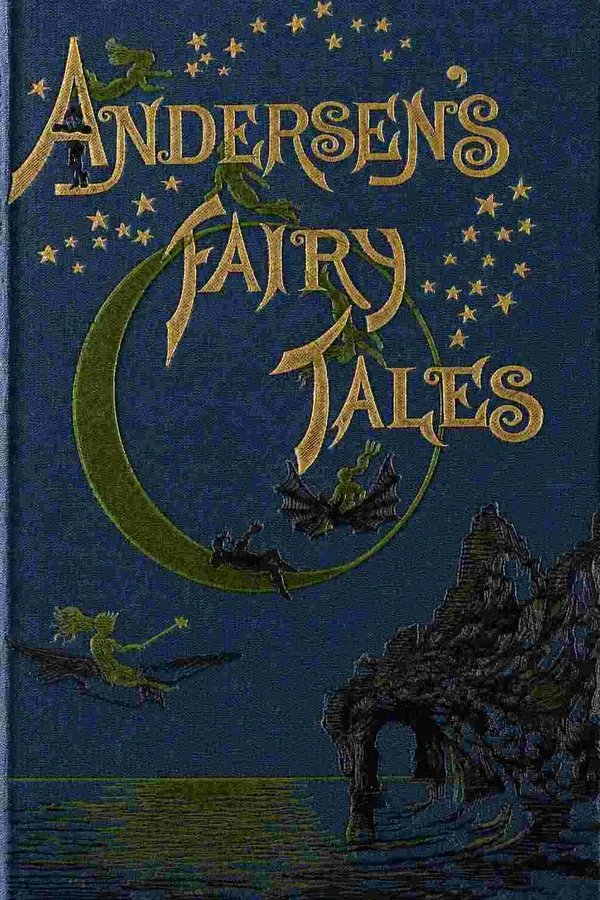
Andersen’s Fairy Tales
📖 Click to Read the Opening Pages Online Preview
The opening of The Emperor’s New Clothes
Many years ago, there was an Emperor, who was so excessively fond of new clothes, that he spent all his money in dress. He did not trouble himself in the least about his soldiers; nor did he care to go either to the theatre or the chase, except for the opportunities then afforded him for displaying his new clothes. He had a different suit for each hour of the day; and as of any other king or emperor, one is accustomed to say, “he is sitting in council,” it was always said of him, “The Emperor is sitting in his wardrobe.”
Time passed merrily in the large town which was his capital; strangers arrived every day at the court. One day, two rogues, calling themselves weavers, made their appearance. They gave out that they knew how to weave stuffs of the most beautiful colors and elaborate patterns, the clothes manufactured from which should have the wonderful property of remaining invisible to everyone who was unfit for the office he held, or who was extraordinarily simple in character.
An emperor whose chief pleasure is new clothes, and two rogues who promise a fabric invisible to anyone unfit for his office or unusually simple in character. The excerpt stops at the bargain: the looms are not yet set up.
Download Full EPUB1835-1872
Tales
54,834 words
3.1 h
Standalone
Denmark and the wider world of the tales, 1835-1872
Eighteen tales in nine story groups
EPUB · AZW3 · KEPUB
0.21 MB (EPUB) · 0.32 MB (AZW3) · 0.23 MB (KEPUB)
Public domain in the United States
Project Gutenberg #1597
Andersen’s Fairy Tales collects eighteen stories published between 1835 and 1872, and they are not all of one kind. There are court satires, such as The Emperor’s New Clothes and The Swineherd, in which vanity is exposed and a clever nobody gets the better of a title. There is a long quest, The Snow Queen, in which Gerda walks through witches, robbers and snow to bring Kay home. There are stories of grief and conscience, like The Little Match Girl, The Story of a Mother and The Red Shoes. The tone moves from joking to tender to merciless, sometimes within a single tale, and the plain prose keeps the teller’s voice close.
The tales collected here first appeared in small booklets from 1835 onward, gathered under the title Fairy Tales Told for Children, and Andersen kept adding to the series for nearly four decades. This selection prints eighteen of them in the order given in the source text, from The Emperor’s New Clothes to The Red Shoes. Familiar as they are, the written versions keep a spoken roughness: sudden asides, repetitions, and a habit of addressing the reader directly. The text is available via Project Gutenberg #1597.

Andersen’s Fairy Tales by Hans Christian Andersen: Summary, Characters & Themes
This page gives a summary and analysis of Andersen’s Fairy Tales, the eighteen stories printed together in this Project Gutenberg text and published across the years 1835 to 1872. Hans Christian Andersen writes here for children and for the people who read aloud to them, and the tales carry marks of both: a relish for street and household detail, an eye for foreign places, and a willingness to end a story in grief rather than in marriage. This edition follows the order of the source text, so the early satires stand beside the late, darker pieces, and The Snow Queen, the longest tale here, keeps its seven internal stories intact. The collection is not a single narrative and has no frame story; each tale stands alone, and the reader can begin anywhere, though the printed order has its own logic.
The first four tales set the tone. The Emperor’s New Clothes follows a ruler who spends every hour with his tailor and ends up walking the street with no clothes at all, while the two swindlers who invent the invisible cloth escape with money and silk. The Swineherd is a companion piece about a prince who disguises himself as a pig-keeper to punish a princess who prefers trinkets to a rose and a nightingale, and it ends with the door shut in her face. The Real Princess reduces courtship to a test of twenty mattresses and three peas. The Shoes of Fortune, much longer, lets a wish-granting pair of galoshes carry a series of Copenhagen men into the wrong century and the wrong life, and every wish turns sour.
In the middle of the book the tales turn to memory, patience and the natural world. The Fir Tree is the confession of a tree that spends its youth wishing to be older and its one bright Christmas wishing for the forest again. The Snow Queen sends Gerda through a witch’s garden, a raven’s palace, a robber camp and a Lapland house to the ice palace of a boy who has forgotten her, and it earns its length by keeping every stage distinct. The Leap-Frog, The Elderbush, The Bell, The Old House and The Happy Family are shorter, closer to fable, and often end on a quiet image: an old pewter soldier in the soil, a bell heard at the shore, two snails content in their shells. The Bell and The Old House are quieter than the quest tales, but they share the same interest in what a place remembers and what a person chooses to keep.
The last tales put more weight on death and conscience. The Story of a Mother follows a woman who gives her songs, her blood and her eyes for a child Death has taken, and who finally prays to be refused. The False Collar is a brisk joke about a boasting shirt collar, but The Shadow is not funny: a scholar’s shadow becomes a man of property, reverses their places and marries the princess while the scholar is quietly removed. The Little Match Girl dies in the snow with her grandmother’s arms around her, in sight of the comfortable houses. The Dream of Little Tuk, The Naughty Boy and The Red Shoes close the volume with a school lesson, a warning about Cupid and a story of vanity that ends, unexpectedly, in mercy. The Red Shoes is the clearest example of the collection’s double edge: it is a warning against vanity and a story about being forgiven, and it refuses to choose between the two.
What has kept these stories is not polish but the pressure of ordinary things. A stove, a match, a pair of shoes, a collar, a tin soldier or a pot of elderflower tea is enough to start a tale, and the prose does not explain away the strangeness. The English text here is a plain nineteenth-century translation, with footnotes for a few Danish and German references and the songs and verse passages left in place. It is a reading text rather than a scholarly edition, and that suits stories that were meant to be read out loud. For a companion volume, see Alice’s Adventures in Wonderland, which learned from Andersen’s example, and Aesop’s Fables, the older fable tradition he rewrote for children; both sit on the Children’s Classics shelf. The full text is also available from Project Gutenberg. The page keeps the tale headings and whole paragraphs, so it reads like a book rather than a database record.
Historical Context
The tales were not published as one book. They came out in slim booklets from 1835 onward, and the title under which they were gathered, Fairy Tales Told for Children, says what they were for: reading aloud to children, though adults bought them too. Andersen kept returning to the form for nearly four decades, adding a new instalment every few years until 1872. Because the tales arrived in this piecemeal way, a collected edition can look uneven: a court joke from the 1830s sits beside a story of grief from the 1840s and a late tale about a shadow. The present order is the order of one nineteenth-century English collection, not the order of composition. Each booklet was a slim gathering of a few tales, sold cheaply, and the series grew by accumulation rather than by plan.
The stories are rooted in a small northern kingdom that the text shows in detail: Copenhagen’s East Street and New Booths, the Round Tower, the canal, the king’s garden, the cathedral at Roeskilde and the academy town of Soroe. Kings Hans, Waldemar and Hroar appear as figures out of history, and a schoolboy is made to learn the towns of Zealand by heart. Everyday religion is equally present: confirmation, hymn-singing, the Lord’s Prayer, a clergyman’s household, a church that comes to a dying girl’s room. The tales use these places and customs without nostalgia; a muddy street, a plague year, a funeral or a bare room is allowed to be as real as the magic. The mixture of exact streets and impossible events is deliberate: the magic happens next door to an ordinary room, and the hospital is never far from the palace.
This text is an early English translation, and its age shows in ways that are useful. A few Danish and German references are explained in footnotes, some songs are left in verse, and the narrator sometimes steps forward to comment on the tale just told. The translation does not smooth out the oddities: it keeps sudden shifts of tense and endings that refuse consolation. Readers who know the tales only from picture-book retellings will find more death here, and more jokes, than they remember. The translation keeps the tales’ habit of direct moral address, though it often lets the moral arrive as an image rather than as a sentence. The eighteen pieces are printed in the order of the source text, with The Snow Queen’s seven stories kept as the author arranged them.
Key Characters & Literary Archetypes
- The Emperor: The ruler in The Emperor’s New Clothes, who cares about dress more than government and is undone by his own vanity. He is not a tyrant but a peacock, and his courtiers are worse: they see nothing on the loom and praise the cloth because they fear being thought foolish.
- Gerda: The heroine of The Snow Queen. She is a child when the story begins and travels a long way on foot: through a witch’s garden, a robber camp and the Finnish snow. Her power is not magic but persistence and love, and the Finland woman says as much when she refuses to give her a potion.
- Kay: The boy taken by the Snow Queen. A splinter from the troll mirror lodges in his eye and heart, and he stops seeing the good in things; he is clever and proud, and the ice puzzle in the palace is a game for a mind that has lost its warmth. Gerda’s tears release him.
- The Mother: The woman in The Story of a Mother, who loses her child to Death and bargains with Night, a thorn bush, a lake and an old grave woman. She gives her songs, her blood and her eyes, and in the end gives up her claim rather than choose a future she cannot see.
- Karen: The girl in The Red Shoes. She is poor, vain and genuinely repentant, and the tale is careful about the difference: the shoes are a delight before they are a punishment. Her relief comes not from a bargain but from mercy, and the ending is one of the few consolations in the collection.
- The Shadow: The learned man’s shadow in the tale of that name. It leaves him, returns as a wealthy gentleman with seals and rings, and gradually takes his place. It is polite, plausible and completely without scruple, an archetype of the double who succeeds by saying what people want to hear.
Core Literary Themes
- Vanity and Self-Deception: Again and again a character is undone by what other people will think. The emperor parades naked because no one will admit to seeing nothing; the princess in The Swineherd trades a rose and a nightingale for a pot and a rattle; Karen cannot stop looking at her red shoes; the collar in The False Collar believes its own advertisement. Andersen’s satire is seldom angry. He lets the vain expose themselves, and the exposure is funnier, and sadder, for being entirely their own doing. The courtiers and townspeople who praise the empty loom are not innocent bystanders either; they choose the comfortable lie, and the tale keeps them in view. The emperor’s officials are the real target: they see the loom is empty and praise it anyway, and the child who speaks is the only person without a position to protect.
- Innocence and Endurance: Gerda, the little match girl, Karen and the boy in The Dream of Little Tuk are all small people in a large, cold world. They do not win by cleverness or force. Gerda simply keeps walking; the match girl keeps striking matches; Tuk helps a washerwoman and is given his lesson in a dream. The tales respect patience, and they are honest about its cost: innocence is often cold, hungry and barefoot, and it does not always lead home. The Snow Queen’s Finland woman locates Gerda’s power in her heart rather than in a spell, and that is the collection’s clearest statement of the theme. None of these figures is rescued by a prince; when help comes it is from a grandmother, a robber girl or an old washerwoman, and it is offered rather than earned.
- Memory and the Passage of Time: The Fir Tree, The Elderbush and The Old House are all about looking back. The fir spends its life wishing forward and understands only in the loft what it has lost; the elder tree’s story is a fiftieth wedding anniversary in which the past arrives as a living guest; the old house is pulled down but its pewter soldier survives in the garden. Childhood, in these tales, is not a golden age so much as a debt that the adult keeps paying. Even the happy endings are tinged with loss: the grown Gerda and Kay are children at heart, but the raven has died and the grandmother is old. The tales are less interested in what happened than in how it is remembered, and the remembering is usually the consolation.
- Death, Grief and Consolation: Death is not hidden from children here. The Little Match Girl freezes in a doorway, the mother in The Story of a Mother lets Death take her child, Karen’s feet are cut off and the old lady dies while she dances. The consolation, when it comes, is small and unsentimental: a grandmother’s arms, a prayer, a green spray of roses, a soul flying to God. The tales do not promise that grief will be repaid, only that it can be borne. The Story of a Mother is the hardest case, because the mother gives up her child knowingly and the story calls that mercy. The Christmas tree and the match are both small lights against a large dark, and the tales trust such images more than they trust arguments.
- The Double and the Shadow Self: The Shadow and The False Collar both turn on a figure who acquires a life of his own. The shadow becomes a man of property and displaces his original; the collar’s courtships are a comedy of self-importance. Alongside them stand the mirror of The Snow Queen, which makes good look mean, and the ice puzzle that can only be solved by warmth. Identity in Andersen is not fixed: it can be lost to a splinter, a wish or a flattering story. The tales are fascinated by doubles, and by the ease with which a plausible imitation can take the place of the real thing. The scholar in The Shadow is not foolish; he is honest, and honesty is exactly what the shadow cannot afford.
Why Download Our Custom E-Reader Edition of Andersen’s Fairy Tales?
The tales are short enough to read in the gaps of a day and strange enough to reward a second pass. This edition keeps all eighteen in the order of the source text, including the seven stories of The Snow Queen, so a reader can follow the collection as it was printed rather than as a modern anthology arranges it. The prose is clean, the tale headings are clear, and nothing has been rewritten to soften the endings. The tales can be read in any order, but the printed order shows how Andersen’s comedy and his grief grew out of the same habit of looking closely at ordinary people.
It is a reading text, not a scan or a facsimile. Paragraphs are unbroken by page numbers, the footnotes are kept where they belong, and the verse passages are set as verse. On an e-reader the type can be enlarged, bookmarks can mark a favorite tale, and the whole book can be carried offline. The grouping on this page pairs neighboring tales, which makes it easy to read one story at a time or two in a sitting. The page also keeps the original tale titles, so a reader can match the text to a printed edition without hunting for renamed chapters.
Because the collection is in the public domain, the text can be offered without charge and without a license check. There is no commentary layer, no modern introduction and no abridgment: the tales stand as the nineteenth-century translation left them, with their odd turns and their hard endings. Readers who want a scholarly apparatus will need another edition; readers who want the stories themselves can begin here. There is no account to create and no paywall to pass: the file is a complete reading text, and the tales begin as soon as the first page opens.
- Project Gutenberg transcription, via Project Gutenberg #1597 — the source transcription used for this edition, with the tales in its printed order and no tales added or removed.
- All eighteen tales, in source order From The Emperor’s New Clothes to The Red Shoes, with The Snow Queen’s seven internal stories kept whole.
- Grouped for reading, not numbered like chapters Nine story groups pair adjacent tales, so a session can cover one story or a pair without losing the thread.
- Plain e-reader formatting Clear tale headings, unbroken paragraphs and verse set as verse; bookmarks and adjustable type work as your device allows.
- Lewis Carroll’s dream-journey through Wonderland, which took the fairy tale in a nonsense direction and answered Andersen’s example with its own logic and wordplay. — free EPUB, AZW3 & KEPUB
- The older fable tradition Andersen rewrote for children: short stories about animals, gods and ordinary people that end in a proverb, a warning or a joke. — free EPUB, AZW3 & KEPUB
- The shelf of children’s classics on editions.ink, where the fairy tale, the fable, the adventure story and the school story sit together. — free EPUB, AZW3 & KEPUB
Chapter summaries
The eighteen tales are printed in the order of the source text and grouped here in pairs, nine groups in all. Each group keeps two neighboring stories together, so the early satires, the middle tales of memory and the late stories of grief can be read as they follow one another. The Snow Queen keeps its seven internal stories inside its group.
- Story 1-2 — The Emperor’s New Clothes and The Swineherd: A ruler who spends every hour with his tailor is fitted with a cloth that only the wise can see, and a prince disguised as a pig-keeper teaches a princess the price of trinkets. Both stories are comedies of vanity, and both end with someone walking away.
- Story 3-4 — The Real Princess and The Shoes of Fortune: The princess test turns on three peas under twenty mattresses, and the wish-granting galoshes carry a Copenhagen official, a watchman, a student, a clerk and a young divine into lives they did not ask for. The comedy of the first tale gives way to a long, restlessly inventive satire of discontent.
- Story 5-6 — The Fir Tree and The Snow Queen: A small fir tree wishes to be old enough to be cut down, and a boy with a splinter of mirror glass in his heart is carried off by the Snow Queen. Gerda’s search runs through a witch’s garden, a robber camp and the Finnish snow to the ice palace, where her tears do what no magic can.
- Story 7-8 — The Leap-Frog and The Elderbush: Three jumpers compete for a princess and the winner is the one who lands in her lap. An old man tells a boy a story that grows out of a teapot, and the elder tree becomes a fiftieth wedding anniversary, a childhood ride through the Danish seasons and a word the tale keeps returning to: remembrance.
- Story 9-10 — The Bell and The Old House: Everyone in the town hears a bell in the wood, but only a king’s son and a poor boy in wooden shoes find it, in the sound of the sea and the sun. In the old house across the street, a lonely man, a pewter soldier and a withered bouquet keep the past alive until the auction.
- Story 11-12 — The Happy Family and The Story of a Mother: The last two white snails in a burdock forest believe the manor-house exists so that they may be boiled and served on silver. A mother whose child Death has taken gives her songs, her blood and her eyes, and finally gives up her claim, in the collection’s hardest and most consoling story.
- Story 13-14 — The False Collar and The Shadow: A boasting collar is cut by the scissors, sent to the rag chest and printed on as paper. A scholar’s shadow leaves him, returns as a rich man, reverses their places and marries the princess, while the scholar is quietly removed. The first is a joke, the second is not.
- Story 15-16 — The Little Match Girl and The Dream of Little Tuk: A barefoot girl sells matches on New Year’s Eve and lights them one by one against the cold, seeing a stove, a goose, a Christmas tree and her grandmother. A schoolboy who must learn the towns of Zealand falls asleep on his geography book and is taken on a dream tour of them.
- Story 17-18 — The Naughty Boy and The Red Shoes: Cupid comes in from the storm, warms himself and shoots an old poet in the heart. Karen’s red shoes take her from her mother’s burial to her confirmation to a ball she cannot leave, and the dancing carries her into the wood and a long penance that ends with a green spray of roses and a broken heart.
Andersen’s Fairy Tales: Frequently Asked Questions
What stories are in this book?
Is this the complete Andersen?
What order are the tales in?
Are these stories suitable for young children?
Who translated this text?
How long is The Snow Queen?
Which tales are best known?
Where can I read the full text?
Part of: Children’s Classics · Hans Christian Andersen