The Republic by Plato: Free EPUB, AZW3 & KEPUB Download
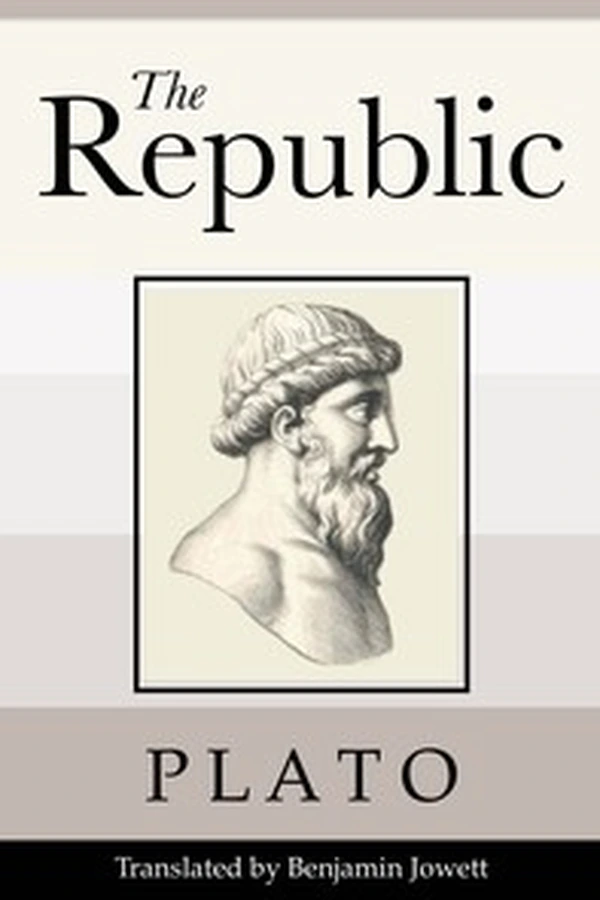
The Republic
📖 Click to Read the Opening Pages Online Preview
Book I: the opening at the Piraeus
I went down yesterday to the Piraeus with Glaucon the son of Ariston, that I might offer up my prayers to the goddess (Bendis, the Thracian Artemis.); and also because I wanted to see in what manner they would celebrate the festival, which was a new thing. I was delighted with the procession of the inhabitants; but that of the Thracians was equally, if not more, beautiful. When we had finished our prayers and viewed the spectacle, we turned in the direction of the city; and at that instant Polemarchus the son of Cephalus chanced to catch sight of us from a distance as we were starting on our way home, and told his servant to run and bid us wait for him. The servant took hold of me by the cloak behind, and said: Polemarchus desires you to wait.
I turned round, and asked him where his master was.
There he is, said the youth, coming after you, if you will only wait.
The preview stops at the door of Cephalus’ house. Download the complete edition to read on.
Download Full EPUBc. 375 BC
~212,000 words (estimated)
Approx. 11.8 hours
Standalone
A house in the Piraeus, one evening
Introduction + 10 Books
EPUB · AZW3 · KEPUB
0.59 MB (EPUB) · 0.90 MB (AZW3) · 0.64 MB (KEPUB)
Public domain in the United States
Project Gutenberg #1497
The Republic is a conversation that begins at a festival in the Piraeus and ends with a man describing what he saw among the dead. Socrates has come down to watch the rites of Bendis; Polemarchus detains him; by evening he is arguing with Thrasymachus about whether justice is anything more than the interest of the stronger. Glaucon restates the challenge with the ring of Gyges: why be just if you could be invisible and never punished? The answer takes ten books, a city built in speech, three waves of paradox, a cave, a divided line, five failing constitutions and a myth of judgment.
Jowett’s 1871 version is Victorian in cadence and still the most quotable English Republic: prisoners who take shadows for reality, the good as the cause of knowledge and truth, the philosopher dragged back into the cave and laughed at. This edition also carries his Introduction and Analysis, some forty thousand words, which follows the argument book by book and states its difficulties without flinching. Read the dialogue for the images and the essay for the map. See Wikipedia’s article on The Republic for its publication history. The text is available via Project Gutenberg #1497.
The Republic by Plato: Summary, Characters & Themes
This page is a summary and analysis of The Republic by Plato: the argument of each book, the images that carry it, the characters who resist Socrates, the Athens the dialogue answers to, and the free download links. The conversation is usually dated to about 375 BC, though the evening it stages belongs to the 420s, when Athens was losing the Peloponnesian War. Socrates narrates in the first person, and the frame is a descent, first to the port of the Piraeus for a foreign goddess’s festival, then into an argument about the city and the soul. Every position is put by someone who means it, and the objections are strong enough to have kept readers taking sides for twenty-four centuries.
The author is Plato, and the text of The Republic itself has a long critical history. Plato was an Athenian of the generation that watched the city lose the war to Sparta and then, under the Thirty, lose its self-respect; two of the Thirty were his relatives, and the execution of Socrates in 399 BC is the wound behind the book. What he writes is not a programme but an enquiry: why is the just life worth living when the unjust life pays better? To answer it he builds a city in speech, and the city turns out to be a model of the soul. The proposals that shock readers, philosophers on thrones, no private families among the guardians, poets shown the door, are argued for rather than asserted, and the argument is designed to be resisted.
The first four books set the problem and find an answer. Book I ends in confusion, with Socrates admitting that he has refuted others without knowing what justice is. Book II starts again with Glaucon’s ring of Gyges and Adeimantus’ catalogue of the rewards the unjust enjoy, and Socrates replies by founding a city: farmers, craftsmen, a market, then, when Glaucon objects that this is a city of pigs, an army and a class of guardians. Books III and IV educate those guardians, censor the stories told to them, and then read justice off the finished city. The city rests on a principle every Athenian knew from the workshop: one man, one craft. Justice is each part doing its own work, and in the soul it is reason ruling appetite with spirit as its ally.
Book V opens the three waves: women must train with the men, the guardians must hold wives and children in common, and cities will have no rest until philosophers are kings. Book VI defends the philosopher against the charge of uselessness with the parable of the ship, where the true pilot is called a stargazer while the sailors fight over the helm, and then climbs to the idea of the good, imaged as the sun that makes both sight and visible things, and to the divided line that ranks knowledge above opinion. The philosopher is defined by desire, by the love of the whole of wisdom, not by a diploma or a chair. Book VII tells the allegory of the cave and turns it into a curriculum: arithmetic, geometry, astronomy, harmonics and dialectic, with a compulsory return to the darkness for those who have seen the light.
Books VIII and IX descend from the best city to the worst: timocracy, oligarchy, democracy, tyranny, each generated from the one before and each matched to a type of man, until the tyrant is shown to be the most wretched of them, 729 times less happy than the king. Book X returns to poetry, which is three removes from truth and feeds the passions it should starve, and then, after an argument for the immortality of the soul, closes with the myth of Er, a soldier who returns from the dead to describe the judgment of souls and the choice of lives. The myth is Plato’s answer to the poets he has just expelled. Two related shelves on this site are Meditations and The Nicomachean Ethics. The text used here is the Project Gutenberg transcription (#1497), which is in the public domain in the United States.
Historical Context
Plato wrote in Athens in the first half of the fourth century BC, a generation after the city had lost the Peloponnesian War to Sparta. The defeat was followed by the rule of the Thirty, an oligarchy installed by the victors, and by a civil war that ended with a general amnesty. Two of the Thirty were relatives of Plato. In 399 BC the restored democracy tried and executed Socrates on charges of impiety and of corrupting the young. The Republic is written from inside that aftermath. Its question, whether the just man can be happy in an unjust city, is not academic: it is the question Socrates’ death put to his friends, and the city in speech is built partly as an answer to the Athens that killed him.
The dialogue is usually placed in Plato’s middle period, after the aporetic early dialogues and before the late metaphysics of the Timaeus and the Laws. Socrates is still the main speaker, but he now advances positive doctrines, the theory of forms, the immortality of the soul, the three parts of the soul, that the historical Socrates probably did not hold. The dramatic date is later than the setting of the Apology, since some of the speakers would be dead by 399. Ancient readers treated the Republic as the centre of Plato’s political teaching. Modern ones disagree about whether the city in speech is a serious proposal, a thought experiment, or a satire on Athenian ambition.
Benjamin Jowett, Master of Balliol College, Oxford, published his translation in 1871, with a long introductory essay and an analysis of each book. It was the first English Republic that read like English prose, and it made Plato a school text in Britain for a century. Jowett smooths the Greek, expands compressed phrases and keeps a Victorian dignity in the speeches; Thrasymachus sounds like a barrister, Socrates like a don. The version printed here is the Project Gutenberg text of that edition, including the Introduction and Analysis. Its renderings, the good as the cause of knowledge and truth, the city of pigs, the lie in the soul, have become the phrases English readers know.
Key Characters & Literary Archetypes
- Socrates: The narrator and the engine of the dialogue. He opens with a plain sentence about going down to the Piraeus and spends the rest of the book turning other people’s confident definitions into questions. In Book I he asks Cephalus whether returning a borrowed weapon to a madman is just, and reduces Thrasymachus to a blush. He claims no knowledge of his own and calls himself a midwife, yet in Books VI and VII he announces the largest doctrines in the book. His irony is never quite absent, even while he is describing the cave.
- Glaucon: Plato’s brother, young, athletic and impatient, and the one who refuses to let Socrates win cheaply. He divides goods into three classes, demands that justice be shown good in itself and not for its rewards, then tells the story of Gyges’ ring to make the case for injustice. It is Glaucon who looks at the first city and calls it a city of pigs, forcing the luxurious city and the guardians into existence. He is brave in argument, quick to laugh, and always ready to push a concession to its awkward end.
- Adeimantus: Glaucon’s elder brother, graver and slower, and the one who states the objections Plato most needs answered. In Book II he reads out the poets and the common opinion: the unjust prosper, the just are tortured, and appearance is what counts. In Book IV he asks whether the guardians will not be miserable, forbidden private property, gold and family while the rest of the city has them. In Book VI he wonders whether philosophers are not simply useless or vicious. Each time his objection is the reader’s, and Socrates answers it at length.
- Thrasymachus: A Sophist from Chalcedon who enters Book I like a wild beast and refuses to be polite. His thesis, that justice is the interest of the stronger, is the challenge the whole Republic exists to answer. He argues that rulers make laws for their own advantage, that the just man always comes off worse than the unjust, and that the shepherd cares for the sheep only to fleece them and, in the end, to eat them. He blushes when Socrates traps him and stays to listen for the rest of the evening.
- Polemarchus: Heir of Cephalus and host of the evening, who catches Socrates in the street with the joke that Socrates is either stronger than the company or must stay. His definition of justice, helping friends and harming enemies, is the common morality of the Greek city, and Socrates dismantles it by asking who is best at helping and harming: the doctor for the sick, the pilot at sea, the rich man with money. Polemarchus is good-humoured and gives way easily, and he speaks for a decent conventional Athens that Plato is about to put on trial.
- The guardian and the philosopher-king: The guardians are the city’s soldiers and rulers, chosen for natural aptitude, trained in music and gymnastic, tested in pleasures and fears and forbidden private wealth. They are told the noble lie that God mixed gold into the rulers, silver into the auxiliaries, iron and brass into the farmers. The best of them must become philosophers, and the best of the philosophers must be compelled to go back down into the cave and rule, which they do reluctantly, because they would rather stay in the light.
Core Literary Themes
- Justice as the health of the soul: Book IV answers Thrasymachus by analogy. The healthy body has its parts in order, and the healthy soul has reason ruling, spirit supporting reason, and appetite obeying. Justice is that order, injustice is civil war inside one person. Socrates says the unjust man is like a body at war with itself, and that no amount of external success can make such a life pleasant. The claim is tested in Book IX, where the tyrant, who seems to have everything, is shown to be the most divided and therefore the most miserable of men, a slave to a mob of desires.
- The city as the soul written large: Socrates proposes to look for justice in the city first because the letters are bigger. The city’s three classes, rulers, soldiers and producers, correspond to reason, spirit and appetite, and the virtues of the city are the same virtues as the individual’s. The analogy is the spine of the book, and its weak point: readers have objected ever since that a city is not a person and that the correspondence is asserted rather than proved. Plato knows the difficulty, calls the proof of the soul’s three parts a longer way, and postpones it to the end of Book IV and beyond.
- Knowledge, opinion and the invisible: Gyges’ ring asks whether anyone is just when unseen. The answer runs through Book V’s distinction between knowledge of what is and opinion about what is and is not, through the sun and the divided line in Book VI, to the cave in Book VII, where prisoners see shadows and call them real. What is at stake is not scepticism but direction: the visible world is not false, it is a copy, and the philosopher is the person who has turned around. The tyrant, by contrast, lives among images and calls them pleasures, and his life is a shadow of a shadow.
- Education as the turning of the soul: Book VII denies that education puts knowledge into a soul, as if sight could be put into blind eyes. The soul already has the power of learning; what it needs is to be turned from becoming to being, from the shadows to the light. The curriculum is built for that turn: arithmetic draws the mind to number, geometry to the eternal, astronomy to the invisible order behind the stars, harmonics to the ratios behind sound, and dialectic to the good itself. Those who make the turn are then compelled to go back down to the prisoners, because a city is not saved by men who stay in the sun.
- The quarrel with poetry: Plato’s city censors the poets in Books II and III, expels them in Book X, and yet the book is itself full of myth. The charge in Book X is that imitation is three removes from truth, that Homer knows nothing of the arts he describes, and that tragedy feeds grief and anger when it should starve them, so that the spectator’s pleasure is paid for by a worse private life. The cave, the ring, the sun and the spindle of Necessity are all images. Plato’s quarrel with poetry is a quarrel with his own method, and the Republic never quite settles it.
Why Download Our Custom E-Reader Edition of The Republic?
The text is the Project Gutenberg transcription of Jowett’s 1871 translation, unabridged, with the Introduction and Analysis and the ten books in order. Nothing is modernised, cut or silently rewritten. The pagination of the print volume is gone, but every book begins where Jowett begins it. The Introduction and Analysis alone is a short book, and it is printed here as Jowett wrote it, with its own order and its own arguments.
The EPUB, AZW3 and KEPUB are built from that text with a linked table of contents, book-level chapter marks and clean paragraphing, so the ten books are navigable on a phone, a Kindle or a Kobo. Typography is set for long reading: measured line length, generous leading, and no decoration competing with the argument. Jowett’s introductory essay sits with the text rather than in a separate file, and no page in this volume is a scanned image.
The volume is free and DRM-free. There is no account to create, no sample to unlock and no expiry date. If the dialogue is on a syllabus, a whole class can download the same file, and a reader can keep the book after the course is over.
- Project Gutenberg transcription, via Project Gutenberg #1497 — the complete text, unabridged, with the chapter headings the author set.
- Jowett’s Introduction and Analysis The 1871 essay and the book-by-book analysis are included in full, not excerpted, and they come first in the file, as they did in Jowett’s own volume.
- Book-level navigation Each of the ten books is a separate stop in the EPUB, AZW3 and KEPUB tables of contents, so a reader can go straight to the cave or to the myth of Er.
- No DRM, no account Download the file and keep it; nothing phones home and nothing expires. All 212,446 words of the Jowett volume are here, from the first line at the Piraeus to the last sentence of the myth of Er.
- Meditations — free EPUB, AZW3 & KEPUB
- The Nicomachean Ethics — free EPUB, AZW3 & KEPUB
- The Prince — free EPUB, AZW3 & KEPUB
Chapter summaries
The Republic is ten books framed by Jowett’s long introductory essay. The summaries below follow the order of the volume and mark the argument’s turns, from the failure of Book I to the myth that closes Book X.
- Jowett’s Introduction and Analysis: The 1871 volume opens with a long essay, some forty thousand words, that sets the scene at the Piraeus, distinguishes Glaucon from Adeimantus, dates the dialogue and states the central difficulty: the city in speech is a pattern laid up in heaven, not a programme. Then follows a book-by-book analysis that summarises each argument, quotes the key sentences and names the gaps, including the puzzles about the abolition of the family and the relation of the Republic to the Laws. It is a Victorian editor talking a reader through a Greek text, and it remains the best map of the argument in English.
- Book I: Cephalus, Polemarchus, Thrasymachus: Socrates goes down to the Piraeus for the festival of Bendis and is detained by Polemarchus. In Cephalus’ house the old man defines justice as telling the truth and paying debts, and Socrates answers with the borrowed weapon and the mad friend. Polemarchus offers helping friends and harming enemies, and is refuted by the doctor and the pilot. Thrasymachus bursts in with justice as the interest of the stronger, and it ends in perplexity: the refutations leave the question open.
- Book II: the ring of Gyges and the city of pigs: Glaucon divides goods into three kinds and demands that justice be praised for itself, then tells of the shepherd who found a ring in a hollow bronze horse and, made invisible, seduced the queen and killed the king. Adeimantus adds that the poets promise rewards to the unjust and torture to the just. Socrates answers by building a city from need: farmers, builders, weavers, a market. Glaucon calls it a city of pigs, so luxuries, war and guardians arrive. The guardians must be trained like good dogs, gentle to friends and fierce to enemies.
- Book III: censoring the poets and the noble lie: The education of the guardians turns into a censorship. Stories must not show gods quarrelling, or heroes weeping, or the underworld as a place to fear; the lie in the soul is hated, though rulers may lie for the city’s good. Style follows content, and the guardians may imitate only good men. Gymnastic and medicine come next, with the judge and the doctor limited to curable cases, and the rulers are selected and tested. They are told the myth of the metals: gold, silver, brass, and the warning that a golden child may be born of silver parents.
- Book IV: the four virtues and the just soul: Adeimantus objects that the guardians will be miserable, and Socrates answers that the city’s happiness is not the happiness of one class. The finished city is wise, brave, temperate and just: wisdom in its rulers, courage in its soldiers, temperance in the agreement of all, and justice in each part doing its own work. The same division is then found in the soul, reason, spirit and appetite, and justice becomes the health of the soul while injustice is its disease. The proof of the soul’s parts is postponed as a longer way.
- Book V: the three waves: Three paradoxes break over the argument. First, women must be guardians too, since nature gives them the same capacities, and they must train naked in the palaestra. Second, the guardians must have wives and children in common, with the best matched to the best and the inferior offspring quietly set aside. Third, and greatest, cities will have no rest until philosophers are kings or kings philosophers. Socrates defines the philosopher as the lover of all wisdom and all truth, distinguishes knowledge from opinion, and is told that the third wave may drown him.
- Book VI: the ship, the sun and the divided line: Adeimantus asks why philosophers are useless, and Socrates answers with the ship: the true pilot is called a stargazer while the sailors quarrel over the helm. The philosophic nature is rare and easily corrupted, and the multitude, like a wild beast, trains its keepers to its own tastes. The guardians must nonetheless study the good, which Socrates approaches through the sun, the child of the good, which gives sight and visible things, and through the divided line, which cuts reality into images, things, mathematics and forms.
- Book VII: the cave and the curriculum: Prisoners chained in an underground den take shadows for reality until one is released, turned around, dragged up a steep and rugged ascent and forced into the sun. Blinded at first, he sees the good last of all, is seen only with an effort, and when he returns to tell the others he is laughed at and would be killed. Education is not putting sight into blind eyes but turning the whole soul. The curriculum follows: arithmetic, geometry, astronomy, harmonics, dialectic, with the best compelled to return to the cave at fifty.
- Book VIII: timocracy, oligarchy, democracy, tyranny: The just city decays, and Socrates traces four worse constitutions. Timocracy, rule by honour, grows from a miscalculated breeding number and produces the proud, unmusical man. Oligarchy, rule by property, splits the city into rich and poor and breeds the miser with his drone desires. Democracy, born of too much liberty, hands the city to the poor and makes every life equally possible, until freedom passes into licence. Tyranny rises from democracy’s excess as the champion of the people, and becomes the worst of the four.
- Book IX: the tyrant’s soul: The tyrant is examined from the inside. Lawless desires that other men only dream of are awake in him all day, and love becomes a winged drone ruling the soul. He is the most enslaved man, surrounded by fears, unable to travel, hated by the city he rules. Socrates then ranks the three lives, the philosophic, the honour-loving and the money-making, and finds the first the truest and most pleasant. The tyrant is three times removed from the oligarch and 729 times less happy than the king.
- Book X: poetry and the myth of Er: Poetry is judged and expelled. Imitation is three removes from truth: God makes the one bed, the carpenter a bed, the painter a copy of a copy, and Homer knows nothing of the arts he describes. Tragedy feeds grief and anger, and the best of us enjoy in the theatre what we would be ashamed to feel at home. After an argument for the soul’s immortality, the book ends with Er, a soldier killed in battle who saw the judgment of souls, the spindle of Necessity, the choice of lives, and the river of Forgetfulness.
The Republic: Frequently Asked Questions
What is The Republic about?
Who translated this edition?
How long does it take to read?
What happens in the allegory of the cave?
What is the divided line?
What are the three waves?
Why does Plato banish the poets?
Is this the complete text?
Part of: Philosophy · Classic Fiction