Carmilla by Joseph Sheridan Le Fanu: Free EPUB, AZW3 & KEPUB Download
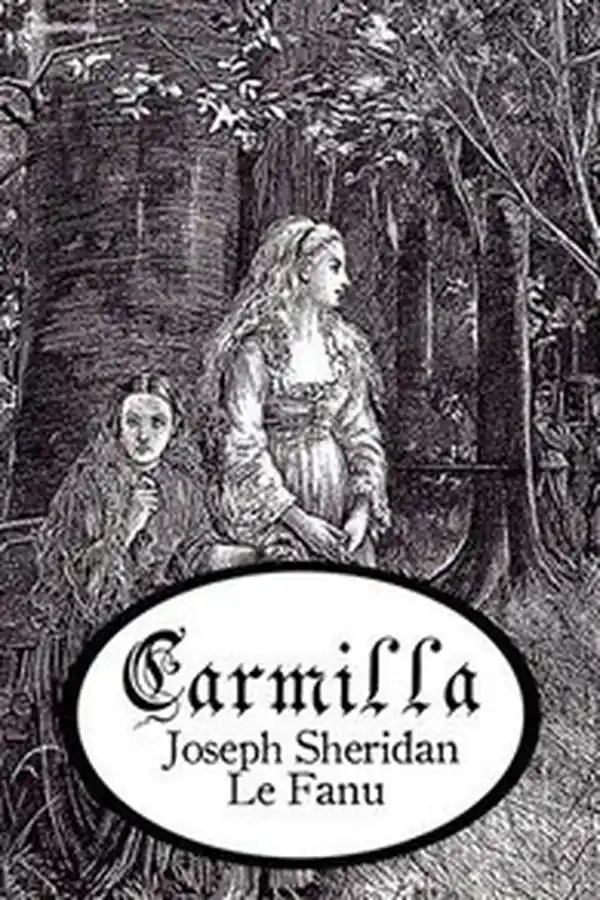
Carmilla
📖 Click to Read the Opening Pages Online Preview
Read the opening pages
In Styria, we, though by no means magnificent people, inhabit a castle, or schloss. A small income, in that part of the world, goes a great way. Eight or nine hundred a year does wonders. Scantily enough ours would have answered among wealthy people at home. My father is English, and I bear an English name, although I never saw England. But here, in this lonely and primitive place, where everything is so marvelously cheap, I really don’t see how ever so much more money would at all materially add to our comforts, or even luxuries.
My father was in the Austrian service, and retired upon a pension and his patrimony, and purchased this feudal residence, and the small estate on which it stands, a bargain.
Nothing can be more picturesque or solitary. It stands on a slight eminence in a forest. The road, very old and narrow, passes in front of its drawbridge, never raised in my time, and its moat, stocked with perch, and sailed over by many swans, and floating on its surface white fleets of water lilies.
The gates of the schloss are only the first enclosure. Download the EPUB to follow Laura as far as the Karnstein chapel.
Download Full EPUB1872
~28,000 words (estimated)
Approx. 1.6 hours
Standalone
Styria, Austrian Empire
17 sections in 12 groups
EPUB · AZW3 · KEPUB
0.16 MB (EPUB) · 0.22 MB (AZW3) · 0.17 MB (KEPUB)
Public domain in the United States
Project Gutenberg #10007
Carmilla is a short novel about a girl who is not well, a guest who is too kind, and a household that slowly stops being able to explain itself. Laura lives with her father in a lonely castle in Styria, with two governesses and a lot of empty country. One night a carriage overturns at the bridge, and the elegant mother inside asks the family to keep her daughter for three months. The daughter is beautiful, affectionate and evasive. She will not give her name, she sleeps half the day, and she is frightened of funerals. By the time Laura understands what has been living in her room, everyone else already knows.
The novel appeared in 1872 and it is still the best introduction to the vampire in English prose. There is no castle in the Carpathians and no count: the monster is a young woman who is invited in, and the horror comes from the ordinary rules of hospitality being followed to the letter. Laura narrates, and much of the tension comes from what she notices and refuses to name. The book is also a document, opening with a doctor’s case note and closing with an official report. Twenty-eight thousand words, sixteen short chapters, and one ruined chapel where a grave is opened before witnesses and the case is settled with a stake. See Wikipedia’s article on Carmilla for its publication history. The text is available via Project Gutenberg #10007.
Carmilla by Joseph Sheridan Le Fanu: Summary, Characters & Themes
This page is a summary and analysis of Carmilla by Joseph Sheridan Le Fanu, with a plot overview, a historical note, the characters, the themes, grouped chapter summaries and free EPUB, AZW3 and KEPUB downloads. The book is a prologue and sixteen chapters, about 28,000 words, narrated in the first person by Laura, the daughter of a retired English officer who has settled in a castle in Styria. A note at the front explains that her manuscript reached a doctor as part of his case papers, and that the woman who wrote it has since died. Laura then speaks for herself. The subject is a guest, and the difficulty of knowing what a guest is when the guest is charming, grateful, and entirely at home.
Joseph Sheridan Le Fanu had spent decades writing ghost stories before this one, and a case file used as a frame was already a familiar device in his hands. The other titles printed at the back of this edition, Uncle Silas, The House by the Churchyard and In a Glass Darkly among them, show the company the story keeps: locked rooms, legal language, and narrators who are careful about what they can prove. The doctor’s note is both a joke and a promise. It converts Laura’s memoir into evidence, and it quietly tells the reader that the person who lived through these events is no longer available for questions. What follows is a document, not a confession, and the difference matters once the supernatural arrives.
The plot works through two households. In Laura’s, the guest arrives after an accident at the bridge, and her mother extracts a promise of three months’ hospitality before she will even give her name. In General Spielsdorf’s, which we reach through a letter and then through the General’s own account, the same illness has already killed a girl called Bertha Rheinfeldt. Laura’s chapters are domestic and slow: walks, portraits, a mountebank’s magic lantern, two governesses arguing about ghosts. The General’s chapters are a report, delivered on the road to a ruin. The book’s power sits in the gap between them, because everything Laura cannot see has already happened once, in another house, to another family, and the reader watches it happen again with the names changed.
The novel is the direct ancestor of the vampire fiction that followed, though it is also something more awkward than a template: a ghost story with a diagnosis. What Le Fanu adds to the folklore is tenderness. His monster is charming, and the narrator loves her long before she is afraid of her, which is why the book still reads as a love story with a medical report attached. The same haunted-house machinery, a household quietly taken over by a stranger, drives The Turn of the Screw and The Phantom of the Opera, and the vampire line proper runs on to Dracula. Read in that sequence, Carmilla looks like the small, careful original that the later books enlarged.
The text here is the Project Gutenberg transcription of the 1872 book, Project Gutenberg #10007, including the prologue, the sixteen chapter headings and the closing report that Laura’s father keeps among his papers. Nothing has been cut, modernised or annotated, and the punctuation is the edition’s own, which means the long sentences stay long and the two governesses keep their exclamation marks. The EPUB, AZW3 and KEPUB files are generated from that same source, so the wording is identical in all three. If you want to check a passage against the original, the source is one click away, and the chapter marks in the EPUB follow the book’s own divisions rather than a device’s rough estimate of where a page should end.
Historical Context
The schloss stands in Styria, in the Austrian Empire, in a landscape of forest, a moat and a drawbridge, with a ruined village three miles to the west and the tombs of the Karnsteins in its chapel. Laura’s father is an English officer drawing an Austrian pension, which places the household at the edge of two countries and two loyalties. The ruined village is the book’s model of history: a noble family extinct, a church without a congregation, a tomb whose site has been forgotten by everyone except the villagers. When General Spielsdorf says that the Inquisition will be held according to law, the sentence is not a joke about medieval superstition. The old procedures are still on the books, and the horror is that they work.
Vampire lore reached Le Fanu through eighteenth-century reports from the Habsburg frontier, where officials investigated bodies that would not decay, and through the antiquarian treatises that Baron Vordenburg carries in his pocket. The novel uses the older spelling, oupire, and it is careful with the folklore: a suicide begins the chain, the victims of a vampire rise in turn, and the creature must be found in its grave and destroyed. The peasants in the book know the rules before the gentry do. That inversion, with servants and a woodman holding the practical knowledge while the doctors argue about symptoms, is one of the story’s quiet jokes, and it is also its method: the truth is common property, and the educated cannot hear it.
1872 was a good year for a story about a guest who cannot be refused. The ghost story was a serious commercial form in Britain and Ireland, and the vampire had already moved from village reports into fiction and the theatre. Le Fanu’s household is a small closed economy: a father, a daughter, two governesses, servants who sleep in the passages, and a doctor who arrives by carriage. The horror works because the house is believable, down to the locks, the keys, the nightdresses and the cold in the corridor. Nothing about the setting is exotic. The supernatural is admitted through the smallest possible door, and the room beyond it is furnished exactly like the one you are standing in.
Key Characters & Literary Archetypes
- Laura: Laura is nineteen when the story happens and six when it begins, and the book opens with a memory of a night she has never explained. She is lonely, dutiful and observant, and her voice is the reason the novel works: she reports her own fear with the same care she gives to the furniture. Her mother died when she was an infant, and the household’s two governesses are kind but not equal to what arrives. Laura is not brave. She is patient, and patience is exactly what the vampire needs from her.
- Carmilla: The guest has three names and gives none of them. She is beautiful, languid and demonstrative, sleeps until afternoon, refuses to say where she comes from, and speaks of love in the same breath as death. Her fits, her charm against the oupire, her exact resemblance to a portrait dated 1698 and her fury at being watched are all clues the narrator notices without understanding. She is the book’s villain and its most sympathetic character, and the story never really chooses between those two readings, which is why she has outlasted almost everyone else in Victorian horror.
- General Spielsdorf: A proud, formal soldier and an old friend of Laura’s father, the General arrives ten months after his ward’s death and is visibly hollowed out by it. He has spent the interval reading and asking questions, and he comes to Styria to open a grave. His account of the masquerade at Count Carlsfeld’s, and of the night he watched beside Bertha’s bed with a sword in his hand, is the book’s second narrative and its coldest. He is the one who says he means to unearth some of those fine people, and he is not exaggerating.
- Bertha Rheinfeldt: Bertha never appears alive. She is the General’s ward, and by the time Laura hears of her she has been dead for weeks, but her case is described in detail: the languor, the dreams, the small punctures, the decline that the doctors could not name. Her symptoms are Laura’s symptoms, and the reader recognises them before Laura does. She exists to show that the story has already run once, in another house, with the same guest under a different name, and that the second telling is not going to end any better than the first.
- Doctor Spielsberg: The local physician is a grave little man with white hair and spectacles, called in when Laura’s strength fails, and he finds the small blue spot below her throat that the household has missed. He is professional, unexcitable and entirely out of his depth. His instructions are practical, that Laura is not to be left alone for a moment. Le Fanu uses him to make a point about medicine: a doctor can see the wound and still not name the cause, and the household believes him because he writes it down.
- Baron Vordenburg: Vordenburg is the expert who arrives at the end: tall, stooping, in black, with gold spectacles, a broad-leafed hat and black gloves much too wide for his hands. He carries a plan of the chapel and a dirty little book, and he identifies the grave, explains the anagram, and supplies the family history that makes the ending possible. His calm is more disturbing than the General’s rage, because he has seen the case before and has a procedure for it. The novel’s final authority is a scholar with a bibliography, and he is entirely at ease.
Core Literary Themes
- Hospitality and the guest: The book is built on the oldest rule of civilised life: a guest is protected by the house, and the house is protected by the guest’s good behaviour. Carmilla is admitted by an accident, kept by a promise, and fed by the household she is destroying. Le Fanu turns the mother’s request for three months’ hospitality into a contract, and the horror is contractual, because nobody breaks the rules and the rules are still enough to kill a girl. The vampire does not break in. She is invited, and then she stays.
- Illness without a name: Laura’s decline is described with clinical patience: appetite, sleep, colour, the small blue spot, the doctors who disagree, the sealed letter from Gratz. The story understands that a diagnosis is also a classification, and that the wrong one can be fatal. Spielsberg’s medicine sees a wound and calls it anaemia. The reader has the folklore and knows better, which produces a particular kind of dread: the fear of being treated by people who are competent and wrong, and who will not be contradicted by a nineteen-year-old girl.
- Desire and dread: The most quoted sentences in the book are love speeches. Carmilla’s affection is physical, possessive and unembarrassed, and Laura’s response is excitement as much as fear. Le Fanu keeps both registers inside the same paragraph, so that a caress and a threat can share a sentence without either one cancelling the other. Victorian readers called the book a tale of terror; later readers have found a love story with a body count. The novel does not choose between those readings, and the refusal is a large part of why it survives.
- Inheritance and extinction: The Karnstein line is extinct, the village is ruined, and the tomb has been deliberately lost; the family survives as a portrait, a name and a claim on Laura’s mother. Inheritance in this book is not property but appetite. Laura is maternally descended from the Karnsteins and is therefore both the vampire’s natural prey and her kin, which is the story’s coldest idea: the monster is a relative. The stake at the end is a family matter, conducted by men who have just realised how closely the household is related to the thing in the coffin.
- Evidence and paperwork: A prologue about a case file, a letter that arrives late, a sealed report from Gratz, an Imperial Commission, and a baron with a library: the supernatural is always accompanied by documents. Le Fanu’s vampires are proved the way crimes are proved, by testimony and procedure, and the horror sits in the gap between what the papers say and what the witnesses saw. The novel’s last word is not a scream but a report, and the report is kept in a drawer by a man who was there.
Why Download Our Custom E-Reader Edition of Carmilla?
Carmilla is short enough to read in a single evening and strange enough to keep for years. The prose is plain and the chapters are brief, but the atmosphere is dense: corridors, candlelight, a locked door, a guest who is late for breakfast and affectionate when she should not be. Readers who know the vampire only from later films will find the original much quieter and much more unsettling, because Le Fanu withholds the monster and gives you the symptoms instead. By the time the grave is opened, you have been living with the diagnosis for a hundred pages.
The text here is the complete Project Gutenberg transcription of the 1872 book, with the prologue, all sixteen chapters and the closing report. Nothing is abridged, no chapter has been merged, and the punctuation follows the source. The three formats are generated from the same file, so the wording is identical whichever you choose, and the EPUB has real chapter marks for navigation rather than one long scroll. The book is small, which means the download is small too, and it will open instantly on an old e-reader as well as a new phone.
The story has been adapted for stage, film and television, usually by keeping the seductress and dropping the household. That is a loss. What makes the book endure is the ordinary life around the horror: two governesses comparing notes about ghosts, a father who explains everything as sleepwalking, a mountebank selling amulets at a fair, a doctor who writes a prescription for a vampire bite. Read the original and you get the terror and the domestic comedy at once, which turn out to be the same thing seen from different rooms of the same house.
- Project Gutenberg transcription, via Project Gutenberg #10007 — the complete 1872 text, prologue and all.
- Unabridged, sixteen chapters No cuts and no merged sections; the chapter headings are the book’s own.
- No DRM, no registration Download the EPUB, AZW3 or KEPUB directly and copy it to any device you own.
- Real chapter marks Every chapter starts on its own page, so the table of contents works on phone and e-reader alike.
- The Turn of the Screw — free EPUB, AZW3 & KEPUB
- The Phantom of the Opera — free EPUB, AZW3 & KEPUB
- Dracula — free EPUB, AZW3 & KEPUB
Chapter summaries
The book is a prologue and sixteen short chapters. The twelve groups below follow its own headings; the last groups carry the execution and the explanation, and the first two set up the house.
- PROLOGUE · I. An Early Fright: A note from Doctor Hesselius’s papers explains that what follows is a case, and that its author is dead. Laura then takes over and describes the castle: the moat, the swans, the drawbridge, the chapel, her father’s pension, the two governesses. She remembers being six years old and waking to find a beautiful young woman kneeling beside her bed. The household finds two small punctures on her chest, and the housekeeper feels the hollow in the sheets, which is still warm.
- II. A Guest: General Spielsdorf’s letter arrives: his ward Bertha Rheinfeldt is dead, and he blames a fiend who abused his hospitality. That evening a carriage overturns at the bridge in front of the schloss, and a lady in black velvet asks the family to keep her daughter for three months. She will not give her name, will not say where they are going, and asks that no questions be asked. Her companion, a dark woman called Matska, waits in the carriage. Laura’s father agrees, because the request is made in the language of a promise.
- III–IV. We Compare Notes · Her Habits: The guest recovers and begins to talk. She remembers a night twelve years earlier when she climbed into a child’s bed and embraced her, and Laura remembers the same night from the other side. Carmilla will not give her family name and locks her door at night. On a walk they meet a peasant funeral, and she stops her ears and says she hates funerals. At the fair a hunchback with a magic lantern examines her teeth, remarks on the sharpness of one, and sells her an amulet against the oupire.
- V. A Wonderful Likeness: A picture cleaner arrives from Gratz to restore the family portraits, and one of them stops the household: a young woman in an old dress, painted in 1698, with the name Mircalla, Countess Karnstein. The face is Carmilla’s, down to the small mole on her throat. Carmilla says she is descended from the Karnsteins through her mother, and then, in the moonlight, she becomes strangely tender and unsteady, and tells Laura that she lives in her and that Laura would die for her.
- VI–VII. A Very Strange Agony · Descending: Carmilla speaks of a ball where she was nearly murdered in her bed, and of love that requires sacrifice and blood. Laura begins to lock her door, as her guest does. That night she dreams of a great black cat, feels two needles enter her breast, and wakes to see a female figure at the foot of the bed who passes through the locked door. Her strength fails over three weeks. Then she sees Carmilla standing in her room in a white nightdress soaked in blood, and the room is empty when the household searches it.
- VIII–IX. Search · The Doctor: Carmilla is gone from a room locked on the inside, and Laura’s father searches the house. She reappears at her dressing table with an explanation that satisfies him: he has decided that Laura walks in her sleep. A doctor is called, finds a small blue spot on Laura’s throat, and forbids that she be left alone. General Spielsdorf writes again, and the two men plan a drive to the ruins of Karnstein, where the General intends to dig.
- X. Bereaved: On the road the General joins them, older by ten months and hollowed out by grief. He has been reading about the dead who return, and he has come to Styria to open a grave. He tells Laura’s father what happened at Count Carlsfeld’s, where a masked countess begged him to take charge of her daughter for three months, and where the daughter was lost at a ball and found again at the gate. He says he means to unearth some of those fine people, and he is not speaking figuratively.
- XI–XII. The Story · A Petition: The General tells the story properly. At the Carlsfeld masquerade a pale gentleman in black watched the Countess and her daughter Millarca; the Countess, masked, would not unmask or give her name, and pressed her request with a charm the General could not resist. Bertha was delighted with her new friend. At the next ball Millarca vanished, and the household searched the grounds until a servant reported a young lady in distress at the gate. The General wonders, too late, what he was actually persuaded to do.
- XIII. The Woodman: Bertha’s illness is described, and it is Laura’s illness: the languor, the dreams, the creature at the foot of the bed, the two punctures, the decline that no doctor can name. Millarca was seen walking in the early morning; her door was locked from the inside. At the ruined chapel the woodman tells the General what the village remembers: a Moravian nobleman who broke into a vampire’s tomb, and a Countess Mircalla whose grave was removed and whose site was forgotten, though the chapel was never quite empty.
- XIV. The Meeting: The General keeps watch beside Bertha’s bed and sees a black shape spread itself over her throat; his sword finds nothing, and Bertha dies before morning. In the chapel Carmilla appears, and the General recognises her at once: Millarca, the guest he took in, who is also Mircalla, Countess Karnstein. He strikes at her with the woodman’s hatchet, and she catches his wrist in a grasp he cannot break and is gone. Laura is sent out of the ruins, and nobody explains what has happened.
- XV. Ordeal and Execution: Baron Vordenburg arrives in the chapel like a figure from one of his own books: tall, stooping, black-coated, gold spectacles, a broad-leafed hat, black gloves too wide for his hands, a plan of the building and a dirty little volume. His measurements uncover the marble tablet of Mircalla, and the General sends for the commissioner. The next day the grave is opened before witnesses: a hundred and fifty years after her funeral the features are warm, the limbs flexible, and the leaden coffin floats with blood. The stake, the head, the fire, the river.
- XVI. Conclusion: Vordenburg explains the rules over the following weeks: vampires look healthy rather than pale, they multiply by a ghostly law, a suicide begins the chain, and the name must be an anagram, which is why the same woman has been Carmilla and Millarca and Mircalla. His own ancestor loved her and faked the removal of her tomb. Then Laura closes the case: a year away, a spring in Italy, and an image that returns with two faces, the playful girl at the door and the thing in the ruined church.
Carmilla: Frequently Asked Questions
Is Carmilla a vampire story?
Who is Carmilla, and why does she have three names?
Did Carmilla influence Dracula?
How long does it take to read?
Is it suitable for younger readers?
What is an oupire?
Why does the book begin with a doctor’s note?
Where can I read the complete text online?
Part of: Gothic & Horror · Classic Fiction