Cranford by Elizabeth Gaskell: Free EPUB, AZW3 & KEPUB Download
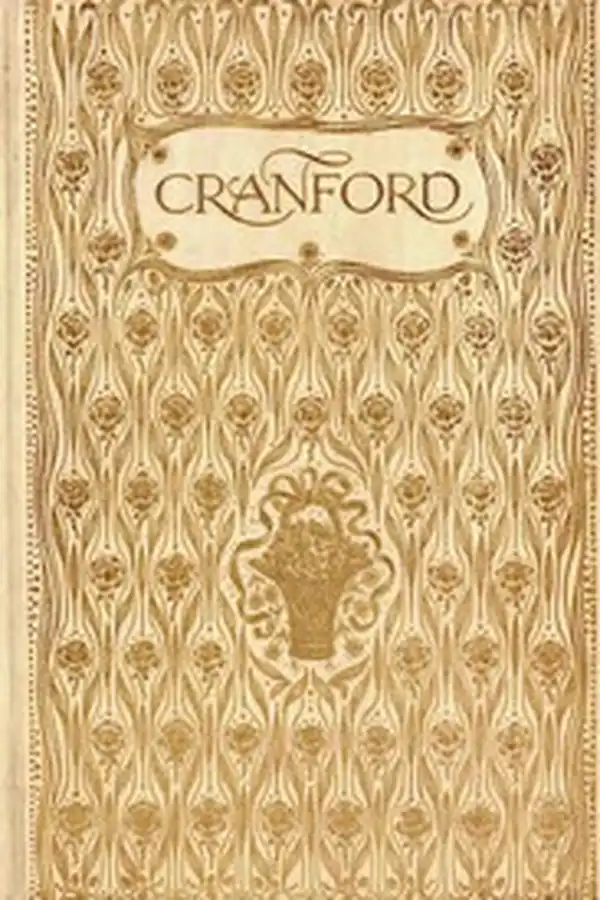
Cranford
📖 Click to Read the Opening Pages Online Preview
Read the opening of Cranford
It was impossible to live a month at Cranford and not know the daily habits of each resident; and long before my visit was ended I knew much concerning the whole Brown trio. There was nothing new to be discovered respecting their poverty; for they had spoken simply and openly about that from the very first. They made no mystery of the necessity for their being economical. All that remained to be discovered was the Captain’s infinite kindness of heart, and the various modes in which, unconsciously to himself, he manifested it. Some little anecdotes were talked about for some time after they occurred. As we did not read much, and as all the ladies were pretty well suited with servants, there was a dearth of subjects for conversation. We therefore discussed the circumstance of the Captain taking a poor old woman’s dinner out of her hands one very slippery Sunday. He had met her returning from the bakehouse as he came from church, and noticed her precarious footing; and, with the grave dignity with which he did everything, he relieved her of her burden, and steered along the street by her side, carrying her baked mutton and potatoes safely home. This was thought very eccentric; and it was rather expected that he would pay a round of calls, on the Monday morning, to explain and apologise to the Cranford sense of propriety: but he did no such thing: and then it was decided that he was ashamed, and was keeping out of sight. In a kindly pity for him, we began to say, “After all, the Sunday morning’s occurrence showed great goodness of heart,” and it was resolved that he should be comforted on his next appearance amongst us; but, lo! he came down upon us, untouched by any sense of shame, speaking loud and bass as ever, his head thrown back, his wig as jaunty and well-curled as usual, and we were obliged to conclude he had forgotten all about Sunday.
Miss Pole and Miss Jessie Brown had set up a kind of intimacy on the strength of the Shetland wool and the new knitting stitches; so it happened that when I went to visit Miss Pole I saw more of the Browns than I had done while staying with Miss Jenkyns, who had never got over what she called Captain Brown’s disparaging remarks upon Dr Johnson as a writer of light and agreeable fiction. I found that Miss Brown was seriously ill of some lingering, incurable complaint, the pain occasioned by which gave the uneasy expression to her face that I had taken for unmitigated crossness. Cross, too, she was at times, when the nervous irritability occasioned by her disease became past endurance. Miss Jessie bore with her at these times, even more patiently than she did with the bitter self-upbraidings by which they were invariably succeeded. Miss Brown used to accuse herself, not merely of hasty and irritable temper, but also of being the cause why her father and sister were obliged to pinch, in order to allow her the small luxuries which were necessaries in her condition. She would so fain have made sacrifices for them, and have lightened their cares, that the original generosity of her disposition added acerbity to her temper. All this was borne by Miss Jessie and her father with more than placidity—with absolute tenderness. I forgave Miss Jessie her singing out of tune, and her juvenility of dress, when I saw her at home. I came to perceive that Captain Brown’s dark Brutus wig and padded coat (alas! too often threadbare) were remnants of the military smartness of his youth, which he now wore unconsciously. He was a man of infinite resources, gained in his barrack experience. As he confessed, no one could black his boots to please him except himself; but, indeed, he was not above saving the little maid-servant’s labours in every way—knowing, most likely, that his daughter’s illness made the place a hard one.
He endeavoured to make peace with Miss Jenkyns soon after the memorable dispute I have named, by a present of a wooden fire-shovel (his own making), having heard her say how much the grating of an iron one annoyed her. She received the present with cool gratitude, and thanked him formally. When he was gone, she bade me put it away in the lumber-room; feeling, probably, that no present from a man who preferred Mr Boz to Dr Johnson could be less jarring than an iron fire-shovel.
Such was the state of things when I left Cranford and went to Drumble. I had, however, several correspondents, who kept me au fait as to the proceedings of the dear little town.
Download Full EPUB1853
~71,000 words (estimated)
Approx. 3.9 hours
Standalone novel
Cranford, a small town of ladies in Cheshire, in the 1830s and 1840s
16 chapters
EPUB · AZW3 · KEPUB
8.35 MB (EPUB) · 8.43 MB (AZW3) · 8.37 MB (KEPUB)
Public domain in the United States
Project Gutenberg #394
Cranford is Elizabeth Gaskell’s portrait of a small Cheshire town in which the houses are held by women. Mary Smith, who comes over from the manufacturing town of Drumble to stay with friends, is our guide, and she is too well-bred to say everything she notices. The ladies of Cranford have agreed among themselves to be genteel and poor at the same time: they keep early hours, they give wafer bread-and-butter at parties, they return calls within three days, and they call this elegant economy. Into their society comes Captain Brown, who talks about his poverty in the street and is run down by a train while reading the Pickwick Papers.
What plot the book has is domestic: a bundle of old letters, a returned brother, a bank that stops payment, a shop licensed to sell tea, and two marriages that the town must be persuaded to forgive. Gaskell writes it as sixteen papers of linked episodes, full of small catastrophes and long memories, and its comedy is edged with real grief. What survives the crash is not money but the habit of looking after one another. See Wikipedia’s article on Cranford for its publication history. The text is available via Project Gutenberg #394.
Cranford by Elizabeth Gaskell: Summary, Characters & Themes
This summary and analysis of Cranford follows the town through its sixteen chapters, from the arrival of Captain Brown to the return of Miss Matty’s brother from India. Gaskell does not tell a story so much as let one accumulate. The narrator is Mary Smith, the daughter of a Drumble man of business, who visits Cranford for weeks at a time and writes down what she sees with a discretion that is itself part of the comedy: gossip is repeated, scandal is hinted at, and the reader is often left to supply the sentence that a lady of Cranford would never finish. There are deaths in it, a bank failure, a long-lost brother and a great deal of tea, but the book’s real subject is the ordinary management of a small society by the people inside it.
The author is Elizabeth Gaskell, who was born in 1810 and brought up at Knutsford in Cheshire, the town most often named as the model for Cranford, though she always denied that its portrait was literal. She married William Gaskell, a Unitarian minister in Manchester, and wrote her first novel, Mary Barton, in 1848 out of the poverty she saw in that city – a book that made her famous and, to some readers, suspect. Cranford came from a different mood entirely. Its papers appeared in Dickens’s weekly Household Words between 1851 and 1853, and the two sides of her talent, the reformer’s anger and the comic observer of small manners, are usually kept apart by readers who prefer one or the other. She wrote both all her life.
Cranford was not planned as a novel. The first paper, Our Society, appeared in Household Words in December 1851, and further papers followed at intervals whenever Dickens wanted one, which is why the book has so little forward plot and so much return: characters are introduced because they are funny, and are remembered later because they are loved. When the papers were collected in 1853, Gaskell had to make them look like a whole, and the result is a book of episodes with a shape underneath it. The town itself is deliberately old-fashioned, with the railway running past it and the commercial panic of 1825 already behind it, and its ladies measure time by the visits they pay rather than by the news.
The comedy is built on a paradox the ladies themselves never state: they are poor and they will not be common. Miss Matty burns one candle at a time and keeps the other the same length so that a visitor will believe she burns two; the Honourable Mrs Jamieson gives wafer bread-and-butter and calls it elegance; Miss Pole borrows a hat to hang in her lobby so that burglars will think a man lives in the house. Under the jokes there is a steady attention to what poverty does to people brought up to hide it, and the last third of the book, in which a bank failure leaves a gentlewoman with five shillings a week, is written without a trace of condescension.
This page uses the plain text of the 1853 volume held at Project Gutenberg, with the sixteen chapters and the spellings of that printing, and the summaries below follow the order of the book. Readers who want the same anatomy of a small town at greater length can try Middlemarch, where George Eliot gives a provincial town its whole public life, or Emma, in which a clever young woman governs a village by arranging other people’s marriages and is corrected for it. Cranford is shorter and gentler than either, and in some ways stranger.
Historical Context
The panic that hangs over Cranford is the commercial crisis of 1825, when a long boom in speculative joint-stock companies and country banknotes broke. In December 1825 the Bank of England itself came close to stopping payment, and dozens of country banks failed, taking with them the savings of exactly the sort of people who appear in this book: clergymen’s daughters, officers’ widows, small holders of shares. A country bank in the 1820s issued its own notes, which passed from hand to hand as money, so a shopkeeper who refused one was refusing a neighbour’s promise. Gaskell’s Town and County Bank, paying eight per cent and stopping payment overnight, is a fiction built out of that history.
The Cranford Gaskell describes is a town of women because the men have gone where the money is: to the regiment, to the ship, or to Drumble, twenty miles away on a new railroad, to work in the cotton trade. What is left is a society of small incomes, paid quarterly, served by one maid each, and held together by calls between twelve and three and by the obligation to return them within three days. Genteel poverty is a technique in this world, and the book is full of its instruments – the sedan chair, the pattens, the borrowed hat, the economy with candles – each a way of keeping up an appearance that everyone has agreed to believe.
Household Words was Dickens’s weekly miscellany, priced at twopence, and it printed fiction, reportage and essays side by side without signatures. Gaskell’s Cranford papers were written to fit that format: short, self-contained and readable aloud in a family. The 1850s were also the decade in which the condition of England was argued over in novels, and Gaskell had already written one of the angriest; Cranford answers it from the other end, with a town where almost nothing happens and every income has shrunk, and suggests that decency is a form of wealth. The book appeared in volume form in 1853 and has never been out of print since.
Key Characters & Literary Archetypes
- Mary Smith: The narrator, and the reason the book has a shape. Her father has moved from Cranford to Drumble and made his money in the cotton trade, which gives her a foot in both worlds: she is respectable enough to be trusted with the ladies’ secrets and detached enough to see the jokes. She carries messages, keeps the accounts, writes to India on impulse, and is often the only person in the room who understands what has just been said. Gaskell gives her no love story of her own, one of the quiet decisions that make the book work.
- Miss Matty Jenkyns: The rector’s younger daughter, timid, literal-minded and generous to a fault. She has spent her life being managed, first by her sister Deborah and then by the town, and the novel’s interest lies in watching her discover that she can manage herself. Her economies with candles, her refusal to sell green tea without a warning, her five sovereigns for a farmer’s doubtful note and her final happiness behind a shop counter make her one of the least sentimental portraits of goodness in Victorian fiction. She is fifty-eight, and she still dreams of the child she never had.
- Miss Deborah Jenkyns: Miss Matty’s elder sister, dead before the second paper but present in every rule the town observes. A rector’s daughter who modelled herself on Deborah the prophetess, she wore a cravat and a little bonnet like a jockey-cap, wrote in balanced Johnsonian sentences, and quarrelled with Captain Brown over whether Dr Johnson or Mr Boz was the greater writer. She invested the sisters’ money in the Town and County Bank against the advice of Mary’s father, and the consequences of that single decision fall on Miss Matty. Her propriety is both a protection and a cage.
- Miss Pole: The town’s intelligence service and its most determined spinster. She collects rumours, arranges them for the greatest effect, lends her authority to the ladies’ schemes and is generally the first to know anything. She is also superstitious, credulous about her own courage, and secretly afraid of the dark lane home. Her long campaign against matrimony, and the pleasure she takes in other people’s engagements, are the book’s best-running joke. When the town needs a leader in Mrs Jamieson’s absence, it is Miss Pole who takes the chair, and writes her speech out on a card beforehand.
- Captain Brown: A half-pay officer who comes to Cranford with two daughters and no money, and commits the social crime of saying so in the street. He works for the railway, carries an old woman’s baked mutton home for her on a Sunday, makes Miss Jenkyns a wooden fire-shovel as a peace offering, and is run down by a train while reading the Pickwick Papers. He is the book’s first lesson in what Cranford does with sincerity, and his daughters’ patient nursing of their dying sister is the first of its quiet acts of heroism.
- Peter Jenkyns: Miss Matty’s brother, the family’s black sheep: a practical joker at Shrewsbury, flogged in public by his father for a hoax, who ran away to sea and vanished into India. He comes back at the end of the book as the Aga Jenkyns who once took in the Brunonis’ sick baby at Chunderabaddad, with white hair, an indigo planter’s fortune and a talent for stories that improves with every telling. His return is the novel’s one large event, and Gaskell keeps it almost entirely off the page until the moment it happens.
Core Literary Themes
- Elegant economy: Cranford’s central joke is also its central moral: a community of small incomes has agreed to be poor without being common. The ladies hide their economies, disguise one candle as two, give bread-and-butter instead of supper, and are mortified when a kindness is seen to be charity. Gaskell takes the phrase elegant economy from them and lets it do double work, since the elegance is real and so is the economy. The book never laughs at the pretence without showing what the pretence protects: privacy, dignity, and the right of a gentlewoman to be treated as one after her money has gone.
- A town of women: The men of Cranford are at the regiment, at sea or in Drumble, and the novel is interested in what a society looks like when women run it. It is not a utopia: the ladies are snobbish, inquisitive and hard on anyone who marries beneath them. But they also nurse, subscribe, carry soup and keep one another afloat in ways the men in the book never manage. Marriage appears as a risk rather than a prize, and the two weddings in the story are treated as a species of desertion. Miss Matty’s admitted regret gives the comedy its depth.
- Gossip, fear and panic: Much of the book runs on reports: who called, who was seen, what the shopman said. Gaskell shows how a town’s information system works and how easily it becomes a machine for fear. In the chapter called The Panic the ladies arm themselves with pokers against robbers who turn out to be a few boys and a cat, and the headless lady of Darkness Lane is a story told by a servant. The joke is not that they are foolish but that fear is a form of company, and that a town with no police and no newspaper must invent its own alarms.
- Credit, character and the bank: The Town and County Bank pays eight per cent and stops payment in a morning, and the novel uses it to ask what money is when it is only a promise. A farmer’s five-pound note is refused at the counter, and Miss Matty buys it with her own gold, because she is a shareholder and would rather lose the money than the honesty. Gaskell is exact about the arithmetic, and equally exact about the shame, which is worse than the sum. Credit in Cranford means both solvency and reputation, and the book is careful not to confuse the two.
- Return and reconciliation: The last two chapters do what comedy is for: they bring the lost brother home, marry the doctor to the widow, and make the snob and the plebeian shake hands over a conjuror’s placard. Mr Peter’s return is managed with a pile of tall stories – a Burmese prison, an indigo plantation, a shot cherubim – and it works because the town prefers a good story to a true one. The closing sentence, that we are all of us better when Miss Matty is near us, is not irony. Gaskell has spent sixteen chapters earning the right to say it plainly.
Why Download Our Custom E-Reader Edition of Cranford?
Cranford is short, and it is easy to lose the thread of it: sixteen papers written over two years, with characters who come and go and a narrator who assumes you already know the town. This edition keeps the sixteen chapter headings as the 1853 volume printed them, so the papers stay separate and you can stop at the end of one, and it keeps the paragraphs and the dialogue where Gaskell left them rather than resetting them into modern blocks. The chapter summaries further down follow the same order, so the book, the file and this page agree with one another.
The text is the Project Gutenberg transcription of the 1853 volume, unabridged, with the punctuation of the period – a small thing that matters here, because much of the comedy is in the way a sentence trails off, or in a colon that introduces one more household economy. Nothing has been simplified, modernised or abridged, and the chapter titles are the ones the book was published with, so a passage you check against this file will match the nineteenth-century printing. It runs complete from the first sentence of Chapter I to the last of Chapter XVI.
Three formats are offered: EPUB for phones and tablets, AZW3 for Kindle, and KEPUB for Kobo, which handles pagination and bookmarks better in that container. All three are DRM-free and complete, they can be moved between devices you own, and none of them needs an account or an app store to open them. The files are a little over eight megabytes each, small enough to keep on a phone and to copy onto a reader without a cable, and they will still open in ten years.
- Project Gutenberg transcription, via Project Gutenberg #394 — the complete text, unabridged, with the chapter headings the author set.
- Sixteen chapters, kept apart The papers are preserved as the 1853 volume printed them, with their original titles, so the town’s episodes stay episodes.
- The 1853 text Project Gutenberg’s transcription of the 1853 volume, unabridged, with the punctuation and spellings of the period.
- EPUB, AZW3 and KEPUB Three DRM-free files in one download, the same book on a phone, a Kindle or a Kobo.
- Middlemarch — free EPUB, AZW3 & KEPUB
- Emma — free EPUB, AZW3 & KEPUB
- Silas Marner — free EPUB, AZW3 & KEPUB
Chapter summaries
Cranford has sixteen chapters, and they were written as separate papers for Household Words, so each stands more or less alone. They run from the arrival of the Browns to the return of Miss Matty’s brother, and the summaries below group them in the order they come, keeping the titles the 1853 volume printed. The town changes less than the people in it.
- I-II: The Amazons, and Captain Brown: Cranford is held by women: every house above a certain rent belongs to a lady, and the husbands vanish to the regiment or to Drumble. Mary Smith learns the rules of the place – calls between twelve and three, three days to return them, wafer bread-and-butter at the best parties, and an elegant economy that Miss Betsy Barker’s Alderney cow wears in the shape of a grey flannel waistcoat after falling into a lime-pit. Then Captain Brown arrives, speaks of his poverty openly, quarrels with Miss Jenkyns over Dr Johnson and Mr Boz, and is killed by a train while reading Pickwick.
- III: A love affair of long ago: Miss Jenkyns is dead, and Mary expects her Cranford visits to end; instead Miss Pole and Miss Matty both ask her to stay. Miss Matty, who has always been called Matty, asks to be called Matilda now that her sister cannot object. In her house Mary meets the household – Martha the servant, the absent follower, the wine and dessert laid out for a visit that never comes – and hears of Mr Holbrook of Woodley, the yeoman farmer whom Miss Matty once refused. Meeting him in a shop, she is told, quite kindly, that he should not have known her.
- IV-V: Woodley, and the old letters: Holbrook invites the ladies to spend a June day at Woodley, and Miss Matty buys three caps before she can be persuaded to go. There is a garden where roses touch the currant bushes, twenty-six cows named after the letters of the alphabet, dinner served in a room full of books, pudding before the meat, and two-pronged forks. Afterwards Holbrook dies, and Miss Matty is ill for months. In November she burns the family letters one by one, and tells Mary about the brother nobody mentions.
- VI: Poor Peter: Peter was the family’s darling and its practical joker. When he dressed in Deborah’s old gown with a pillow for a baby and paraded a crowd past the study window, his father flogged him in the walk, and Peter bowed to the onlookers and left. He went to Liverpool and enlisted, and the letter that would have stopped him arrived too late. His mother died within the year, and the Indian shawl he had sent reached Cranford the day after her death and was buried with her. Miss Matty believes he is alive.
- VII-VIII: Visiting, and Your Ladyship: Miss Betty Barker, once a lady’s maid, gives a tea-party, and Miss Matty comes down with two caps on. Mrs Jamieson attends with Carlo, and Mrs Fitz-Adam is not asked. Then word comes that Lady Glenmire is visiting, and the town falls to arguing about how to address a peeress: Miss Pole rehearses your ladyship, Mrs Jamieson refuses to call on her at all, and Miss Matty cannot remember what was said to Lady Arley. The call is made; the visitor is a small, shabby, cheerful widow; the evening ends with Preference, elder wine and a sedan chair in the lobby.
- IX: Signor Brunoni: Mary is away for most of a year, nursing her father, and comes back to a mysterious letter: turbans are in fashion, and a conjuror is to perform at the Assembly Rooms. Miss Matty longs for a sea-green turban and gets a plain cap instead. Miss Pole reports that at the George Inn she saw two men where only one was supposed to be, and Mrs Forrester suspects the French. The rector’s presence sanctions the entertainment, and Signor Brunoni, in a turban and a black beard, produces eggs, coins and a good deal of broken English.
- X-XI: The panic, and Samuel Brown: Robberies, real and rumoured, set the town arming itself: Miss Matty leads nightly rounds with the poker, Miss Pole hangs a borrowed man’s hat in her lobby, Mrs Forrester blames French spies. Mr Hoggins is said to have been robbed at his own door, though the truth is a cat and a neck of mutton, and Jenny’s headless lady in Darkness Lane keeps the walk home interesting. Then Miss Pole and Lady Glenmire find the conjuror at a wayside inn, hurt in a cart accident: he is Samuel Brown, ex-sergeant, twin to his assistant Thomas, and husband of a woman who walked a hundred miles to Calcutta with a baby.
- XII-XIII: Engagements, and stopped payment: Miss Pole brings the news that Lady Glenmire is to marry Mr Hoggins, in a grocer’s shop, and the ladies cannot decide whether to congratulate anyone until Mrs Jamieson comes home. Then the spring fashions arrive, and on the same Tuesday two letters come: Mary’s father warns that the bank is shaky, and Miss Matty is invited to a shareholders’ meeting. At the counter a farmer’s five-pound note is refused, and Miss Matty gives five sovereigns for it, sacrificing her silk gown. The bank stops payment; she has thirteen pounds a year left.
- XIV-XV: Friends in need, and the shop: Martha refuses to leave, and makes a pudding in the shape of a lion couchant to prove it. The ladies of Cranford meet at Miss Pole’s, write their subscriptions on sealed papers, and Mrs Forrester gives a twentieth of her income. Mary’s father arranges the sale, the lodgings and a licence to sell tea, and Miss Matty, who has never chosen anything for herself, opens a little shop. A year later a brown, white-haired stranger asks for a pound of almond comfits, and Miss Matty says, can you be Peter?
- XVI: Peace to Cranford: Mr Peter becomes the town’s favourite, telling stories that improve with every telling, and sits cross-legged in Miss Pole’s best chair. The Gordons come back from the Continent, and there is a lunch at the George and a conjuror in the Assembly Room under the patronage of the Honourable Mrs Jamieson. Mary fears a marriage and watches Peter tell her ladyship about shooting a cherubim in the Himalayas. He walks into the Assembly Room with Mrs Jamieson on one arm and the new Mrs Hoggins on the other, and the feud is over.
Cranford: Frequently Asked Questions
What is Cranford about?
Who narrates Cranford?
Is Cranford a novel or a series of sketches?
What was the Panic of 1825, and why does it matter here?
Is Cranford hard to read?
How many chapters does Cranford have?
What happens to Miss Matty Jenkyns?
Where can I read the full text of Cranford?
Part of: Victorian Novels · Classic Fiction