Pascal’s Pensées by Blaise Pascal: Free EPUB, AZW3 & KEPUB Download
Pascal’s Pensées
📖 Click to Read the Opening Pages Online Preview
The two fragments on man’s disproportion
Man’s disproportion.—[This is where our innate knowledge leads us. If it be not true, there is no truth in man; and if it be true, he finds therein great cause for humiliation, being compelled to abase himself in one way or another. And since he cannot exist without this knowledge, I wish that, before entering on deeper researches into nature, he would consider her both seriously and at leisure, that he would reflect upon himself also, and knowing what proportion there is …] Let man then contemplate the whole of nature in her full and grand majesty, and turn his vision from the low objects which surround him. Let him gaze on that brilliant light, set like an eternal lamp to illumine the universe; let the earth appear to him a point in comparison with the vast circle described by the sun; and let him wonder at the fact that this vast circle is itself but a very fine point in comparison with that described by the stars in their revolution round the firmament. But if our view be arrested there, let our imagination pass beyond; it will sooner exhaust the power of conception than nature that of supplying material for conception. The whole visible world is only an imperceptible atom in the ample bosom of nature. No idea approaches it. We may enlarge our conceptions beyond all imaginable space; we only produce atoms in comparison with the reality of things. It is an infinite sphere, the centre of which is everywhere, the circumference nowhere.[30] In short it is the greatest sensible mark of the almighty power of God, that imagination loses itself in that thought.
Returning to himself, let man consider what he is in comparison with all existence; let him regard himself as lost in this remote corner of nature; and from the little cell in which he finds himself lodged, I mean the universe, let him estimate at their true value the earth, kingdoms, cities, and himself. What is a man in the Infinite?
The excerpt is the pair of fragments that begins “Man’s disproportion”: the first sets man before the whole of nature, makes the earth a point beside the circle the sun describes, and calls the whole visible world an atom in the bosom of nature, an infinite sphere whose centre is everywhere and circumference nowhere; the second turns back on the man himself, lost in a remote corner of nature, and asks what a man is in the Infinite. The edition prints Pascal’s erased opening inside square brackets, as its note explains.
Download Full EPUB1670
Aphorisms
~114,000 words (estimated)
Approx. 6.3 hours
Standalone
Port-Royal and Paris, 1656-1662
Fourteen sections of fragments, grouped in twelve
EPUB · AZW3 · KEPUB
0.37 MB (EPUB) · 0.63 MB (AZW3) · 0.43 MB (KEPUB)
Public domain in the United States
Project Gutenberg #18269
The Pensées are the notes Pascal left for a defence of the Christian religion, unfinished at his death and printed afterwards. They begin with the mind and its two powers, pass to the misery of man without God, and go on to diversion, the wager, the means of belief, justice and custom, the philosophers, morality, and the proofs drawn from Scripture, the prophecies and the miracles. Pascal writes in short fragments that answer one another across the book. His subject throughout is the condition of man between the infinite and nothing, and the religion he thinks can account for it.
The edition follows the fourteen sections of the arranged text: mind and style, misery, the wager, belief, justice, the philosophers, doctrine, the fundamentals, perpetuity, typology, the prophecies, Jesus Christ, the miracles, and the polemical fragments. Each fragment keeps its number, and the long discourse on the wager and the fragment on the two infinities stand inside the run of the argument rather than apart from it. The Wikipedia article on the Pensées gives the history of the text. The text is available via Project Gutenberg #18269.
Pascal’s Pensées by Blaise Pascal: Summary, Ideas & Arguments
This page offers a summary and analysis of Pascal’s Pensées, with the fourteen sections of fragments set out in reading order and the argument of each one described. Blaise Pascal was born at Clermont, in Auvergne, in 1623, and died at thirty-nine, a note in this edition giving the year as 1662. He meant to write a defence of the Christian religion and left only notes for it, which were printed after his death, with 1670 on the title. The Letters to a Provincial belong to the same years and are a work of controversy; this is the apology he did not live to finish. The text here is the Project Gutenberg #18269 transcription of an English edition that prints T. S. Eliot’s Introduction before the fragments. It belongs with the rest of the Philosophy Classics on this site.
The plan formed about 1660, and the book was never finished. Eliot quotes Sainte-Beuve’s image of a tower whose stones have been laid on one another but not cemented, and adds that the fragmentariness lies in the expression more than in the thought. The fragments are numbered, and in this arrangement they run to 923. A note at the head of the text explains the signs used in it: passages Pascal erased stand in square brackets, and words added or corrected by the editor are printed in italics. One fragment of the French edition, the 514th, was moved to the Notes, and the fragments after it were renumbered. Eliot adds that Pascal’s memory was unusually retentive, and that if illness had not weakened it he might never have set these notes down at all.
The order of the sections follows the argument Pascal had in mind. Mind and style come first, then the misery of man without God, then the necessity of the wager, then the means by which belief is reached. Justice and the reason of effects follow, then the philosophers, then morality and doctrine, where the true religion is measured by what it teaches about greatness and wretchedness. The last sections turn to the fundamentals of the Christian religion, to the perpetuity of the Jewish people and the figures of the Old Testament, to the prophecies, to Jesus Christ, and to the miracles, with an appendix of polemical fragments on Port-Royal and the Jesuits. Within a section the fragments are short, often no more than a paragraph, and they follow one another without a connecting argument.
The fragments are not a system, and Eliot warns against quoting them as if each were complete in itself. They answer one another across the book: the fragment on the machine answers the wager, the three orders answer the reason of effects, and the hidden God answers the complaint that the evidence is not clear. Pascal’s distinction between the esprit de géométrie and the esprit de finesse runs through the first section, and his account of the heart’s reasons runs through the last. Eliot’s own example is the phrase about the heart’s reasons, which he says has been quoted often and quoted to the wrong purpose. Read in order the fragments show a single argument being assembled; read at random they read as aphorisms.
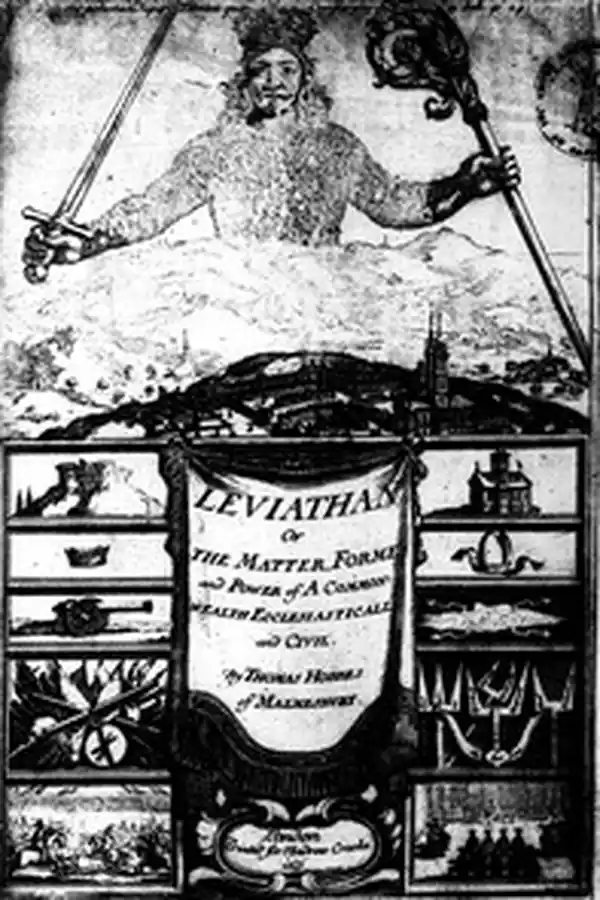
The edition prints Eliot’s Introduction with his own notes, then the fragments, then a body of explanatory notes and an index. The notes are editorial: they are based mainly on Brunschvicg’s, with those of Faugère, Molinier and Havet consulted, and they give the biblical references in the Authorised Version where the text itself keeps the Vulgate. The Introduction is an essay about Pascal, not by him, and the page keeps the two apart. The index refers to fragment numbers rather than to pages, as its own note says. Readers who want the same questions in another key can take Augustine’s Confessions, the earlier apology Pascal answers at several points, or Hobbes’s Leviathan, the other great case for reason made in his century.
Historical Context
The volume is a paperback printed by E. P. Dutton in New York in 1958, and it carries Eliot’s Introduction first, signed with his name, then a Contents page, a short note on the signs used in the text, the fourteen sections, the Notes and an Index. The Contents gives the title of each section with the page on which it begins, and lists the Introduction, the Notes and the Index among them. The Introduction is editorial: it describes Pascal’s life, the two conversions, Port-Royal and the state of the text, and argues about how the Pensées should be read. Pascal’s own words begin only after it, at the first fragment on the difference between the mathematical and the intuitive mind.
Pascal was born in 1623 and died in 1662. Eliot describes the first conversion of 1646, when the family met the Jansenists, and the second of 23 November 1654, when Pascal wrote down the experience he afterwards kept sewn into his coat. From then until his death he was close to Port-Royal, the society his sister Jacqueline had joined, while it fought the Jesuits over five propositions condemned at Rome. The Letters to a Provincial, eighteen of them, belong to that quarrel; Eliot calls them a masterpiece of controversy and says plainly that Pascal was no theologian. He adds that Pascal was not a systematic philosopher either, but a man with a genius for science, a natural psychologist and moralist, and a strong passion for truth.
The notes record what the fragments cannot: that they are based on Brunschvicg’s, that the numbering was altered when one fragment was moved out, and that the reference to the Holy Thorn means the cure of Pascal’s niece Marguerite Périer in March 1656. They also mark the places where the printed text differs from the manuscript, as at the phrase by rule, where the manuscript reads without rule. Eliot’s essay is sceptical about the place Pascal gives to miracles, and says so; the fragments on miracles take the opposite view. Nothing in the notes is Pascal’s, and the reader is told which words in the running text are the editor’s.
Key Ideas & Arguments
- The two infinities: Man is set between the infinite and nothing and has no proportion to either. The whole visible world is an atom in the bosom of nature, and a mite contains worlds in the same way. We can know neither the beginning nor the end of things, and we are incapable both of certain knowledge and of absolute ignorance.
- Diversion: Men cannot stay quietly in their own chamber, and all their unhappiness comes from that. A king without diversion is wretched; the chase matters more than the quarry, because it keeps a man from thinking of death. Diversion is the only thing that consoles us for our miseries, and it is also the greatest of them.
- The wager: God is, or He is not, and reason can decide neither way; but the game is on and a choice cannot be avoided. A finite stake is set against an infinite gain, so the course is to wager that God is, and then to act as if one believed, which loosens the hold of the passions.
- Imagination: The deceitful part in man, mistress of error and falsity, which makes the magistrate venerable, the physician trusted and the king feared, and which reason cannot disarm. Custom is a second nature, and the automaton in us is bent by habit rather than by proof; hence the need for outward forms joined to inward belief.
- The heart and its reasons: The heart has its reasons, which reason does not know, and it is by the heart that first principles are known. Faith is God felt by the heart, not a conclusion of argument. The three orders, body, mind and charity, are discontinuous: no addition of bodies produces a thought, and no addition of minds produces charity.
- The hidden God: Deus absconditus: God has left signs that those who seek him find and that those who do not seek him miss. There is enough light to enlighten the one and enough obscurity to blind the other. The Christian religion therefore teaches two truths at once, that God can be known and that human nature is corrupt.
Core Arguments & Influence
- Misery and greatness: The first movement of the book is the contradiction in man. He wants to be happy and cannot be; he knows he is wretched and will not admit it; he is neither angel nor brute, and the man who would act the angel acts the brute. The sceptics show that reason cannot establish its own principles, the dogmatists show that we cannot live without them, and Pascal leaves the two in open war. Original sin is offered as the knot that explains the contradiction, and Eliot calls the analysis of human motives and occupations that opens the book magnificent. He denies that the despair in these fragments is a personal weakness; it is, he says, a stage in the progress of the intellect towards faith.
- Custom, justice and might: Justice is not natural but established: three degrees of latitude reverse the whole of jurisprudence, and a river decides what is true. Custom creates the whole of equity because it is accepted, and the wisest legislators have concealed its origin. Might, not opinion, rules the world, and since justice could not be made strong, men made strength just. The people are right to honour birth and office, though not for the reasons they give, and this is what Pascal calls the reason of effects. Laws are to be obeyed because they are laws, and it is dangerous to tell the people that they are unjust, since they obey them only because they think them just.
- The three orders: Bodies, minds and charity are three orders differing in kind, and the distance between the second and the third is infinitely greater than between the first and the second. Archimedes would be revered whatever his rank, because his greatness is of the mind; Jesus Christ is great in the order of holiness, without riches and without display. The passage answers anyone who takes offence at a lowliness that belongs to another order. All bodies together cannot produce one thought, and all minds together cannot produce one act of charity. He adds that the greatness of wisdom is invisible to the carnal-minded and to the clever alike, since it is not of their order.
- Figures and prophecies: Scripture has two meanings, and the whole question is whether the prophets spoke only of the old covenant or of Jesus Christ. The law, the temple and the sacrifices are figures; the Jewish people are the witnesses who preserve the prophecies while rejecting their fulfilment. Pascal calls the prophecies the strongest proof of Jesus Christ, distributed through the world and through time so that their agreement cannot be chance. Typology and prophecy are therefore one argument in two forms, and the perpetuity of the Jewish people is the fact it rests on. The refusal of the Jews to believe was itself foretold, he says, and that refusal serves the proof instead of breaking it.
- Miracles, heresy and the Church: Miracles judge doctrine and doctrine judges miracles, and the two are the outward and the inward fundamentals of belief. In the polemical fragments the argument turns on the Church: heresy is the exclusion of one of two truths that must be held together, as the two natures are held together in Christ. The five propositions, the casuists and the Society of Jesus are answered here, in fragments written while Port-Royal was under attack. The tone changes with the subject: these are the only pages in the book written as a partisan. Eliot, for his part, says Pascal gave miracles a larger place in his construction than a modern apologist would.
Why Download Our Custom E-Reader Edition of Pascal’s Pensées?
The download is the whole book as this edition prints it: Eliot’s Introduction with his notes, the fourteen sections of fragments with their numbers, the explanatory notes and the index. Nothing is summarised in place of itself and no fragment is left out, so the wager can be followed from its first line to its last without leaving the page. Eliot’s references to Massis, Chevalier, Maritain and Hulme are all here, and can be followed up.
The page is arranged to be read beside the text. Twelve groups follow the fourteen sections in order and stop where each section stops; six notes explain the ideas the fragments turn on; five themes follow the argument from the misery of man to the miracles; and the Introduction is described apart, so that Eliot’s essay is not mistaken for Pascal’s. The fragment numbers are kept, so a reference to number 277 can be found directly.
The files come in three formats with the same text and the same divisions. The EPUB opens in Apple Books, Calibre and most Android readers; the AZW3 is the file for a Kindle; the KEPUB is the one Kobo devices read best. No account is needed for any of them, and nothing in the downloads is locked or time limited.
- Project Gutenberg transcription, via Project Gutenberg #18269 — the complete text, with Eliot’s Introduction, the fourteen sections of fragments, the notes and the index.
- Fourteen sections, kept in order The fragments stand in the numbered order the edition gives them, from the thoughts on mind and style to the polemical appendix, and each keeps its own number instead of being gathered under a heading of the editor’s.
- The Introduction kept apart T. S. Eliot’s essay is printed before the text and marked as editorial on this page and in the file, so that Pascal’s fragments are never read as though they were the argument of his introducer.
- EPUB, AZW3 and KEPUB files The same text in three formats, for Apple Books, Kindle and Kobo, with the section divisions, the fragment numbers and the bracketed passages intact.
- Augustine’s Confessions, the earlier account of a soul that cannot rest, and the book Pascal quotes wherever he wants the weight of tradition behind him. Read it beside the fragments where he appeals to Augustine on the submission of reason, on working for an uncertainty, and on the place of miracles. — free EPUB, AZW3 & KEPUB
- Hobbes’s Leviathan, the other great case for reason and the sovereign made in Pascal’s century. Eliot names Hobbes once, to say that beside the French moralists he is crude and uncivilised, and the contrast is worth seeing at first hand. — free EPUB, AZW3 & KEPUB
- The shelf where this edition sits, with the rest of the free philosophy on the site in the same three formats. — free EPUB, AZW3 & KEPUB
Chapter summaries
The edition’s fourteen sections are grouped here in twelve. The sections on perpetuity and typology are taken together, since both turn on the place of the Jewish people in the argument, and the appendix of polemical fragments is taken with the miracles, which is where the argument of the book ends. No section has been renamed, no fragment has been moved, and each group stops where its section stops. The labels give the number of each group and the subject of the section it covers, and nothing has been made into a chapter that the edition does not have.
- Section 1 — Mind, style and the two kinds of mind: The book opens with the mathematical and the intuitive mind: one starts from principles plain but remote from use, the other from principles in common use that must be seen at a glance. Then come notes on eloquence, on order, on the honnête homme who is not a specialist, and on the natural style in which a reader meets a man rather than an author.
- Section 2 — The misery of man without God: The two halves of the apology are announced here, misery and happiness. The section holds the fragments on the two infinities, on imagination as the mistress of error, on custom as a second nature, and on diversion, the busyness that keeps a man from sitting quietly in his own chamber.
- Section 3 — The necessity of the wager: Reason cannot decide whether God is, and the game is already being played, so the choice is not whether to wager but on which side. A finite stake is set against an infinite gain. The section ends by advising the reader to act as if he believed, and so to lessen the passions that hold him back.
- Section 4 — The means of belief: Pascal sets out three sources of belief, reason, custom and inspiration, and argues that the mind is convinced by proofs while the automaton in us is bent by habit. Faith is a gift rather than a conclusion. The section also holds the fragments on the hidden God, on submission, and on the heart’s knowledge of first principles.
- Section 5 — Justice and the reason of effects: Custom, not nature, decides what is just, and might decides what is obeyed; the two are joined so that peace may hold. Pascal explains why the people are right to honour birth and office even though the reasons they give for doing so are wrong, and why tyranny is the wish to rule beyond its own order.
- Section 6 — The philosophers: Man is a thinking reed: the universe can crush him, and he is nobler than what crushes him because he knows it. Against the Stoics, who ask a man to master his passions, and against the sceptics, who doubt everything, Pascal sets the war between dogmatism and scepticism. He notes too that a fly can disturb the mind that judges kingdoms.
- Section 7 — Morality and doctrine: The longest section. The true religion must teach both greatness and wretchedness, must command the love of God, must know lust and offer remedies for it. Pascal describes the body of thinking members, the hatred of self, grace and the value of good works, and the marks by which the true religion can be known.
- Section 8 — The fundamentals of the Christian religion: The Christian religion consists in two points: that there is a God men can know, and that there is a corruption in their nature. Pascal refuses to prove God from the works of nature, since Scripture calls him a hidden God, and makes Jesus Christ the centre to which everything in the book tends.
- Section 9 — Perpetuity and the figures: The Jewish people are the witnesses of a religion older than any other, and their books carry the prophecies the Christians read as fulfilled. Typology follows: the law, the temple and the sacrifices are figures, and Scripture has two meanings, as Christ and the Apostles taught.
- Section 10 — The prophecies: The time, the state of the world and the state of the temple were foretold, and the four monarchies and the seventy weeks of Daniel fell together. Pascal calls the prophecies the strongest proof of Jesus Christ, since they were scattered through the world and through time. The section also answers the objection that the Jews did not believe what their own books had foretold.
- Section 11 — Proofs of Jesus Christ: The two Testaments regard him as their centre; the prophets foretold and were not foretold, while he both foretold and was foretold. The section closes on the three orders of body, mind and charity, and on the distance between greatness in the world and greatness in holiness.
- Section 12 — The miracles and the polemical fragments: Miracles judge doctrine and doctrine judges miracles; the miracles of the Gospel are the ground on which belief rests, and the cure of Pascal’s niece is argued for in the same way. The fragments on the five propositions and the casuists end the book, written while Port-Royal was under attack.
Pascal’s Pensées: Frequently Asked Questions
What are the Pensées?
What is the wager?
What does diversion mean?
What is man’s disproportion?
What are the three orders?
Who were the Jansenists, and what was Port-Royal?
Is the text complete, and how is it numbered?
How do I read the free downloads?
Part of: Philosophy Classics · Blaise Pascal