Discourse on the Method by René Descartes: Free EPUB, AZW3 & KEPUB Download
Discourse on the Method
📖 Click to Read the Opening Pages Online Preview
The opening three paragraphs of Part I
Good sense is, of all things among men, the most equally distributed; for every one thinks himself so abundantly provided with it, that those even who are the most difficult to satisfy in everything else, do not usually desire a larger measure of this quality than they already possess. And in this it is not likely that all are mistaken the conviction is rather to be held as testifying that the power of judging aright and of distinguishing truth from error, which is properly what is called good sense or reason, is by nature equal in all men; and that the diversity of our opinions, consequently, does not arise from some being endowed with a larger share of reason than others, but solely from this, that we conduct our thoughts along different ways, and do not fix our attention on the same objects. For to be possessed of a vigorous mind is not enough; the prime requisite is rightly to apply it. The greatest minds, as they are capable of the highest excellences, are open likewise to the greatest aberrations; and those who travel very slowly may yet make far greater progress, provided they keep always to the straight road, than those who, while they run, forsake it.
For myself, I have never fancied my mind to be in any respect more perfect than those of the generality; on the contrary, I have often wished that I were equal to some others in promptitude of thought, or in clearness and distinctness of imagination, or in fullness and readiness of memory. And besides these, I know of no other qualities that contribute to the perfection of the mind; for as to the reason or sense, inasmuch as it is that alone which constitutes us men, and distinguishes us from the brutes, I am disposed to believe that it is to be found complete in each individual; and on this point to adopt the common opinion of philosophers, who say that the difference of greater and less holds only among the accidents, and not among the forms or natures of individuals of the same species.
I will not hesitate, however, to avow my belief that it has been my singular good fortune to have very early in life fallen in with certain tracks which have conducted me to considerations and maxims, of which I have formed a method that gives me the means, as I think, of gradually augmenting my knowledge, and of raising it by little and little to the highest point which the mediocrity of my talents and the brief duration of my life will permit me to reach. For I have already reaped from it such fruits that, although I have been accustomed to think lowly enough of myself, and although when I look with the eye of a philosopher at the varied courses and pursuits of mankind at large, I find scarcely one which does not appear in vain and useless, I nevertheless derive the highest satisfaction from the progress I conceive myself to have already made in the search after truth, and cannot help entertaining such expectations of the future as to believe that if, among the occupations of men as men, there is any one really excellent and important, it is that which I have chosen.
The excerpt is the first three paragraphs of Part I. The first argues that good sense, or reason, is of all things among men the most equally distributed, since even those hardest to satisfy in other matters do not ask for more of it; the diversity of our opinions comes not from unequal shares of reason but from the different ways we direct our thoughts, and a slow traveller who keeps the straight road gets further than a runner who leaves it. The second disclaims any superior mind and says reason is complete in each of us. The third names the good fortune of falling early on certain tracks, and the method he formed from them.
Download Full EPUB1637
Treatise
~26,000 words (estimated)
Approx. 1.4 hours
Standalone
Germany in the winter of 1619, the roads of Europe during the nine years that followed, and the retired country where the book was finished; it is written in French, and the six parts look back over the years from his schooling to the printing of the book.
A prefatory note and six parts
EPUB · AZW3 · KEPUB
0.11 MB (EPUB) · 0.16 MB (AZW3) · 0.12 MB (KEPUB)
Public domain in the United States
Project Gutenberg #59
Descartes’s Discourse on the Method is a short account of how one man set about clearing his mind of everything he had been taught and rebuilding it on ground he could not doubt. He calls it a history, or a tale, and it runs from his schooling through the four rules of his method to the provisional morality he kept while he used them. Part IV reaches the cogito and the proofs of God and of the soul; Part V sets out his physics, the motion of the heart, and the difference between the human soul and that of the brutes; Part VI gives his reasons for publishing at all. The manner is plain and the claims are large.
The six parts are short and the argument runs on without a break. Part I describes the studies he gave up; Part II gives the four rules; Part III the provisional code of morals; Part IV the metaphysical foundations; Part V the physics and the two kinds of soul; Part VI the reasons for print. The parts are of unequal length, and the fourth, which carries the proofs, is the one most argued over. The Wikipedia article on the Discourse on the Method sets out the plan and the reception. The text is available via Project Gutenberg #59.
Discourse on the Method by René Descartes: Summary, Ideas & Arguments
This page offers a summary and analysis of the Discourse on the Method, taking the prefatory note and the six parts in the order the edition prints them, describing the step each one takes, and setting out the arguments of the fourth part as the text gives them. René Descartes wrote it in French and published it in 1637, and the English here is the Project Gutenberg text, which keeps the Latin of the title page and the few Latin phrases the argument turns on, cogito ergo sum among them. The book is short and it is not a treatise in the school form: it is the account of a road taken, written so that a reader can judge the road for himself. The full title promises a method of rightly conducting the reason, and the promise is kept by example rather than by precept. It belongs with the other Philosophy Classics on this site, and the same text, unabridged, is at Project Gutenberg #59.
Part I begins with good sense. Reason, he says, is by nature equal in all men, and the difference between opinions comes from the different routes our thoughts take, not from unequal gifts; the greatest minds are open to the greatest errors, and a slow traveller who keeps the straight road gets further than a runner who leaves it. He then reviews his own education at one of the most celebrated schools in Europe, where he learned languages, history, rhetoric, poetry, mathematics, morals, theology and philosophy, and found himself in more doubt at the end than at the beginning. Philosophy he sets aside, since nothing in it is above dispute. He valued eloquence and poetry, but thought both were gifts of nature rather than fruits of study, and he was delighted with mathematics for the certitude and evidence of its reasonings while thinking its use went no further than the mechanical arts. He abandons letters, travels, and resolves to study himself and the great book of the world.
Part II finds him in Germany, held by the winter, in a room where he has the day to himself. From the observation that a building planned by one architect is better than one patched by several hands, he takes the decision to sweep his opinions away and begin again, without recommending the same course to everyone. He looks at logic, geometrical analysis and algebra, finds each of them defective for his purpose, and reduces the whole of method to four rules: to accept nothing that is not clearly known, to divide each difficulty, to move from the simplest to the most complex, and to make enumerations complete enough that nothing is omitted. The rules are few on purpose, he says, since a multitude of laws often only hampers justice, and a state is best governed when its laws are few and rigidly administered. He was twenty-three at the time and thought the metaphysical work should wait.
Part III supplies the house he lives in while the old one comes down: a provisional code of morals in three or four maxims. He will obey the laws and customs of his country and keep to the faith of his childhood, choosing the most moderate opinions of the most judicious; he will be as firm in action on a doubtful opinion as on a certain one, like travellers lost in a forest who walk straight; and he will conquer himself rather than fortune, since nothing but our thoughts is in our power. He put the maxims in reserve, he says, along with the truths of faith, which had always held the first place in his belief. He spent nine years travelling on that footing. Part IV then makes the metaphysical turn, and the cogito opens it.
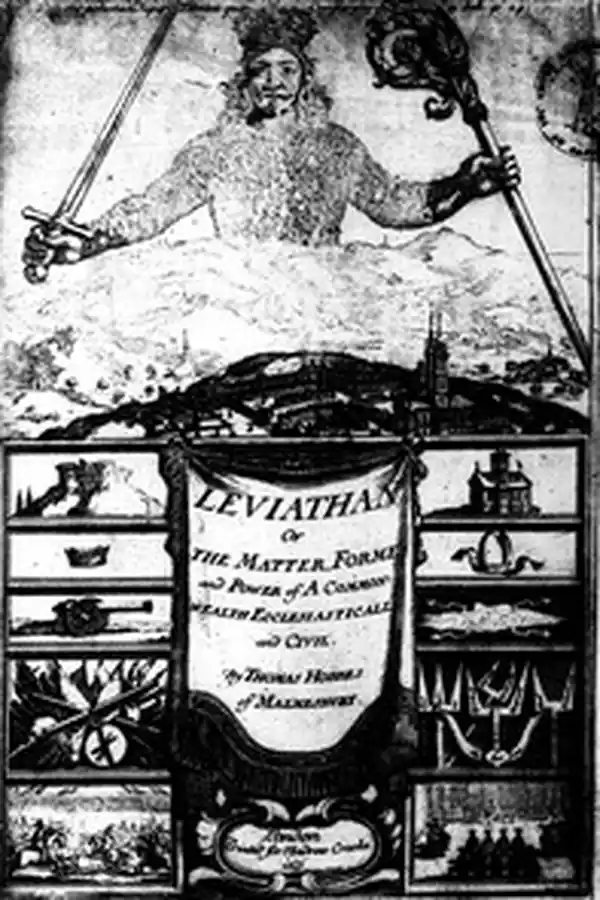
Part V summarises the physics he chose not to publish. He describes light, the heavens, the earth, and then the human body: the motion of the heart and arteries, the blood rarefied by the heat of the heart, the circulation that an English physician had already taught, and the difference between a body that runs by itself and a rational soul that must be created and joined to it. The aim he names is practical: to know the force and action of fire, water, air and the stars as distinctly as we know a trade, and to turn that knowledge to use. The last part gives his reasons for printing anything at all, in French rather than Latin, and asks objectors to send their objections to his publisher. Hobbes’s Leviathan is the other system of the century built on motion; Hume’s An Enquiry Concerning Human Understanding is the empiricist answer a hundred years on.
Historical Context
The edition prints the author’s prefatory note and the six parts, and no editorial matter of its own; the note itself serves as a table of contents, since it names what each part contains. The form is autobiographical, but the book is not a memoir. Dates are given as intervals rather than as years: he was twenty-three when he put the metaphysical question aside, he travelled for nine years, and he had been eight years in the country where he wrote it. The school, the country of his retirement, the treatise he withheld and the men who condemned the doctrine all go unnamed. The prefatory note itself gives no place and no date, and the chronology has to be pieced together from remarks dropped along the way.
The circumstances are given only in outline. He was in Germany, drawn there by a war not yet ended, and the winter that stopped him is the setting of the four rules. The treatise behind Part V was finished three years before the Discourse, and he was revising it for the press when a doctrine in physics, published shortly before by another man, was condemned by persons whose authority over his actions he says was hardly less than his own reason over his thoughts. The text does not name the doctrine or the men, and the caution he draws from it is stated in general terms. The war is the only public event the book leans on, and it is mentioned for the winter it brought, not for its politics.
The book is in French, and it says why: he expects those who use their unprejudiced natural reason to judge better than those who heed only the writings of the ancients. The choice is part of the argument, since the schools taught in Latin and the schools are what he is leaving. He answers the school maxim that there is nothing in the understanding which was not previously in the senses, and he names Aristotle, for the disciples who never surpass their master. The last pages send the reader to the Dioptrics and the Meteorics for the optical and meteorological matters. The English keeps the Latin tags where the argument uses them, cogito ergo sum and the anatomical names of the heart among them.
Key Ideas & Arguments
- Good sense: Reason, which he also calls good sense, is by nature equal in all men; what differs is the use made of it. Opinions diverge because thoughts take different roads, not because some minds are better stocked. A slow walker who keeps the straight road gets further than a runner who leaves it, and the method is the road.
- The four rules: Never accept what is not clearly known; divide each difficulty into as many parts as it needs; proceed from the simplest to the most complex, giving an order even to things that have none; and make enumerations so complete that nothing is omitted. He replaced the precepts of logic with these four and kept them without exception.
- Provisional morality: A code of three or four maxims to live by while everything else was in doubt: obey the laws and customs of the country and keep the faith of childhood; take the most moderate opinions of the most judicious; act as firmly on a doubtful opinion as on a certain one; and change his desires rather than the order of the world.
- The cogito: The one proposition that survived total doubt. To doubt the senses, the reasonings of the schools and the world of dreams, he had to be thinking, and to think he had to exist. I think, therefore I am is certain in the act of being thought, and from it the mind is known as a substance whose nature is to think.
- Clear and distinct ideas: The rule he drew from the cogito: whatever is conceived clearly and distinctly is true. He admits the difficulty of knowing which objects we conceive distinctly, and grounds the rule in God, who is perfect and does not deceive, so that ideas of that kind, coming from him, cannot be false.
- The animal machine: The body, on this account, is a machine. Heat in the heart rarefies the blood, valves open and close, and the whole frame moves without any thinking principle, as animals do. What no machine can do is speak or reason; the rational soul is created, not produced from matter, and being independent of the body it is not destroyed with it.
Core Arguments & Influence
- Method before doctrine: The four rules are not a logic textbook but a discipline of attention. Everything the book later claims rests on his having applied them: the doubt of Part IV is the first rule carried out, the analysis of the heart in Part V is the second, the chain from the simplest truths is the third, and the demand for complete enumeration is the fourth. He says the precepts gave him such ease that in two or three months he solved questions he had thought beyond him. The method is offered as a description of his own practice, not as a set of commands for others. The model throughout is the geometer’s chain, in which each link is simple and the whole is certain.
- Rebuilding on one’s own foundation: He compares the work to pulling down a house and building another, and he is careful about how far the comparison goes. A private man should not reform the state, and not everyone should strip himself of his beliefs; those who judge too quickly, and those who would do better to trust the judgement of others, are both advised against it. The licence he takes is limited to his own opinions. The provisional morality is the rented house he lives in while the work is under way, and the comparison is kept up to the end of the part. The house, the materials, the builders and the lodging are all in the text.
- The cogito and the ground of certainty: Part IV is the hinge of the book. Doubt is an instrument, not a resting place: he says plainly that he is not one of the sceptics who doubt only in order to doubt, and that his design was to find ground of assurance. The cogito gives him a first certainty, and the clarity of the act gives him a rule. The proofs of God and of the immortality of the soul follow, and they carry the weight of the rule, since without God’s veracity a clear idea might still be false. The order is unusual, and it is the order he insists on. He warns at the start that these meditations are metaphysical and uncommon, and may not please everyone.
- The body as machine, the soul as created: Part V is the part that made the book notorious. The heart is a fire without light, the blood is rarefied and driven through valves, and the circulation is credited to an English physician who broke the ice on the subject. On this account a body can see, move and remember without any soul, which is what the brutes are. Man is the exception, and only because a rational soul is joined to the machine. Nothing in matter can produce it, and nothing independent of the body need die with it. He advises the reader who is not versed in anatomy to have the heart of a large animal dissected in his presence.
- Publishing, withholding and the common good: Part VI is an apology for print that ends by explaining why he prints so little. He believes the new physics can make men the lords and possessors of nature, and that to keep it hidden would be to sin against the law that bids us promote the general good. Against that stand the condemnation of another man’s doctrine, the controversies he dreads, and the time they would cost him. He settles on specimens, in French, with an invitation to send objections to his publisher. He asks posterity not to believe on hearsay anything attributed to him that he did not publish himself.
Why Download Our Custom E-Reader Edition of Discourse on the Method?
The download is the whole book. The prefatory note and all six parts are here as the edition prints them, from the four rules to the motion of the heart and the closing request to readers, and no part is summarised in place of itself. The fourth part is given in full, so the cogito and the arguments that follow it can be followed step by step rather than taken on report. Nothing is an excerpt, and the prefatory note that stands first in the edition is kept in its place.
The page is arranged to be read beside the text. Seven groups follow the book’s own divisions and stop where each division stops; six notes explain the terms the argument turns on; five themes follow it from the four rules to the reasons for publishing. A short historical section sets out what the text names and what it leaves out. Nothing in that apparatus goes beyond the pages it summarises.
The files come in three formats with the same text and the same divisions. The EPUB opens in Apple Books, Calibre and most Android readers; the AZW3 is the file for a Kindle; the KEPUB is the one Kobo devices read best. No account is needed for any of them, and nothing in the downloads is locked or time limited. The three carry the same text, so a passage found in one is found in the others.
- Project Gutenberg transcription, via Project Gutenberg #59 — the complete text, unabridged, with the prefatory note and the six parts in the translation the edition prints.
- The prefatory note and six parts Every division of the book has its own place, from the note that names the six parts to the last paragraph of Part VI, and nothing is abridged or reordered.
- Seven groups, one for each division Each group states the step its part takes and stops where the part stops, so a reader can go from the summary to the passage itself without hunting for it.
- EPUB, AZW3 and KEPUB files The same text in three formats, for Apple Books, Kindle and Kobo, with the divisions intact and nothing to install beyond the reading app you already use.
- Hobbes’s Leviathan, the other great system of the seventeenth century, built on motion and on a state of nature that men leave by covenant. Read it beside Part V, where the body is turned into a machine and a soul is then added to it. — free EPUB, AZW3 & KEPUB
- Hume’s Enquiry, the empiricist answer a century later, which takes experience as the only source of ideas and leaves out the clear and distinct perceptions and the proofs of God that Part IV depends on. — free EPUB, AZW3 & KEPUB
- The shelf where this edition sits, with the rest of the free philosophy on the site in EPUB, AZW3 and KEPUB, from Plato and Aristotle to Hume and the moderns. — free EPUB, AZW3 & KEPUB
Chapter summaries
The seven groups below follow the edition’s own divisions in the order it prints them: the prefatory note, then Parts I to VI. Nothing has been merged or renamed, and no group covers a part of the book that does not exist under that title. Each summary states the step the part takes and stops where the part stops.
- Part 1 — The prefatory note: The prefatory note is a single sentence of orientation. The Discourse, it says, may be divided into six Parts: the sciences in the first, the rules of the method in the second, the rules of morals in the third, the proofs of God and of the human soul in the fourth, the physical questions and the motion of the heart in the fifth, and in the last what he thinks is needed for further advance in the study of nature, with his reasons for writing.
- Part 2 — Part one of the Discourse, the sciences: Part I begins from good sense, which he takes to be equal in all men, and turns to his own education at one of the most celebrated schools in Europe. Languages, history, rhetoric, poetry, mathematics, morals, theology and philosophy leave him in more doubt than he began with, since philosophy is still disputed and the other sciences borrow their principles from it. He gives up letters, travels, and takes the world for his book.
- Part 3 — Part two, the four rules: Part II is set in Germany, in a winter when he had a whole day to himself. The observation that one architect builds better than several improvers becomes the argument for sweeping his opinions away, though he warns that not everyone should attempt it. Logic, geometrical analysis and algebra each fail him in some respect, and he reduces method to four rules: evident knowledge, division, order, and complete enumeration.
- Part 4 — Part three, the provisional morality: Part III supplies a house to live in while the old one comes down: a provisional morality of three or four maxims. He will obey the laws and customs of his country and keep the faith of his childhood, taking the most moderate opinions of the most judicious; he will act as firmly on a doubtful opinion as on a certain one; and he will change his desires rather than the order of the world. Nine years of travel follow.
- Part 5 — Part four, the cogito and the proofs of God and the soul: Part IV is the metaphysical core. He rejects as false whatever admits the least doubt, including the evidence of the senses and of dreams, and finds that the doubting itself cannot be doubted: I think, therefore I am. The mind is a substance whose whole nature is to think, and it is wholly distinct from the body. Whatever is clearly and distinctly conceived is true, and the idea of a perfect being carries his existence with it, as the triangle carries its angles.
- Part 6 — Part five, physics, the heart and the animal machine: Part V summarises the physics he left unpublished. He describes a new world, light, the heavens and the earth, and then the human body, with the heart as a fire without light that rarefies the blood and drives it through the arteries. The blood circulates, as an English physician had shown; the body is a machine that can do everything but think. The rational soul cannot come from matter and must be created, and being independent of the body it is not liable to die with it.
- Part 7 — Part six, why he publishes and what he asks of readers: Part VI explains the delay and the decision. He had finished a treatise three years before and was about to print it when a doctrine in physics was condemned by men whose authority he respected, and he withheld it. He publishes these specimens instead, in French rather than Latin so that plain reason may judge them, and asks objectors to send their objections to his publisher. He wants the rest of his life for the study of nature and for medicine.
Discourse on the Method: Frequently Asked Questions
What is the Discourse on the Method about?
What are the four rules of the method?
What is the provisional morality, and why did he need one?
What does ‘I think, therefore I am’ establish?
How does he prove that God exists?
What does Part V say about the body and the soul?
Why did he write in French, and why withhold the treatise?
How do I read the free downloads?
Part of: Philosophy Classics · René Descartes