The Garden Party and Other Stories by Katherine Mansfield: Free EPUB, AZW3 & KEPUB Download
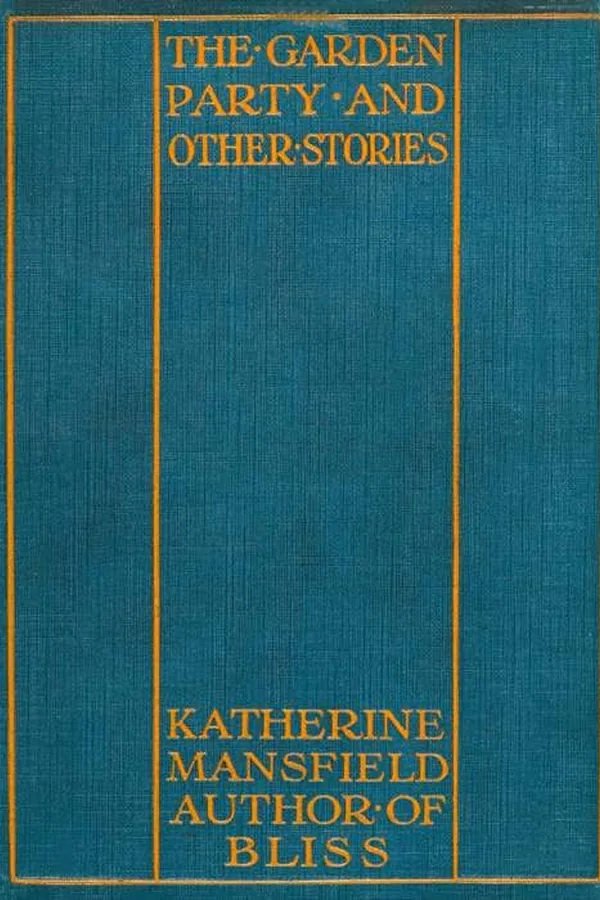
The Garden Party and Other Stories
📖 Click to Read the Opening Pages Online Preview
The opening of The Garden-Party
And after all the weather was ideal. They could not have had a more perfect day for a garden-party if they had ordered it. Windless, warm, the sky without a cloud. Only the blue was veiled with a haze of light gold, as it is sometimes in early summer. The gardener had been up since dawn, mowing the lawns and sweeping them, until the grass and the dark flat rosettes where the daisy plants had been seemed to shine. As for the roses, you could not help feeling they understood that roses are the only flowers that impress people at garden-parties; the only flowers that everybody is certain of knowing. Hundreds, yes, literally hundreds, had come out in a single night; the green bushes bowed down as though they had been visited by archangels.
Breakfast was not yet over before the men came to put up the marquee.
“Where do you want the marquee put, mother?”
The Garden-Party, the first paragraph.
Download Full EPUB1922
~57,000 words (estimated)
Approx. 3.2 hours
Standalone
Wellington, New Zealand, and the English countryside in the early 1920s
Fifteen stories, in twelve movements
EPUB · AZW3 · KEPUB
0.21 MB (EPUB) · 0.31 MB (AZW3) · 0.24 MB (KEPUB)
Public domain in the United States
Project Gutenberg #1429
The Garden Party and Other Stories is Katherine Mansfield’s third collection, published in London in 1922 and the last book of hers she saw through the press. Fifteen stories move between the Wellington harbour suburb of her childhood and rented rooms, hotels and music halls in England and France. A garden party is prepared while a carter is killed at the corner; two sisters sort their dead father’s clothes; a governess sits in a park in her fur; a schoolgirl crosses Cook Strait at night with her grandmother; a lady’s maid talks past midnight. The occasions are ordinary, and the writing is exact.
Nothing is announced as important. Mansfield works by the small shift of attention, a hat, a cream puff, a fur necklet, a telegram, and lets the ground move under the reader. A garden party, a funeral tea, a first ball, a night crossing, a charwoman’s Tuesday: the occasions are small and the stakes turn out to be everything. The stories are funny about snobbery, precise about money, and unusually good on the people who serve: cooks, maids, stewardesses, a lady’s maid talking past midnight. The Garden Party and Other Stories fixed her reputation in England and America. The text is available via Project Gutenberg #1429.

The Garden Party and Other Stories by Katherine Mansfield: Summary, Characters & Themes
This is a summary and analysis of Katherine Mansfield’s The Garden Party and Other Stories, the fifteen-story collection she published with Constable in London in 1922. The book opens with At the Bay, a long morning-to-night piece set among the bungalows and bathing beaches of Crescent Bay, and follows it with The Garden-Party, in which a Wellington family prepares a party on the day a carter is killed at the corner of the road. From there the stories move to London and the south of France: two sisters sorting a dead colonel’s clothes, a governess alone on her Sunday bench, a schoolgirl on the Picton boat, a music mistress reading a letter that ends her engagement. Nothing in the table of contents announces a theme, and the arrangement does the work instead, setting a long New Zealand story beside a short English one.
What holds the fifteen together is not plot but method. Mansfield drops the reader into a household mid-conversation and lets a room, a meal or a hat do the work of an argument. A cream puff passed round a party, a pair of boots that will not come off, a telegram opened in a corridor: each is a small object that turns out to carry the weight of a life. The stories are often very funny about snobbery, about the vanity of the young, about the way a family talks over a father’s head, and then, without a change of tone, they are not. The comedy is not a relief from the seriousness; it is how the seriousness gets in, and the trigger is usually small enough to be missed.
Mansfield was born in Wellington in 1888 and left New Zealand for England at nineteen. She published In a German Pension in 1911, Prelude in 1918 and Bliss in 1920, and by the early 1920s was living between London, the south of France and Switzerland, writing against the clock of a lung illness. Katherine Mansfield died at Fontainebleau on 9 January 1923, aged thirty-four, so this is the last collection she saw through the press. Several of the stories had appeared in magazines first, and the book was assembled while she was already too ill to travel far. The New Zealand stories were written at a remove from New Zealand, and the distance shows in their tenderness and their clarity.
The collection is usually read beside the other modernist story books of the moment. Dubliners, published in 1914, shares its refusal of plot and its interest in the exact weight of an ordinary afternoon; The Gift of the Magi stands for the popular magazine story that Mansfield’s ironic endings were written against; The Awakening shows how far a short book could go with a woman’s inner life in the same years. Mansfield’s difference is speed and touch: a page can turn from comedy to grief without the prose raising its voice, and the endings stop on a sentence rather than a conclusion. The comparison is not a matter of influence so much as of what a story was allowed to be in 1922.
This edition follows the Project Gutenberg #1429 transcription, which preserves the fifteen stories in their published order with the original punctuation and the New Zealand and English spellings of the 1922 text. There are no chapter titles beyond the story titles, no editorial notes and no modernised dialogue. The summaries below take the stories in order, in twelve groups, and stop short of the final turns so that the last paragraphs are left to the reader. The text is complete and unabridged, and the same file is used for all three downloads. The only changes are typographic: quotation marks are curled, scene breaks are spaced, and the story titles are set as headings.
Historical Context
1922 was a strong year for the short story in English, and a strange one for the novel. Joyce’s Ulysses and Eliot’s The Waste Land appeared in the same twelve months, both built out of fragments; Mansfield’s collection is quieter and more domestic, but it belongs to the same moment of broken surfaces. The war had changed what a room could contain: households were smaller, servants harder to keep, and the people who had run them were dead or married or gone. Mansfield writes the aftermath in kitchens rather than on battlefields, and the war is present as an absence, in the servants who are no longer there and the routines that have quietly shrunk.
The stories set in New Zealand draw on a childhood in Wellington and on the seaside settlement of the Burnells, which Mansfield had already used in Prelude. The English and French stories draw on the life she was living: rented flats, hotels, trains, a health that kept her moving between London and the Continent. The two halves of the book are not divided by a line, and that is part of the effect. A woman in a London park and a woman on a Wellington veranda are given the same attention, the same room to think, and the same small defeat. The two settings are not a before and after; they are two rooms in the same life.
Constable published the collection in London in 1922, and the reviews were warm enough to make it the book by which she was known in the year before her death. It is a book of the postwar decade in its assumptions about class and service: the maid who brings the tray, the gardener who rolls the lawn, the governess who is neither family nor servant. Mansfield does not argue with that world. She looks at it closely, from the inside of the people who keep it running, and the looking is the criticism. The book has stayed in print since, and it is the collection most often named when Mansfield is called a master of the modern short story.
Key Characters & Literary Archetypes
- Laura Sheridan: The daughter sent out to supervise the marquee men in The Garden-Party, and the story’s centre. She has been taught to be kind and has not been taught what kindness costs. She feels a sudden sympathy with the workmen, wants to stop the party when she hears of the accident, and is talked out of it by a new hat. She is the only person in the house who takes the news seriously for more than a minute. Her last words to Laurie, “isn’t life—”, are left unfinished on purpose.
- Kezia Burnell: The middle Burnell girl in At the Bay, and the child Mansfield returns to most often. She carries her grandmother’s umbrella, plays the animal card game in the washhouse after dark, and asks the old woman to promise she will never die. She is brave about the sea and frightened of the dark, and she watches the adults with the patience of a child who has learned that they will not explain. Her questions are the ones the adults answer badly, and the story lets the bad answers stand.
- Linda Burnell: Stanley’s wife, lying in a steamer chair under the manuka with her baby son and thinking that she does not love her children. She is tired, sardonic and tender by turns, and the story gives her the collection’s most unguarded thoughts. Her scenes with Jonathan Trout measure two kinds of dissatisfaction: his wish to escape the office, hers to escape the body and the house. She is not a bad mother in the story’s terms; she is a tired woman in a chair, and the distinction matters.
- Josephine and Constantia Pinner: The two spinster daughters of the late Colonel in The Daughters of the Late Colonel, living in a house that still belongs to their father a week after his funeral. Josephine makes the decisions and Constantia follows, until a barrel-organ makes them both remember that he is dead. Their attempts to say something important to each other, and their failure to remember what it was, are the story’s tenderest joke. They are comic and pitiable at once, and Mansfield never decides between the two.
- Miss Brill: An Englishwoman in a French park on a Sunday afternoon, wearing the fur necklet she has kept in its box all summer and imagining the band, the promenaders and herself as part of a play. She reads the newspaper to an invalid four afternoons a week and takes a slice of honey-cake as her Sunday treat. A young couple’s remark about her fur closes the theatre for her, quietly and for good. The fur is her companion, her courage and her costume, and the story is careful about what it costs to keep it.
- Ma Parker: A charwoman who cleans a literary gentleman’s flat every Tuesday, and who buried her grandson Lennie the day before the story opens. She has buried seven of thirteen children, nursed a husband who died of flour on the lungs, and never once been seen to cry. The story follows her through one morning’s work and a walk into the rain, looking for somewhere she can cry in private. Her voice is reported in her own idiom, and the story never asks the reader to admire her.
Core Literary Themes
- Class and the price of the party: The Garden-Party is built on a contrast that Laura feels before she can name it. The marquee men are friendly and the florist’s lilies are beautiful, and a carter has been killed at the corner; the party goes ahead because it is easier to go ahead. Mansfield does not turn the Sheridans into villains. She shows how much comfort depends on not looking, and how quickly a new hat can reconcile a conscience. The basket of leftovers carried down the hill is charity and insult at once. The story’s famous last line is not a resolution; it is the sound of a young woman discovering that she has no words for what she has seen.
- Women without money: Cooks, maids, governesses, spinsters and a music mistress: the collection is full of women whose lives are decided by what they can earn or inherit. Ma Parker cleans other people’s kitchens; Ellen gives up a marriage to keep her lady; Miss Meadows faces the loss of her post as well as her engagement; the Pinner sisters have never handled their own affairs. Mansfield writes them without pity, inside their own voices, and the result is a set of portraits that are funny, exact and hard to forget. The wages are small, the rooms are cold, and the stories do not look away from either. What these women have instead is competence, and the writing respects it.
- The family at a distance: At the Bay and The Voyage are about the separations inside families: a father who leaves for town without saying goodbye, a mother who watches her children from a chair, a granddaughter sent across the water with a grandmother and a shilling. The New Zealand stories are not nostalgic. They are precise about how little people say to one another and how much they notice, and the distance between Wellington and London is mirrored in the distance between parents and children. The sea crossing in The Voyage is a lesson in how a child reads the silences of adults.
- Performance and self-deception: Miss Brill believes she is an actress in a play; Isabel in Marriage à la Mode performs the clever wife until a letter shows her what she has done; Miss Meadows conducts a lament while conducting her own heartbreak; Beryl in At the Bay rehearses a lover at the gate and then meets the wrong one. Mansfield’s people are always playing a part, and the stories catch the moment when the part slips. The comedy and the cruelty come from the same place. The performance is not hypocrisy; it is how they survive the room they are in.
- The unfinished ending: Mansfield’s stories stop rather than close. Laura’s “isn’t life—” is cut off by Laurie’s understanding; Constantia and Josephine forget what they meant to say; Miss Brill hears something crying in the box; Fenella is handed a shilling and told nothing. The refusal of a moral is not evasion. It is the form of a writer who thinks a moment is enough, if it is the right moment, and who trusts the reader to carry the rest away. The reader is left holding the moment, which is exactly where Mansfield wants the story to end, and the technique is harder than it looks.
Why Download Our Custom E-Reader Edition of The Garden Party and Other Stories?
Because these are stories to be read twice: once for the surface, the party, the hat, the fur, the telegram, and once for what the surface is doing. The text here is complete and unabridged, all fifteen stories in their published order, with the 1922 punctuation and the New Zealand and English spellings left as they stand. There is no introduction to skip and no notes to interrupt a page.
The files are made for reading rather than archiving: a working table of contents, story breaks that survive a change of font, no page images and no scanning errors. The dialogue, including the servants’ speech and the French phrases, is left alone, and the same text opens on a phone, a Kindle, a Kobo or an old e-ink reader, with nothing locked and no account required. The typography is deliberately plain: a readable serif, generous leading, and no decorations competing with the page.
The collection is available from Project Gutenberg as a plain transcription; this edition takes that text and sets it for e-readers, with the stories in order and no notes between the reader and the page. Read it beside the summaries on this page rather than instead of them: they stop where the last turns begin, and the download is a single file rather than a folder of fragments.
- Project Gutenberg transcription, via Project Gutenberg #1429, the source used for this edition, transcribed from the 1922 Constable text and checked against the fifteen story titles and their order.
- Complete fifteen-story text No abridgement, no modernised dialogue and no silent rewriting; the collection as the transcription gives it, from the shepherd on the beach at Crescent Bay to the lady’s maid’s last speech, with the punctuation of the period intact.
- EPUB, AZW3 and KEPUB One download per format, so the book opens on Kindle, Kobo, Apple Books and every other reader without conversion, with a table of contents that works on all of them, including older devices that dislike nested navigation.
- Free and DRM-free Public domain in the United States, with no account, no sample chapter and no lock on the file; download it once and it is yours to keep, to move between devices and to reread.
- Dubliners — free EPUB, AZW3 & KEPUB
- The Gift of the Magi — free EPUB, AZW3 & KEPUB
- The Awakening — free EPUB, AZW3 & KEPUB
Chapter summaries
Fifteen stories, in the order Mansfield published them. These twelve summaries follow the collection from the beach at Crescent Bay to the lady’s maid’s bedroom, and stop before the last turns.
- Stories 1–2 — At the Bay; The Garden-Party: At the Bay gives a whole day at Crescent Bay, from the shepherd driving his flock past the bungalows to Beryl’s encounter with Harry Kember at the gate at night. Stanley Burnell swims, breakfasts and leaves for town; Linda lies under the manuka with the baby; the children play in the washhouse; Alice takes tea at Mrs Stubbs’s shop. The Garden-Party then moves to the Sheridan house, where Laura supervises the marquee, hears that a carter has been killed, and carries a basket of leftovers down to his widow. It is the shorter and the more tightly wound.
- Story 3 — The Daughters of the Late Colonel: A week after Colonel Pinner’s funeral his two daughters lie awake in the dark, worrying about the porter’s top-hat, the condolence letters and the servant Kate. They go through their father’s room and cannot bring themselves to open the wardrobe. Cyril comes to tea, and the meringues bring back the afternoon they shouted at the deaf Colonel that his son was still fond of them. A barrel-organ starts in the street, and for a moment they think their father will thump on the floor. Then they remember.
- Story 4 — Mr. and Mrs. Dove: Reginald, a fruit farmer in Rhodesia with five or six hundred pounds a year and no capital, is leaving England tomorrow and has come to propose to Anne Proctor. His widowed mother does not want him to go; Anne laughs at his check tie, tells him she could not marry a man she laughs at, and says they would be like the doves on the lawn. He says goodbye. She calls him back, and he crosses the grass slowly, bowing as he comes. Anne’s call is a small surrender, and the story leaves the wedding undecided.
- Stories 5–6 — The Young Girl; Life of Ma Parker: A woman takes Mrs Raddick’s daughter and small son to a casino while their mother gambles. The girl is seventeen, and her mother has been trying to pass her off as twenty-one; she is bored, rude to Hennie and dismissive of the tea, then orders a chocolate and, after refusing the pastries, holds out her plate. Waiting on the steps for her mother, she says she is always waiting, in all kinds of places. Life of Ma Parker then gives a charwoman one morning of cleaning and one long walk into the rain.
- Story 7 — Marriage à la Mode: William takes the Saturday train to his wife Isabel, who has been rescued from domestic life by Moira Morrison and now fills the house with poets and painters. He brings a melon and a pineapple for the children and is politely ignored. On the last afternoon Isabel carries his suitcase to the gate, and after he has gone the post brings his long love letter, which she reads aloud to her friends for laughter. Then she is ashamed, and goes bathing instead of answering it. Reading it aloud is the worst thing she could have done with it.
- Story 8 — The Voyage: Fenella and her grandmother take the Picton boat across Cook Strait at night. Her father sees them off with a shilling pressed into Fenella’s hand, which she takes as proof that she is going away for ever. The stewardess shows them to a tiny cabin; grandma climbs to the upper berth and prays; in the morning Mr Penreddy meets them with a cart and they drive to the little house where grandpa is waiting in bed. The story is told almost entirely from Fenella’s height, which is why the adult world stays half explained.
- Story 9 — Miss Brill: Miss Brill takes her fur out of its box and goes to the Jardins Publiques for the Sunday concert. She listens to the band, watches the promenaders, imagines the whole park as a stage and herself as an actress with a part. A young couple sit down beside her and mock her fur; the play collapses. She buys no honey-cake, climbs to her room like a cupboard, puts the fur away, and thinks she hears something crying. The story is the collection’s sharpest study of a woman who has learned to be charming instead of kind.
- Story 10 — Her First Ball: Leila, a country cousin of the Sheridan girls, comes to her first ball in a drill hall and finds everything new: the cab, the programmes, the azaleas, the men asking for dances. She is happy until a fat, kind, melancholy old man tells her that she will grow old and sit on the stage watching, and that no one will want to kiss her. She dances again and forgets him by the next turn. The old man’s warning is the story’s hinge, and Leila’s recovery is both its joke and its mercy.
- Story 11 — The Singing Lesson: Miss Meadows walks into the music hall with a letter from her fiancé in her pocket and conducts the girls through A Lament as if the words were her own. She ignores Mary Beazley’s chrysanthemum, drives the class to tears, and is called out to Miss Wyatt. A telegram from Basil says the letter was madness, that he has bought the hat-stand. She returns, takes the flower, and sets the girls singing a song of congratulation. The telegram arrives in the middle of a lesson, which is where Mansfield likes her revelations to land.
- Story 12 — The Stranger: Mr Hammond waits on the wharf for the liner bringing his wife Janey back from ten months in Europe. He has counted the minutes, hired the cab, taken the best room in the hotel. When they are alone she tells him that a young passenger died in her arms the night before, and that she was alone with him. Hammond’s welcome turns to a jealousy he cannot speak, and the evening he had planned is over before it begins. The wharf, the hotel and the story’s last silence are places where a marriage is decided by what is not said.
- Stories 13–14 — Bank Holiday; An Ideal Family: Bank Holiday is a crowd piece: three street musicians, stalls of ticklers and golliwogs, a fortune-teller, a pub at the top of the hill, and a hot wind blowing through it all. An Ideal Family is old Mr Neave’s walk home to a house full of women and a son who will not work. He is told he is lucky, dozes in his chair, and dreams of a little old man climbing endless stairs. Bank Holiday is the shortest piece in the book, and both are built on a single crowd or a single walk home.
- Story 15 — The Lady’s Maid: Ellen, a lady’s maid, talks to a visitor after eleven at night, about her mistress’s prayers, the mother she laid out with pansies on her breast, her own childhood in a barber’s shop, the donkey ride she never had, and Harry the florist. She was going to marry Harry and live over the shop. On the day they were to choose furniture she sent him away, because she could not leave her lady. The monologue is the collection’s last word, and it is given to a servant.
The Garden Party and Other Stories: Frequently Asked Questions
What is The Garden Party and Other Stories about?
Where is the collection set?
Do the stories need to be read in order?
Is the collection autobiographical?
What is Mansfield’s style?
Which stories are the best known?
How does the collection relate to Mansfield’s other books?
Where can I read the full text online?
Part of: Classic fiction · The 1920s