The Last Man by Mary Shelley: Free EPUB, AZW3 & KEPUB Download
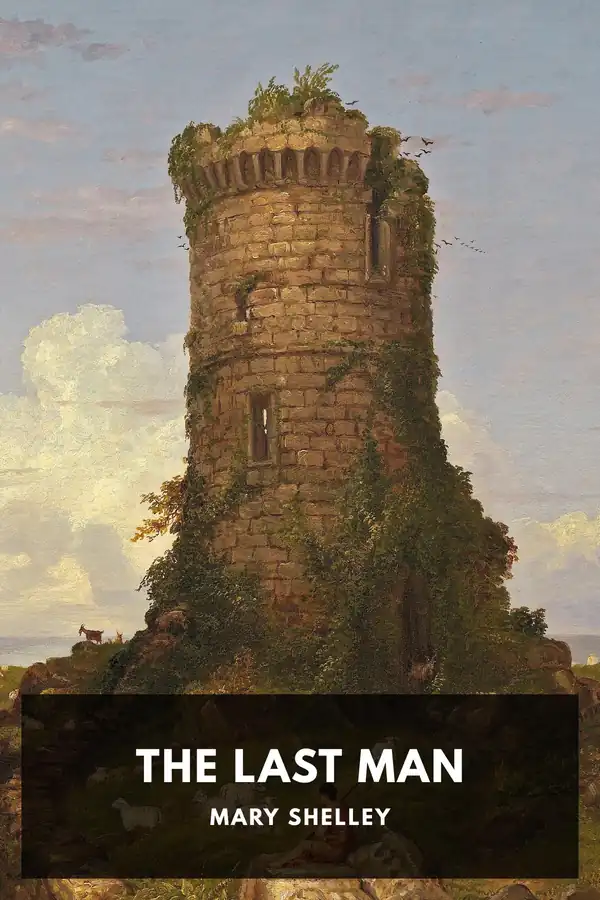
The Last Man
📖 Click to Read the Opening Pages Online Preview
A sea-surrounded nook: the opening of The Last Man
I am the native of a sea-surrounded nook, a cloud-enshadowed land, which, when the surface of the globe, with its shoreless ocean and trackless continents, presents itself to my mind, appears only as an inconsiderable speck in the immense whole; and yet, when balanced in the scale of mental power, far outweighed countries of larger extent and more numerous population. So true it is, that man’s mind alone was the creator of all that was good or great to man, and that Nature herself was only his first minister. England, seated far north in the turbid sea, now visits my dreams in the semblance of a vast and well-manned ship, which mastered the winds and rode proudly over the waves. In my boyish days she was the universe to me. When I stood on my native hills, and saw plain and mountain stretch out to the utmost limits of my vision, speckled by the dwellings of my countrymen, and subdued to fertility by their labours, the earth’s very centre was fixed for me in that spot, and the rest of her orb was as a fable, to have forgotten which would have cost neither my imagination nor understanding an effort.
My fortunes have been, from the beginning, an exemplification of the power that mutability may possess over the varied tenor of man’s life. With regard to myself, this came almost by inheritance. My father was one of those men on whom nature had bestowed to prodigality the envied gifts of wit and imagination, and then left his bark of life to be impelled by these winds, without adding reason as the rudder, or judgment as the pilot for the voyage. His extraction was obscure; but circumstances brought him early into public notice, and his small paternal property was soon dissipated in the splendid scene of fashion and luxury in which he was an actor. During the short years of thoughtless youth, he was adored by the high-bred triflers of the day, nor least by the youthful sovereign, who escaped from the intrigues of party, and the arduous duties of kingly business, to find never-failing amusement and exhilaration of spirit in his society. My father’s impulses, never under his own control, perpetually led him into difficulties from which his ingenuity alone could extricate him; and the accumulating pile of debts of honour and of trade, which would have bent to earth any other, was supported by him with a light spirit and tameless hilarity; while his company was so necessary at the tables and assemblies of the rich, that his derelictions were considered venial, and he himself received with intoxicating flattery.
This kind of popularity, like every other, is evanescent: and the difficulties of every kind with which he had to contend, increased in a frightful ratio compared with his small means of extricating himself. At such times the king, in his enthusiasm for him, would come to his relief, and then kindly take his friend to task; my father gave the best promises for amendment, but his social disposition, his craving for the usual diet of admiration, and more than all, the fiend of gambling, which fully possessed him, made his good resolutions transient, his promises vain. With the quick sensibility peculiar to his temperament, he perceived his power in the brilliant circle to be on the wane. The king married; and the haughty princess of Austria, who became, as queen of England, the head of fashion, looked with harsh eyes on his defects, and with contempt on the affection her royal husband entertained for him. My father felt that his fall was near; but so far from profiting by this last calm before the storm to save himself, he sought to forget anticipated evil by making still greater sacrifices to the deity of pleasure, deceitful and cruel arbiter of his destiny.
The free preview stops after the opening paragraphs of Volume I, chapter 1, and the complete thirty-chapter novel is in the download.
Download Full EPUB1826
~174,000 words (estimated)
Approx. 9.7 hours
Standalone
England, France and Italy in the late twenty-first century
30 chapters in three volumes
EPUB · AZW3 · KEPUB
1.16 MB (EPUB) · 1.33 MB (AZW3) · 1.20 MB (KEPUB)
Public domain in the United States
Project Gutenberg #18247 · Standard Ebooks
The Last Man is Mary Shelley’s future history of the end of the human race, published in 1826 and set in the last decades of the twenty-first century. Lionel Verney, a proud and penniless shepherd’s son from Cumberland, is drawn into the orbit of Adrian, Earl of Windsor, and into the political drama of his age: the abdication of England’s last king, the rise of Lord Raymond, and the loves and jealousies that divide the little circle around them. Then a plague arrives from the East, and the novel turns from drawing-room comedy into something far stranger. Shelley follows her dwindling survivors across a depopulated Europe to the empty streets of Rome, where one man is left.
Written in the aftermath of personal catastrophe, The Last Man reads at once as a political novel and as an elegy. The Last Man begins as a comedy of manners among the English aristocracy and ends with a single figure walking through an abandoned city, and the long middle is held by a plague that no government, no science and no courage can stop. Shelley’s prose is slower and more meditative than Frankenstein’s, full of set-piece descriptions of an emptying world. The text is available via Project Gutenberg and Standard Ebooks, so the whole novel is easy to read in a clean digital edition.
The Last Man by Mary Shelley: Summary, Characters & Themes
This page offers a summary and analysis of The Last Man, Mary Shelley’s 1826 novel about the extinction of the human race, together with a complete free edition for e-readers. Mary Shelley is best known for Frankenstein, the book that gave modern science fiction its founding myth, and The Last Man is her most ambitious attempt to work the same ground at a larger scale: not one man destroyed by his own creation, but a whole species undone by a bacterium it cannot see, fight or forgive. Readers who want the earlier novel beside this one can start with our Frankenstein edition, which shares the same fascination with creation, responsibility and grief. Both books are about the cost of a single act of overreach, though only one of them ends with the human race still in possession of its cities.
The novel opens with a frame story of unusual boldness. A traveller in Naples, wandering the gloomy cavern of the Cumaean Sibyl, finds scattered leaves covered with characters in many languages and spends years deciphering them; what he pieces together is the manuscript of Lionel Verney, the last surviving man. Shelley does not pretend the leaves are complete. The editor admits that they are “scattered and unconnected”, and that he has been obliged to add links, so the novel presents itself from the first as a broken record, assembled after the fact, whose gaps are part of its argument. The reader is therefore promised two things at once: a story and the ruins of a story.
Volume I is a novel of English society in the 2070s, and it is often very funny. Lionel, the son of a ruined courtier, grows up half savage in Cumberland, poaching the deer of Ulswater Park out of pure spite, until Adrian, Earl of Windsor, son of the king who abdicated in 2073, catches him in the act and disarms him with kindness. Adrian’s friendship makes Lionel human, in his own words, and it also gives him a place in the great world: at Windsor he meets Idris, Adrian’s sister, whom he will marry, and Lord Raymond, the republican leader and orator whose rise, marriage to Lionel’s sister Perdita, and affair with the Greek exile Evadne drive the first volume to its crisis. The politics are lively, the satire is dry, and the happiness of the Windsor circle is described with real warmth.
The second volume changes key. Raymond becomes Lord Protector, resigns, and goes to Greece to fight for its freedom; he dies storming Constantinople, and Perdita drowns herself at sea. As Lionel brings their daughter Clara home, the plague that has been burning in the East begins to move west. Shelley handles it with almost bureaucratic calm: hospitals report cases, ships arrive with dead crews, the government issues orders, and none of it matters. By the end of Volume II half of England is empty and the survivors are preparing to leave the island entirely. The shift is managed without a break in the narrator’s voice, which is one reason the book still feels modern.
The last volume is the one that made the book famous. The remnant, Adrian and Lionel, Clara, Lionel’s sons Alfred and Evelyn, and a few hundred others, crosses France, winters at Versailles, and moves south as their numbers fall. Each death is domestic and specific: a child buried under a cypress at Como, a ship lost in a storm off Venice, an old woman who refuses rescue. Lionel ends in Rome in 2100, alone, writing his account for no reader. The whole text is available from Project Gutenberg and Standard Ebooks; for the same apocalyptic current in a very different register, try our editions of The War of the Worlds and The Invisible Man.
Historical Context
The Last Man was published anonymously in three volumes in 1826 by Henry Colburn, the London publisher who specialised in fashionable novels, and it was not a success. Mary Shelley was twenty-eight, widowed four years, and responsible for a household that included her only surviving child and the debts of her father, William Godwin. The book is saturated with that season of grief. Percy Shelley had drowned in 1822, Byron died at Missolonghi in 1824, and the novel’s account of dying friends and emptying houses reads as a roman à clef of the final Romantic generation, with Raymond standing in for Byron and Adrian for Shelley. Its first readers, who knew the gossip, could map the dead onto the living with uncomfortable ease, and the book’s cold reception seems to have hurt her more than she admitted.
The premise had a tradition behind it. Grainville’s Le Dernier Homme, translated into English within a year of its French publication, had already imagined the extinction of mankind, and Byron’s short poem Darkness, published in 1816, had made the image of a burnt-out world famous. Shelley borrowed from both, but she replaced disaster with epidemiology: her apocalypse is not a fire or a flood but an infection that spreads along trade routes, is carried on ships, and is fought with quarantine, hospitals and imperial administration. The novel is fascinated by all the machinery of a modern state, and then shows the machinery grinding to a halt. Its closest literary relative is not a monster story but a disaster narrative, and its closest historical relative is the quarantine report.
The politics are also of their moment. Shelley grew up inside the radical circle of her father and mother, William Godwin and Mary Wollstonecraft, and wrote in the aftermath of the French Revolution and of the Napoleonic wars that had buried it. Her future England is a republic by default: the monarchy has ended by abdication, the Lords give way to an elected Protectorship, and the best of the aristocrats devote themselves to canals, bridges and a national gallery. The novel admires that programme and then asks what it is worth when the population it serves begins to die. The result is a political novel that refuses to console: reform is still worth doing, Shelley suggests, even when the future it was meant to serve has already been cancelled.
Key Characters & Literary Archetypes
- Lionel Verney: The narrator and the last man. The son of a ruined Cumberland gentleman, he is raised in poverty and near savagery, poaching Ulswater Park for revenge until Adrian catches him. Friendship teaches him to read, speak and govern himself; he marries Idris, becomes Raymond’s brother-in-law, and outlives everyone except the animals. His voice is proud, self-mocking and increasingly solitary, and his manuscript, written for no one, is the novel.
- Adrian, Earl of Windsor: Son of the king who abdicated in 2073, and Shelley’s portrait of a good man in public life. Where Raymond burns for glory, Adrian works by patience and persuasion; he is the figure who calms crowds, negotiates between rivals and, when the plague begins, holds an administration together. Lionel calls him the best of men. He is also no politician: his early love for the Greek exile Evadne nearly kills him, and he dies at sea with Clara in the last volume.
- Lord Raymond: The republican leader, orator and soldier whose ambition drives Volume I. Raymond’s eloquence wins him the Protectorship and he marries Lionel’s sister Perdita, but his old attachment to Evadne returns and destroys the marriage. He resigns his office, sails to Greece to fight for its independence, and dies storming Constantinople, leaving Lionel to recover his body from the ruins. He is the novel’s study of greatness without goodness, and its most convincing argument that public virtue and private loyalty rarely arrive together.
- Perdita: Lionel’s sister and the centre of the novel’s first tragedy. A visionary girl who reads at the window while her brother poaches, she is courted by Raymond at their cottage, marries him, and bears him a daughter, Clara. When she discovers his infidelity she becomes silent and proud rather than forgiving. She drowns herself in the sea after Raymond’s death, slipping from the cabin window of the ship at night while her daughter sleeps; her loss turns Lionel’s grief into the novel’s permanent weather, and the book never quite recovers its earlier lightness.
- Idris: Adrian’s sister, the Ex-Queen’s daughter, whom Lionel idolises from their first meeting at Windsor. Her mother forbids the match; she marries him anyway. Idris is the practical heart of the family, running the household, raising Clara and her own two sons, and nursing Lionel through the plague when he is close to death. The effort leaves her weak, and in January 2098, travelling to help a destitute family at Datchet, she dies of cold in a snowbound cottage near Egham. Her mother, at last, calls Lionel worthy of her.
- Clara: Raymond and Perdita’s daughter, brought out of Constantinople as a child and raised by Lionel. She is beautiful, gifted and increasingly remote; after Idris and young Evelyn die she withdraws into solitude and refuses Adrian’s company. She is lost with Adrian when their ship goes down in a storm near Venice, and her absence is the final loss that makes Lionel the last man. She is also, quietly, the novel’s best argument for a future that the plot then takes away from everyone.
Core Literary Themes
- The Last Man and the End of History: Shelley takes the ancient fantasy of the last survivor and gives it a modern shape: not a flood or a comet, but a plague that spreads along the trade routes of her own century, through ports, hospitals and quarantine lines, faster than governments can respond. The novel asks what history means when there is no one to inherit it. Its answer is bleak and precise. Monuments, laws and public works are revealed as promises made to future generations, and when the children are gone the promises become furniture in empty rooms.
- Plague and the Collapse of Order: The plague chapters are the most documentary in the book. Reports arrive, hospitals fill, officials issue instructions, and Adrian, who governs better than anyone in England, can only slow the process. Shelley is not anti-science: she credits quarantine, clean water and courage. What she shows is that the institutions built to defend a society depend on that society continuing to exist. Empire belongs to the same argument, because the infection enters Europe through the trade and war that connect it to Asia and the Mediterranean.
- Love, Friendship and the Domestic Affections: For all its grandeur, the novel is a family story. Its happiest pages are at Windsor, where Lionel, Idris, Adrian, Perdita and Raymond form a household in which friendship and marriage hold ambition in check. The plague does not attack ideas first; it removes the people through whom love is expressed. Each death is described in domestic detail, which is why the book’s bleakness feels intimate rather than abstract. The last man is not lonely because the world is empty but because he has lost a wife, a sister, two sons and a friend.
- Grief, Memory and Autobiography: Written after the deaths of Shelley, Byron and two of her children, the novel is an elegy in fictional dress. Readers have long identified Raymond with Byron, Adrian with Shelley, and Lionel with the author’s own grief, though Shelley complicates any simple key. What survives is a study of bereavement: the way ordinary routines continue, the way the dead appear in familiar rooms, the way memory becomes a kind of company. Verney writes his manuscript for no reader at all, which is close to what mourning feels like from the inside.
- Prophecy, Futurity and the Romantic Imagination: Shelley’s England of the 2070s is a thought experiment about where the reforms of her own day might lead: monarchy dissolved by choice, aristocracy converted into public service, science and engineering ascendant. The novel then tests that future with the oldest figure in literature, prophecy. The Sibyl’s leaves frame the story, Evadne’s dying curse predicts Raymond’s death, and the narrator writes at the end of the world in a city of ruins built by an earlier empire. Futurity and ruins turn out to be the same structure seen from two directions.
Why Download Our Custom E-Reader Edition of The Last Man?
This edition is prepared for people who read on phones, tablets and e-ink screens and who want a clean text rather than a scanned page. The novel is long, its chapters are long, and the three-volume structure is real: a reader who loses the thread in Volume II will not find it again by scrolling. Here the volumes and chapters are laid out clearly, the prose is set with proper italics and quotation marks, and the book opens at the point where you stopped reading.
The underlying text is a proofread transcription, not a raw scan, so the punctuation follows the nineteenth-century printing without the stray characters that optical recognition leaves behind. If you want to compare readings or check a passage, the Project Gutenberg edition is the standard reference for this novel and is worth keeping beside this one. Nothing in this file has been abridged, modernised or annotated away.
Above all, The Last Man is a book that grows with a reader. On a first pass it looks like a plague story; on a second it looks like a portrait of a marriage, and on a third like a study of public and private grief. It has been called an early work of science fiction and an elegy at once, and both descriptions are accurate. An e-reader makes that rereading practical, and the three volumes are quick to move between when you want to see how carefully the deaths are arranged.
- Based on the Standard Ebooks Edition, via Standard Ebooks — the volunteer press produces carefully proofread texts from public-domain sources, and their edition of The Last Man is the base for this page. The chapter divisions follow the three-volume original, so the structure of the 1826 book survives in your e-reader’s table of contents.
- Three formats in one download The same book is supplied as EPUB for most e-readers, AZW3 for Kindle and KEPUB for Kobo devices. Each file carries all three volumes and the complete text, with a linked table of contents and navigable chapters at both volume and chapter level.
- No DRM, no account, no expiry The files open on any reader you own and can be moved, backed up and converted without asking permission. There is no login, no reader app to install and no copy protection to work around, so the book still works in ten years on hardware nobody has designed yet.
- Prepared for long reading The typography is sized for sustained reading, with generous line spacing and clear headings at each volume and chapter. Furniture on the page is kept simple, so that page numbers and progress indicators remain the only interruptions, and the notes you need are the notes you can ignore.
- Frankenstein — free EPUB, AZW3 & KEPUB
- The War of the Worlds — free EPUB, AZW3 & KEPUB
- The Invisible Man — free EPUB, AZW3 & KEPUB
Chapter summaries
The novel runs to thirty chapters in three volumes. The groupings below follow the printed volumes rather than the e-reader’s chapter breaks, and they are arranged in reading order, so you can trace how a comedy of manners becomes the record of a dying world.
- Volume I, chapters 1–2 — the shepherd’s son; Adrian: Lionel Verney introduces himself as the son of a ruined Cumberland gentleman, raised in poverty with his sister Perdita after their parents’ deaths. He poaches the deer of Ulswater Park out of boredom and spite, and dreams of a revenge he cannot name. The park belongs to the family of Adrian, Earl of Windsor, son of the king who abdicated in 2073, and when Adrian arrives to inspect his estate he catches the poacher and, instead of punishing him, talks to him. The friendship that follows is the hinge of the book.
- Volume I, chapters 3–5 — Evadne; Lord Raymond; the Protectorship: Adrian’s hopeless love for the Greek exile Evadne, and Lionel’s awkward role as messenger, fill the opening of this group; Evadne leaves for Paris and Adrian’s health collapses. Into the melancholy comes Lord Raymond, the republican orator, who visits Perdita’s cottage and argues with Lionel about ambition and friendship. The debate over the Protectorship follows, with Raymond’s great speech in Parliament, and by the end Lionel has understood two things: that he loves Idris, and that his sister loves Raymond.
- Volume I, chapters 6–8 — Idris; a wedding at Windsor; the first crack: Lionel’s poverty keeps him away from Windsor until Idris defies her mother and marries him, and the novel gives its characters a season of happiness. Perdita and Raymond have a daughter, Clara; Lionel and Idris settle; Adrian recovers his spirits. Then the first cracks appear. Adrian’s health fails again, and Raymond, now Lord Protector, throws himself into public works while renewing his intimacy with Evadne. The volume ends with a question that hangs over everything that follows: what did Perdita see?
- Volume I, chapters 9–11 — Perdita’s grief; Raymond sails for Greece: Perdita discovers the affair and withdraws into silence; Raymond, confronted, confesses and resolves to resign the Protectorship and leave for Greece. Lionel spends the last chapters trying to reconcile a sister who will not be reconciled, and the two of them travel north of England while the decision settles. Raymond sails for Greece in the closing pages, and the volume ends with the family divided, the plague still a rumour from the East, and no reader yet aware of how completely the political plot is about to be abandoned.
- Volume II, chapters 1–3 — Constantinople; a prophecy; a funeral at sea: The second volume opens with Lionel, Perdita and Clara sailing to Greece, where they find Athens, a dying Evadne disguised as a soldier, and her prophecy that Raymond will die. Raymond is besieging Constantinople when the plague breaks out inside the city, and he storms it himself rather than wait. Lionel finds his body in the ruins and buries him outside the walls; Perdita, unable to bear it, drowns herself at sea. Lionel takes Clara home, and on the voyage the survivors meet a drifting ship whose crew is dead.
- Volume II, chapters 4–6 — 2092; the plague reaches England: The plague recedes and the novel allows itself a year of peace. Lionel returns to his estate in the autumn of 2092 to find Idris and the children well, and for a moment the book reads like a domestic idyll in which no one dies by another’s hand. The weather then turns strange, the infection reappears in the south of France, and by 2094 it is in the London hospitals. Lionel, watching his wife and children, decides to join Adrian and help govern a city that is beginning to empty.
- Volume II, chapters 7–9 — flight from London; an island emptying: London empties. Lionel rides out past Egham and Bishopgate, past Perdita’s abandoned cottage, through crowds of refugees, and sends Idris and the children ahead to Windsor while he goes to Adrian. The last chapters of the volume describe an administration doing what it can: hospitals, burials, food, and orders that arrive too late. In October half of England is desolate, refugees from North America land in Ireland, and the English begin to leave the island. The volume ends on the road.
- Volume III, chapters 1–3 — Alfred; Idris at the bedside; a death at Windsor: The last volume opens with a country whose children are gone. In the autumn of 2096 Adrian proposes that the survivors leave England altogether, and the household at Windsor prepares to go. Just before departure Alfred, Lionel’s elder son, sickens and dies; Lionel himself falls ill, and Idris nurses him for three days and nights until she collapses. They leave London on 1 January 2098, and in a snowstorm the carriage breaks down. Idris dies in a roadside cottage near Egham; Lionel buries her in the Windsor vault beside Alfred.
- Volume III, chapters 4–6 — Paris; Versailles; the Countess of Windsor: The survivors cross England one last time, revisiting Windsor, Datchet and the cottage where Perdita lived, and then France. In Paris Adrian quells a dispute in the street; at Versailles the remnant finds a castle large enough to shelter them for a winter of foraging and dying. The old Countess of Windsor, Idris’s mother, refuses to be rescued from a plague-stricken man and stays behind to die with him. In the spring they leave Paris, fewer than when they arrived, for the south.
- Volume III, chapters 7–8 — fifteen hundred souls; Como; Evelyn: The journey south is the novel’s most beautiful and most desolate sequence. The survivors pass through an empty France into Switzerland, along Lake Geneva and into the Alpine ravines, and at a villa near Como Lionel’s younger son Evelyn dies and is buried under a cypress. Clara, who has nursed him, becomes withdrawn and silent. On 15 August they leave for Rome, with a party small enough to be counted, and the reader begins to understand that the count will reach one.
- Volume III, chapter 9 — Venice; the storm; Ravenna: At Como the party rests, then moves to Venice because Adrian wants to see it, and takes ship. A storm catches them in the night; the vessel breaks up, and Adrian and Clara are lost. Lionel is thrown ashore on the Italian coast, half-drowned, and walks inland to Ravenna, where he finds oxen, horses and dogs in the streets and no human being at all. He paces the empty town until nightfall. It is the first chapter in which he is genuinely alone.
- Volume III, chapter 10 — Rome, 2100; the last man: The final chapter is a coda in the empty city. Lionel, the last man, wanders through Rome, sleeps in palaces, reads in libraries, and writes the manuscript that the frame story will later claim to have found. He thinks back to the shepherd boy Adrian befriended, and forward to nothing. Winter comes in 2100, the gardens of Rome lose their leaves, and the book ends with him alone among the ruins, the last Englishman, the last European, the last of his species.
The Last Man: Frequently Asked Questions
Is The Last Man a difficult novel to read?
How long is The Last Man?
Is The Last Man a sequel to Frankenstein?
Do I need to know the politics of the 1820s to follow it?
Is the plague in the novel based on a real disease?
Where is The Last Man set?
Is The Last Man in the public domain?
How do I download The Last Man for my e-reader?
Part of: Gothic & horror classics · Victorian era