Frankenstein by Mary Shelley (Free EPUB, AZW3, KEPUB)
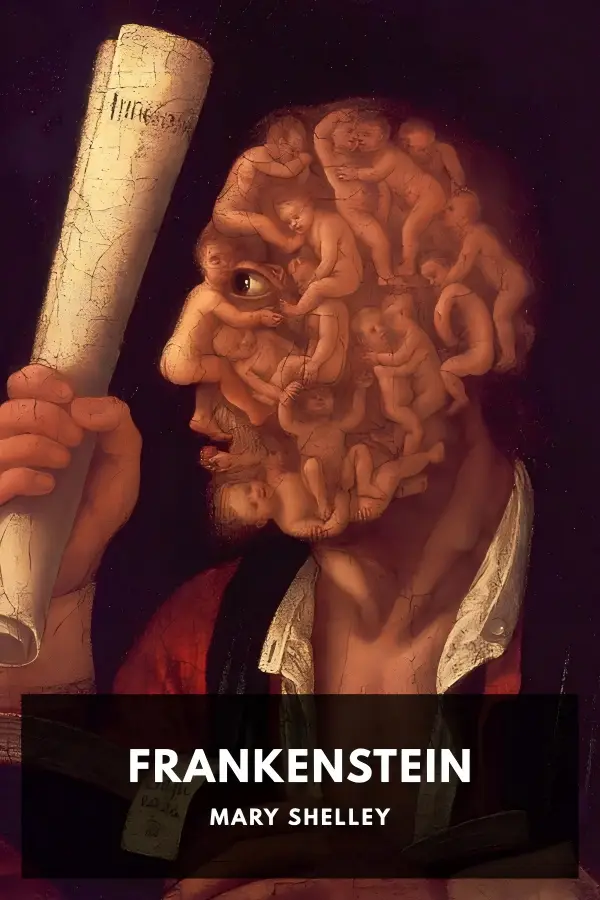
Frankenstein
📖 Click to Read Letter I Online Preview
Letter I
To Mrs. Saville, England.
St. Petersburgh, Dec. 11th, 17—.
You will rejoice to hear that no disaster has accompanied the commencement of an enterprise which you have regarded with such evil forebodings. I arrived here yesterday, and my first task is to assure my dear sister of my welfare and increasing confidence in the success of my undertaking.
I am already far north of London, and as I walk in the streets of Petersburgh, I feel a cold northern breeze play upon my cheeks, which braces my nerves and fills me with delight. Do you understand this feeling? This breeze, which has travelled from the regions towards which I am advancing, gives me a foretaste of those icy climes.
Inspirited by this wind of promise, my daydreams become more fervent and vivid. I try in vain to be persuaded that the pole is the seat of frost and desolation; it ever presents itself to my imagination as the region of beauty and delight.
Enjoying the opening letters? Download the complete, unabridged novel to read on your e-reader.
Download Full EPUB
About Mary Shelley’s Frankenstein
Conceived during the legendary storm-lashed summer of 1816 at Villa Diodati near Lake Geneva and published anonymously in London in 1818, Frankenstein; or, The Modern Prometheus is Mary Shelley’s haunting masterpiece. Written when Shelley was only nineteen years old, it is universally recognized as the pioneering foundation of modern science fiction. This editions.ink edition is based on the Standard Ebooks version, derived from the 1831 text (Project Gutenberg #42324) and Internet Archive scans, and the novel is in the public domain in the United States.
Confronting the dawn of the Industrial Revolution and early electrical experiments with galvanism, Shelley crafted a profound cautionary tale. She questioned the moral boundaries of unchecked human ambition and scientific creation.
Framed through the Arctic letters of explorer Captain Robert Walton, the novel follows Victor Frankenstein, a brilliant Genevan student obsessed with conquering human mortality. Assembling human body parts gathered from charnel houses and laboratories, Victor infuses a spark of life into an eight-foot creature. The novel is structured as a frame narrative: Walton’s letters enclose Victor’s story, which in turn encloses the Creature’s account.
Horrified by the hideous visage of his living creation, Victor flees in disgust, abandoning the nameless newborn being to the elements. Left without guidance, parental love, or social acceptance, the Creature learns language and empathy by secretly watching a family of poor cottagers, and he later reads Paradise Lost, Plutarch’s Lives, and The Sorrows of Werther.
When the terrified villagers drive him away with stones and fire, the Creature’s innate benevolence curdles into vengeful fury. He tracks his maker across Europe, demanding an artificial female companion or promising total annihilation of Victor’s loved ones.
Victor’s refusal ignites a ruthless cycle of murders—claiming his younger brother, his dear friend Clerval, and his bride Elizabeth on their wedding night. The narrative culminates in a desperate, freezing pursuit across Arctic ice, locking creator and created in mutual ruin. The novel has 24 chapters, plus Walton’s letters and the Creature’s narrative.
Key Characters & Literary Archetypes in Frankenstein
- Victor Frankenstein (The Modern Prometheus & Hubristic Creator): The driven natural philosopher whose obsession with usurping nature blinds him to moral responsibility. He represents the archetype of scientific brilliance unmoored from ethical empathy, doomed by fleeing the consequences of his own intellect.
- The Creature (The Noble Savage & The Abandoned Orphan): Born innocent and eager for affection, the nameless being embodies Jean-Jacques Rousseau’s idea of innate goodness corrupted by societal cruelty. He mirrors Milton’s Adam and fallen Satan, demonstrating how systematic exclusion transforms longing for companionship into destructive vengeance.
- Captain Robert Walton (The Mirrored Seeker & Audience Proxy): The ambitious Arctic explorer sailing toward the North Pole. Hearing Victor’s dying confession amidst the polar ice, Walton serves as Victor’s double, ultimately learning to temper dangerous scientific obsession with human preservation.
- Elizabeth Lavenza (The Domestic Angel & Innocent Sacrifice): Victor’s adopted cousin and devoted betrothed. She represents the pure domestic sanctuary and emotional warmth that Victor continually abandons in his monomaniacal quest, becoming the ultimate casualty of his hubris.
- Henry Clerval (The Humanistic Anchor): Victor’s loyal childhood friend who pursues languages, poetry, and moral philosophy. He acts as the grounded humanist foil to Victor’s detached scientific fanaticism.
Core Literary Themes & Historical Significance of Frankenstein
- The Modern Prometheus and Usurping Nature: Shelley invokes ancient Greek myth to warn against intellectual arrogance. Stealing the fire of biological creation without understanding moral consequences leads inevitably to catastrophic self-destruction.
- Parental Responsibility vs. Monstrous Abandonment: The novel poses a central ethical indictment: the true monster of the narrative is not the creature assembled from clay, but the creator who gives life and immediately abdicates moral care.
- Prejudice, Isolation, and the Origin of Cruelty: Shelley reveals that human society judges solely by external physical beauty. The tragic descent of the Creature demonstrates that monstrosity is not an inborn condition, but an inevitable reaction to unrelenting societal rejection and loneliness.
Why Download Our Custom E-Reader Edition of Frankenstein
Many digital editions of Frankenstein circulating online mix text from the 1818 and 1831 versions, or disrupt Walton’s intricate nested epistolary structure. Our custom digital library editions have been carefully crafted for modern electronic paper hardware:
- Authoritative 1831 Text: Meticulously typeset and verified against the 1831 edition of Frankenstein, the version Mary Shelley revised and expanded, as transcribed by Project Gutenberg (#42324) and cross-checked against Internet Archive scans.
- Mobile-Optimized E-Ink Typography: Formatted with clean proportional drop caps, comfortable line height, and balanced paragraph indents designed to eliminate eye fatigue and ghosting on E-Paper displays and mobile devices alike.
- Universal Device Readiness: Download reflowable EPUB (compatible with Apple Books, Onyx Boox, and Moon+ Reader), Amazon-ready AZW3 (tailored for Kindle Paperwhite, Oasis, and Scribe), and dedicated KEPUB (providing per-chapter reading progress and instant pagination on Rakuten Kobo readers).