The Sea-Wolf by Jack London: Free EPUB, AZW3 & KEPUB Download
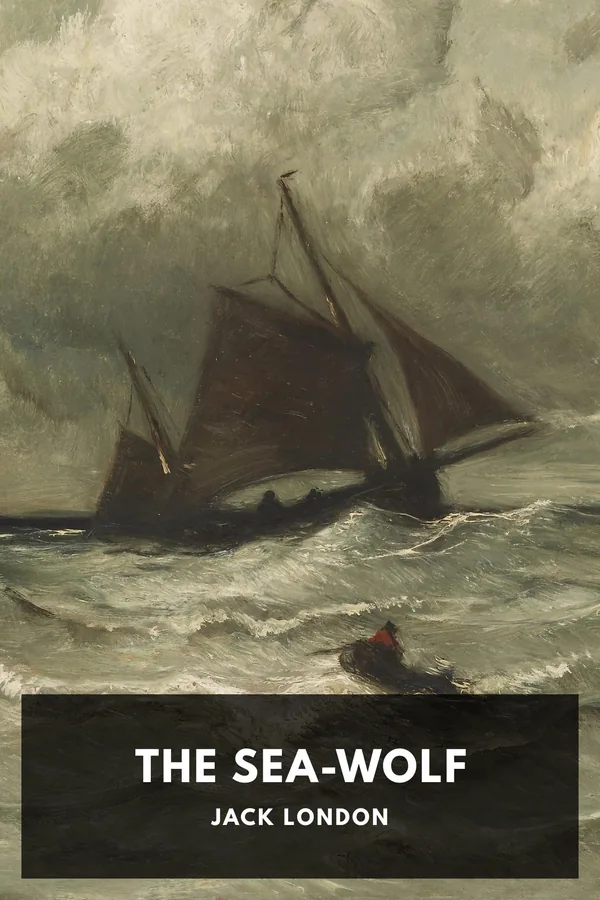
The Sea-Wolf
📖 Click to Read the Opening Pages Online Preview
The opening of Chapter 1
Not but that I was afloat in a safe craft, for the Martinez was a new ferry steamer, making her fourth or fifth trip on the run between Sausalito and San Francisco. The danger lay in the heavy fog which blanketed the bay, and of which, as a landsman, I had little apprehension. In fact, I remember the placid exaltation with which I took up my position on the forward upper deck, directly beneath the pilothouse, and allowed the mystery of the fog to lay hold of my imagination. A fresh breeze was blowing, and for a time I was alone in the moist obscurity—yet not alone, for I was dimly conscious of the presence of the pilot, and of what I took to be the captain, in the glass house above my head.
I remember thinking how comfortable it was, this division of labour which made it unnecessary for me to study fogs, winds, tides, and navigation, in order to visit my friend who lived across an arm of the sea. It was good that men should be specialists, I mused. The peculiar knowledge of the pilot and captain sufficed for many thousands of people who knew no more of the sea and navigation than I knew. On the other hand, instead of having to devote my energy to the learning of a multitude of things, I concentrated it upon a few particular things, such as, for instance, the analysis of Poe’s place in American literature—an essay of mine, by the way, in the current Atlantic. Coming aboard, as I passed through the cabin, I had noticed with greedy eyes a stout gentleman reading the Atlantic, which was open at my very essay. And there it was again, the division of labour, the special knowledge of the pilot and captain which permitted the stout gentleman to read my special knowledge on Poe while they carried him safely from Sausalito to San Francisco.
A red-faced man, slamming the cabin door behind him and stumping out on the deck, interrupted my reflections, though I made a mental note of the topic for use in a projected essay which I had thought of calling “The Necessity for Freedom: A Plea for the Artist.” The red-faced man shot a glance up at the pilothouse, gazed around at the fog, stumped across the deck and back (he evidently had artificial legs), and stood still by my side, legs wide apart, and with an expression of keen enjoyment on his face. I was not wrong when I decided that his days had been spent on the sea.
The excerpt below quotes the opening three paragraphs of Chapter 1, in which the narrator explains how he came to be on the water at all, describes the ferry Martinez running through a January fog from Sausalito to San Francisco, and then hears, in that fog, the whistle of a steamer that is far too close.
Download Full EPUB1904
~107,000 words (estimated)
Approx. 5.9 hours
Standalone
The Pacific, from a fogbound ferry crossing in San Francisco Bay to the seal herds of the Bering Sea and a small island where the schooner Ghost is wrecked.
Thirty-nine chapters grouped into fourteen parts
EPUB · AZW3 · KEPUB
0.71 MB (EPUB) · 0.80 MB (AZW3) · 0.75 MB (KEPUB)
Public domain in the United States
Project Gutenberg #1074 · Standard Ebooks
The Sea-Wolf is Jack London’s novel of 1904, told by Humphrey Van Weyden, a thirty-five-year-old essayist who is pulled out of San Francisco Bay after a ferry collision and carried off by the seal-hunting schooner Ghost. Her captain, Wolf Larsen, keeps him aboard as cabin boy and then mate, and argues while he works him that life is a ferment and the strong eat the weak. When the Ghost rescues Maud Brewster from a foundering mail steamer, Larsen’s brutality turns toward her, and Van Weyden stabs him and takes her away in an open boat. They are cast ashore on an island where the Ghost later drives aground, dismasted, with Larsen aboard and going blind.
The book is a first-person narrative with a long middle of argument: Larsen defends his creed in the language of Spencer and Darwin, and the educated man who came aboard as Hump answers him with Shakespeare, Browning and the poets he loves. A growth in Larsen’s brain takes his sight and then his body, and the last third is a survival story, with a wrecked schooner rebuilt on a beach by two people while a blind hunter keeps cutting their rigging. Wikipedia’s entry on the novel covers its reception and the long argument about Larsen’s philosophy. — The text is available via Project Gutenberg #1074 and Standard Ebooks.

The Sea-Wolf by Jack London: Summary, Characters & Themes
This page offers a summary and analysis of The Sea-Wolf, with its thirty-nine chapters set out in reading order, the people of the Ghost described, and the voyage from San Francisco Bay to a seal rookery in the Bering Sea read beside the argument the novel keeps having with itself. Jack London published the book in 1904, and the edition that carried it first was Macmillan’s, in New York. What the novel does is narrower than its reputation: it takes an educated man who has never reefed a sail and puts him on a schooner where the only currency is strength, and lets the reader watch him learn the trade or break. The page follows the novel chapter by chapter, so it can be read beside a copy rather than instead of one.
The story is told by Humphrey Van Weyden, a critic and essayist of thirty-five who has never done a day’s physical work. Drowned in a ferry collision, he is hauled aboard the Ghost and told he will serve as cabin boy at twenty dollars a month; when the mate dies in a fight, he is made mate at seventy-five. Larsen calls him Hump, and the nickname holds until Van Weyden can stand a watch, steer, go aloft and handle men. The first half of the book is that education; the second half, after Maud Brewster comes aboard, is the escape. The text this page describes is the Standard Ebooks edition, and a complete reading text also sits at Project Gutenberg #1074. Nothing is skipped: the fogs, the seal hunts, the typhoon that takes three boats and the two winters of the last third are all here.
The crew is drawn with the same care as the captain. Thomas Mugridge, the Cockney cook, steals from the men, informs on them and terrorises Van Weyden with a knife until a dirk bought from Louis settles the galley. Johansen, the mate, left Sweden at eighteen and has never been home. George Leach, sixteen, is knocked down and made a boat puller, then spends the voyage trying to kill Larsen. Louis the boat steerer has sailed a dozen seasons and reads the sky like a farmer. Against them Larsen stands alone, and the novel keeps him alone on purpose, with a bookcase and nobody to talk to. The hunters, Smoke and Henderson, Kerfoot and Latimer, shoot each other in the steerage and lose fingers to the winch, and are as brutal as their captain without his mind. Oofty-Oofty, the Kanaka, is the best seaman aboard, and the one Larsen treats with something like respect.
The argument of the novel is Larsen’s. He believes that life is a ferment, that the strong eat the weak, and that men are moved by desire rather than by souls, and he reads Spencer to support it. Van Weyden, trained on the Atlantic and on Browning, argues back for moral courage and finds the words easier than the practice: he cannot shoot an unarmed man, and Larsen tells him exactly why. The two wolf-dog novels, The Call of the Wild and White Fang, put the same question to a dog instead of a man, and are worth reading beside this one. The sea-wolf of the title is Larsen himself, and the book lets him be magnificent as well as cruel, which is what makes the argument worth having.
The rest of the book belongs to the sea. Storms wreck the Ghost’s boats, a shark takes a man’s foot, fog hides a steamer’s lights, and two people rebuild a dismasted schooner on a beach with a boom for a derrick. The last chapters are a lesson in competence, and the novel’s happiest passages are the ones where someone learns to do a difficult thing well. For another sea adventure of the period, with a schooner, a map and a mutiny, see Treasure Island; that edition is free to download too. The island chapters, with their seals, their stone hut and their wrecked schooner, are the strangest part of the book and the part most readers carry away.
Historical Context
The Ghost is a sealing schooner, and the novel is exact about what that means. The hunters are not paid wages but a lay, a share of the skins, and they buy clothes and tobacco from the ship’s slop chest against that share, which is why Johnson’s complaint about shoddy oilskins ends in a beating. The herd the schooner follows migrates north to the Bering Sea rookeries, where the crews go in among the bulls and the holluschickie, the young bachelors, and take skins for women’s furs. The sea is patrolled, the Russians are feared, and the Macedonia’s fourteen boats, double the usual number, are a sign of what the trade had become. The crews sign on for a season and are paid when the voyage ends, which gives the captain a hold over every man aboard.
Larsen’s creed belongs to the argument of its decade. He quotes Spencer on altruism and Darwin on the struggle, holds that the strong eat the weak, and keeps Shakespeare, Tennyson, Poe and Browning on the same shelf as Tyndall and Bulfinch. Van Weyden’s world of Atlantic essays, Browning societies and poetry readings is set against him; Maud Brewster earns eighteen hundred dollars a year by paper, ink and a typewriter, and is recognised by a review he wrote of her seven thin volumes. The book is a debate about whether moral courage means anything in a sealed world with one man’s will in it. Van Weyden’s own essay on Poe, written for the Atlantic, is the credential that makes him useless on deck and useful in the cabin.
The machinery is of the period too: a ferry steamer in the fog off San Francisco, a mail steamer disabled in a typhoon, a small cannon on a sealing steamer, and schooners that work entirely by sail and muscle. The Ghost is eighty tons, with seven boats and twenty-two men; the island where she ends is uninhabited, with a rookery, a wrecked boat and no station. London published the novel in 1904, and its ships, its shares and its weather belong to a world of commercial sail that the book takes for granted and its readers no longer know. The novel has almost no machines it cannot show working, and that is part of its hold on a reader.
Key Characters & Literary Archetypes
- Humphrey Van Weyden: The narrator, thirty-five, a critic who wrote a noted essay on Poe and had never done manual work. He cannot swim when the ferry sinks, and learns seamanship aboard the Ghost from Louis and the sailors, rising from cabin boy to mate. Larsen calls him Hump, and his refusal to kill Larsen when he has the chance is the novel’s moral test.
- Wolf Larsen: Captain of the Ghost, a Dane born within a hundred miles of Romsdal Fjord, self-taught in navigation, mathematics and literature. He keeps a bookcase and a Browning, argues that life is a ferment and the strong eat the weak, and enforces the creed with his fists. Headaches blind him, a growth in his brain paralyses him, and he dies at sea.
- Maud Brewster: A poet and essayist of twenty-seven, from Cambridge, rescued with four men from the mail steamer City of Tokyo. Van Weyden has reviewed her seven thin volumes and called her the American Mrs. Meynell. Aboard she insists on moral courage and forms a secret alliance with him; on the island she learns to steer, to sew sails with a palm and needle, and to hold her nerve.
- Thomas Mugridge: The Cockney cook, who wants to be called Mr. Mugridge, steals from the men and informs on them. He terrorises Van Weyden with a knife until a dirk from Louis settles the galley, is towed over the side on Larsen’s order, loses a foot to a shark, and burns his hand on the stove while reciting a life of hospitals.
- Johansen: The mate, a Swede of thirty-eight who left home at eighteen and has not seen it since; he shouts his orders in his sleep and is moved forward for it. He tells Van Weyden about his mother and the passage home he means to buy, and is killed in the forecastle attack on Larsen.
- George Leach: The cabin boy of sixteen, from Telegraph Hill, knocked down and made a boat puller. He stabs Mugridge, curses Larsen to his face, throws a sheath knife and drops a marlinspike on him, and finally deserts with Johnson in boat No. 3, to be left to drown when Larsen sails away from them.
Core Literary Themes
- The ferment and the strong: Larsen states the creed early and is tested on it to the last page. Life, he says, is a mess, a ferment, and the big eat the little; the strong eat the weak; a man can wrong only himself. He keeps the creed literal, beating Johnson, drowning Leach and Johnson, and telling Van Weyden that morality is a convention he cannot afford. The novel does not refute him with argument; it lets time and a tumour refute him, and leaves him dead with the creed intact. Maud’s answer, that the soul decides, is the counter-argument, and the book leaves the two of them standing. Maud hears him out and answers with the poets.
- Standing on your own legs: Van Weyden arrives unable to swim, row or steer, and the book follows his education in exact stages: cabin boy, cook, mate, boat handler, shipwright. Larsen’s congratulations, that he can now fire his father’s legs back into the grave, are the closest the novel comes to a moral. The masts raised on the island with a pair of shears and a boom derrick are that education made visible, and Maud’s hands are as blistered as his. The interest is in the small steps, not in the final triumph.
- Moral courage: Maud asks Van Weyden for moral courage, and the phrase is tested at the end of a knife: he cannot pull the triggers on an unarmed blind man, and Larsen tells him that his conventional morality is stronger than he is. The novel is careful here. The refusal is not staged as virtue rewarded; it is a fact about him, and it sits beside the other fact, that he stabbed Larsen in the shoulder to save Maud. What the book finally asks is whether a man can be brave without being good.
- The sea that keeps no accounts: “The sea is the great faithless one,” Van Weyden says, and the weather does what the creed says nature does: it kills Holyoak and Williams in a capsized boat, drowns the deserters, drives an open boat the wrong way for twenty days and then, without justice, gives the two of them an island. The storms are not punishment and the calms are not mercy, which is exactly the point. By the end the sailors have stopped asking the sea for reasons.
- Love under the eye of the wolf: The love story is kept quiet and practical: given names instead of declarations, a shared watch, seal meat and mended sails. Van Weyden decides in the boat that “it is better and finer to love than to be loved”, and the ending answers him with “my one small woman” and a kiss before the cutter’s crew come over the side. Larsen’s desire for Maud is the shadow that makes the courtship urgent. Their first kiss comes after the last of Larsen’s cruelty, which is the order the novel wants.
Why Download Our Custom E-Reader Edition of The Sea-Wolf?
The download is the whole novel: thirty-nine chapters, from the ferry collision in the first paragraph to the revenue cutter in the last, with the chapter numbers the edition prints and nothing abridged. The text is the Standard Ebooks edition, set from the Project Gutenberg transcription made by David Price and the Distributed Proofreaders, and the spelling and punctuation are the edition’s. The chapter numbers match the edition, so a passage found here can be looked up in the novel.
Around the text the page supplies what a long voyage needs: fourteen grouped chapter summaries that stop where their chapters stop, six character notes, five themes, and a note on the sealing trade and the argument the novel keeps having. The groups are ours; the chapters and their numbering are not. It is meant to be used, not read once and put away.
The files come in three formats with the same text and the same chapter breaks. The EPUB opens in Apple Books, Calibre and most Android readers; the AZW3 is the file for a Kindle, by USB or through Send to Kindle; the KEPUB is the one Kobo devices read best. No account is needed for any of them. Nothing in the downloads is locked, watermarked or time limited.
- Based on the Standard Ebooks Edition, via Standard Ebooks, whose text of The Sea-Wolf is set from the Project Gutenberg transcription by David Price and the Distributed Proofreaders.
- Complete text in thirty-nine chapters Every chapter from the Martinez collision to the revenue cutter, numbered as the edition numbers them, with no chapter text abridged.
- Chapter summaries in reading order Fourteen grouped summaries from the ferry to the rescue, each keyed to the chapters it covers and stopping at their end.
- EPUB, AZW3 and KEPUB files The same text in three formats, for Apple Books, Kindle and Kobo, with the chapter breaks and the chapter numbers intact.
- London’s Klondike novel of 1903, the story of Buck the dog, and the nearest of his books to this one in subject: a creature learning the law of strength. — free EPUB, AZW3 & KEPUB
- The companion novel of 1906, the same frozen north told from the wolf’s side, with a dog’s-eye view of the struggle between wildness and civilisation. — free EPUB, AZW3 & KEPUB
- Stevenson’s 1883 sea adventure, with a schooner, a treasure map, a one-legged cook and a mutiny, and the book most often set beside this one for the voyage alone. — free EPUB, AZW3 & KEPUB
Chapter summaries
The novel has thirty-nine chapters and prints no titles. The edition numbers them and keeps them plain, so the chapter numbers here are the edition’s, and the fourteen group names are ours, added to make the book easy to follow. Each group begins where its first chapter begins and stops where its last chapter stops, so the page can be read beside the novel without running ahead of it. Chapters are cited by number throughout. The numbering is the same in all three downloads.
- Chapters 1–2 — The Martinez and the Ghost: The ferry Martinez is cut down by an unseen steamer in a January fog and sinks. Van Weyden, who cannot swim, holds to a life belt until the sealing schooner Ghost picks him up. Captain Wolf Larsen inspects his soft hands, names him Hump, and offers him the cabin boy’s berth at twenty dollars a month.
- Chapters 3–5 — Articles, a bookcase and a stolen purse: Van Weyden signs the articles and is sent to the cook, Thomas Mugridge. The pilot boat Lady Mine passes without taking him ashore. In Larsen’s stateroom he finds Shakespeare, Darwin, Spencer and a Browning, and hears the creed that life is a ferment and the strong eat the weak. Mugridge robs him of a hundred and eighty-five dollars.
- Chapters 6–8 — The Ghost at sea: Louis tells the forecastle what Larsen did at Hakodate. Harrison is sent eighty feet up the gaff and hangs there while Larsen forbids anyone to help him. The northeast trades then drive the schooner at ten knots, and in the cabin Larsen wins the stolen money back at Nap and argues Spencer with his unwilling passenger.
- Chapters 9–11 — A crushed arm and a dirk: Larsen grips Van Weyden’s biceps until the arm is numb for weeks. Mugridge sharpens a knife for days, so Van Weyden trades five cans of condensed milk to Louis for a dirk and faces the cook in the galley doorway. Larsen shows him a navigation device he means to patent, tells how he educated himself at sea, and reads Ecclesiastes and Omar Khayyam.
- Chapters 12–13 — The carnival of brutality: Larsen and the mate beat Johnson senseless for complaining about the oilskins in the slop chest. Leach curses the captain in front of the crew and is watched with curiosity. The cabin boy plants a knife in the galley woodwork and vows to do for the mate. Mugridge burns his hand and recites a life of hospitals, scurvy and broken bones.
- Chapters 14–15 — The forecastle and the mate’s berth: Johansen talks of Sweden and the passage home he never takes. That calm night Larsen climbs back aboard by the log line with his cheek cut open, and the watch in the forecastle attacks him in the dark; seven men cannot hold him. Van Weyden sews his scalp, is made mate at seventy-five dollars a month, and is told he now stands on his own legs.
- Chapters 16–18 — The hell ship, a typhoon and a woman: Larsen takes his revenge on the crew with petty tyranny. Leach throws a knife and drops a marlinspike from the crosstrees; Harrison and Kelly fail to escape at Wainwright Island. In the June typhoon the Ghost loses three boats and their crews. Days later a boat is sighted with four men of the mail steamer City of Tokyo, and one woman.
- Chapters 19–21 — A promise and a shark: Larsen promises not to lay hands on Leach, then sails away from the deserters’ boat until it is lost in a squall. Maud Brewster is given the spare cabin and recognised by Van Weyden at table. Mugridge is towed over the side for the crew’s amusement; a shark takes his foot, and Larsen calls it man-play.
- Chapters 22–24 — The alliance and the Macedonia: Maud asks Van Weyden how he could permit the drowning, and the two agree to dissimulate and keep out of Larsen’s way. North, the Ghost meets the Macedonia, Death Larsen’s steamer, which hogs the sea with fourteen boats. Larsen talks of purses and souls, admits he envies men who believe, and looks at Maud with desire.
- Chapters 25–27 — The hog, the fog and the open boat: Larsen plays the hog in return, luring the Macedonia’s hunters aboard for a gam and taking seven boats. A cannon fires out of the fog and the Ghost escapes unseen. That night, after the whisky, Larsen seizes Van Weyden’s throat and then Maud; Van Weyden stabs him, finds him blind, and the two slip away in an open boat.
- Chapters 28–30 — Endeavour Island: Twenty days of storm drive the boat the wrong way. They land on a small island, make fire from a shotgun shell and a rock, and find a rookery of seals and a wrecked boat marked Gazelle No. 2. Building a stone hut, they discover they have no meat for winter and no marksman, and go to club young seals.
- Chapters 31–33 — The Ghost on the beach: A sealskin roof, a seal-oil lamp and a winter of jerked meat follow. Then, after a gale, the Ghost drives ashore, dismasted and deserted, with Larsen aboard. Van Weyden raids the lazarette, cannot shoot him, and learns that Death Larsen has marooned his brother and that the captain is going blind.
- Chapters 34–36 — The shears and the sabotage: Van Weyden decides to put the masts back into the Ghost and invents a pair of shears to lift them. Larsen cuts the guys, breaks the windlass and turns the masts adrift; Maud and Van Weyden tow them back through a night at sea. When Larsen grips Van Weyden’s throat, Maud strikes him with a seal club.
- Chapters 37–39 — The derrick, the fire and the rescue: Paralysed and then unable to speak, Larsen answers by hand pressure and writes B-O-S-H when asked about immortality. A boom derrick steps the foremast, the sails are patched and bent. Larsen sets fire to his mattress and dies in the storm that carries the Ghost away; a United States revenue cutter comes alongside.
The Sea-Wolf: Frequently Asked Questions
What is The Sea-Wolf about?
Who is Wolf Larsen?
Who is Humphrey Van Weyden?
Who is Maud Brewster?
How many chapters does the book have?
How does The Sea-Wolf end?
Is the novel suitable for younger readers?
How do I read the free downloads?
Part of: Classic Fiction · 1900s