Wuthering Heights by Emily Brontë – Free Download (EPUB, AZW3, KEPUB)
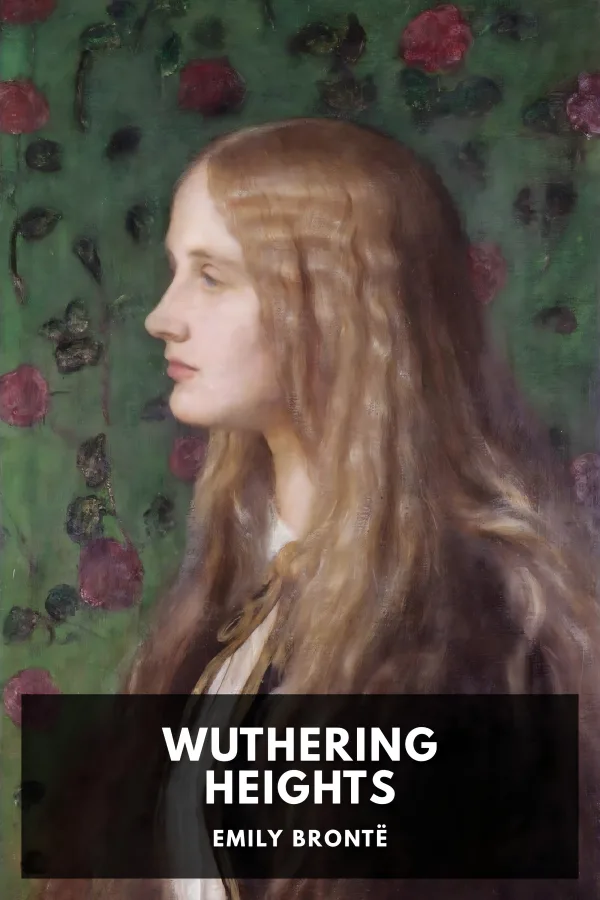
Wuthering Heights
📖 Click to Read Chapter 1 Online Preview
Chapter I
1801.—I have just returned from a visit to my landlord—the solitary neighbour that I shall be troubled with. This is certainly a beautiful country! In all England, I do not believe that I could have fixed on a situation so completely removed from the stir of society. A perfect misanthropist’s heaven: and Mr. Heathcliff and I are such a suitable pair to divide the desolation between us.
A capital fellow! He little imagined how my heart warmed towards him when I beheld his black eyes withdraw so suspiciously under their brows, as I rode up, and when his fingers sheltered themselves, with a jealous resolution, still further in his waistcoat, as I announced my name.
“Mr. Heathcliff?” I said. A nod was the answer.
“Mr. Lockwood, your new tenant, sir. I do myself the honour of calling as soon as possible after my arrival, to express the hope that I have not inconvenienced you by my perseverance in soliciting the tenancy of Thrushcross Grange: I heard yesterday you had some thoughts—”
“Thrushcross Grange is my own, sir,” he interrupted, wincing. “I should not allow any one to inconvenience me, if I could hinder it—walk in!”
Step into the tempestuous world of Heathcliff and Catherine. Download the complete, unabridged novel for your e-reader.
Download Full EPUBTales of Gothic Shadows & Moral Conflict
About Emily Brontë’s Wuthering Heights
Published in December 1847 under the androgynous pseudonym Ellis Bell, Wuthering Heights is the sole novel produced by English poet and author Emily Brontë. While contemporary Victorian reviewers were shocked and appalled by its raw depictions of emotional brutality, obsessive cruelty, and social transgression, the work has since ascended to the highest echelon of English literature, celebrated for its astonishing psychological ferocity and complex structural architecture. This editions.ink edition is based on the Standard Ebooks version, derived from Project Gutenberg #768 and Internet Archive scans, and the novel is in the public domain in the United States.
Set against the wind-battered, untamed expanse of the Yorkshire Moors, the narrative charts the all-consuming, destructive bond between Catherine Earnshaw and Heathcliff—a dark, orphan foundling brought into the Earnshaw family home of Wuthering Heights. What begins as an intense spiritual kinship between two kindred spirits curdles into an all-devouring vendetta after Catherine chooses to marry the wealthy, socially polished Edgar Linton of Thrushcross Grange. Rather than a conventional romantic tragedy, Brontë presents an elemental study of passion transformed into a multi-generational cycle of calculated vengeance.
Brontë eschews traditional linear storytelling, instead deploying an intricate nested narrative structure. The events are filtered through two distinct intermediaries: Mr. Lockwood, an aloof and superficial urban gentleman renting Thrushcross Grange, and Nelly Dean, a lifelong domestic servant whose partisan observations and moral judgments both construct and obscure the objective reality of the Earnshaw and Linton dynasties. The novel is set between 1771 and 1802 and has 34 chapters.
Thematic & Literary Architecture of Wuthering Heights
The Dialectic of Storm and Calm
Lord David Cecil famously analyzed Wuthering Heights as a cosmic confrontation between two opposing spiritual realms: the principle of storm, embodied by Wuthering Heights, Heathcliff, and Catherine; and the principle of calm, represented by Thrushcross Grange, Edgar Linton, and civilized social convention. Unlike conventional moralists of the Victorian era who championed calm over storm, Brontë posits both forces as vital, volatile, and destined to clash violently until a natural equilibrium is restored through the younger generation.
Beyond Conventional Romance: The Metaphysical Bond
The connection between Catherine and Heathcliff defies traditional concepts of romantic affection. Catherine famously declares to Nelly, “I am Heathcliff! He’s always, always in my mind: not as a pleasure, any more than I am always a pleasure to myself, but as my own being.” Their attachment is devoid of Victorian sentimentality; it is an instinctual, pagan union of the soul that rejects bodily and institutional limitations, persisting beyond physical death into the haunted periphery of the moors.
The Tyranny of Domestic Spaces
In contrast to the Victorian ideal of the household as a tranquil domestic haven (the “Angel in the House” trope), Wuthering Heights functions as an isolated site of psychological torment, physical violence, and genealogical entrapment. Heathcliff systematically turns the tools of patriarchal law, property inheritance, and physical confinement against his tormentors, exposing the legal vulnerabilities of women and dependents in 19th-century British society.
Key Characters in Wuthering Heights
- Heathcliff: The novel’s central, brooding force. A foundling of unknown origin who endures relentless racialized and class-based humiliation as a youth, only to transform into an unyielding, vindictive landlord hell-bent on ruining the heirs of both the Earnshaws and the Lintons.
- Catherine Earnshaw: Heathcliff’s childhood companion and twin soul. Capricious, fierce, and emotionally unbound, her tragic decision to marry Edgar Linton splits her psychological identity, culminating in her premature death.
- Edgar Linton: The master of Thrushcross Grange. Elegant, educated, and well-meaning, he represents the peak of refined gentility, yet proves entirely powerless against the primitive fury unleashed by Heathcliff.
- Nelly Dean (Ellen): The principal narrator. Sensible, pragmatic, but frequently self-righteous, her narration provides intimate domestic access while demanding critical scrutiny from the reader.
- Cathy Linton: The daughter of Catherine and Edgar. Possessing her mother’s vitality combined with her father’s gentleness, she becomes the bridge through which the destructive cycle of revenge is ultimately broken. The second generation—Cathy Linton and Hareton Earnshaw—restores the balance.
Digital Edition & Typography Notes for Wuthering Heights
Public domain files of Wuthering Heights often suffer from misaligned dialect passages and uneven chapter markers. This edition from editions.ink has been meticulously prepared to offer an immersive reading experience:
- Textual Purity: Based on the Standard Ebooks edition, derived from a Project Gutenberg transcription (#768, 1996) and Internet Archive scans, preserving Emily Brontë’s original dialect speech for the servant Joseph.
- Reflowable Typography: Hand-crafted CSS formatted specifically for water-ink e-paper screens. Features balanced margins, standard drop caps, verified blockquote indents, and clean em-dash formatting.
- Universal DRM-Free Access: Available in EPUB, AZW3, and KEPUB formats without encryption or tracking, ready to side-load onto Kindle, Kobo, or open-source reading devices.