Jane Eyre by Charlotte Brontë – Free Download (EPUB, AZW3, KEPUB)
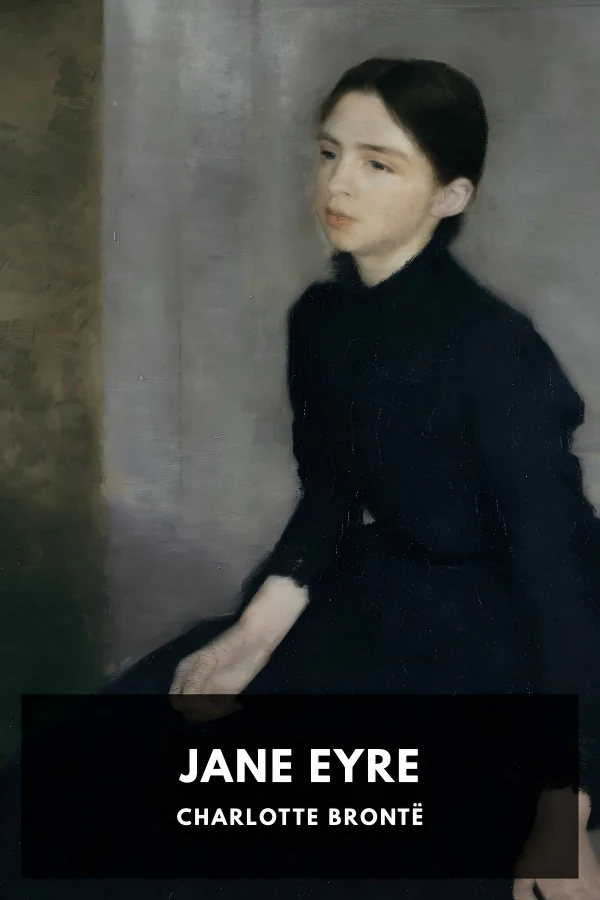
Jane Eyre
📖 Click to Read Chapter 1 Online Preview
Chapter I — Gateshead Hall
There was no possibility of taking a walk that day. We had been wandering, indeed, in the leafless shrubbery an hour in the morning; but since dinner (Mrs. Reed, when there was no company, dined early) the cold winter wind had brought with it clouds so sombre, and a rain so penetrating, that further outdoor exercise was now out of the question.
I was glad of it: I never liked long walks, especially on chilly afternoons: dreadful to me was the coming home in the raw twilight, with nipped fingers and toes, and a heart saddened by the chidings of Bessie, the nurse, and humbled by the consciousness of my physical inferiority to Eliza, John, and Georgiana Reed.
The said Eliza, John, and Georgiana were now clustered round their mama in the drawing-room: she lay reclined on a sofa by the fireside, and with her darlings about her (for the time neither quarrelling nor crying) looked perfectly happy. Me, she had dispensed from joining the group; saying, “She regretted to be under the necessity of keeping me at a distance; but that until she heard from Bessie, and could discover by her own observation, that I was endeavouring in good earnest to acquire a more sociable and childish disposition, a more attractive and sprightly manner—something lighter, franker, more natural, as it were—she really must exclude me from privileges intended only for contented, happy, little children.”
Follow Jane Eyre’s unforgettable journey of resilience, passion, and conscience. Download the complete unabridged novel for your e-reader.
Download Full EPUB
About the Novel
Published in London in October 1847 under the pen name Currer Bell, Jane Eyre by Charlotte Brontë revolutionized English prose fiction. At a time when Victorian heroines were expected to be docile, ornamental, and socially subservient, Brontë introduced an orphaned, plain-looking, and impoverished protagonist possessed of uncompromising moral autonomy and intense emotional interiority. The novel was an immediate commercial sensation, captivating readers while unsettling conservative critics who decried its fierce spirit of social and spiritual rebellion.
For those interested, you can access a Jane Eyre free epub version of this literary classic online. Download Jane Eyre free epub, azw3, kepub formats today — no DRM, no registration required. This Victorian Bildungsroman remains one of the most studied novels in English literature, frequently cited in feminist literary criticism and Gothic doubling analysis.
Subtitled An Autobiography, the novel follows the developmental trajectory (Bildungsroman) of Jane Eyre across five distinct physical and psychological environments: the oppressive tyranny of Gateshead Hall; the institutional deprivation and pestilence of Lowood School; the romantic allure and brooding Gothic mystery of Thornfield Hall; the desolate spiritual testing ground of Moor House; and finally, the secluded sanctuary of Ferndean Manor.
At Thornfield, Jane assumes the role of governess to Adèle Varens, the ward of the sardonic, tormented Edward Fairfax Rochester. Their deepening intellectual and emotional connection defies Victorian class hierarchies, culminating in a wedding ceremony that is abruptly shattered by the revelation of Rochester’s devastating secret: his first wife, Bertha Mason, remains living, concealed in the attic of Thornfield as the violent “madwoman.”
Critical Themes & Historical Context
Radical Autonomy and Moral Conscience
The core conflict of Jane Eyre is the struggle between passionate emotional desire and moral integrity. When Rochester entreats Jane to live with him as his mistress in the south of France following the ruined wedding, she confronts the ultimate moral crucible. Recognizing that abandoning her principles to serve Rochester’s emotional needs would compromise her self-respect, she famously proclaims: “I care for myself. The more solitary, the more friendless, the more unsustained I am, the more I will respect myself.” Her departure into the desolate moors with neither money nor shelter marks a watershed moment in Victorian literary feminism.
The Gothic Mirror: Bertha Mason and Doubling
Bertha Mason serves as both a literal plot impediment and a psychological shadow double for Jane herself. Imprisoned in the third-story attic, Bertha’s nocturnal wanderings, guttural laughs, and destructive arson mirror Jane’s suppressed fury against patriarchal oppression and social confinement. Literary theorists, notably Sandra Gilbert and Susan Gubar in The Madwoman in the Attic, have underscored how Bertha enacts the destructive rage that Jane’s moral governance forbids her from expressing openly.
Critique of Religious Dogma
Brontë systematically exposes three divergent forms of 19th-century religious practice:
- The Hypocrisy of Mr. Brocklehurst: The evangelical director of Lowood who enforces corporal mortification and starvation upon impoverished girls while clothing his own daughters in luxury silk.
- The Stoic Resignation of Helen Burns: Jane’s childhood friend whose passive, turn-the-other-cheek Christian martyrdom offers peace in death, yet proves unlivable for Jane’s passionate earthbound nature.
- The Zealotry of St. John Rivers: The devout missionary cousin whose icy, uncompromising devotion to duty demands Jane sacrifice her emotional heart on the altar of spiritual self-immolation.
Key Characters
- Jane Eyre: The narrator and central consciousness. Small, fierce, and scrupulously honest, she navigates systemic abuse and societal marginalization by relying upon an unyielding sense of personal dignity and ethical truth.
- Edward Fairfax Rochester: The complex, brooding master of Thornfield Hall. A Byronic hero burdened by early dissipation and trapped by a disastrous colonial marriage, his redemption requires catastrophic physical and spiritual humility.
- Bertha Mason: Rochester’s Jamaican wife. Confined to the attic under the supervision of Grace Poole, she embodies the dark Gothic undercurrent of Rochester’s concealed past and the colonial secrets underpinning English wealth.
- St. John Rivers: A handsome, rigorous clergyman who offers Jane safety at Moor House and proposes marriage—not out of love, but to enlist her as an ascetic co-worker for his mission in India.
- Helen Burns: Jane’s saintly fellow student at Lowood whose unwavering spiritual faith and tranquil death from consumption leave an indelible moral imprint on Jane.
Digital Edition & Typography Notes
This editions.ink edition of Jane Eyre has been curated to deliver an authentic, uninterrupted Victorian reading experience:
- Authoritative Text: Faithfully based on the 1847 Smith, Elder & Co. three-volume text, incorporating Charlotte Brontë’s Preface to the Second Edition, in which she pays tribute to William Makepeace Thackeray. The source text derives from the Project Gutenberg transcription (eBook 1260) and Standard Ebooks’ CC0-licensed edition.
- Typographic Calibration: Reflowable formatting engineered for electronic-ink contrast (Kindle, Kobo, BOOX). Includes historical drop caps in the online preview, correctly preserved French phrases, calibrated dialogue dashes, and standardized internal navigation. Optimized as epub for Kobo and azw3 for Kindle.
- Zero DRM & Open Standards: Completely unencumbered by restrictive licenses, ready for immediate loading into your personal digital library or archival reading application. No registration, no email, no license key required — a true DRM-free classic ebook download.