Emma by Jane Austen: Free EPUB, AZW3 & KEPUB Download
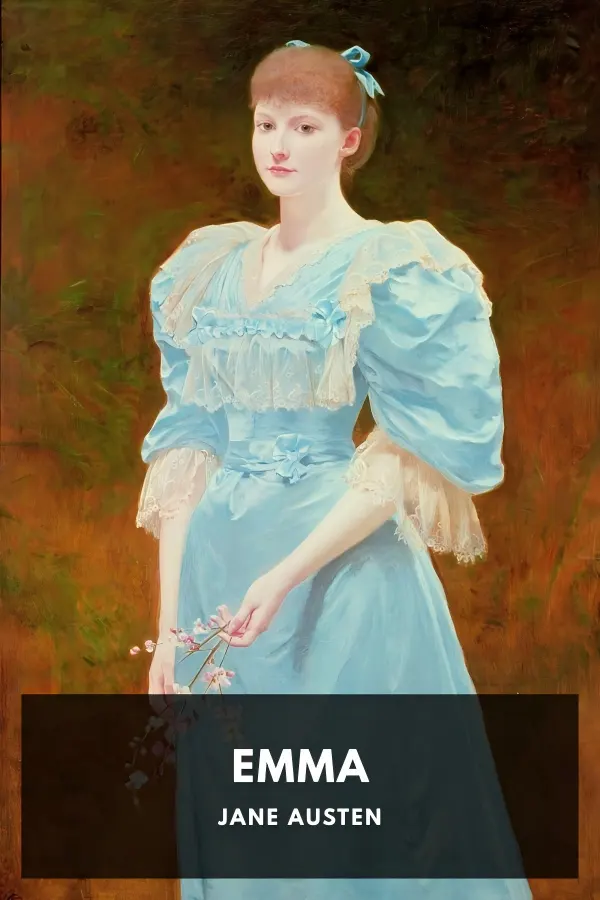
Emma
📖 Click to Read Chapter I Online Preview
Chapter I
Emma Woodhouse, handsome, clever, and rich, with a comfortable home and happy disposition, seemed to unite some of the best blessings of existence; and had lived nearly twenty-one years in the world with very little to distress or vex her.
She was the youngest of the two daughters of a most affectionate, indulgent father; and had, in consequence of her sister’s marriage, been mistress of his house from a very early period. Her mother had died too long ago for her to have more than an indistinct remembrance of her caresses; and her place had been supplied by an excellent woman as governess, who had fallen little short of a mother in affection.
Sixteen years had Miss Taylor been in Mr. Woodhouse’s family, less as a governess than a friend, very fond of both daughters, but particularly of Emma. Between them it was more the intimacy of sisters. Even before Miss Taylor had ceased to hold the nominal office of governess, the mildness of her temper had hardly allowed her to impose any restraint; and the shadow of authority being now long passed away, they had been living together as friend and friend very mutually attached, and Emma doing just what she liked; highly esteeming Miss Taylor’s judgment, but directed chiefly by her own.
Follow Emma Woodhouse through Regency drawing-rooms, misguided matchmaking, and her own surprising path to love. Download the complete unabridged edition for your e-reader.
Download Full EPUBEmma is an 1815 novel by Jane Austen, following a wealthy young woman in Regency England whose misguided matchmaking schemes lead her into romantic misunderstandings and, ultimately, self-knowledge. The novel explores social class, courtship, and the limits of cleverness without empathy. This Standard Ebooks edition is based on Project Gutenberg eBook #158 and is in the public domain in the US.
About Jane Austen’s Emma: Summary, Characters & Themes
Emma is an 1815 novel by Jane Austen and the most sophisticated psychological comedy of manners in English literature. This summary and analysis covers its plot, key characters, and core themes, based on the Standard Ebooks edition transcribed from Project Gutenberg eBook #158.
The story takes place entirely within the comfortable village of Highbury and centers on Emma Woodhouse: young, strikingly beautiful, wealthy, and intellectually self-satisfied. Unlike Austen’s other heroines, Emma possesses complete financial independence and has no financial need to marry.
She amuses herself by meddling in the romantic lives of her neighbors. After mistakenly attributing the successful marriage of her former governess Miss Taylor to her own scheming, Emma takes under her wing Harriet Smith, a sweet but naive girl of unknown parentage.
Emma convinces Harriet to reject a sincere marriage proposal from respectable tenant farmer Robert Martin, falsely projecting that the ambitious curate Mr. Elton is in love with her. As her misguided romantic machinations unravel, Emma remains blind to the secret engagement of the accomplished Jane Fairfax and the charming Frank Churchill.
Her unthinking public cruelty to the impoverished Miss Bates at Box Hill invites a stinging moral rebuke from her lifelong friend, Mr. George Knightley, prompting a profound awakening to her own flaws and true desires.
Key Characters & Literary Archetypes
The novel’s characters function as archetypes, each embodying a distinct response to Regency courtship and social obligation.
- Emma Woodhouse (The Flawed Heroine): Wealthy, imaginative, and morally confident, Emma is a privileged young woman who plays matchmaker in the lives of others. Her journey represents the humbling transition from vanity to genuine moral empathy.
- Mr. George Knightley (The Moral Anchor): Sixteen years Emma’s senior and owner of the neighboring Donwell Abbey, Knightley is the novel’s ethical compass. He is the only figure courageous enough to tell Emma unvarnished truths.
- Harriet Smith (The Impressionable Protégée): The parlor-boarder of unknown parentage whose pliable mind becomes the canvas for Emma’s snobbish fantasies. She represents the dangers of romantic idealization disconnected from social reality.
- Frank Churchill (The Charming Deceiver): High-spirited and dashing, Frank appears to be the perfect romantic hero but conceals a covert engagement to Jane Fairfax while flirting with Emma to protect his secret.
- Jane Fairfax (The Stoic Gentlewoman): Exceptionally talented and elegant yet penniless, Jane serves as Emma’s shadow and moral contrast, enduring silent heartbreak with stoic dignity.
- Mr. Woodhouse (The Valetudinarian Patriarch): Emma’s gentle, neurotic father, who views any change—especially matrimony—as a catastrophe. He anchors the domestic sphere with eccentric warmth.
Core Literary Themes & Historical Significance
These themes are central to any analysis of the novel’s enduring significance.
- The Revolution of Free Indirect Discourse: Austen blends the narrator’s objective voice with Emma’s biased inner monologue, forcing the reader to navigate Emma’s misinterpretations in real time.
- Class Responsibility and Nobility of Conduct: Through the Box Hill picnic scene, Austen delivers an uncompromising moral lesson: true nobility is measured not by birth or wealth, but by how compassionately one treats the vulnerable.
- The Delusion of Imagination vs. Reality: Emma constantly invents romantic plots, interpreting ordinary glances as grand passions, demonstrating how human beings project their own wishes onto objective reality.
Why Download Our Custom E-Reader Edition of Emma?
Emma endures as a major achievement in psychological realism, free indirect discourse, and satirical comedy of manners. Emma’s self-satisfied romantic hubris—meddling in the marital prospects of Harriet Smith, misunderstanding the secret engagement of Frank Churchill and Jane Fairfax, and receiving Mr. Knightley’s stinging moral rebukes—demands an intimate, immersive typography.
Mass-market automated conversions often flatten Austen’s delicate prose, alter her intricate social dialogues, and garble French conversational phrases. Our custom e-reader edition restores the archival elegance of Regency England with calibrated E-ink clarity.
- Authoritative Text Fidelity: Carefully keyed to the authoritative text, our edition preserves Austen’s original architectural progression across all fifty-five chapters. We retain period British spelling, authentic Regency capitalization, and Austen’s distinct rhythmic hyphenation.
- Granular NCX/Nav Structural Architecture: Navigating the subtle shifts of Highbury society requires clean internal structure. Our multi-tiered table of contents maps individual chapter breakdowns, enabling readers to jump seamlessly to iconic turning points—including Mr. Elton’s clumsy carriage proposal, the strawberry-gathering party at Donwell Abbey, and the social humiliation of Miss Bates at Box Hill.
- Calibrated E-Ink Typography for Social Dialogue: Austen’s narrative tension often pivots on written communication and parlour games, from Mr. Elton’s charade on “Courtship” to Frank Churchill’s revealing letters. Our edition applies bespoke semantic block styling, generous line-height ratios, and high-contrast styling across Kindle Paperwhite (AZW3), Kobo Libra/Clara (KEPUB), and open EPUB readers.
- Verified Public Domain Sources: This edition is based on Project Gutenberg eBook #158 and the Standard Ebooks transcription, with digital scans from the Internet Archive. The text is in the public domain in the US.