Les Misérables by Victor Hugo: Free EPUB, AZW3 & KEPUB Download
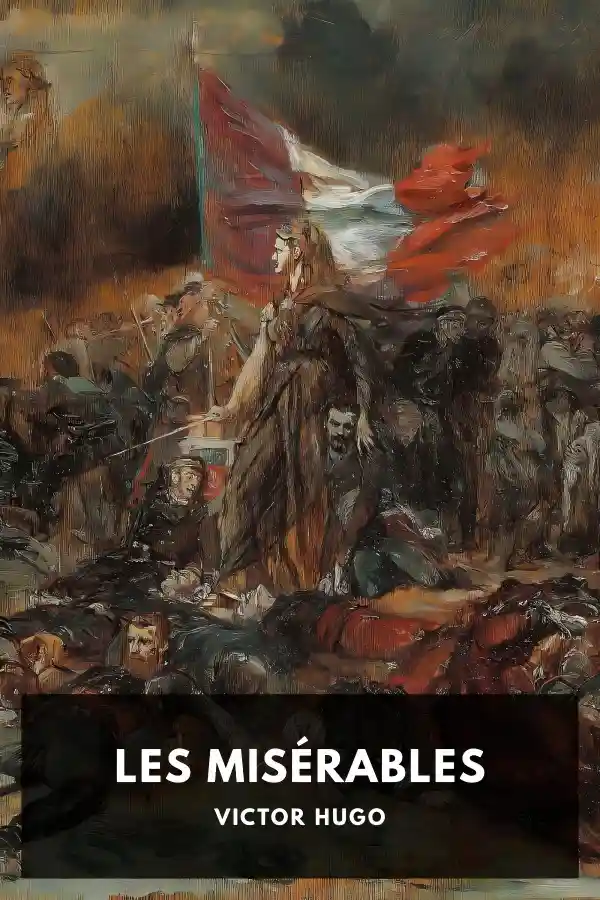
Les Misérables
📖 Click to Read Volume I: Book First — Chapter I Online Preview
Volume I: Fantine — Book First: A Just Man — Chapter I: M. Myriel
In 1815, M. Charles-François-Bienvenu Myriel was Bishop of Digne. He was an old man of about seventy-five years of age; he had occupied the see of Digne since 1806.
Although this detail has no connection whatever with the real substance of what we are about to relate, it will not be superfluous, if merely for the sake of precision in all points, to mention here the various rumors and remarks which had been circulated about him from the very moment when he arrived in the diocese.
True or false, that which is said of men often occupies as important a place in their lives, and above all in their destinies, as that which they do. M. Myriel was the son of a councillor of the Parliament of Aix; hence he belonged to the nobility of the robe.
Follow Jean Valjean’s monumental quest for redemption across the battlefields, barricades, and underworld of France. Download the complete unabridged edition for your e-reader.
Download Full EPUBTL;DR
Les Misérables is an 1862 epic novel by Victor Hugo, translated into English by Isabel F. Hapgood in 1888. It follows paroled convict Jean Valjean as he seeks redemption across post-Napoleonic France, pursued by the relentless Inspector Javert and bound by a promise to protect the orphaned Cosette, in a sweeping story of grace, social injustice, and moral transformation.
This Standard Ebooks edition is based on Project Gutenberg eBook #135 and is in the public domain in the United States; readers outside the US should check their local laws.
About Les Misérables: Summary, Characters & Themes
Les Misérables is Victor Hugo‘s monumental 1862 epic about redemption, social injustice, and the possibility of moral transformation. This summary and analysis covers a novel that spans over half a million words and seventeen turbulent years of post-Napoleonic French history, from Jean Valjean’s release from the galleys at Toulon in 1815 to the 1832 June Rebellion in Paris. It is one of the most ambitious humanitarian epics ever written, examining systemic poverty and spiritual regeneration as profoundly as Hugo’s gothic tragedy in The Hunchback of Notre-Dame.
What Is the Story of Les Misérables?
Jean Valjean is an impoverished peasant released on parole after nineteen years of brutal hard labor in the galleys at Toulon for stealing a loaf of bread to feed his sister’s starving children. Hardened and despised as an outcast, Valjean’s bitter hatred toward humanity is dissolved when the saintly Bishop Myriel shields him from arrest after a theft of silverware, bestowing two silver candlesticks with the command to buy his soul for God.
Reinventing himself as Monsieur Madeleine, a benevolent industrialist and beloved mayor of Montreuil-sur-Mer, Valjean creates economic prosperity while quietly funding charities. However, his quiet redemption is relentlessly imperiled by Police Inspector Javert, an unbending agent of the legal order who views criminal nature as irredeemable and suspects the mayor’s true identity.
Valjean sacrifices his civic position and freedom by walking into a courtroom to clear an innocent simpleton wrongly accused of being Valjean. Before being rearrested, he pledges to the dying, exploited working-girl Fantine that he will locate and protect her orphaned daughter Cosette, whom he rescues from the abusive grip of the predatory innkeepers, the Thénardiers.
Raising Cosette in convent seclusion and later in Paris, Valjean is drawn into the revolutionary maelstrom of the 1832 Paris June Rebellion. When Marius Pontmercy—the idealistic young aristocrat passionately in love with Cosette—is gravely wounded on the student barricade, Valjean undertakes an extraordinary rescue through the subterranean labyrinth of the Paris sewers, carrying Marius to safety while sparing the life of his captive pursuer, Javert.
Confronted with the moral impossibility of reconciling human grace with rigid penal law, Javert commits suicide by leaping into the Seine. Having seen Cosette joyfully married to Marius, Valjean dies peacefully in the warm glow of Bishop Myriel’s silver candlesticks, having achieved the ultimate spiritual triumph: dying in absolute love after a lifetime of selfless sacrifice.
Historical Context: Post-Napoleonic Restoration and Social Reform
Composed primarily during Hugo’s political exile on the island of Guernsey, Les Misérables was written as a direct manifesto against societal injustice. In his celebrated author’s preface, Hugo declared that as long as social degradation creates an artificial hell on earth, books like this will never be useless.
The novel captures the painful transition of France from the fall of Napoleon at Waterloo (1815) through the Restoration and the July Monarchy to the bloody street battles of the 1832 June Rebellion. Hugo integrates comprehensive historical investigations into the Waterloo battlefield, the criminal slang of the Parisian underworld, and the monastic rules of Catholic convents, turning the novel into a total encyclopedia of 19th-century French civilization.
Key Characters & Literary Archetypes
- Jean Valjean / M. Madeleine (The Redeemed Convict & Christ-like Martyr): Endowed with titanic physical strength and moral resilience. His internal pilgrimage from savage criminal resentment to supreme saintliness forms the theological spine of the novel.
- Inspector Javert (The Inflexible Legalist & Blind Hand of Justice): Born in a prison himself, Javert lives entirely by strict adherence to the letter of the law. He is not malicious, but dogmatic, viewing grace as treason and justice as infallible until Valjean’s mercy shatters his moral universe.
- Fantine (The Sacrificial Mother & Crushed Working-Class): An innocent provincial girl abandoned by her bourgeois lover. Forced to sell her hair, teeth, and ultimately her body to pay for Cosette’s care, she personifies the systemic destruction of impoverished women under industrial capitalism.
- Cosette (The Maiden of Grace & Living Beacon of Hope): The mistreated child whose pure existence offers Valjean a reason to love and survive. Her flourishing into radiant womanhood symbolizes the renewal of life won through Valjean’s suffering.
- Marius Pontmercy (The Romantic Revolutionary & Idealistic Youth): Torn between his Bonapartist father’s martial heritage and his royalist grandfather’s wealth, he finds his political voice among the student rebels of the Friends of the ABC.
- Monsieur & Madame Thénardier (The Demonic Parasites & Human Hyenas): Opportunistic, vicious, and devoid of conscience. They personify the degraded underclass whose poverty has corrupted into pure predatory malice.
- Gavroche (The Heroic Street Urchin & Spirit of Paris): The resilient, merry gamin who laughs at authority and gathers ammunition under fire at the barricade, singing verses until felled by royal bullets.
Core Literary Themes
- Grace vs. The Law: The fundamental conflict between human compassion (represented by Bishop Myriel and Valjean) and the blind cruelty of institutional legal codes (personified by Javert).
- The Possibility of Moral Transmutation: Hugo asserts that human souls are never irredeemable; given love, economic dignity, and spiritual mercy, the most degraded convict can ascend to heroic moral greatness.
- The Subterranean Outcast: Through the physical imagery of prisons, convict galleys, and the Parisian sewer network, Hugo exposes the dark, invisible foundations upon which polite bourgeois civilization rests.
Why Download Our Custom E-Reader Edition of Les Misérables?
First published in Brussels and Paris in 1862 during Victor Hugo’s political exile in Guernsey, Les Misérables stands as humanity’s most ambitious literary monument to social compassion, spiritual redemption, and revolutionary justice. Spanning over half a million words across two turbulent decades of nineteenth-century French history, the epic follows paroled convict Jean Valjean as he flees the merciless legalistic pursuit of Inspector Javert, protects the martyred Fantine’s orphaned daughter Cosette, and plunges into the bloody street combat of the 1832 Paris June Rebellion.
Generic digital transcriptions and automated web conversions regularly collapse under the immense sheer scale of Hugo’s masterpiece: truncating his famous philosophical and historical essays (such as the 19-chapter forensic anatomy of the Battle of Waterloo, the religious cloister at Petit-Picpus, the Parisian argot slang lexicon, and the subterranean sewer networks of Paris), scrambling French names and street maps, and creating erratic chapter structures that cause reading devices to hang. Our bespoke digital edition restores an archival, unabridged reading experience calibrated precisely for modern E-ink displays.
Which English Translation of Les Misérables Is the Most Complete?
The most complete widely available English translation is Isabel Florence Hapgood’s 1888 unabridged translation. Unlike earlier Victorian translations (such as Charles E. Wilbour’s early version or Sir Lascelles Wraxall’s expurgations that eliminated Hugo’s political, religious, and historical digressions), Hapgood’s edition presents the complete five volumes, forty-eight books, and three hundred and sixty-five chapters with full philosophical vigor intact. Our EPUB is based on the Standard Ebooks edition, via Project Gutenberg #135 and Internet Archive scans.
What Makes This Les Misérables EPUB Edition Different?
- Verified Public Domain Sources: This edition is based on the Standard Ebooks transcription of Project Gutenberg eBook #135, with digital scans from the Internet Archive.
- Granular Architectural 5-Volume NCX/Nav Structural Navigation: Navigate Hugo’s massive 530,000-word universe with an exhaustively indexed, multi-tiered table of contents. Instantly leap between monumental milestones—from Bishop Myriel’s silver candlesticks in Digne and Valjean’s crisis of conscience in “A Tempest in a Skull,” to the crushing field of Waterloo, the rescue of little Cosette from the Thénardiers’ inn at Montfermeil, the barricade of the Rue de la Chanvrerie with Gavroche and Enjolras, and the harrowing sewer flight to safety.
- Calibrated Typographical Layout for Monumental Epic Prose: Hugo’s colossal shifts between lyrical character drama, historical forensic accounts, revolutionary student songs, and philosophical manifestos require rigorous typographical pacing. Our edition implements calibrated paragraph indents, distinct styling for letters, epitaphs, and street argot, and zero-glare contrast across Kindle Paperwhite (AZW3), Kobo Libra/Clara (KEPUB), and open EPUB readers, ensuring rapid rendering without layout distortion, memory crashes, or battery-draining redraws.
Is This Les Misérables EPUB Compatible with Kindle and Kobo?
Yes. This edition is available in three DRM-free formats: EPUB for open e-readers, AZW3 for Kindle Paperwhite and other Kindle devices, and KEPUB for Kobo Libra, Kobo Clara, and other Kobo e-readers. All three formats are calibrated for rapid rendering without layout distortion, memory crashes, or battery-draining redraws.