The Man Who Was Thursday by G. K. Chesterton: Free EPUB, AZW3 & KEPUB Download
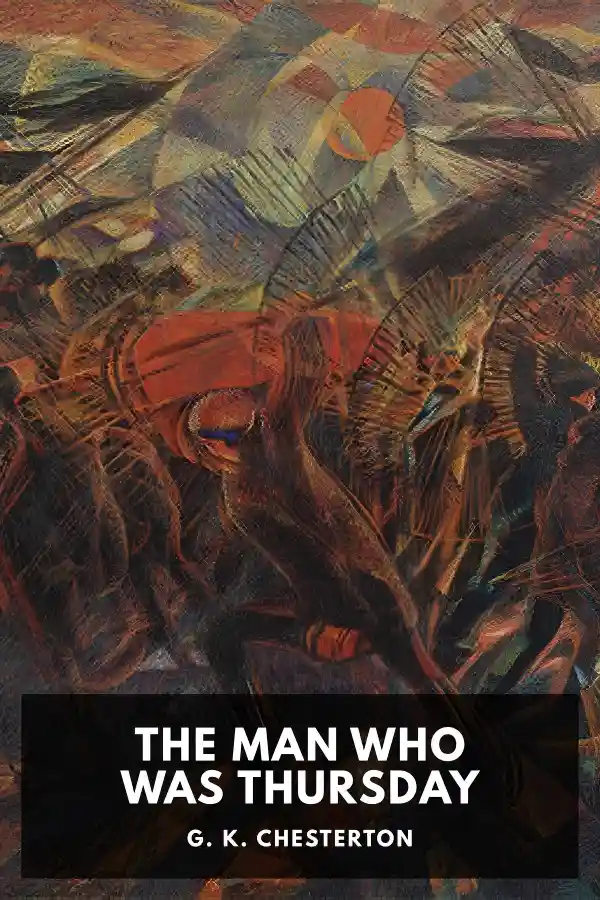
The Man Who Was Thursday
📖 Click to Read Chapter I: The Two Poets of Saffron Park Online Preview
Chapter I — The Two Poets of Saffron Park
The suburb of Saffron Park lay on the sunset side of London, as red and ragged as a cloud of sunset.
It was built of a bright brick throughout; its skyline was fantastic, and even its ground plan was wild. It had been the outburst of a speculative builder, faintly tinged with art, who called its architecture sometimes Elizabethan and sometimes Queen Anne, apparently under the impression that the two sovereigns were identical.
It was described with some justice as an artistic colony, though it never in any definable way produced any art. But although its pretensions to be an intellectual centre were a little vague, its pretensions to be a pleasant place were quite indisputable.
Follow Gabriel Syme’s descent into the underground council of anarchists, and the nightmare chase that follows. Download the complete unabridged edition for your e-reader.
Download Full EPUBTL;DR
The Man Who Was Thursday is a 1908 metaphysical thriller by G. K. Chesterton. It follows the poet Gabriel Syme, who infiltrates a secret anarchist council and is elected Thursday, only to discover that nearly everyone around him is also an undercover detective. The novel mixes spy chase, paradox and dream logic to ask how order and revolt can be told apart. This Standard Ebooks edition is based on Project Gutenberg #1695 and is in the public domain in the United States. The text was prepared by Standard Ebooks.
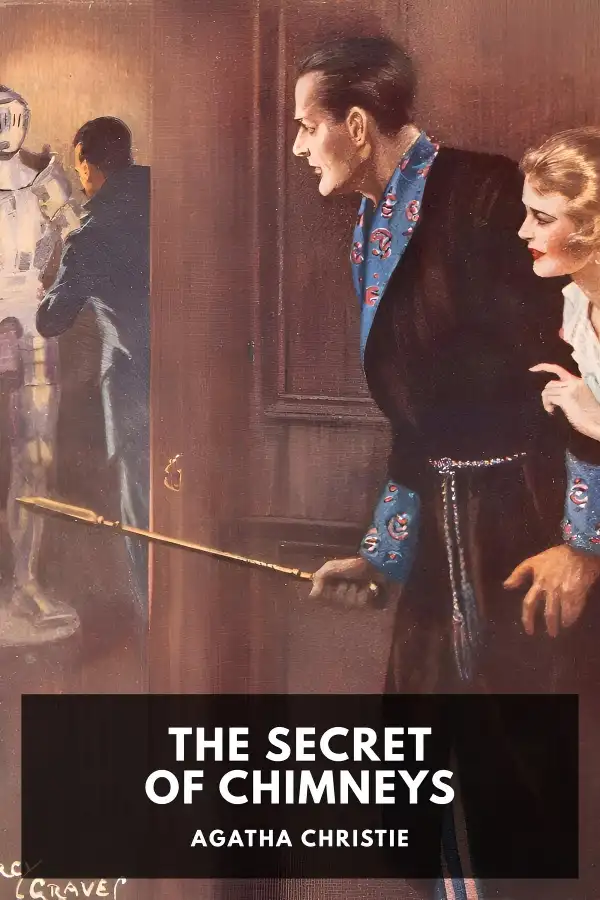
The Man Who Was Thursday by G. K. Chesterton: Summary, Characters & Themes
The Man Who Was Thursday: A Nightmare (1908) is G. K. Chesterton’s metaphysical thriller and one of the strangest spy novels ever written. It begins as a summary and analysis of a London poets’ quarrel and turns into a chase across a dreamlike Europe, where every anarchist may be a policeman and every policeman may be something else. The book is often read as a paradox inside a paradox: a defence of order written in the shape of a nightmare about order.
The story opens in Saffron Park, an artistic suburb, where the mild poet Gabriel Syme argues with the red-haired anarchist Lucian Gregory. Syme claims to be a poet of law; Gregory claims that art and anarchy are the same thing. To prove his seriousness, Gregory takes Syme to a hidden council of anarchists beneath a riverside tavern.
Syme is elected to the Central Anarchist Council as Thursday, replacing a dead member. The Council has seven members, each named after a day of the week, led by the unseen President Sunday. Syme soon discovers that most of his fellow councillors are also undercover detectives. Each one thought the others were real anarchists.
The middle chapters turn into a chase. Syme flees across London, is pursued by the supposedly paralysed Professor de Worms, and crosses to France with Dr. Bull and the Professor. In a duel with the Marquis de St. Eustache, Syme wounds his opponent four times without drawing blood; the Marquis finally tears off his own nose and reveals himself as Inspector Ratcliffe.
By the end, the six detectives realise that the entire Council was a trap built by Sunday, who is also the mysterious man in the dark room who recruited them all. The final chapters push the book from spy story into parable, and the last scene returns Syme to the garden at Saffron Park.
This Standard Ebooks edition is based on Project Gutenberg #1695, with scans from the HathiTrust Digital Library. The text is in the public domain in the United States; readers outside the US should check local copyright law. The edition is produced by Standard Ebooks.
Historical Context
Chesterton wrote The Man Who Was Thursday in 1907 and published it in 1908. Edwardian Britain was then full of real anarchist scares, bomb plots, and fierce debates about science, art, and religion. Chesterton, a Christian apologist and critic of both capitalism and socialism, was close to the literary circles he gently mocked in the book. The novel’s nightmare logic reflects both the paranoia of the period and Chesterton’s own taste for paradox.
Key Characters & Literary Archetypes
- Gabriel Syme (The Poet-Detective): A poet who becomes a policeman and infiltrates the anarchist council as Thursday. He is Chesterton’s stand-in for sanity under pressure.
- Lucian Gregory (The Anarchist Poet): A red-haired revolutionary who talks of destroying the world but cannot act on it. He is the book’s first false anarchist.
- President Sunday (The Unknowable Authority): The giant leader of the Central Anarchist Council, later revealed as the man in the dark room. He is both enemy and creator of the detectives.
- The Professor de Worms (The False Cripple): An actor named Wilks disguised as the German nihilist Professor de Worms. He chases Syme across London and becomes his ally.
- Dr. Bull (The Man in Spectacles): A cheerful, respectable-looking detective whose dark glasses make him look like a devil until he removes them.
- The Marquis de St. Eustache (Wednesday): A nobleman and apparent dynamiter, later revealed as Inspector Ratcliffe of Scotland Yard.
- Rosamond Gregory (The Sister): Lucian’s sister, whose red hair recurs through the book as a quiet motif of ordinary life.
Core Literary Themes
- Order and Anarchy: The novel refuses to treat either as simple. Syme defends law, yet the law itself is shown to be as strange and theatrical as the conspiracy it fights.
- Identity and Disguise: Nearly every character is someone else. Beards, noses, spectacles, and accents come off one by one.
- Paradox and Faith: Chesterton uses paradox not as decoration but as argument. The book ends by pushing paradox past the edge of reason into something closer to belief.
- The Nightmare and the Everyday: The chase is nightmarish, but ordinary things, a garden, a girl, a barrel-organ, keep pulling Syme back to sanity.
- Comedy and Terror: The book is genuinely funny and genuinely frightening, often in the same scene.
Why Download Our Custom E-Reader Edition of The Man Who Was Thursday?
G. K. Chesterton published The Man Who Was Thursday in 1908, at the height of the Edwardian anarchist scares. It is part spy story, part philosophical comedy, and part nightmare. The book follows a poet-detective who infiltrates a secret council and finds that almost everyone in it is also a policeman.
The plot moves from a suburban garden to a hidden council chamber, then across London and into France. A duel is fought over a train schedule, a man pulls off his own nose, and a chase ends at a garden party dressed as the seven days of Creation. Chesterton keeps the tone light even when the ideas turn dark.
Most free digital copies of this novel come from older transcriptions with inconsistent punctuation, broken dialogue, and no proper chapter navigation. This edition fixes those problems. It is based on the Standard Ebooks text, which was carefully proofread against the 1908 first edition and includes modern typography and clean structural markup.
- Based on the Standard Ebooks Edition, via Project Gutenberg #1695: The text was proofread against the 1908 first edition, with scans from the HathiTrust Digital Library used to verify uncertain readings.
- Granular Architectural NCX/Nav Structural Navigation: Every chapter is properly marked up, so your e-reader can jump straight to any of the fifteen chapters without guesswork.
- Calibrated Typographical Layout for Philosophical Thriller: Dialogue, paradox, and chapter breaks are spaced for comfortable reading on both small phones and large tablets.
- Verified Public Domain Sources: The text comes from Project Gutenberg #1695 and is checked against the Standard Ebooks edition.