Narrative of the Life of Frederick Douglass by Frederick Douglass: Free EPUB, AZW3 & KEPUB Download
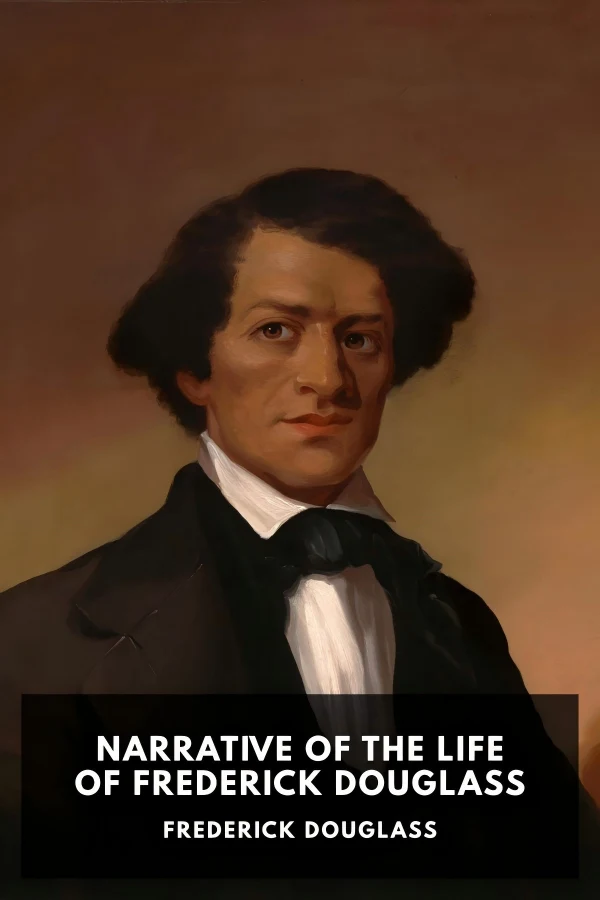
Narrative of the Life of Frederick Douglass
📖 Click to Read the Opening Pages Online Preview
Chapter I — I was born in Tuckahoe
I was born in Tuckahoe, near Hillsborough, and about twelve miles from Easton, in Talbot County, Maryland. I have no accurate knowledge of my age, never having seen any authentic record containing it. By far the larger part of the slaves know as little of their ages as horses know of theirs, and it is the wish of most masters within my knowledge to keep their slaves thus ignorant. I do not remember to have ever met a slave who could tell of his birthday. They seldom come nearer to it than planting-time, harvest-time, cherry-time, spring-time, or fall-time. A want of information concerning my own was a source of unhappiness to me even during childhood. The white children could tell their ages. I could not tell why I ought to be deprived of the same privilege. I was not allowed to make any inquiries of my master concerning it. He deemed all such inquiries on the part of a slave improper and impertinent, and evidence of a restless spirit. The nearest estimate I can give makes me now between twenty-seven and twenty-eight years of age. I come to this, from hearing my master say, some time during 1835, I was about seventeen years old.
My mother was named Harriet Bailey. She was the daughter of Isaac and Betsey Bailey, both colored, and quite dark. My mother was of a darker complexion than either my grandmother or grandfather.
My father was a white man. He was admitted to be such by all I ever heard speak of my parentage. The opinion was also whispered that my master was my father; but of the correctness of this opinion, I know nothing; the means of knowing was withheld from me. My mother and I were separated when I was but an infant—before I knew her as my mother. It is a common custom, in the part of Maryland from which I ran away, to part children from their mothers at a very early age. Frequently, before the child has reached its twelfth month, its mother is taken from it, and hired out on some farm a considerable distance off, and the child is placed under the care of an old woman, too old for field labor. For what this separation is done, I do not know, unless it be to hinder the development of the child’s affection toward its mother, and to blunt and destroy the natural affection of the mother for the child. This is the inevitable result.
The preview stops after the opening paragraphs of Chapter I. The complete text — Garrison’s preface, Wendell Phillips’s letter, all eleven chapters and the appendix — is in the free download below.
Download Full EPUB1845
~41,000 words (estimated)
Approx. 2.3 hours
Standalone
Talbot County, Maryland, and New Bedford, Massachusetts
11 chapters
EPUB · AZW3 · KEPUB
0.40 MB (EPUB) · 0.37 MB (AZW3) · 0.41 MB (KEPUB)
Public domain in the United States
Project Gutenberg #23 · Standard Ebooks
Frederick Douglass was born in Talbot County, Maryland, about 1818 by his own reckoning, and never learned the day; his mother walked twelve miles at night to see him and was gone before morning, and she died before he could know her. The Narrative, published in Boston in 1845, follows him from Colonel Lloyd’s plantation to the Aulds’ house in Baltimore, where a mistress taught him the alphabet until her husband forbade it, then to Edward Covey’s farm, where the sixteen-year-old fought back, and at last to New York and New Bedford. It is a short book and a hard one, written to prove that the man describing slavery had been a slave.
Douglass wrote it himself, within seven years of escaping, and it is one of the few antebellum slave narratives whose author kept full control of the text: no amanuensis, no ghost editor, and a preface by William Lloyd Garrison vouching for him. The 1845 first edition runs to a preface, a letter from Wendell Phillips, eleven untitled chapters and an appendix on the Christianity of the land. Its first printing carried a portrait of the author and the words ‘Written by Himself’, a claim the title page of 1845 made pointedly. See Wikipedia’s article on Narrative of the Life of Frederick Douglass for its publication history. The text is available via Project Gutenberg #23 and Standard Ebooks.
Narrative of the Life of Frederick Douglass by Frederick Douglass: Summary, Characters & Themes
This page is a summary and analysis of Narrative of the Life of Frederick Douglass, an American Slave, written by Frederick Douglass and published in Boston in 1845, seven years after he left Maryland. It is short — roughly 41,000 words of main text, with the two prefatory documents — and it is arranged with unusual care: a preface by William Lloyd Garrison, a letter from Wendell Phillips, eleven chapters that carry no titles of their own, and an appendix in which Douglass turns on the Christianity of the slaveholding South. He gives dates where he can and refuses to guess where he cannot; the first sentence admits that he does not know his own birthday, and that admission sets the method for everything that follows. What he can date he can prove, which is why the book reads less like a memoir than like a deposition. The text survives in several public-domain transcriptions, including Project Gutenberg #23 and the Standard Ebooks edition used here.
He was born in Tuckahoe, in Talbot County on Maryland’s Eastern Shore, and spent his early childhood with his grandmother, Betsey Bailey, before being moved to Colonel Edward Lloyd’s home plantation, where he saw his aunt Hester whipped in the kitchen and later called that morning ‘the blood-stained gate, the entrance to the hell of slavery.’ Colonel Lloyd owned, by Douglass’s estimate, close to a thousand slaves, and the second and third chapters are a survey of that estate: the tarred garden fence, the monthly allowance of eight pounds of pork and a bushel of corn meal, the children who went naked until the next allowance-day, the overseer Austin Gore shooting the slave Demby in a creek rather than wade in after him. The plantation is not scenery in these chapters; it is the indictment. Lloyd’s estate was a business before it was a household, and Douglass describes it as one, with ledgers of allowances, a sloop carrying grain to Baltimore and overseers who were themselves overseen.
At about seven he was sent to Baltimore to look after the child of Hugh and Sophia Auld, and the move changes the book’s direction. Sophia Auld, who had never held a slave before her marriage, began teaching him the alphabet; her husband stopped her, and in doing so handed Douglass the idea that carried him out of slavery: ‘If you give a nigger an inch, he will take an ell.’ Douglass took the ell. He traded bread with boys in the street for reading lessons, read The Columbian Orator until he could argue with its dialogue between a master and his slave, and taught himself to write by copying the letters chalked on timber in the shipyards. The Baltimore chapters are the book’s most hopeful and its most bitter, because the same streets showed him what literacy was worth and what it cost a black man to be kept from a trade.
In 1833 his master hired him out for a year to Edward Covey, a tenant farmer with a reputation for breaking young slaves. The six months that follow are the book’s centre: work in all weathers, a whipping for the smallest awkwardness, and the passage in which Douglass says that Covey ‘succeeded in breaking me. I was broken in body, soul, and spirit.’ In August 1833, sick and beaten, he walked seven miles to complain to Thomas Auld, was sent back, and fought Covey in the barnyard rather than be tied again. Covey never laid a whip on him afterwards. Douglass writes that ‘you have seen how a man was made a slave; you shall see how a slave was made a man,’ and the sentence is both a summary and the spine of the book. Douglass reports the fight without triumph, as a man who had decided that being tied again was worse than being killed, and Covey never raised a hand to him afterwards.
The last chapters are deliberately incomplete. Douglass plans an escape with four companions in 1835, is betrayed, spends a week in the Easton jail, and is sent back to Baltimore to learn caulking; he escapes on 3 September 1838 without telling the reader how, on the ground that a full account would ‘induce greater vigilance on the part of slaveholders’ and shut a door on other men. The omission is not modesty. It is the one place where the narrator’s authority over his own story is used against the reader, and it has annoyed biographers ever since. The book ends in New Bedford with a name taken from a poem. Read it beside The Souls of Black Folk, which returns to the question of the color line half a century later, and Walden, begun at the pond in the same year this book appeared and built on the same argument about what a person needs in order to be free.
Historical Context
Maryland in the 1820s was a slave state in transition. The tobacco economy of the Eastern Shore had worn out its soil, and Talbot County farms like Colonel Lloyd’s were turning to wheat, corn and timber, which needed fewer hands and could rent out the rest. Douglass’s own life follows that shift: field hand, then house servant, then rented labourer, then caulker whose weekly wages are collected by his master every Saturday night. State law made the arrangement explicit — a child followed the condition of the mother, a black person could not testify against a white one, and teaching a slave to read was forbidden, as Hugh Auld reminds his wife. The cruelties in this book are not anomalies produced by bad men. They are the routine enforcement of a code that made a person into property.
Douglass spoke at Nantucket on 11 August 1841, at a convention organised by the Massachusetts Anti-Slavery Society, and was hired as an agent within days. For three years he was told to stick to facts and let his back do the arguing, which is one reason the book is so sparing with adjectives. The Garrisonian wing of the movement wanted a slave who could tell his own story, and the Narrative was commissioned as evidence: Wendell Phillips’s letter vouches for its author before a reader reaches the first chapter. Its success created a problem. A named fugitive with a published book was a target; Douglass sailed for Britain in 1845, and friends there raised the money that bought his freedom in 1846. The book was written for that campaign, and its facts are arranged for argument rather than atmosphere.
The Anti-Slavery Office in Boston printed the book in May 1845, with a frontispiece portrait and the subtitle ‘Written by Himself’ — a claim that mattered, since most slave narratives carried a white editor’s guarantee. Several American editions appeared within a year, and it was reprinted in England and Ireland. Southern papers attacked it and clergymen denounced it, and Douglass answered the second group in the appendix, where he separates the Christianity of Christ from the ‘slaveholding religion of this land’ and prints a parody hymn about Methodist pews and whipping. He told the story twice more, in My Bondage and My Freedom in 1855 and Life and Times in 1881, each time saying more about the escape that the 1845 book withholds.
Key Characters & Literary Archetypes
- Frederick Douglass, narrator: He appears in his own book as a case rather than a hero: a boy who is not told his age, is ranked with horses at a valuation, and reasons his way out of a system built to keep him ignorant. He records his humiliations plainly and his victories briefly, and he refuses to describe the one act that made him free. The voice is that of a man testifying in public and choosing each word, which is what a hired abolitionist lecturer in 1845 was.
- Sophia Auld: Hugh Auld’s wife, a former weaver who had never owned another human being and begins by teaching a child his letters out of simple kindness. Douglass watches slavery work on her: suspicion, then rage, then a settled hostility to books. She is the book’s clearest demonstration that the institution damages the slaveholder as surely as the slave, and its saddest character, because the reader sees her ruined in a few pages. Douglass does not blame her for the change; he blames the power slavery handed her, and he says so twice.
- Hugh Auld: A Baltimore ship carpenter who forbids his wife to teach Douglass, and in forbidding it supplies the argument that literacy unfits a slave for slavery. He is not the cruellest master in the book, and he is the most useful to Douglass, who calls the prohibition a revelation. Later he collects his slave’s caulking wages every week, gives back six cents to encourage him, and finds that no warrant will issue on a black man’s word after a gang of apprentices half blinds him.
- Edward Covey: A poor tenant farmer and Methodist class-leader who rents men and hires himself out as a breaker of young slaves. He crawls through the corn to catch his hands idle, prays loudly twice a day, and works his people from before dawn until midnight in fodder time. The slaves call him ‘the snake’. He buys a woman named Caroline as a breeder and forces her to live with a hired man for a year, which Douglass sets beside the prayers without comment.
- Thomas Auld: Douglass’s legal owner from 1832, a St. Michael’s storekeeper who inherited his slaves by marriage and never learned to manage them. He starves four people on less than half a bushel of corn meal a week, whips a lame girl while quoting Luke, and hands Douglass to Covey to be broken. Douglass describes him as mean rather than fierce, a borrowed lion who commands without firmness and is held in contempt by his own household.
- William Freeland: A small farmer near St. Michael’s who hires Douglass for 1834 and 1835, works him between sunrise and sunset, feeds him enough, and makes no profession of religion. Douglass calls him the best master he ever had until he became his own. Freeland’s farm is where the Sabbath school begins, with more than forty scholars, and where the escape of 1835 is planned, betrayed and broken up by the constables of Talbot County.
Core Literary Themes
- Literacy as the road out: The book’s famous sentence belongs to the slaveholder, not the slave: give a slave an inch and he takes an ell. Douglass builds the whole progress of the narrative on that involuntary confession. Letters are the first thing taken from him and the first thing he steals back, first from the street boys who trade reading lessons for bread, then from the chalked markings on ship timbers, then from a copybook borrowed from a white child. The appendix repeats the lesson at the level of scripture, since a book that has been read closely can also be argued with.
- Slavery as an education in power: Douglass insists that the damage runs in both directions. Sophia Auld begins as the kindest person in the book and becomes, under the weight of irresponsible power, as violent as her husband. Overseers are described as men selected for cruelty and rewarded for it, and the murder of Demby is not punished because the only witnesses are slaves, who cannot testify. The book’s analysis is structural rather than sentimental: it shows a system that produces the characters it needs, and then shows what happens to a boy who learns to see the mechanism.
- Religion as a shelter for cruelty: The appendix is the sharpest writing in the book, and the chapters prepare for it. Covey is a class-leader who prays twice a day and commits adultery with a woman he bought as a breeder; Thomas Auld quotes Scripture while whipping the lame girl Henny; the men who break up the Sabbath school at St. Michael’s are Methodist class-leaders. Douglass separates the Christianity of Christ from what he calls the slaveholding religion of the land, and the parody hymn he prints makes the distinction impossible to forget.
- Manhood, resistance and the body: The turning point is physical. Sick, kicked and bloody, Douglass decides that being tied again would be worse than being killed, and fights Covey in the barnyard for the better part of two hours. His account of the result is careful not to claim a victory that changed his legal condition; he remains a slave for four more years. What changes is his sense of himself, and the book marks the shift with one of its most quoted sentences about how a man was made a slave and how a slave was made a man.
- The narrator’s withheld self: Douglass tells the reader almost everything and withholds the one thing everyone wants: the method of his escape. He gives reasons that are practical and collective, and the omission turns the autobiography into an argument about who owns a story. The same discipline shapes the rest of the book. Names of helpers are left out to protect them, the ships on the Chesapeake are apostrophised instead of boarded, and the famous apostrophe to the sails ends with a resolution rather than a plan. Even the title page makes the point, promising a life written by the man who lived it rather than by an editor who interviewed him.
Why Download Our Custom E-Reader Edition of Narrative of the Life of Frederick Douglass?
Because the book is short enough to read in an evening and dense enough to keep for years, and the free copies in circulation are uneven. This edition follows the text prepared by Standard Ebooks from a Project Gutenberg transcription, keeping Garrison’s preface and Wendell Phillips’s letter, the eleven chapters in their original order and the appendix that most reprints drop. Nothing has been modernised and nothing abridged. The spelling, the italics and the long paragraphs that make Douglass’s sentences work are left as they stand, so a quotation taken from this page will match the 1845 book rather than a retyped web version.
The files were made to be read on a phone. Paragraphs are spaced for a small screen, the type is a serif face at a size that holds up in daylight, and the eleven chapters are separate entries in the table of contents, so the reader can move between the plantation chapters and the Covey year without scrolling through the middle. The poem in chapter eight keeps its line breaks, the appendix keeps its headings, and the prefatory documents are marked off from the narrative so that it is always clear when Douglass is speaking and when his sponsors are.
Three formats are offered and all three carry the same text. The EPUB reflows on phones, tablets and most desktop readers. The AZW3 is for Kindles, with a working table of contents and no DRM. The KEPUB is for Kobos, where it keeps page numbers and dictionary lookup. The book runs to about 41,000 words, or roughly two and a half hours of steady reading, and every file downloads from this page without an account. Pick the one that matches the device you read on and nothing needs converting. If a file will not open, the EPUB is the safest fallback on almost any device.
- Based on the Standard Ebooks Edition, via Standard Ebooks, with the 1845 text, the Garrison preface, the Phillips letter and the appendix intact.
- Checked against the Project Gutenberg transcription Project Gutenberg #23 supplies the base transcription, so the wording can be compared line by line with the public-domain source.
- Eleven chapter marks that match the book Every chapter is its own entry in the table of contents, from the Tuckahoe opening to the New Bedford naming, so a reader can jump to the Covey fight or the appendix without scrolling.
- No DRM, no account, no fee The files download straight from this page and open in Calibre, Apple Books, Kindle or Kobo; nothing checks a licence, asks for an email address or phones home.
- The Souls of Black Folk — free EPUB, AZW3 & KEPUB
- Walden — free EPUB, AZW3 & KEPUB
- The Autobiography of Benjamin Franklin — free EPUB, AZW3 & KEPUB
Chapter summaries
The 1845 Narrative has eleven chapters and no chapter titles; the headings below are the Roman numerals the book prints, with a line on each chapter’s contents. The prefatory documents — Garrison’s preface and Wendell Phillips’s letter — are in the free download and are not summarised here, because they belong to the book’s sponsors rather than to its author.
- Chapter I: Douglass begins with what he cannot know: his birthday, his father’s name, the age at which his mother died. He was born at Tuckahoe in Talbot County and separated from his mother, Harriet Bailey, as an infant; she walked twelve miles at night to lie beside him and was gone before morning, and he learned of her death as he might have learned of a stranger’s. The chapter ends with the whipping of his aunt Hester in Captain Anthony’s kitchen, which he calls the blood-stained gate of slavery.
- Chapter II: A survey of Colonel Lloyd’s home plantation, the Great House Farm, and the twenty-odd out-farms that reported to it. Douglass lists the monthly allowance, the yearly clothing, the dirt floors the children sleep on, and the two overseers, Mr. Severe and the milder Mr. Hopkins. The chapter’s centre is the singing of slaves walking to the Great House for their allowances, songs that Northern visitors took for contentment and that Douglass hears as complaint: ‘Every tone was a testimony against slavery.’
- Chapter III: The garden, the tarred fence and the horses of Colonel Lloyd, whose wealth was said to run to a thousand slaves, and old Barney and young Barney, whipped for faults in animals they cannot control. The sharpest episode is the slave who tells a stranger on the road that his master does not treat him well, and is sold to a Georgia trader for telling the truth. Douglass draws the maxim the story teaches: ‘a still tongue makes a wise head.’
- Chapter IV: Austin Gore replaces Hopkins and runs the farm on the rule that an accusation is a conviction. When the slave Demby runs into a creek to escape a whipping, Gore gives him three calls, warns him, and shoots him; no court inquires. Douglass adds three more killings in Talbot County — Thomas Lanman with a hatchet, Mrs. Hicks with a stick, Beal Bondly shooting an old man over oysters — to show that the murder of a black person was not treated as a crime there.
- Chapter V: Douglass describes his own childhood: hunger, cold, the corn-meal mush eaten from a trough, and the corn sack he crawled into at night, with his head in and his feet out. He is chosen to go to Baltimore to look after the child of Hugh and Sophia Auld, and the passage is written as a conversion. He washes the plantation off himself, is given his first pair of trousers, sails past Annapolis, and meets at the Auld door the first kindly white face he has seen.
- Chapter VI: Sophia Auld teaches him the alphabet until her husband forbids it, and Hugh Auld’s argument becomes the book’s intellectual turning point: a slave who learns to read would become unmanageable and of no value to his master. Douglass says he understood from that moment the pathway from slavery to freedom. The chapter also measures city slavery against plantation slavery, and ends with Henrietta and Mary, two girls in a neighbouring house beaten by their mistress until their heads are covered with sores.
- Chapter VII: Seven years in the Auld household, spent learning to read against the prohibition. Douglass turns street boys into teachers by trading bread for lessons, reads The Columbian Orator, and finds in its dialogue between a master and his slave the argument that ends in voluntary emancipation; he also learns the word abolitionist from newspapers and from the wharf. Then he teaches himself to write, copying the letters chalked on ship timbers — L, S, L.F., S.F. — and practising on a fence with a lump of chalk.
- Chapter VIII: Captain Anthony dies without a will, and his property, slaves included, is valued and divided. Douglass is sent for from Baltimore and ranked with horses, sheep and swine; he falls to Lucretia Auld and goes back to the city. The chapter’s real subject is his grandmother, Betsey Bailey, who raised him, bore twelve children, and is carried at the end to a hut in the woods and left there to die alone. Douglass closes with a poem about daughters sold to the rice swamp and a hearth left desolate.
- Chapter IX: In March 1832 he is taken from Hugh Auld to Thomas Auld at St. Michael’s, a master who gives four slaves less than half a bushel of corn meal a week and whips the lame girl Henny while quoting Scripture. Douglass starts a Sabbath school in the town, which two Methodist class-leaders break up with sticks. Auld, unable to manage him, hires him out for a year to Edward Covey, a class-leader with a reputation for breaking young slaves. The chapter is short and among the most quoted, because it shows a slaveholder using Scripture as a whip.
- Chapter X: The longest chapter: a year with Edward Covey, a whipping for the smallest awkwardness, work from dark to dark, and the season in which Covey ‘succeeded in breaking me. I was broken in body, soul, and spirit.’ In August 1833 Douglass collapses fanning wheat, is kicked and struck, walks seven miles to complain and is refused, then fights Covey and is never whipped again. Hired to William Freeland in 1834, he teaches more than forty slaves, plans an escape in 1835, is betrayed, jailed at Easton, and sent back to Baltimore to learn caulking.
- Chapter XI: Douglass explains that he will not describe his escape, because publishing the route would close it for others, and he criticises abolitionists who advertise the underground railroad as an upper-ground one. He hires his time at three dollars a week, is refused a renewal, and on 3 September 1838 reaches New York. David Ruggles takes him in, Anna Murray arrives, they are married, and in New Bedford he takes the name Douglass from a poem. The chapter closes with his first speech, at Nantucket in August 1841.
Narrative of the Life of Frederick Douglass: Frequently Asked Questions
Is the EPUB really free?
Who was Frederick Douglass?
Is this the complete text or an abridged version?
Why does he not describe how he escaped?
How is this edition different from other free copies?
What is the appendix about?
How long does it take to read?
Where do the text and this edition come from?
Part of: Philosophy & Essays · Classic Fiction