The King in Yellow by Robert W. Chambers: Free EPUB, AZW3 & KEPUB Download
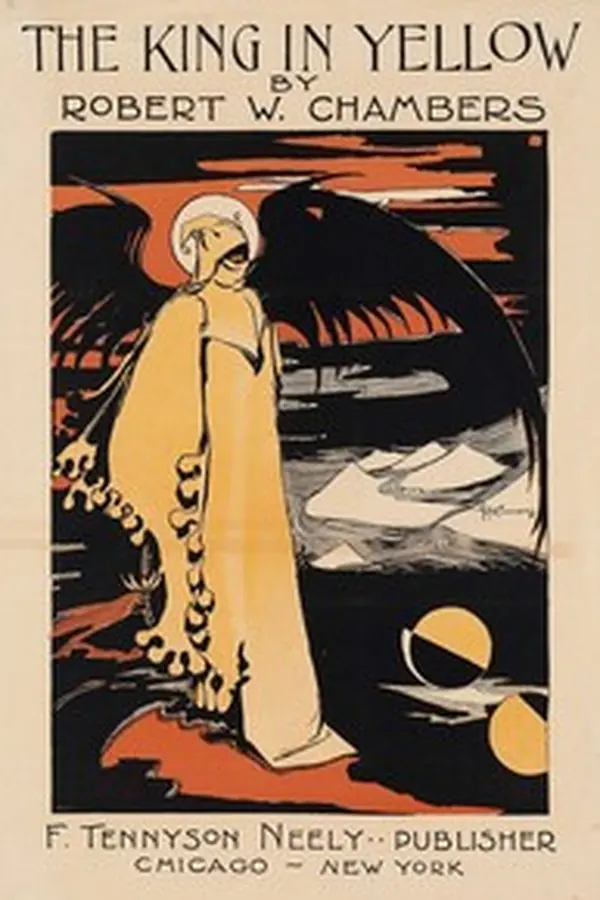
The King in Yellow
📖 Click to Read the Opening Pages Online Preview
The Repairer of Reputations: New York, 1920
Toward the end of the year 1920 the Government of the United States had practically completed the programme, adopted during the last months of President Winthrop’s administration. The country was apparently tranquil. Everybody knows how the Tariff and Labour questions were settled. The war with Germany, incident on that country’s seizure of the Samoan Islands, had left no visible scars upon the republic, and the temporary occupation of Norfolk by the invading army had been forgotten in the joy over repeated naval victories, and the subsequent ridiculous plight of General Von Gartenlaube’s forces in the State of New Jersey. The Cuban and Hawaiian investments had paid one hundred per cent and the territory of Samoa was well worth its cost as a coaling station. The country was in a superb state of defence. Every coast city had been well supplied with land fortifications; the army under the parental eye of the General Staff, organized according to the Prussian system, had been increased to 300,000 men, with a territorial reserve of a million; and six magnificent squadrons of cruisers and battle-ships patrolled the six stations of the navigable seas, leaving a steam reserve amply fitted to control home waters. The gentlemen from the West had at last been constrained to acknowledge that a college for the training of diplomats was as necessary as law schools are for the training of barristers; consequently we were no longer represented abroad by incompetent patriots. The nation was prosperous; Chicago, for a moment paralyzed after a second great fire, had risen from its ruins, white and imperial, and more beautiful than the white city which had been built for its plaything in 1893. Everywhere good architecture was replacing bad, and even in New York, a sudden craving for decency had swept away a great portion of the existing horrors. Streets had been widened, properly paved and lighted, trees had been planted, squares laid out, elevated structures demolished and underground roads built to replace them. The new government buildings and barracks were fine bits of architecture, and the long system of stone quays which completely surrounded the island had been turned into parks which proved a god-send to the population. The subsidizing of the state theatre and state opera brought its own reward. The United States National Academy of Design was much like European institutions of the same kind. Nobody envied the Secretary of Fine Arts, either his cabinet position or his portfolio. The Secretary of Forestry and Game Preservation had a much easier time, thanks to the new system of National Mounted Police. We had profited well by the latest treaties with France and England; the exclusion of foreign-born Jews as a measure of self-preservation, the settlement of the new independent negro state of Suanee, the checking of immigration, the new laws concerning naturalization, and the gradual centralization of power in the executive all contributed to national calm and prosperity. When the Government solved the Indian problem and squadrons of Indian cavalry scouts in native costume were substituted for the pitiable organizations tacked on to the tail of skeletonized regiments by a former Secretary of War, the nation drew a long sigh of relief. When, after the colossal Congress of Religions, bigotry and intolerance were laid in their graves and kindness and charity began to draw warring sects together, many thought the millennium had arrived, at least in the new world which after all is a world by itself.
But self-preservation is the first law, and the United States had to look on in helpless sorrow as Germany, Italy, Spain and Belgium writhed in the throes of Anarchy, while Russia, watching from the Caucasus, stooped and bound them one by one.
In the city of New York the summer of 1899 was signalized by the dismantling of the Elevated Railroads. The summer of 1900 will live in the memories of New York people for many a cycle; the Dodge Statue was removed in that year. In the following winter began that agitation for the repeal of the laws prohibiting suicide which bore its final fruit in the month of April, 1920, when the first Government Lethal Chamber was opened on Washington Square.
The excerpt stops where Hildred Castaigne stops, at the door of a man who repairs reputations. The download carries all ten stories, unabridged, in the order Chambers set them.
Download Full EPUB1895
~70,000 words (estimated)
Approx. 3.9 hours
Standalone
New York and Paris, and the dream-city of Carcosa beyond them
10 stories
EPUB · AZW3 · KEPUB
0.41 MB (EPUB) · 0.55 MB (AZW3) · 0.44 MB (KEPUB)
Public domain in the United States
Project Gutenberg #8492
The King in Yellow is Robert W. Chambers’s 1895 collection of ten stories, and only the first four share the book that made it famous. A young man in a New York of 1920 believes he is heir to an imperial dynasty. A sculptor in Paris keeps a bath of rose-coloured death. A painter in the Latin Quarter is followed home across a whole city. A model brings her lover a clasp with a sign no alphabet explains. Behind them sits a play, The King in Yellow, that ruins everyone who reads the second act, and a city called Carcosa. The other six stories are romances, a siege and a Breton ghost story.
Chambers wrote these stories young, and their menace is domestic rather than cosmic: a rented flat, a rented piano, a pension on the rue Vavin, a flower market on the Pont au Change. The famous play is never quoted at length, which is why it still works. Read the four mythos stories for the Pallid Mask and the sign, and read the six others for a quality Chambers had at thirty and rarely afterwards: the ability to make an ordinary street feel watched, even when nothing supernatural is coming. See Wikipedia’s article on The King in Yellow for its publication history. The text is available via Project Gutenberg #8492.
The King in Yellow by Robert W. Chambers: Summary, Characters & Themes
This page is a summary and analysis of The King in Yellow, the ten-story collection Robert W. Chambers published in 1895, when he was thirty and living between Paris and New York. It is usually remembered as one book and is really two. The first four stories share a banned play, a masked figure and a sign that ruins the people who see it; the last six share nothing with them except the same young author’s eye for streets, rooms and unhappiness. Readers who arrive expecting tentacles find instead a New York of 1920 that never happened, a sculptor’s house in the Rue Sainte-Cécile, and a painter chased down the Rue de Rivoli by a white-faced man. What follows takes the stories in the order Chambers printed them, then sets out the characters, the imagery and the reasons the book is still reprinted.
The author is Robert W. Chambers, a painter by training who came to fiction late and to this book early. The collection has two audiences and they rarely agree. The weird stories are short, cold and built on a single image apiece; the Paris stories are warm, social, and end in marriage, disappointment or a shell falling on the rue de Seine. Chambers studied at the École des Beaux-Arts and the Académie Julian, exhibited in the Salon, and had published a novel and a story collection before 1895. The Quarter of the middle stories is the one he had lived in, written up while the memory was still fresh, which is why the rents, the food and the students’ jokes sound overheard rather than researched.
Everything the collection is remembered for comes from a play that nobody in the book finishes. The King in Yellow runs in two acts: the first is said to be ordinary, the second destroys whoever reads it. Chambers quotes only fragments, a few lines between Cassilda and Camilla, the names Hastur, Aldebaran and the Hyades, and the image of Carcosa, where black stars hang above the lake of Hali and the twin suns go down. Mr. Wilde’s agents in The Repairer of Reputations pass the Yellow Sign to the right people; the painter in The Yellow Sign finds it on an onyx clasp near the Aquarium. Chambers never explains the sign, and that silence is the reason later writers could borrow it so easily.
The other six stories are not mythos material and should not be sold as such. The Demoiselle d’Ys is a time-slip on the Breton moors that ends at a shrine dated 1573. The Prophets’ Paradise is eight prose poems about Pierrot, Death and mirrors. The Street of the Four Winds takes a starving cat up five flights to a dead woman’s room. The Street of the First Shell is a siege story set in December 1870, with horse on the menu and a Prussian who calls himself an American. The Street of Our Lady of the Fields and Rue Barrée are Quarter romances, one about a girl who is not a student, the other about a pianist who turns down an honest proposal. For the same period and the same unease there is Henry James’s The Turn of the Screw, and for the Paris of those decades Gaston Leroux’s The Phantom of the Opera.
The book’s afterlife has been stranger than its sales. For thirty years it was one title among many by a fashionable novelist who wrote historical romances and drawing-room comedies; then Lovecraft’s survey of supernatural horror singled out the early Chambers, and the names Hastur and Hali travelled from this book into the Cthulhu Mythos, where they acquired meanings their inventor never gave them. Most readers now come for that lineage and find something quieter: a convalescent in a locked room, a marble hand under a muslin cloth, a hearse that stops at midnight. The ten stories are printed here in the order Chambers set them, without the additions that some later editions make, and with the two halves left as Chambers left them. The text used here is the Project Gutenberg transcription (#8492), which is in the public domain in the United States.
Historical Context
Chambers wrote as an American who had spent years in Paris, and the middle of the book is a record of the American art-student colony. The studios of the rue de la Grande Chaumière, the pension tables of Montparnasse, the Luxembourg gardens, the crémerie on the Boulevard St. Michel, the models and students who bow to a girl they know only by the name chalked on a street barrier: this is 1895 seen from the inside. The Quarter was cheap, foreign and full of people who intended to be painters. Chambers had been one of them, and the comedy of The Street of Our Lady of the Fields, where a boy from Connecticut is called a nouveau for his clothes, is reportage rather than invention.
The Street of the First Shell reaches back twenty-five years to the siege of Paris, when Prussian guns ringed the city and the Latin Quarter ate horse, rats and bread of unknown flour. Chambers was a small child when Paris capitulated, and he grew up with the stories. The narrative is careful about rations and the price of a quarter of rat, and it puts a Prussian posing as an American at the centre of its moral problem, which is whether a man may be saved for the sake of a child he has never acknowledged. The shells are not decoration either: one falls in the rue de Seine, and a child writes the news on a wall.
The decade that produced the book gave the Yellow Book its colour and Wilde his scandal, and the collection belongs to it in manner as much as mood: short, artificial, fond of masks, mirrors and exhausted aristocrats. A play that damages its audience is the purest expression of that taste. When Lovecraft adopted Hastur and the lake of Hali in the 1920s he was borrowing names from a book that had never explained them, and the borrowing fixed the collection’s reputation as a founding document of weird fiction. It is a founding document, but of something narrower than the mythos: the modern short story of a place that is slightly wrong.
Key Characters & Literary Archetypes
- Hildred Castaigne: The narrator of The Repairer of Reputations, recovering from a fall from a horse, who believes the year is 1920 and that he is next in line to an American empire. He keeps a jewelled diadem in a time-locked safe, signs his first order as Hildred-Rex, and is last seen in a police cell shouting about the crown of the King in Yellow; the editor’s note says he died in an asylum. His narrative is courteous, confident and completely unreliable, and it never admits that he is ill.
- Mr. Wilde: The repairer of reputations himself: a tiny man without ears or fingers who keeps ledgers of other people’s ruin in a room guarded by a vicious cat. He promises Hildred a dynasty, refuses to send the Yellow Sign to California, and is found at the end with his throat torn open. He is the book’s first portrait of an editor, or a publisher, as a monster. His cat is the one thing here that kills on its own account, and it is no accident.
- Alec: The painter who narrates The Mask, twenty years old and in love with Geneviève, who loves the sculptor Boris Yvain instead. He is patient, observant and passive until the last page, when he comes back from two years in Constantinople, kisses the marble drapery in the empty house, and gets his miracle. His is the warmest first-person voice in the collection. He paints all day and looks at the marble room, and that is his only real action.
- Boris Yvain: The young American-born sculptor of The Mask, twenty-three, who has found a rose-coloured solution that turns living things to marble in a second and has isolated an element he refuses to name. He keeps his formula private, quarrels with his own success, and dies in the pool in his garden, leaving the marble woman in the house to the man who loves her. His element and his bath are the book’s only real inventions, and he dies before either is used.
- Geneviève: Eighteen, Parisian, loved by two men and honest enough to say so in a fever. She sprains her ankle on a wolf’s-head rug, confesses that she loves Alec, and lies afterwards on a marble couch under a Madonna, the pale azure vein visible in her arms and a flush of rose under the stone. She is the collection’s one figure of return rather than revenge, and the only miracle in the book that is granted rather than withheld. Her name is the one the story keeps returning to.
- Tessie Reardon: The painter’s model in The Yellow Sign, Irish and Catholic, three years in the studio and in love with the man she sits for. She dreams three times of a black-plumed hearse whose driver is the church’s night watchman, and she brings her lover the onyx clasp bearing the sign no alphabet explains. She reads the book first and pays for it first. She tells the painter the dream before she tells him the driver’s name, and she is right about both.
Core Literary Themes
- The book that reads its reader: The King in Yellow is a play in two acts, and the second act is fatal. Chambers never prints it, only the damage: Castaigne’s delusion in a New York that never existed, the painter’s hearse at midnight, the organist who follows a mocking reader from the Rue St. Honoré to the Bois, and the city of Carcosa where black stars hang and the twin suns go down into the lake of Hali. The idea that a text can act on its audience was fashionable in 1895 and has not worn out since, because it makes the reader complicit in the danger: the copy in your hands is part of the machinery, and the harm begins with turning the page.
- Masks, theatre and the Pallid Mask: The book is full of performance. There is the Pallid Mask that Castaigne cannot forget, the white marble mask that Geneviève’s face becomes under the Madonna, the organ loft at St. Barnabé, the hearse that arrives like a stage effect, Pierrot and the green room of the short pieces. Chambers painted salon pictures before he wrote fiction, and the collection’s horror is pictorial: it is arranged in tableaux, with one figure standing in the wrong light while everyone around her fails to look. Mr. Wilde wears wax ears on silver wires. No one explains the mask itself.
- Madness as the frame: The Repairer of Reputations is narrated by a man whose 1920 never existed, and the editor’s note on the last line turns the story into a case file. In the Court of the Dragon is a swoon in a pew, The Yellow Sign a confession written while the writer waits for the priest to arrive. Chambers rarely shows madness from outside, as a doctor would. He hands over the pen, and lets the reader discover, after it is too late to stop, that the narrator’s certainty was the first symptom.
- Revenants and the wrong century: A night watchman dead for months walks up the stairs, takes the Yellow Sign from a coat, and asks three times whether it has been found. Jeanne d’Ys has been in her grave since 1573. A woman lies in a candle-lit room five flights up, and a stranger who followed her cat kisses her mouth. The collection keeps returning to the moment when a date fails: a glove still warm on an icy slab, a hearse that stops at the right door, a hand that is cold and soft. Time in these stories is a door left unlocked.
- Ordinary streets made uncanny: Washington Square, the Rue de Rennes, the rue Vavin, the Pont au Change, and a street between the rue de la Grande Chaumière and the rue Vavin that the narrator calls a pariah among streets, and the Rue Barrée, whose name on a repair barrier is all anyone knows about a pianist. Chambers puts his terrors in rented rooms and on the walk home from vespers. In the Paris stories the same eye works without the supernatural, on hunger, cold, a fishing party at La Roche and a shell falling into a narrow street, and the effect is not less unsettling for being true.
Why Download Our Custom E-Reader Edition of The King in Yellow?
This page gives you the complete 1895 collection in a reflowable edition: all ten stories, from The Repairer of Reputations to Rue Barrée, with Chambers’s own titles and order and nothing abridged or modernised. The prose is his, the Paris streets are spelled as he spelled them, and the fragments of the play are printed exactly where he put them, so the second act stays off the page the way he intended, in a book that expects its reader to keep going.
The download is DRM-free and comes in three formats from a single page: EPUB for most readers, AZW3 for older Kindles, KEPUB for Kobo devices. Each file carries a linked table of contents with the ten story titles, so you can read The Yellow Sign on its own, or run the whole sequence from the 1920 frame to the rue Barrée, and none of the files needs an account or an app to open, and each one reads just as well on a phone as on a dedicated reader.
The guide above is for readers who want the context as well: the 1870 siege behind The Street of the First Shell, the American art-student colony in the Quarter, the way Lovecraft lifted two names out of this book and left the rest, and ten summaries that follow the stories in order without giving away the endings that depend on surprise. It also says plainly which stories are horror and which are romances, since the collection is still sold as a single thing.
- Project Gutenberg transcription, via Project Gutenberg #8492 — the complete text, unabridged, with the chapter headings the author set.
- Ten marked stories each title starts its own section in the EPUB, AZW3 and KEPUB, so the table of contents lists ten stories instead of one long file.
- Offline and DRM-free download once and keep it, with no account, no reader app and no expiry, on devices made since about 2010.
- Small files, long battery the whole collection stays under a megabyte in each format, which means fast page turns on old hardware and no waiting on a weak connection.
- The Turn of the Screw — free EPUB, AZW3 & KEPUB
- The Phantom of the Opera — free EPUB, AZW3 & KEPUB
- Dracula — free EPUB, AZW3 & KEPUB
Chapter summaries
The King in Yellow was published as ten separate stories in 1895. The summaries below follow Chambers’s order and give each story in a paragraph, beginning with the four that share the play and its sign.
- 1. The Repairer of Reputations: New York, 1920, in a history that never happened: suicide is legal, the first Government Lethal Chamber has opened on Washington Square, and Hildred Castaigne, recovering from a riding accident, has read a play he cannot forget. He visits a man called Wilde who repairs reputations, signs his first order as Hildred-Rex, and sets a forger on his cousin Louis. The ending is a police cell, a dead cat and an editor’s note that undoes the year 1920. Wilde’s office is up a dark stair and smells of cat.
- 2. The Mask: Alec, Geneviève and the sculptor Boris Yvain share a house in the Rue Sainte-Cécile and an impossible triangle. Boris has found a rose-coloured solution that turns flowers, fish and rabbits to marble in a second, and he will not name his new element or publish the formula. When Geneviève and Boris are both dead, Alec keeps the marble woman under the Madonna until one April afternoon the stone changes back. Jack Scott has already burned the papers and let the solution out of the bath.
- 3. In the Court of the Dragon: At vespers in the Church of St. Barnabé a sleepless reader of The King in Yellow mocks a sermon on the soul’s safety and sees the same white-faced organist pass the gallery twice. He is followed across Paris from the Rue St. Honoré to the Bois, and when he reaches the Court of the Dragon the gates are shut. The story is a swoon in a pew, and the man following him knows the road to Carcosa. The sermon promised that nothing can really harm the soul.
- 4. The Yellow Sign: Mr. Scott paints in Washington Square and is in love with a girl in Brittany. His model Tessie dreams of a black-plumed hearse whose driver is the church’s night watchman, a soft white man who keeps asking whether the painter has found the Yellow Sign. Her keepsake is an onyx clasp set with a gold symbol no script explains. When the book turns up in the house, the hearse stops at the door. The painter’s half-finished canvas has already rotted into gangrene colours.
- 5. The Demoiselle d’Ys: A lost sportsman on the Finistère moors follows a falcon with a sleigh-bell on its leash to a moated château where the falconers are named Hastur and Raoul and the heiress, Jeanne d’Ys, has never seen a stranger. Her French is four hundred years old. He stays a week, is bitten by a viper in the garden, and wakes in ruins before a shrine that gives the date as 1573, with a warm glove on the icy stone. Philip never learns whether the château was ever there.
- 6. The Prophets’ Paradise: Eight very short pieces, printed without numbers, in which a painter waits behind glass for a woman who never comes, a woman pours out a jar of a thousand names on white and gold flowers, Pierrot argues with Truth in front of a mirror, a jester titters a single word in a hall, and Death takes the last sitting in the green room. They are prose poems rather than stories, and the book needs them between its two longer halves. They are the book’s shortest pages and its strangest.
- 7. The Street of the Four Winds: Severn, a poor painter five flights up, feeds a starving cat and finds a garter round its neck with a silver clasp engraved with a woman’s name. The janitor, the butcher, the baker and a sculptor all tell him that she lives in the north wing of the same house, and the baker warns him that the four winds blow all things evil into that street. He carries the cat back to a dead woman in a candle-lit room. None of the shopkeepers will say the word dead.
- 8. The Street of the First Shell: December 1870: Paris is under siege, the Quarter eats horse and rat, and Jack Trent’s household prepares a nineteenth birthday dinner for his wife Sylvia. A German who calls himself an American is arrested for swindling the food committee, and Trent is summoned to identify him as a fellow countryman. Sylvia’s confession sends him out with the sortie, and he comes home to a shell in his own street and a child in his bed. The shell that falls in his street is the one the title means.
- 9. The Street of Our Lady of the Fields: Hastings arrives from Connecticut with a letter from a Baptist minister and no idea how to be an art student. In the Luxembourg he meets Valentine, who asks him to keep her to himself and to tell nobody that he has met her; his fellow students are less careful. The story is the book’s comedy of manners, with Julian’s studio, a fishing party at La Roche, and a day out of Paris that ends with her asking to be taken or cast away. Her request is the story’s real test.
- 10. Rue Barrée: The students at Julian’s all bow to a girl who passes under the window and who is known by the name painted on a street-repair barrier. She is a pianist, poor and alone; she buys two francs of pansies at the flower market while Selby secretly buys the rose tree she wanted. Clifford proposes to her on the Luxembourg terrace and is refused. Selby, drunk and jealous, climbs her façade and falls into a white room with a piano and an iron trunk. The white room is the point.
The King in Yellow: Frequently Asked Questions
Is The King in Yellow a novel or a collection?
Do the stories have to be read in order?
Is the play in the book real?
Why is the book connected to Lovecraft and the Cthulhu Mythos?
What is the Yellow Sign?
How frightening is it?
Which stories are set in Paris?
Where can I download The King in Yellow for free?
Part of: Gothic and Horror Classics · Free Classic Fiction