Leviathan by Thomas Hobbes: Free EPUB, AZW3 & KEPUB Download
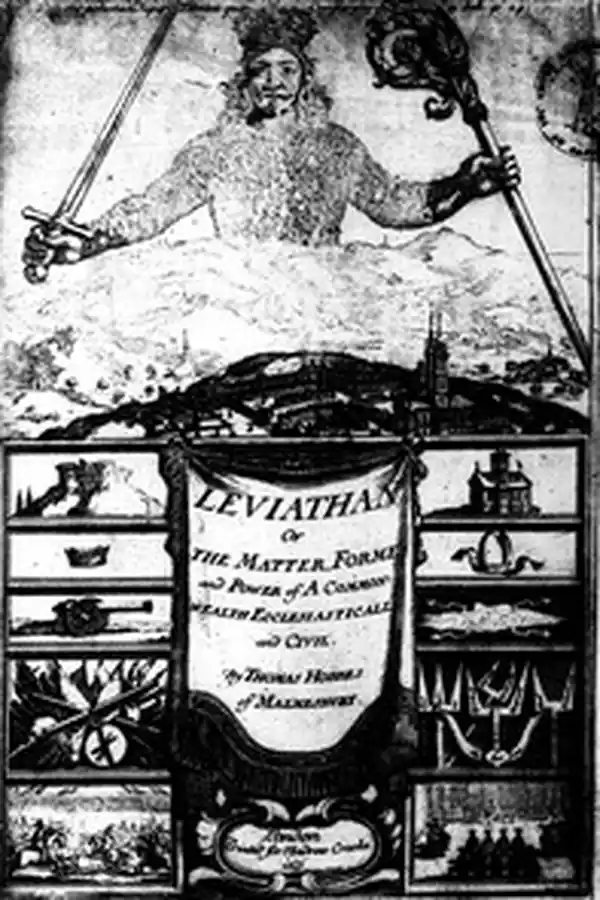
Leviathan
📖 Click to Read the Opening Pages Online Preview
Read the opening of Leviathan
Concerning the Thoughts of man, I will consider them first Singly, and afterwards in Trayne, or dependance upon one another. Singly, they are every one a Representation or Apparence, of some quality, or other Accident of a body without us; which is commonly called an Object. Which Object worketh on the Eyes, Eares, and other parts of mans body; and by diversity of working, produceth diversity of Apparences.
The Originall of them all, is that which we call Sense; (For there is no conception in a mans mind, which hath not at first, totally, or by parts, been begotten upon the organs of Sense.) The rest are derived from that originall.
To know the naturall cause of Sense, is not very necessary to the business now in hand; and I have els-where written of the same at large. Nevertheless, to fill each part of my present method, I will briefly deliver the same in this place.
The Introduction ends here. Chapter I, Of Sense, begins the argument that runs through all four parts to the Review and Conclusion.
Download Full EPUB1651
~213,000 words (estimated)
Approx. 11.8 hours
Standalone work
England in civil war, written in Parisian exile
47 chapters
EPUB · AZW3 · KEPUB
0.82 MB (EPUB) · 1.18 MB (AZW3) · 0.87 MB (KEPUB)
Public domain in the United States
Project Gutenberg #3207
Leviathan is Thomas Hobbes’s account of how political order is made and how it falls apart, written while England was at war with itself and printed in London in 1651. Hobbes starts from the senses and builds a philosophy of man out of them, then asks what the passions alone produce when no common power holds men down. His answer, a war of every man against every man in which life is solitary, poor, nasty, brutish and short, makes the covenant that ends it look like the only rational act. Two thirds of the book then turn that civil argument into an argument about Scripture, church power and the kingdom of darkness.
Read as a whole, the book moves in four parts: Of Man, Of Common-wealth, Of a Christian Common-wealth, and Of the Kingdome of Darknesse, followed by A Review, and Conclusion. Hobbes writes in the geometrical manner he admired, with definitions, numbered laws of nature and deductions from them, and he insists throughout that sovereign power cannot be divided. The English is that of 1651, and the text keeps its own forms, among them Soveraign, Artificiall and shew. Nothing in the argument depends on the civil war, but everything in it was written for readers living through one. See Wikipedia’s article on Leviathan for its publication history. The text is available via Project Gutenberg #3207.
Leviathan by Thomas Hobbes: Summary, Characters & Themes
This page is a summary and analysis of Leviathan by Thomas Hobbes, following the argument from its first chapter to the Review and Conclusion. The Introduction sets out the design. Because nature, the art by which God governs the world, is imitated by the art of man, man can make an artificial animal, and the commonwealth is that animal: a body politic whose soul is sovereignty, whose joints are magistrates, whose nerves are reward and punishment. Hobbes compares the heart to a spring and the nerves to strings, and says that the pacts and covenants by which its parts were at first made, set together and united resemble that Fiat, or the Let Us Make Man, pronounced by God in the Creation. He adds an instruction that governs the whole book: to read thyself, because he that is to govern a whole nation must read in himself not this or that particular man, but mankind. It is an anatomy as much as a treatise.
The author is Thomas Hobbes (1588-1679), a Malmesbury-born scholar who tutored the Cavendish family, published De Cive in 1642, taught mathematics to the future Charles II in Paris, and came home to England in 1651, after the book was printed, and made his peace with the Commonwealth. Leviathan appeared in London in 1651 with the imprint of Andrew Crooke at the Green Dragon in St Paul’s Churchyard, at a moment when the monarchy had been abolished and the question of obedience to the new power was being argued in every parish. It was written in English rather than Latin, which was itself a decision about readers: the gentry, the lawyers and the clergy, rather than the Latin-reading divines of the universities. Hobbes answers that question without flattery to either side, deriving obedience from authorisation rather than from divine right, and the answer cost him his reputation with royalists and republicans alike, on both sides of the question. A Latin version followed in 1668.
Part I, Of Man, builds the person from the senses upward. Sense is the pressure of an external body on the organs, and what remains after the object is removed is imagination, which Hobbes calls decaying sense; memory is the same thing with a name, and dreams are imagination in sleep. A train of thoughts runs either unguided or regulated by desire, and prudence is nothing but experience. Speech gives names, and reason is nothing but reckoning, the adding and subtracting of the consequences of general names. From the passions Hobbes derives appetite, aversion, hope and fear, and the will is the last appetite in deliberation. Knowledge divides into knowledge of fact, which is history, and knowledge of consequence, which is science. The chapter ends by distinguishing the two and warning that a man may reason well and still mistake the colours of fancy for the light of truth. Theology will be treated later by the same method.
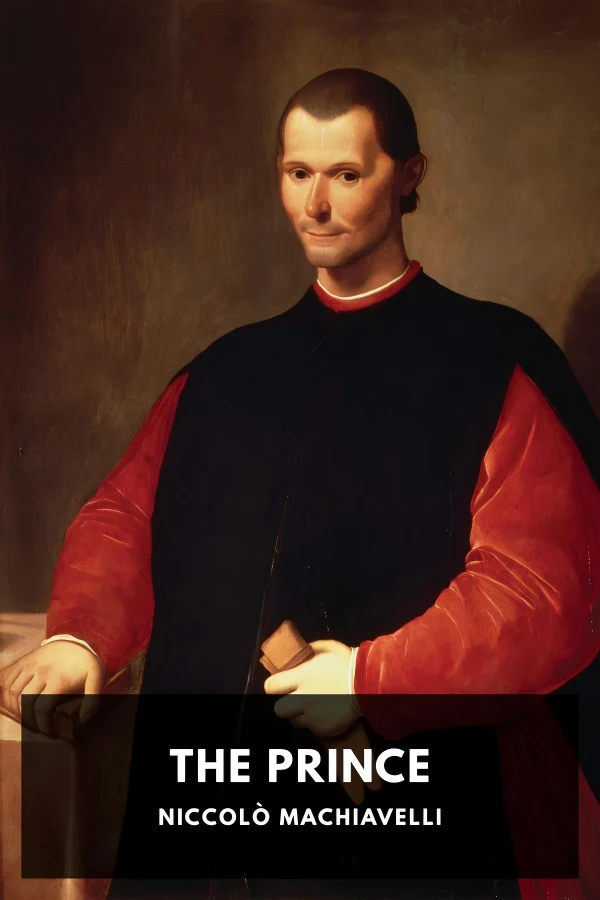
Chapter thirteen removes the common power and shows what remains. Men are equal enough in body and mind that the weakest can kill the strongest by secret machination or by confederacy with others; equality breeds diffidence, diffidence breeds war, and the three causes of quarrel are competition, diffidence and glory. In that war life is solitary, poor, nasty, brutish and short, there is no industry, no navigation, no arts, no society, and no notions of right and wrong, because where there is no common power there is no law, and where there is no law there is no injustice. The passions that incline men to peace are fear of death and desire of such things as are necessary to commodious living, and reason suggests convenient articles of peace, which Hobbes sets down as nineteen laws of nature. Two useful comparisons are Machiavelli’s The Prince, the handbook of statecraft Hobbes answers, and Locke’s Two Treatises of Government, the reply that limits what Hobbes had made absolute.
Part II, Of Common-wealth, is the famous half. A multitude becomes one person when every man says I authorise and give up my right of governing myself to this man, or to this assembly of men, on condition that thou give up thy right to him and authorise all his actions in like manner, and the bearer of that person is the sovereign. Hobbes calls the generation of the commonwealth the generation of that great Leviathan, or rather, to speak more reverently, of that Mortall God to whom we owe our peace and defence. He lists the rights of sovereignty, argues that they cannot be divided, defines the liberty of subjects as the silence of the law, and closes with civil law, punishment, the diseases of a commonwealth and the office of the sovereign. Parts III and IV turn it on Scripture, the Christian commonwealth and the kingdom of darkness, a confederacy of deceivers working by erroneous doctrines. The text used here is the Project Gutenberg transcription (#3207).
Historical Context
Leviathan was written while England was at war with itself. The king was defeated in the 1640s, Charles I was executed in January 1649, and the Commonwealth that followed demanded an oath of loyalty from men who had sworn allegiance to the crown. Hobbes left England in November 1640, before the fighting began, and watched the collapse of royal authority from Paris, where he had gone with the exiled court and where he had been tutor to the prince of Wales. The book was printed in London in 1651, after the regicide and before the Protectorate, and it addresses readers who were living through exactly the situation it describes: a multitude without a common power, and a new power asking to be obeyed. He had published De Cive in 1642 and was already notorious for the argument.
Hobbes’s answer is deliberately unwelcome to both parties. He refuses to say that the king’s cause was just because the king was king, and he refuses to say that a subject may judge his sovereign and rebel when he disagrees. Authority is derived from authorisation, not from divine right and not from the goodness of a cause, and obedience is owed to whoever can protect. Royalists read that as a defence of the new regime and republicans read it as a defence of tyranny. The Review and Conclusion shows him applying the rule to the conquest: he defines conquest as the acquisition of a right over persons, and asks exactly when a beaten subject may lawfully submit, a question his own return depended on. That is why the book offers no theory of resistance and no right of revolution.
The first readers were clergy as much as politicians. Parts III and IV argue that the sovereign, if Christian, is head of the church in his own dominions, that ecclesiastical power is the power to teach and not to command, and that a church and a commonwealth of Christian people are the same men. That was aimed at the claims of Rome and of the Presbyterian assemblies alike: the Westminster Assembly had been sitting since 1643, and the settlement of religion was the live political question of 1651. Hobbism became a term of abuse, the universities are named in the Review as the fountains of civil and moral doctrine, and the argument over the independence of the church was not settled in his lifetime, or in ours. Hobbes answered Bellarmine by name, and the answer is still readable.
Key Characters & Literary Archetypes
- The Artificiall Man: The commonwealth itself, a body politic built from men the way a watch is built from wheels and springs. Hobbes gives it an artificial soul in sovereignty, joints in magistrates and ministers, nerves in reward and punishment, and health in concord, so that sedition becomes sickness and civil war becomes the death of the body. The metaphor is not decoration: it lets him ask what holds the parts together, and it turns factions into tumours and money into blood. and it makes the state legible as a machine whose failures can be diagnosed.
- The Soveraign: The bearer of the person of the multitude, whether one man or an assembly, and the Mortall God to whom subjects owe their peace and defence. Hobbes insists that his power is indivisible, unpunishable and not subject to the law he makes, because he that complaineth of injury from his sovereign complains of that whereof he himself is author. He is the public soul, and the whole second part argues that no part of that power can be lent out without dissolving the body. His rights are the twelve marks of sovereignty.
- The Subject: Every man who has authorised the sovereign’s actions and so owns them. He keeps a liberty of self-defence that no covenant can remove, may refuse an order to kill or wound himself, and is bound in obedience only so long as the protection lasts, since the end of obedience is protection. His liberty is what the law leaves silent, not a share in making it, and chapter twenty-one exists to make sure the difference is understood and not confused with the liberty of the ancients. He may also refuse to accuse himself.
- The Naturall Man: Man considered without government, equal in body and mind, driven by appetite and aversion, and capable of the diffidence that turns equality into war. He is a construction rather than a historical figure, built by subtracting the sovereign from the Englishman of 1651, and he is the test against which every political arrangement is measured. The state of nature is therefore an argument rather than an anecdote about American savages, although Hobbes does cite them when it suits him. The equality is equality of ability, not of condition.
- The Foole: The voice in chapter fifteen who says in his heart that there is no such thing as justice, and who keeps covenants only when it pays. Hobbes answers that a breach which looks rational for one man stops being rational once others see it: he that declares himself a breaker of faith cannot be received into any society that unites for peace and defence. The argument is meant to show that injustice is a contradiction in practice, and not only a sin against an invisible rule. Hobbes answers it at length.
- The Pastour of Darknesse: The archetype Hobbes builds in Part IV: the cleric who claims a power to command that Christ never gave, and who teaches that the kingdom of God is already the church. He is not a named person but a role, filled by popes, presbyters and schoolmen in turn, and the whole fourth part is a prosecution of him. Behind him stands the kingdom of darkness itself, a confederacy of deceivers that works by dark and erroneous doctrines to put out the light of nature and of the gospel. and to unfit men for the kingdom.
Core Literary Themes
- Fear and the sword: The bond of the commonwealth is fear, and Hobbes says so without embarrassment. Fear and liberty are consistent, because a man who obeys to save his life acts freely, and covenants without the sword are but words, and of no strength to secure a man at all. The claim is not that terror is good but that promises have no force without a power to enforce them, and the whole theory of obligation rests on it. It is also why the argument keeps returning to protection: the duty to obey runs exactly as far as the ability to defend. The sovereign is therefore a condition of morality, not a convenience.
- The body and its diseases: The commonwealth is imagined as a body, and the metaphor does real work. It supplies the anatomy of the Introduction, the pathology of chapter twenty-nine, where want of absolute power is a disease and a division of the sovereign’s rights is a fever, and the diagnosis of chapter twenty-two, where unlawful systems are wens and apostemes engendered by the unnatural conflux of evil humours. Hobbes can therefore describe sedition as illness, conquest as death and repair as medicine, and the language makes the dissolution of a state feel like physiology rather than moral failure. The metaphor also tells a reformer what to do: restore the humours, do not amputate the limbs.
- Words as counters: Hobbes treats language as an instrument and an infection at once. Speech is the noblest invention of man, yet words are wise men’s counters, the money of fools, and nearly every error in the book is blamed on the abuse of names, from the absurdities of the schools to the misinterpretation of Scripture. Reason itself is reckoning with names, so that truth and falsehood live in propositions rather than in things, and a commonwealth whose teachers misuse words is one whose subjects cannot see the light. Nominalism is the engine of the politics: if names are counters, whoever fixes them fixes what men can think. Hobbes’s nominalism is therefore a political doctrine as well as a linguistic one.
- Warre of every man: The state of nature is a method rather than a description. By removing the common power Hobbes shows what the passions alone produce, and the account of that condition, in which there is no industry, no propriety and no injustice, is the most quoted passage in the book because it argues for government by subtracting it. The device also fixes the terms of everything that follows: if the natural condition is war, then peace is the good, security is the end and the sovereign is the means, whatever the cost in liberty. That is why the state of nature is described in the present tense, as a permanent possibility rather than a past epoch.
- Two kingdoms, one sovereign: The argument about church and state is not a digression but a second front. Hobbes reads the kingdom of God as a civil kingdom over a peculiar people, reduces the clergy to teachers whose precepts are wholesome counsels rather than laws, and calls the doctrine that the church is that kingdom the chief engine of the kingdom of darkness. Since a church and a commonwealth of Christian people are the same men, there is only one sovereign in a Christian state, and the same authority must interpret Scripture, judge heresy and command the pulpit. The stakes are not metaphysical but jurisdictional, and Hobbes treats them as such.
Why Download Our Custom E-Reader Edition of Leviathan?
Leviathan is long, its argument is cumulative, and its chapters are numbered rather than titled in the copy most readers meet. This edition sets the text from the Project Gutenberg transcription and keeps the chapter headings Hobbes wrote, so a reference to chapter thirteen or chapter twenty-one lands in the right place in the table of contents. The numbered laws of nature, the twelve rights of sovereignty and the marginal notes are left where they stand, because the argument is carried as much by its numbering as by its sentences, and the numbers let a reader follow a deduction rather than a mood, and make the deductions checkable.
The spelling is the spelling of 1651: Soveraign, Artificiall, shew, Common-wealth and Mortall God are printed as Hobbes printed them. The forms look odd for a page or two and then stop being odd, and modernising them quietly rewrites the voice of the argument, making a seventeenth-century lawyer sound like a modern textbook. The literal text is also the only defensible one here, since every paraphrase of a definition is an interpretation, and the book is about who has the right to interpret. Nothing is abridged and no headings are invented. A reader who wants the modernised text can find one elsewhere, but this is what Hobbes wrote.
The file is built for the way the book is actually read. An EPUB with real chapter marks and a navigable table of contents, an AZW3 for Kindle and a KEPUB for Kobo, each with the same text, so that a note made in one reader makes sense in another. Nothing is locked and nothing expires. All four parts are here, including the Review and Conclusion, which is the part readers skip and the part that tells you what Hobbes thought he had done, and the table of contents follows his own division so that the shape of the argument is visible before the first sentence.
- Project Gutenberg transcription, via Project Gutenberg #3207 — the complete text, unabridged, with the chapter headings the author set.
- Made for reading Project Gutenberg transcription The text follows Project Gutenberg ebook #3207, the complete English Leviathan of 1651, unabridged and with the chapter headings the author set.
- Made for reading Chapter marks Forty-seven chapters in four parts plus the Review, each reachable from the table of contents, with the numbered laws and rights left as Hobbes numbered them.
- Made for reading Original spelling Soveraign, Artificiall and shew kept as printed in 1651, with no silent modernisation and no invented headings.
- The Prince — free EPUB, AZW3 & KEPUB
- Two Treatises of Government — free EPUB, AZW3 & KEPUB
- On Liberty — free EPUB, AZW3 & KEPUB
Chapter summaries
Leviathan runs to forty-seven chapters in four parts, plus a Review and Conclusion. The first part builds man, the second builds the state, the third rebuilds the church, and the fourth describes what happens when the church claims to be the state.
- Introduction and chapters I-II: Hobbes announces the design: the commonwealth is an artificial man, made by art as God made nature, with sovereignty for a soul and magistrates for joints, and the reader is told to read himself. Sense is the pressure of external bodies on the organs, and what remains when the object is removed is imagination, which Hobbes calls decaying sense. Memory is imagination with a name, dreams are imagination in sleep, and the train of thoughts runs unguided or regulated by desire, so that prudence is experience and nothing more.
- Chapters III-V: Speech is the noblest invention of man and the source of most of his errors. Names are signs, truth and falsehood live in propositions, and absurdity is the joining of words that cannot stand together. Hobbes lists the abuses of language and says that words are wise men’s counters, the money of fools. Reason is adding and subtracting the consequences of general names, science is the knowledge of those consequences, and error is a miscalculation, while madness is either passion or the settled habit of talking nonsense.
- Chapters VI-IX: The passions are the interior beginnings of voluntary motion, appetite and aversion, love and hate, hope and fear, and deliberation ends in the last appetite, which Hobbes calls the will. Felicity is the continual progress of desire from one object to another, and the power of a man is his present means to some future apparent good. Worth is the price others set on him, honour is the acknowledgement of that price, and knowledge divides into knowledge of fact, which is history, and knowledge of consequence, which is science.
- Chapters X-XII: Power is present means to future apparent good, and Hobbes derives from it worth, dignity, honour and the many signs by which men are valued. Manners follow from a perpetual and restless desire of power after power that ceases only in death. Religion grows from fear of things invisible, from ignorance of causes and from the anxiety of the future; Hobbes separates religion, which is allowed, from superstition, which is not, and finds the same seeds of religion in every nation. Religion, for Hobbes, is politics seen from below.
- Chapter XIII: Men are equal enough in body and mind that the weakest can kill the strongest by secret machination or by confederacy with others. Equality breeds diffidence, diffidence breeds war, and the three causes of quarrel are competition, diffidence and glory. War of every man against every man makes life solitary, poor, nasty, brutish and short, with no industry, no propriety and nothing unjust. The passions that incline men to peace are fear of death and desire of commodious living, and reason suggests the articles of peace.
- Chapters XIV-XV: The right of nature is the liberty to preserve oneself, and the first law of nature commands men to seek peace. Right is transferred by covenant, covenants without the sword are but words, and no covenant can bind a man to resist force. The Foole objects that justice is a fiction and Hobbes answers that keeping faith is the condition of any society. He then sets out the remaining laws of nature, ending with the rule of doing to others what we would have done to us.
- Chapter XVI: Persons, actors and authors are defined so that authorisation can be made precise: an actor performs, an author owns, and authority is the right of doing any action. A multitude becomes one person when it is represented by one man or assembly, and it is the unity of the representer, not of the represented, that makes the person one. Authority is always limited by the commission that conveys it, and a man may authorise another to act for him without authorising every act in advance.
- Chapters XVII-XVIII: A commonwealth is generated when every man authorises one man or assembly to bear his person, and the bearer is the Mortall God under the immortal one. Hobbes defines the sovereign as one person of whose acts a great multitude have made themselves authors, for peace and common defence. He then lists the twelve rights of sovereignty: the subject cannot change the form, forfeit the power, accuse the sovereign or divide the militia from the judicature, because a kingdom divided in itself cannot stand. The rights cannot be divided.
- Chapters XIX-XXI: Sovereignty is monarchy, aristocracy or democracy, and tyranny and oligarchy are the same forms misliked. Hobbes prefers monarchy for practical reasons, provides for succession as an artificial eternity of life, and treats paternal and despotic dominion as acquisition by consent. Liberty is the absence of external impediments, fear and liberty are consistent, and the liberty of subjects is the silence of the law, not a share in government; obligation lasts no longer than the power to protect. The chapter is the hinge between obedience and protection.
- Chapters XXII-XXXI: Systems of people, lawful and unlawful, are the muscles of the body; ministers are its hands; nutrition is property and money, the blood of the commonwealth; counsel is distinct from command; and civil law is what the commonwealth commands, with the sovereign above it. Then crimes, punishments, the things that weaken a state and the office of the sovereign. The part closes with the kingdom of God by nature and with Plato’s philosophers, whose truth Hobbes wants converted into practice. This is the part that teaches the sovereign his trade.
- Chapters XXXII-XLVII and the Review: The Christian commonwealth begins with a rule for reading Scripture and ends with the terms of salvation. To captivate the understanding is to submit the will, not to surrender the intellect. The books of Scripture are law because the sovereign makes them law, the Trinity is read as a threefold representation, ecclesiastical power is the power to teach, and the kingdom of darkness has four causes: misinterpreted Scripture, heathen demonology, vain philosophy and fabulous tradition. The Review restates the relation between protection and obedience.
Leviathan: Frequently Asked Questions
What is Leviathan about?
Is Leviathan a defence of absolutism?
What does solitary, poor, nasty, brutish and short describe?
What is the covenant in Leviathan?
Why does Hobbes call the sovereign a mortal god?
How does Hobbes define liberty?
Why does so much of the book argue about the Bible?
How do I download the free EPUB?
Part of: Philosophy classics · Thomas Hobbes