Tess of the d’Urbervilles by Thomas Hardy: Free EPUB, AZW3 & KEPUB Download
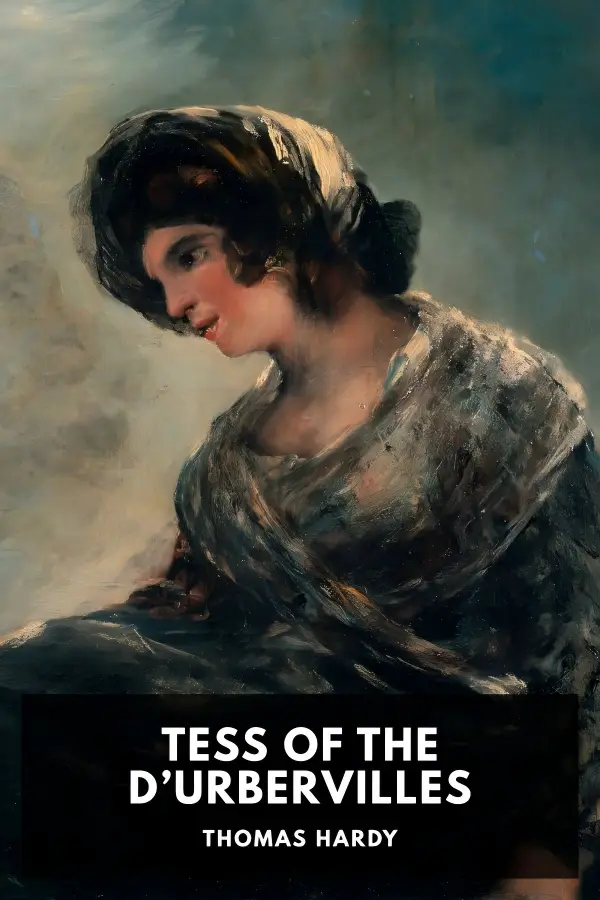
Tess of the d’Urbervilles
📖 Click to Read Phase the First: Chapter I Online Preview
Phase the First: The Maiden — Chapter I
On an evening in the latter part of May a middle-aged man was walking homeward from Shaston to the village of Marlott, in the adjoining Vale of Blakemore, or Blackmoor.
The pair of legs that carried him were rickety, and there was a bias in his gait which inclined him diagonally to the left of the direction in which he appeared to desire to go. He occasionally gave a smart nod, as if in confirmation of some opinion, though he was not thinking of anything in particular.
An empty egg-basket was slung upon his arm, the nap of his hat was ruffled, a patch being quite worn away at its brim where his thumb came in taking it off for a salutation. Presently he was met by an elderly parson astride on a gray mare, who, as he rode, murmured: “Good night with you, Sir John.”
Follow Tess Durbeyfield’s tragic journey through the merciless landscapes and moral hypocrisies of Victorian Wessex. Download the complete unabridged edition for your e-reader.
Download Full EPUBTess of the d’Urbervilles is an 1891 novel by Thomas Hardy, a pastoral tragedy set in rural Wessex that follows Tess Durbeyfield, a young countrywoman whose life is destroyed by the moral hypocrisy and sexual double standards of Victorian England, exploring themes of innocence, class, fate, and the indifference of the universe. This Standard Ebooks edition is based on Project Gutenberg eBook #110 and is in the public domain in the United States; readers outside the US should check their local laws. The text is available via Standard Ebooks.
Tess of the d’Urbervilles by Thomas Hardy: Summary, Characters & Themes
Published in 1891 in book form following controversial serialization in The Graphic, Tess of the d’Urbervilles: A Pure Woman Faithfully Presented is Thomas Hardy‘s supreme pastoral tragedy. This summary and analysis examines the collision between natural innocence and social hypocrisy, matching the tragic moral gravity found in Charlotte Brontë’s Jane Eyre.
The tragedy commences in the Wessex village of Marlott when impoverished peddler John Durbeyfield discovers he is the direct lineal descendant of the ancient, noble Norman family of d’Urberville. Driven by foolish family pride, he sends his eldest daughter, the innocent, beautiful Tess, to “claim kin” with a wealthy family bearing the d’Urberville name in Trantridge.
There, Tess encounters Alec d’Urberville, an amoral playboy whose nouveau-riche family bought the aristocratic name. Alec seduces and violates Tess in the ancient forest of The Chase, leaving her pregnant and spiritually devastated. Tess retreats to her family home to bear her sickly child Sorrow, whose unbaptized death forces Tess to bury him in unconsecrated ground.
Seeking spiritual purification, Tess begins work as a dairymaid in the lush valley of Talbothays. She falls deeply in love with Angel Clare, an educated, free-thinking parson’s son who idolizes Tess as an uncorrupted pastoral goddess. They marry, but when Tess confesses her past on their wedding night following Angel’s own admission of sexual transgression, Angel’s intellectual liberalism collapses under traditional Victorian double standards, prompting him to abandon her and sail for Brazil.
Stranded in starvation wages at Flintcomb-Ash farm and desperate to save her evicted family from ruin after her father’s death, Tess reluctantly yields to the relentless pursuit of Alec d’Urberville, who has abandoned a brief religious conversion to possess her again. When an emaciated, contrite Angel returns from South America, Tess realizes that Alec has permanently destroyed her chance at authentic redemption. The text is based on Project Gutenberg eBook #110 and the Standard Ebooks edition.
In a frenzy of despair, Tess murders Alec in their seaside boardinghouse and flees with Angel across the wilderness. Their flight culminates at the pagan ruins of Stonehenge, where Tess falls asleep on an altar stone before her capture by the authorities, accepting the scaffold at Wintoncester as the inevitable end of her doomed pilgrimage.
Historical Context: Victorian Moral Hypocrisy and Wessex Modernity
Hardy subtitled the novel “A Pure Woman Faithfully Presented,” provoking furious outrage from contemporary conservative critics who labeled the book immoral. In Victorian England, a woman who lost her virginity outside wedlock—regardless of coercion—was branded as “fallen” and cast out from respectable society, while men faced no social or legal penalty for the same acts.
Set against the rapid mechanization of English agriculture during the late 19th century, the novel contrasts the fertile paradise of Talbothays with the brutal steam-threshing machines of Flintcomb-Ash. Hardy illustrates how the steam engine dismantled ancient pastoral rhythms, leaving rural laborers vulnerable to modern economic predation.
Key Characters & Literary Archetypes
- Tess Durbeyfield (The Pure Martyr & Earth Goddess): Generous, fiercely loyal, and spiritually intact despite repeated violations. She personifies natural moral purity in direct opposition to artificial societal codes.
- Alec d’Urberville (The Predatory Libertine & Earthly Tempter): Charismatic, cynical, and manipulative. He uses money and coercion to trap Tess, epitomizing the destructive modern aristocracy that exploits traditional rural innocence.
- Angel Clare (The Dogmatic Idealist & Intellectual Pharisee): While professing radical, progressive philosophical views, Angel remains emotionally captive to orthodox bourgeois moral prejudices, proving incapable of extending the forgiveness he easily grants himself.
- John & Joan Durbeyfield (The Feckless Proletariat & Complicit Parents): Shiftless and foolishly enamored with ancestral pedigrees, they treat their daughter as an economic asset to restore their lost noble glory, precipitating her doom.
- The Ancient d’Urbervilles (The Ghostly Ancestry & Inevitable Doom): The long-extinct Norman knights whose ancestral tombs hover over the narrative, symbolizing the inescapable weight of genetic inheritance, decay, and fatalism.
Core Literary Themes
- The Injustice of the Victorian Sexual Double Standard: Hardy demonstrates the devastating cruelty of a moral hierarchy that forgives Angel’s sexual misconduct as youthful indiscretion while mercilessly condemning Tess for being a victim of assault.
- Pagan Nature vs. Christian Dogma: The novel frequently associates Tess with primeval pagan nature, Druidic stone circles, and animal innocence, contrasting these organic virtues with the rigid, merciless dogmatism of institutional Christianity.
- The Indifference of the Universe: Hardy reflects late-Victorian evolutionary skepticism, presenting a cosmos where human suffering is ignored by cold cosmic fate—encapsulated in his closing line: “The President of the Immortals… had ended his sport with Tess.”
Why Download Our Custom E-Reader Edition of Tess of the d’Urbervilles?
First published in book form in 1891 after facing bowdlerization and rejection by cautious Victorian serial editors, Thomas Hardy’s Tess of the d’Urbervilles: A Pure Woman Faithfully Presented remains the crowning pastoral tragedy of late-nineteenth-century English literature.
Subtitled with deliberate defiance, the novel follows the rural working-class maiden Tess Durbeyfield as she is entrapped between the predatory aristocratic sensualist Alec d’Urberville and the rigid, hypocritical moral dogmatism of the freethinking Angel Clare.
Across the chalk hills, dairy meadows, and stony turnip uplands of semi-fictional Wessex, Hardy stages an unsparing indictment of institutional Christianity, patriarchal double standards, and cosmic indifference. Generic public domain conversions and automated web transcriptions regularly compromise Hardy’s artistry: flattening delicate West Country dialect spellings, stripping explanatory agricultural terminology, and botching the author’s essential division into seven chronological “Phases.” Our bespoke digital edition restores an archival, unabridged reading experience calibrated precisely for modern E-ink displays.
- Based on the Standard Ebooks Edition, via Project Gutenberg #110: Sourced from the Standard Ebooks edition, based on a transcription produced for Project Gutenberg #110 and digital scans from the Internet Archive. Presents the complete seven phases and fifty-nine chapters without the Victorian moral expurgations forced upon its early magazine appearance in The Graphic. Restores the pivotal midnight baptism of baby Sorrow, the uncensored Chase seduction/violation scene, and Hardy’s fierce, philosophical authorial prefaces intact.
- Granular Architectural 7-Phase NCX/Nav Structural Navigation: Trace Tess’s fateful trajectory across Wessex using our deeply indexed, multi-tiered table of contents. Instantly move between the seven narrative movements—from the idyllic milk-scented mornings at Talbothays Dairy and the crushing confession of the wedding night, to the punishing winter thresher at Flintcomb-Ash, the desperate murder at Sandbourne, and the pagan sunrise arrest at Stonehenge.
- Calibrated Typographical Layout for Pastoral Realism: Hardy’s lyrical landscape descriptions, Dorset vernacular cadences, and dramatic ballad epigraphs require meticulous typographical breathing space. Our edition incorporates calibrated paragraph indents, distinct styling for pastoral dialogue and domestic correspondence, and zero-glare contrast across Kindle Paperwhite (AZW3), Kobo Libra/Clara (KEPUB), and open EPUB readers, guaranteeing fluid page turns without character clipping.
- Verified Public Domain Sources: The source text is in the United States public domain; users outside the United States should check their local laws. Sourced from Project Gutenberg eBook #110 and the Standard Ebooks edition.