A Journey to the Centre of the Earth by Jules Verne: Free EPUB, AZW3 & KEPUB Download
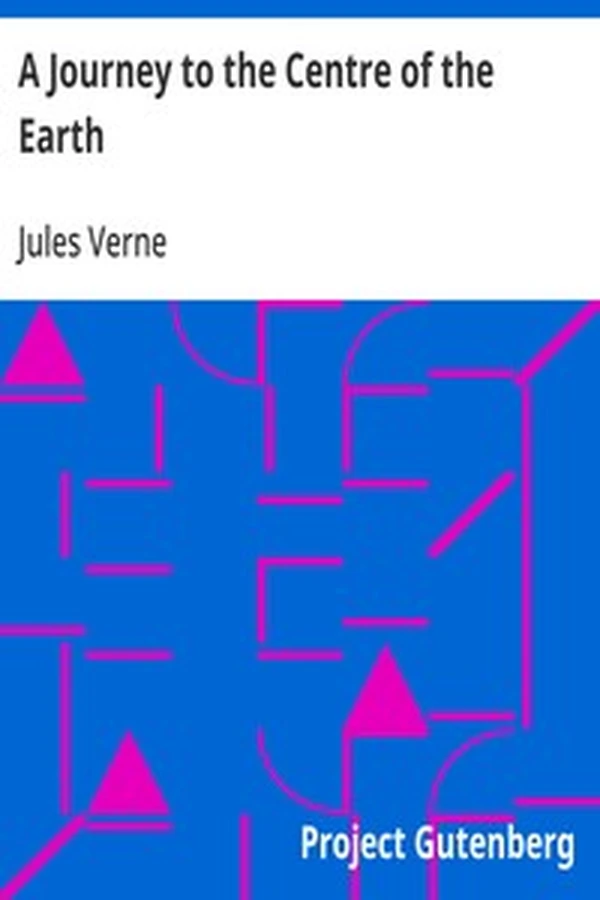
A Journey to the Centre of the Earth
📖 Click to Read the Opening Pages Online Preview
Chapter I: My Uncle Makes a Great Discovery
Looking back to all that has occurred to me since that eventful day, I am scarcely able to believe in the reality of my adventures. They were truly so wonderful that even now I am bewildered when I think of them.
My uncle was a German, having married my mother’s sister, an Englishwoman. Being very much attached to his fatherless nephew, he invited me to study under him in his home in the fatherland. This home was in a large town, and my uncle a professor of philosophy, chemistry, geology, mineralogy, and many other ologies.
One day, after passing some hours in the laboratory—my uncle being absent at the time—I suddenly felt the necessity of renovating the tissues—i.e., I was hungry, and was about to rouse up our old French cook, when my uncle, Professor Von Hardwigg, suddenly opened the street door, and came rushing upstairs.
The first three paragraphs of Chapter I are printed here exactly as they stand in the 1871 Griffith and Farran text. All forty-four chapters, with the publisher’s own headings, are in the free EPUB, AZW3 and KEPUB below.
Download Full EPUB1864
~89,000 words (estimated)
Approx. 4.9 hours
Standalone
Iceland and the interior of the Earth
13 parts
EPUB · AZW3 · KEPUB
0.27 MB (EPUB) · 0.44 MB (AZW3) · 0.29 MB (KEPUB)
Public domain in the United States
Project Gutenberg #18857
A Hamburg professor of mineralogy buys an Icelandic manuscript, a scrap of parchment falls out of it, and the runic note inside sends him and his nephew down the crater of Sneffels in search of a road to the centre of the earth. The party loses its water, finds a boiling spring, crosses a sea under a granite sky on a raft of fossil wood, is driven back to the shore it left, blasts a fallen block of granite open with gun cotton, and is thrown up a volcanic shaft into the Mediterranean. The narrator keeps the temperatures, the bearings and the dates, and the instruments are what make the book an argument as well as an adventure.
Verne published the novel in Paris in 1864; the English text here is the 1871 Griffith and Farran version, which the Project Gutenberg note describes as ‘not a translation at all but a complete re-write of the novel, with portions added and omitted, and names changed’. That is why the professor is Otto Von Hardwigg and the narrator Harry Lawson rather than Lidenbrock and Axel, and it is the version most English-speaking readers met for a century. All forty-four chapters are here in the publisher’s order, unabridged, with nothing modernised. See Wikipedia’s article on A Journey to the Centre of the Earth for the publication history. The text is available via Project Gutenberg #18857.
A Journey to the Centre of the Earth by Jules Verne: Summary, Characters & Themes
This summary and analysis of A Journey to the Centre of the Earth follows the 1871 Griffith and Farran text, and it begins where the novel begins: in a tall, slightly leaning house in the Konigstrasse at Hamburg, one of the few old buildings spared by the fire of 1842. Professor Hardwigg lives there with his nephew Harry, his god-daughter Gretchen and an old cook named Martha. He is fifty, thin and wiry, with a nose compared to a file, and he is gloating over a yellow-leaved manuscript of the Heims-Kringla of Snorre Tarleson when a parchment about five inches by three slips out of the leaves. It is covered in runic letters, one hundred and thirty-two of them, and it carries the name Arne Saknussemm, a sixteenth-century Icelander whose books were publicly burnt at Copenhagen in 1573. Harry deciphers the note by accident, fanning himself with the parchment until the ink shows through from the back and two Latin words, craterem and terrestre, catch his eye. Read backwards, the runes give a direction through the crater of Sneffels, and the rest of the novel is the attempt to follow it.
The author is Jules Verne, and the book is best read as a test of a theory rather than as a tour of wonders. Hardwigg’s science is the science of 1864: he accepts the stratigraphy of the Silurian and the Devonian, argues about the fossil man of Moulin-Quignon, and rejects the standard claim that the heat increases one degree for every seventy feet of descent. His hero is Humphry Davy, whose name he invokes whenever a thermometer refuses to behave. The plot is built so that every measurement either supports him or embarrasses him: the gallery stays cool, the geyser boils, the compass turns, and the reader is left to decide how much of the evidence the narrator has understood. Harry is no scientist. He does the arithmetic, loses his nerve, and is right about the compass at the end, which makes him a better witness than his uncle.
Below Iceland the argument gives way to ordeal. Hans Bjelke, the eider-down hunter hired for three rix-dollars a week, is the third of the party and the only one who is never wrong: he builds the raft out of fossil wood, finds water by striking a crowbar into granite, and pulls Harry out of the sea twice. The three descend the crater on a doubled rope in stages of two hundred feet, take the wrong gallery, run out of water, and are saved when Hans breaks into a scalding spring. They name the stream the Hansbach and follow it down; it leads them under the Atlantic and out onto the shore of a sea lit by a light that has no visible source. The middle of the book is a voyage on that sea, and the last third is the attempt to get off it.
The English text has its own history. Griffith and Farran’s 1871 edition was a rewrite for British readers: it cut the satire, added moralising, renamed the professor Hardwigg and the narrator Harry, and sold steadily for decades. The Project Gutenberg transcription used here prints that edition as it stands, chapter headings included, so quotations taken from this page will match the old printing rather than a modern translation. A rival version by F. A. Malleson, published as A Journey into the Interior of the Earth, stayed closer to Verne and is the one the Gutenberg editor recommends; it is a different book in tone, and the two are worth comparing. What survives in both is the structure: forty-four short chapters, most of them ending on a question, and a narrator who writes up the descent as it happens.
The cast is small and the scenery is not: three men, one raft, a forest of mushrooms forty feet high, a plain of bones, and a light that never goes out. Verne’s invention is to make geological time feel like a place you can walk through, and then to reduce it to three figures on a raft with a chronometer. If you want the same hand at greater length, this site also carries Around the World in Eighty Days and Twenty Thousand Leagues under the Sea, both complete texts with chapter marks in the same three formats. The text used here is the Project Gutenberg transcription (#18857), which is in the public domain in the United States.
Historical Context
Verne wrote the novel in the early 1860s, after Five Weeks in a Balloon had made his name in 1863, and Hetzel published it in Paris in 1864 as the second of the Voyages Extraordinaires. The series was a project as much as a business: Verne set out to map the known world through fiction, and then the places nobody could map. The science in this book is the science of its moment. Geologists were still arguing about whether the earth’s interior was molten or solid, Davy’s name was the standard citation for a cooler crust, and the new stratigraphy of the Silurian and the Devonian gave a writer a usable ladder of deep time. Verne read the journals and put their arguments into the mouths of his characters, usually with the professor on the wrong side of the consensus and stubbornly cheerful about it.
The fossil man who stops the party on the shore of bones was a live controversy. On 28 March 1863 workmen in the quarries of Moulin-Quignon, near Abbeville, turned up a human jawbone fourteen feet down, and the ‘jawbone question’ divided French and British science for years. Milne-Edwards and De Quatregages defended the bone; Elie de Beaumont, who held that the deposit was far younger than the diluvium, did not. Hardwigg names the defenders in Chapter 35 and wishes them present, which dates the composition of that chapter precisely. Verne’s trick is to let a real dispute stand in for a fictional discovery: the reader who knows the quarrel can judge how far the professor has run ahead of his evidence.
The form is a journal, and Verne keeps it strict. Harry writes up each day with its date, its temperature, its compass bearing and its depth, and the instruments do real work in the plot: the thermometer that refuses to climb is the novel’s central proof, the manometer replaces a barometer lost in the storm, and the chronometer that times an echo through the rock is what saves Harry’s life in the whispering gallery. The style is plain, the chapters are short, and most of them end on a question or a noise. Verne also uses the comedy of the pedant as ballast: Hardwigg lectures an empty cavern, stammers over ‘Gigantosteology’, and is more annoyed at returning to the surface than at nearly dying. What the book never explains is the light under the granite sky, and the omission is deliberate enough to be worth noticing.
Key Characters & Literary Archetypes
- Professor Otto Von Hardwigg: Harry’s uncle, a mineralogist of the Johanneum in Hamburg, choleric, tireless and certain that a runic note is a personal summons; he argues with thermometers, lectures empty caverns and stammers over long words.
- Harry Lawson: The narrator and the professor’s fatherless nephew, who translates the parchment by accident, keeps the log, does the arithmetic and is frightened almost continuously, though he is right about the compass in the end.
- Hans Bjelke: The Icelandic eider-down hunter hired at three rix-dollars a week, who answers with single words, builds the raft, finds the spring, saves Harry twice and asks for his thirteenth week’s wages before saying goodbye.
- Gretchen: Harry’s cousin, the professor’s god-daughter and his affianced wife, who calls the scheme ‘magnificent, splendid’, waits in Hamburg, and gives her name to the little harbour on the underground shore.
- Arne Saknussemm: The sixteenth-century Icelander whose burnt books, parchment and carved initials set the plot going; he is never seen, only read, and his route is the one the party tries to follow.
- Martha: The old cook of the Konigstrasse household, whose indiscretion spreads the news of the professor’s departure over Hamburg and who is on hand, astonished, when the three travellers come home.
- Professor Fridriksson: The Reykjavik librarian and natural scientist who speaks only Icelandic and Latin, explains the burning of Saknussemm’s books, finds the party its guide, and sends them off with a line of Virgil.
Core Literary Themes
- Theory against the rock: The novel is constructed as a test of a doctrine: Hardwigg’s claim that heat does not rise as the textbooks say survives every reading the party takes, until a geyser, boiling water and a red-hot shaft make the argument moot.
- Reading the earth as a text: A cipher in runic letters, a name cut into a granite tablet, fossils in the strata, bones on a shore: every layer has to be deciphered, and the skills of the philologist turn out to be the skills of the geologist.
- The guide’s silence: Hans says almost nothing and does nearly everything, and the contrast with the professor’s eloquence is the book’s quiet joke about who actually knows the ground and who only knows the literature about it.
- Scale and the sublime: A sea under a granite sky, a forest of mushrooms, a plain of bones three miles across: Verne makes geological time feel like a physical space, then reduces it to three men on a raft with a chronometer.
- Measurement and its failure: The instruments are the novel’s conscience, and they keep contradicting somebody: the needle points the wrong way, the thermometer reads too low and then too high, and the narrator’s sums are correct while his conclusions are not.
- Doubt at the centre: Harry narrates what he only half believes, from the fossil man to the twelve-foot shepherd and the ape in the cave, and the novel never settles whether the deepest things he saw were real or a fever of the dark.
Why Download Our Custom E-Reader Edition of A Journey to the Centre of the Earth?
This edition is built from the transcription of the 1871 Griffith and Farran printing, with its own chapter headings, its own spelling and its own way of punctuating a sentence. Nothing has been silently modernised and nothing abridged: the forty-four chapters sit in the order the publisher set them, so a quotation taken from this page will match the old edition rather than a recent translation. The instruments, the Latin tags and the geological names are left as they stand, because a journey told through measurements reads oddly once the measurements have been tidied. The table of contents is generated from the chapter list, not typed by hand, so it points where the text actually goes.
The files were made for a small screen. Paragraphs are spaced for a phone, the type is a serif face at a size that holds up in daylight, and the ornamental capitals of the printed book have been dropped rather than imitated at half scale. Forty-four chapters mean forty-four entries in the table of contents, so a reader can move between the Hamburg study and the slope of Stromboli without scrolling through the middle. Most chapters are short enough to finish in a sitting on a bus, and the journal form makes it easy to stop at a date and pick the thread up later. Every chapter heading is listed as its own entry, so the table of contents doubles as a map of the descent.
Three formats are offered. The EPUB is the general one and reflows on phones, tablets and most desktop readers. The AZW3 is for Kindles, with a working table of contents and no DRM. The KEPUB is for Kobos, where it keeps page numbers and dictionary lookup. All three carry the same text, about 89,000 words or roughly five hours of reading, and all three download from this page without an account. Pick the file that matches the device you read on and you will not have to convert anything.
- Project Gutenberg transcription, via Project Gutenberg #18857 — the complete text, unabridged, with the chapter headings of the 1871 printing.
- Readable on the reader you already own The EPUB reflows on phones and tablets, the AZW3 opens on a Kindle at any font size, and the KEPUB keeps page numbers and dictionary lookup on a Kobo.
- Chapter marks that work Every one of the forty-four chapters is a separate entry in the table of contents, so you can jump to the Central Sea or the storm without scrolling to find it.
- No DRM, no account, no fee The files download straight from this page and open in Calibre, Apple Books, Kindle or Kobo; nothing checks a licence or phones home.
- Around the World in Eighty Days — free EPUB, AZW3 & KEPUB
- Twenty Thousand Leagues under the Sea — free EPUB, AZW3 & KEPUB
- The Time Machine — free EPUB, AZW3 & KEPUB
Chapter summaries
The novel runs to forty-four short chapters, and the headings below are the ones printed in the 1871 edition. They are gathered into thirteen parts so the shape of the descent stays easy to follow, from the Hamburg study to the slope of Stromboli, with the dates the narrator gives where they can be checked.
- Chapters 1-4: The Runic Parchment: Hardwigg brings home a yellow-leaved manuscript of Snorre Tarleson and a parchment slips out of it, covered in runes and signed by Arne Saknussemm. Harry, locked in and starved for two days, finally reads it by fanning the parchment until the ink shows through: ‘Descend into the crater of Yocul of Sneffels’ before the kalends of July. The document runs to one hundred and thirty-two letters, seventy-nine consonants to fifty-three vowels, and the reading only works backwards. The uncle dismisses the heat argument, Gretchen calls the scheme magnificent, and the stores are bought for a start at daybreak.
- Chapters 5-7: Copenhagen and the Library: The pair cross to Copenhagen, where Harry cures his vertigo on the steeple of the Vor-Frelser’s-Kirk, and take the Valkyrie for an eleven-day passage to Reykjavik. The governor and the mayor are polite and useless; the librarian Fridriksson, who speaks only Icelandic and Latin, explains that Saknussemm’s works were publicly burnt at Copenhagen in 1573. There is no boat to be had for the west coast, so the journey will go by land, and the library’s eight thousand volumes are lent out to farmers.
- Chapters 8-10: The Eider-Down Hunter: Fridriksson produces Hans Bjelke, an eider-down hunter of Herculean build who accepts three rix-dollars a week, which the narrator works out as fourteen shillings and twopence minus one farthing, refuses an advance with the single word ‘After.’, and never wastes a movement. The instruments are laid out, including a thermometer counting to 150 degrees and two Ruhmkorff coils, with six months of meat and biscuit and, the narrator notes, not a drop of water. They ride out past lava fields and a hut holding nineteen children, and reach the thirty huts of Stapi on 20 June.
- Chapters 11-13: Sneffels and the Shadow of Scartaris: At Stapi the rector is a blacksmith whose wife stands six feet high, and the ascent of Sneffels begins on 23 June with three hired Icelanders carrying the luggage. The party climbs through turf seventy feet deep, two thousand rough steps called the stina, an ice field and a stinging sand whirlwind, and reaches the summit about eleven at night under a sun that does not set. The crater holds three shafts; they wait four days until, at noon on 28 June, the shadow of the Scartaris peak falls into the central one, and the descent begins.
- Chapters 14-17: The Shaft and the Eastern Tunnel: The shaft is almost as perpendicular as a well, and they go down it on a doubled rope in twenty-eight stages of two hundred feet, five thousand six hundred feet in ten and a half hours, to a floor at six degrees. The barometer reads twenty-nine inches, which means they are level with the sea, and the thermometer stays low enough to embarrass the textbooks. At a junction of four galleries the professor takes the eastern one; it runs through Silurian rock, yields a trilobite and then a coal seam, and ends at six in the evening against a blank wall. The water is gone.
- Chapters 18-20: The Wrong Road and the Spring: They march back to the junction, and on 7 July Harry collapses. His uncle gives him the last mouthful of water and refuses to turn back: ‘Never, never shall it be said that Professor Hardwigg retreated.’ The western gallery descends into granite, Harry faints, and the professor says that all is over. Then Hans disappears, returns with the word ‘Water’, and drives a crowbar into the wall three feet above the floor. A jet bursts out scalding hot and then runs cool enough to drink; it is named the Hansbach, and the professor decides to let it run as a guide.
- Chapters 21-23: Under the Ocean, Then Alone: They follow the stream down galleries that fall two inches to the furlong, and by 15 July the reckoning puts them under the open sea, seven leagues down and fifty leagues from Sneffels. Harry does the sums and finds that at this rate the centre is five and a half years away; his uncle tells him to bother his calculations and to ballast his pockets with stones for the manometer. Then, on 7 August, walking ahead with a lamp, Harry turns round to find himself alone, and the stream on which he had been relying has disappeared.
- Chapters 24-26: Lost and the Whispering Gallery: Harry runs, prays, remembers Hamburg, loses his lamp and falls unconscious in the dark. He wakes to a voice repeating ‘forlorad’, and works out that the gallery is carrying sound: an echo that returns in twenty seconds puts his uncle twenty thousand four hundred feet away. They talk along the rock, and the professor tells him to slide. He wakes again in a grotto of stalagmites, bandaged with Hans’s ointment, on the evening of 9 August, four days after he was lost.
- Chapters 27-29: The Central Sea and the Raft: The grotto opens on a shore of golden sand, soft and mixed with small shells, under an electric light with no visible source, and the party has been underground forty-seven days. A forest of white mushrooms forty feet high and lycopods a hundred feet tall stands at the water’s edge, and the sand holds the jaw of a mastodon and the molars of a Dinotherium. Hans builds a raft ten feet by five out of fossil wood, the tide rises ten or twelve feet, and on 13 August they sail, naming the harbour Port Gretchen. Hans catches a blind fish, and Harry dreams of antediluvian monsters.
- Chapters 30-32: Saurians, a Geyser and a Storm: The sea turns out to be far wider than the professor guessed, and a sounding line comes up with the iron crushed as if by teeth. On the night of 18 August a battle begins beside the raft between an Ichthyosaurus a hundred feet long and a Plesiosaurus whose neck rises thirty feet out of the water; the Plesiosaurus dies. On 20 August a spout proves to be a geyser at a hundred and sixty-three degrees, on an island named after Harry, and the position is put at six hundred and twenty leagues from Iceland. Then the storm takes them for four days, and a ball of fire magnetises every iron object on board.
- Chapters 33-36: The Shore of Bones: The raft is thrown back on the north shore, and the compass points north where south should be: the storm has carried them back to the coast they left. Hans has saved the manometer and four months of food, and the professor, who had promised himself a new shore, has to explore the old one again. They explore a new shore of giant shells and then a plain of bones three miles across, where the professor finds a fossil man about six feet tall, of the white race, with a facial angle of ninety degrees, and lectures an empty cavern about the Moulin-Quignon jawbone. Beyond it stands a Tertiary forest without colour, where living mastodons are herded by a figure twelve feet high.
- Chapters 37-40: The Dagger and the Blast: Harry picks up a rusted dagger of sixteenth-century Spanish work, and the professor reads it as the tool that cut the initials A. S. into a granite tablet at the cape they name after Saknussemm. The gallery behind the tablet is blocked by a fallen block, so they pack fifty pounds of gun cotton into it, lay a ten-minute fuse and fire it from the raft. The sea pours into the hole and takes the raft with it at something like a hundred miles an hour, in the dark, with the food gone. Harry dreams of a shark-crocodile and a fourteen-foot ape, and wakes to hear his uncle say that they are going upwards.
- Chapters 41-44: The Volcanic Shaft and Daylight: They rise in a narrow shaft at two fathoms a second, eat their last food, drink the last of the Schiedam and watch the water begin to boil as the temperature climbs. The professor concludes that they are inside an active volcano and that an eruption is the only way out; the lifts come every ten minutes, and at last they are thrown out on the slope of Stromboli, half naked, among olives and vines. A shepherd boy answers their questions in Italian, they reach San Vicenza, Hans takes his thirteenth week’s wages and says ‘Farval’, and on 9 October Harry is home in Hamburg and married.
A Journey to the Centre of the Earth: Frequently Asked Questions
Which English version is this EPUB?
How long is the novel, and how long does it take to read?
Do I need to know any geology to follow it?
Who are the main characters?
Is it suitable for younger readers?
What formats do I get, and is there DRM?
Where does the story end?
Can I check this text against a printed copy?
Part of: Adventure and sea stories · Science fiction classics